
Reviewed · HISTORICAL TOURS
Dublin: Macabre History Walking Tour
Dublin’s darker past is not confined to a museum. It lurks beside the river, near old city walls, and in places you could easily pass without a second glance. This two-hour walk brings out stories of public executions, grave robbing, mummified corpses, man-eating rats, and the death of the warrior Cuchulainn.
I like the way the tour uses lesser-known streets rather than sticking to Dublin’s standard postcard stops. I also like the guides’ storytelling style, especially Peter and Rob, who add humor, drama, and room for questions. The main drawback is that the tour may feel more curious and entertaining than truly terrifying, so do not book it expecting a nonstop horror show.
Key points
- Cuchulainn’s final scene: Hear how the legendary warrior died, with a raven pecking at his eyes.
- Dublin’s grim working life: Learn about grave robbing near the city mortuary and medieval quarantine practices.
- Back streets and both riverbanks: The route covers parts of the old center you might otherwise walk past.
- Animated local guides: Peter and Rob are praised for clear storytelling, humor, acting, and helpful answers.
- Easy central meeting point: Find the yellow umbrella beside the Spire on O’Connell Street.
- Adult-focused and accessible: The English-language tour lasts two hours, welcomes wheelchair users, and is not suitable for children under 18.
Starting beneath the Spire on O’Connell Street
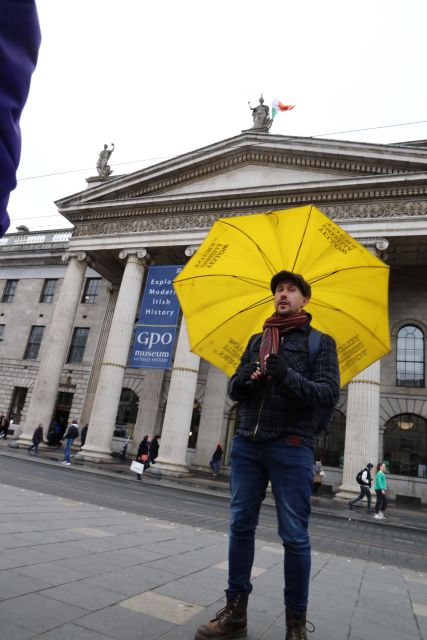
The tour begins beside the Spire, the tall needle in the middle of O’Connell Street. Look for the yellow umbrella. This is a useful meeting point in central Dublin, but take a moment to make sure you have the correct yellow umbrella, since more than one may be nearby.
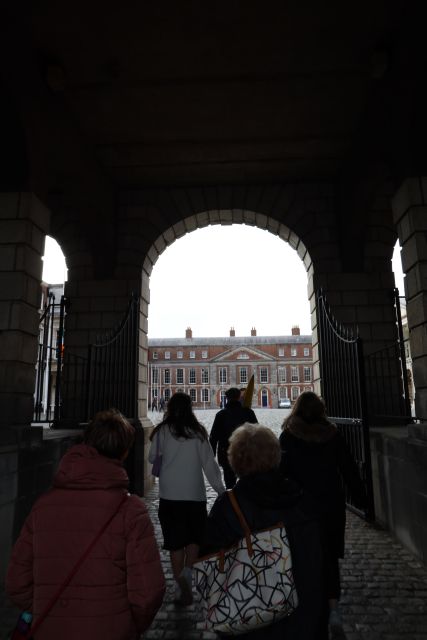
From there, your guide leads you into the old city center. The route explores both sides of the River Liffey, with time spent along the riverside and in streets that many visitors pass without knowing what happened there.
That choice gives the tour its value. You are not simply standing outside a famous building while hearing a familiar piece of Dublin history. You are moving through the setting itself, with ordinary corners turned into prompts for stories about death, disease, crime, punishment, and belief.
The meeting point is easy to reach, but the walk itself is the important part. Wear shoes that suit two hours on city streets, and dress for Dublin’s changeable weather. The tour takes place outdoors, so rain can affect your comfort even when the storytelling is strong.
More Walking Tours in Dublin
- Dublin Highlights and Hidden Gems Guided Walking Tour
★ 5.0 · 6,020 reviews - Dublin: Highlights and Hidden Gems Walking Tour
★ 4.9 · 2,140 reviews - 1916 Rebellion Walking Tour
★ 5.0 · 1,605 reviews
Cuchulainn and the old stories of death
One of the early subjects is the death of Cuchulainn, the mighty warrior from Irish legend. His end is especially grim: after he dies, the raven on his shoulder pecks at his eyes.
This gives the tour a useful opening contrast. Dublin’s macabre past is not only about documented murders or public punishment. It also reaches into legend, where heroic figures meet violent and unsettling ends. You get a sense of how stories about death have occupied Irish culture across very different periods.
The Cuchulainn episode also shows the tour’s broad range. You are not signing up for a narrow list of Victorian crimes. The walk moves between mythology, medieval life, urban history, and more recent tales. That variety helps keep the two hours moving.
The story is best suited to adults who enjoy folklore with a dark edge. If you prefer strictly documented history, you may want to treat this part as legend rather than established fact. The tour’s appeal comes from hearing both kinds of stories in the places connected with Dublin’s past.
Medieval quarantine and the cost of disease
The walk also covers medieval quarantines, a subject that feels especially close to modern life. The story places public health in an older city where disease, crowded streets, and limited medical knowledge shaped daily decisions.
You hear about Dublin as a place where illness could alter the life of an entire neighborhood. The details help explain why quarantine measures developed, and why fear of contagion became part of the city’s social history.
This is one of the tour’s more useful sections because it gives context rather than relying only on shock. The macabre material works best when it shows how people lived, died, and responded to danger. A story about quarantine says something about city planning, public fear, and the limits of medicine.
Do not expect a medical lecture. The guide presents the subject as part of a spoken walk, with stories and local context rather than long technical explanations. Peter is especially good at slowing down when needed and checking that everyone understands the point.
Grave robbing beside the city mortuary

One of the more unusual subjects is Dublin’s 19th-century grave-robbing trade near the city mortuary. This is the kind of detail you are unlikely to pick up from a standard sightseeing route.
The story connects medicine, poverty, death, and commerce. Grave robbing was not simply a matter of villains sneaking through cemeteries. It grew from demand for bodies and from the harsh economic conditions of the time. The tour uses this darker business to show how the dead could become part of an underground market.
This stop is a good example of why a walking tour can add more than a list of famous buildings. You are encouraged to look at the city as a place where institutions, streets, and social problems overlapped. The physical setting gives the story weight, even when the exact scene around you has changed.
The subject is grim, but it is handled as historical storytelling rather than cheap shock. If you are sensitive to stories involving corpses, this is one section to keep in mind before booking.
More walking routes in Dublin:
- 90 Minute Dublin Walking tour and Sightseeing tips
★ 5.0 · 916 reviews - 2-Hour Historical Walking Tour from Dublin
★ 5.0 · 875 reviews - Historical 2-Hour Guided Walking Tour of Dublin
★ 4.7 · 865 reviews - Dublin Traditional Irish 3 Course Meal Walking Tour with Local
★ 5.0 · 755 reviews
Mummified corpses, city walls, and a legless killer
Near the old city walls, the tour turns to stories of mummified corpses and a legless serial killer. These details are among the most unusual parts of the route, and they give the walk its distinct personality.
The mummified-corpses story connects the tour to Dublin’s old religious and burial traditions. The tale of the legless killer, by contrast, belongs to the city’s crime stories and is designed to surprise. Together, they show the range of material covered in a single outing.
Your guide does not simply recite dates. Peter has been praised for acting out parts of the stories, using expression and timing to make the scenes easy to follow. Rob brings a similarly playful approach, with clear delivery and a light comic touch.
That tone matters. The stories are dark, but the walk is not presented as solemn from start to finish. Humor helps keep the mood manageable, especially when the material involves murder, disease, or the treatment of the dead. If you want pure fright, the comic moments may soften the effect. If you want an entertaining history walk, they are a plus.
Man-eating rats and Dublin’s rougher side
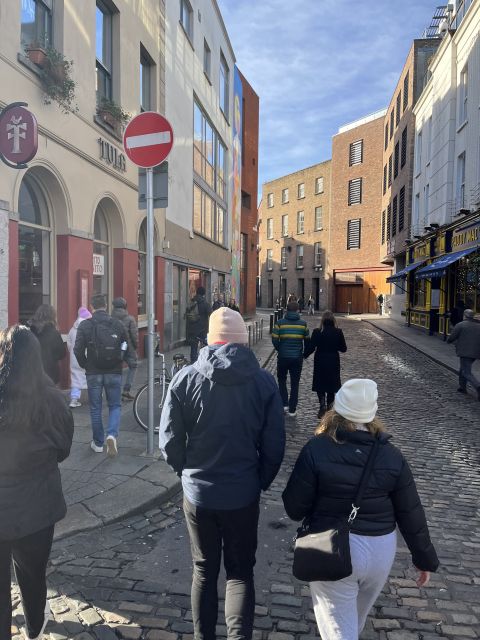
The tour includes stories of man-eating rats, another subject that pushes the walk toward folklore and urban legend. Whether you find the tale horrifying or more entertaining than believable, it fits the tour’s interest in the fears that shaped Dublin’s old streets.
This part works because it adds texture to the city’s social memory. Rats are tied to sanitation, food, disease, and poor living conditions, so the story is not only about a shocking animal tale. It also hints at the hazards of older urban life.
The guide’s delivery makes a difference here. The best moments of this tour come from the way the story is told, with drama, humor, and a clear link to the place where you are standing. Peter is particularly good at building a scene and then answering questions without losing the thread.
The balance is worth noting. Some material may feel more grisly than the usual city tour, but the experience does not appear to rely on graphic staging or theatrical scares. You get spoken stories, city streets, and a guide who brings energy to the walk.
Public executions and Dublin’s final brothel keeper
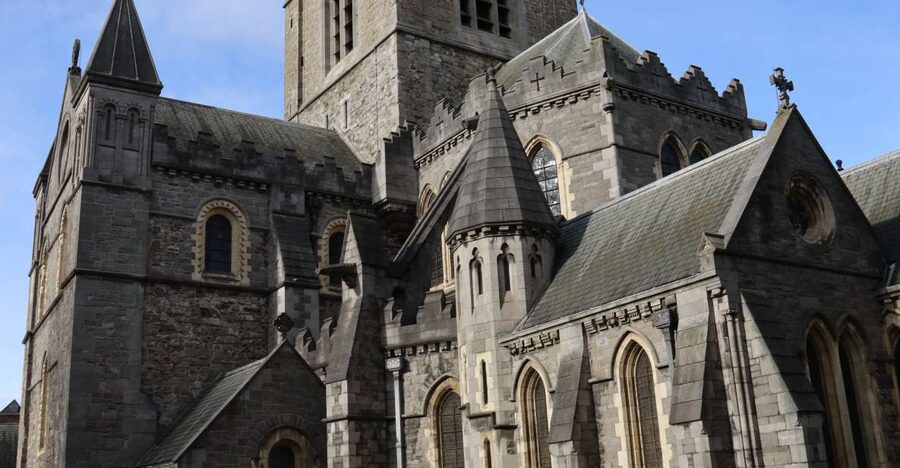
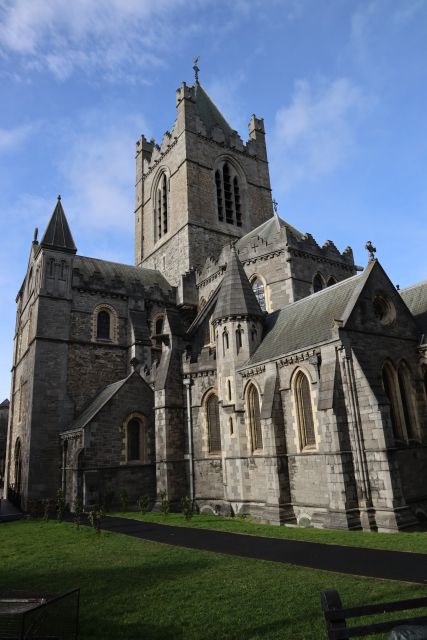
Near the cathedral, the tour ends with the story of Dublin’s most famous brothel keeper and her death by fire at the stake. This is one of the clearest examples of the tour’s interest in people who lived outside respectable society and paid a heavy price for it.
The stop ties together crime, sexuality, punishment, and public spectacle. An execution was not only a private death. It could become a public event, shaped by law, religion, gossip, and the crowd. Hearing about that history beside a major cathedral gives the story extra force.
The subject is also a reminder that Dublin’s past was not built only by political leaders and celebrated writers. It included people whose work, reputation, and fate were debated in public. That broader view makes the tour more worthwhile than a simple collection of ghost stories.
The ending back near the cathedral also keeps the route practical. You finish at the original meeting point, rather than being left across the city. From there, you can continue sightseeing or make your way to another part of central Dublin.
What the guides add to the experience
The guide is the main reason to choose this tour over reading a list of dark Dublin facts on your own. Peter is described as passionate, approachable, and highly skilled at telling a story. He welcomes questions, adjusts his pace, and makes sure people can follow when English is not their first language.
Rob has also led the walk, bringing humor and a lively manner to the material. His delivery has been compared to a comedian’s style, which gives you a sense of the tour’s tone: informative, but not stiff.
Small groups can make the experience feel almost private. A few tours have had only three people, allowing more conversation and direct answers. Group size can vary, so do not assume every departure will be that intimate, but the format leaves room for interaction.
The guides also provide local suggestions beyond the main stories. That is useful if you are early in your Dublin visit and want to ask about the city after the tour. The best use of the walk is to bring questions. Ask about the people, places, or periods that catch your attention, and you will get more than a one-way performance.
Is $19 a fair price for two hours?
At $19 per person, this is a reasonable price for a two-hour guided walk in central Dublin. You are paying for a live English-speaking guide, a planned route, and stories that would be difficult to assemble by simply wandering around.
The value is strongest if you enjoy history told through places. The tour does not include hotel pickup, transport, food, or entry to an attraction. Your payment covers the walk and the guide, so compare it with the cost of a standard sightseeing activity rather than with a full museum visit.
The experience also carries a 4.9 rating from 95 reviews, with repeated praise for Peter, Rob, clear storytelling, unusual locations, and a good group atmosphere. One point of criticism is useful: the material may not feel as bloody or frightening as the title suggests.
That is not a serious flaw if you want dark history with humor and context. It matters if you are seeking a haunted-house style experience with scares at every stop. The tour is better understood as an adult history walk with macabre subjects than as a horror attraction.
Who should book this Dublin walk?
I would choose this tour if you have already seen the main sights and want a different way to read the city. It is also a good first-day activity if you like walking, local stories, and unusual historical details that can shape the rest of your visit.
It suits solo visitors particularly well. The guide keeps the group involved, and the relaxed storytelling style makes it easy to join in even when you arrive alone. Couples and small groups should enjoy the mix of humor and grim subject matter.
The age limit matters. This tour is not suitable for children under 18, and the subjects include murder, corpses, disease, executions, and sexual history. Adults who enjoy macabre folklore should be comfortable with the material, but anyone looking for a family-friendly introduction to Dublin should choose another walk.
The tour is listed as wheelchair accessible, which is helpful, though city walking conditions can still vary from street to street. If you have specific mobility needs, confirm the current route when booking.
Practical details before you go
The walk lasts two hours, with start times available when you check the date. Cancellation is free up to 24 hours before the tour for a full refund, and you can reserve now and pay later.
The tour is conducted in English. Meet beside the Spire on O’Connell Street and find the yellow umbrella. Since the meeting point is central and the tour ends there, you do not need to arrange transport between the start and finish.
Bring weather-appropriate clothing and comfortable footwear. You will be outdoors for the full walk, moving through the old center, along the riverside, and between different historic areas.
Should you book the Macabre History Walking Tour?
Book it if you want Dublin history with rough edges: legends, public punishment, grave robbing, old disease controls, criminal tales, and stories of the dead. The guides, especially Peter and Rob, give the walk its strongest quality through expressive storytelling, humor, and patience with questions.
Skip it if you want a strictly academic history tour or a genuinely frightening night of staged scares. The tour’s darker subjects are balanced by wit and local color.
For $19, it is a good-value way to spend two hours in central Dublin, especially if you want to see streets and corners that standard sightseeing routes may overlook. Bring an open mind, a sturdy pair of shoes, and a taste for history at its most unsettling.
FAQ
Where does the Macabre History Walking Tour begin?
The tour begins beside the Spire, the large needle in the middle of O’Connell Street. Look for the yellow umbrella.
Where does the tour finish?
The activity ends back at the original meeting point beside the Spire.
How long does the tour last?
The walking tour lasts two hours. Starting times depend on availability for your chosen date.
What language is the tour conducted in?
The tour is conducted in English with a live English-speaking guide.
Is the tour suitable for children?
No. The tour is not suitable for children under 18.
Is the walking tour wheelchair accessible?
Yes. The activity is listed as wheelchair accessible.
More history tours in Dublin
- Dublin Historical Centre Food Tour with 8 Food Tastings & Drinks
★ 5.0 · 1,718 reviews - Dublin to Cork, Blarney Castle & Cóbh Heritage Centre by train
★ 4.5 · 510 reviews - Dublin: Jeanie Johnston Tall Ship Irish Famine History Tour
★ 4.8 · 431 reviews - Dublin’s Haunted History Walking Tour
★ 4.3 · 345 reviews
Just added around Dublin
- Gin School, distill you own gin, cocktails, tastings, food★ 5.0 · 8 reviews
- Dublin : Street Art Walking Tour★ 5.0 · 3 reviews
- Dublin: Skip-the-line Book of Kells & Old Town Private Tour★ 5.0 · 6 reviews
- Dublin: Personal Photographer- Travel Photography Experience★ 4.5 · 8 reviews
- Dublin: Howth Coastal Craft Beer and Seafood Tour★ 5.0 · 62 reviews
- Vikings In Dublin (Walking Tour)★ 5.0 · 8 reviews
- Dublin: Silent Disco Walking Tour★ 4.9 · 21 reviews
- Dublin: Private Tour of City Monuments in Spanish★ 5.0 · 6 reviews
Historical Tours, compared.

Dublin Historical Centre Food Tour with 8 Food Tastings & Drinks
Read our review →

Dublin to Cork, Blarney Castle & Cóbh Heritage Centre by train
Read our review →
Jeanie Johnston Tall Ship Irish Famine History Tour
Read our review →

Deliciously Dublin: The Artisan Donut Walking & History Tour
Read our review →

Browse the lists this tour appears in