
Reviewed · HISTORICAL TOURS
Dublin’s Haunted History Walking Tour
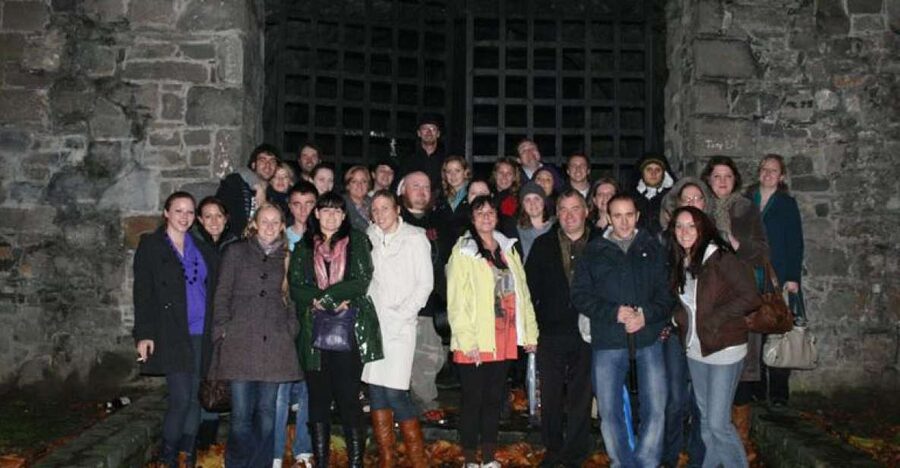
Dublin’s haunted past is not tucked away in a remote castle. It sits around City Hall, old churches, cobbled lanes, and former prisons of the imagination, where stories of murder, punishment, madness, and restless spirits have gathered for centuries. This 1.5-hour walk uses those places as a stage for tales about Darkey Kelly, the Green Lady of St. Audoen’s, the Dolocher, and Dublin’s notorious Hellfire Club.
I like the way the tour joins real Dublin history with supernatural folklore, rather than treating every ghost story as fact. I also like the guides’ range: Darragh, Finn, Lydia, Kate, and Dara are praised for clear storytelling, humor, and personal research. The main caution is practical: the walk can run longer than 90 minutes, and one guide was hard to hear without a microphone, so wear good shoes and dress for cold or rain.
Key points to know before you book
- Start at Bernardo Square: Meet in the small square beside City Hall, then finish back at the same spot.
- Darkey Kelly is a major story: Her grim 18th-century tale gives the tour one of its strongest historical anchors.
- You get history as well as hauntings: The focus often shifts toward Dublin’s people, punishments, churches, and social past.
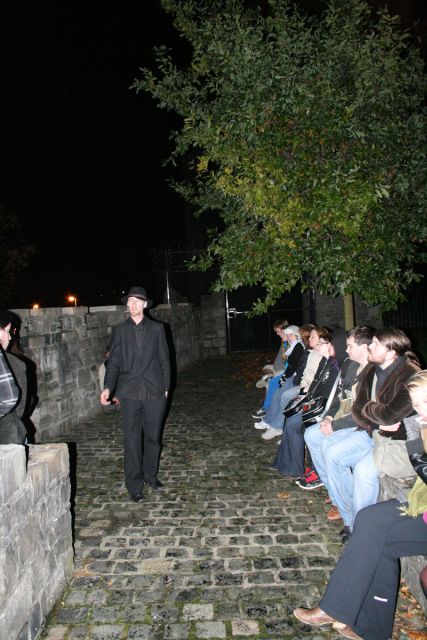
- The route uses atmospheric places: Expect cobbled streets, alleyways, and churchyard settings rather than a seated storytelling show.
- Guides make the difference: Darragh, Finn, Lydia, Kate, Dara, and others have been praised for warmth, humor, and strong delivery.
- Plan for Irish weather: Rain and cold can affect the walk, and the guide may speak outdoors without amplification.
Dublin’s dark stories begin beside City Hall
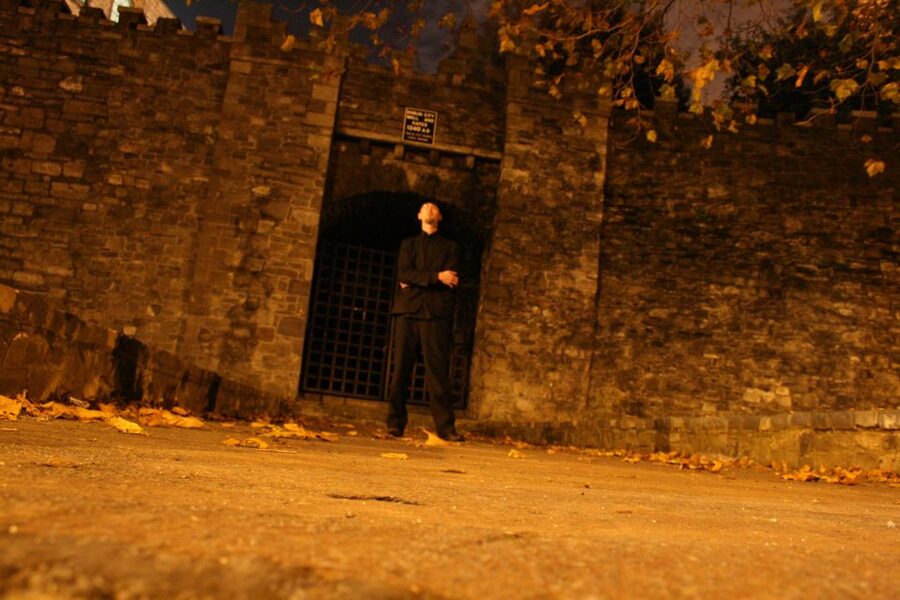
Your meeting point is Bernardo Square, the small square next to Dublin City Hall. This is a useful central starting place because you can reach it easily from the old center, and the tour returns there at the end.
The opening matters. A good guide has to set the rules of the evening: some tales are based on recorded events, some come from local legend, and some sit somewhere between the two. This tour appears to work best when it treats the supernatural as part of Dublin’s cultural memory, not as a parade of guaranteed ghost sightings.
The subject reaches back across several periods of Irish history. Celtic beliefs, Christian traditions, and the Protestant ascendancy all left their mark on Dublin’s stories of death and the afterlife. You are not simply hearing about a haunted building. You are hearing how different communities explained crime, illness, punishment, and unexplained events.
That wider frame gives the walk more substance than a standard scare tour. If you want jump scares or theatrical effects, this may feel restrained. If you like old streets paired with grim human stories, it should fit well.
More Walking Tours in Dublin
- Dublin Highlights and Hidden Gems Guided Walking Tour
★ 5.0 · 6,020 reviews - Dublin: Highlights and Hidden Gems Walking Tour
★ 4.9 · 2,140 reviews - 1916 Rebellion Walking Tour
★ 5.0 · 1,605 reviews
Darkey Kelly and the city’s most disturbing tales
One of the tour’s best-known stories is the fate of Darkey Kelly, an 18th-century madam who was burned as a witch. Her story brings together prostitution, accusation, public punishment, and the fear of witchcraft. It is also the sort of tale that shows why Dublin’s ghost lore cannot be separated from social history.
The treatment of Darkey Kelly seems to be a highlight because it gives you a person to remember, rather than a vague spirit attached to an old wall. You can consider the story from two angles: the frightening legend that survived, and the harsh world that made such a punishment possible.
The guides do not all tell the material in exactly the same way. Darragh is praised for adding extra research and checking details, while another guide brought modern references into the storytelling to lighten the darker material. That variety can be a strength. It means the experience depends partly on who leads your group, but the guides have a clear base of stories to work from.
The subject matter is grisly at times. Families with older children may enjoy the walk, especially when the guide uses humor, but younger children or anyone sensitive to stories of execution, violence, and death may find parts too strong.
St. Audoen’s and the Green Lady
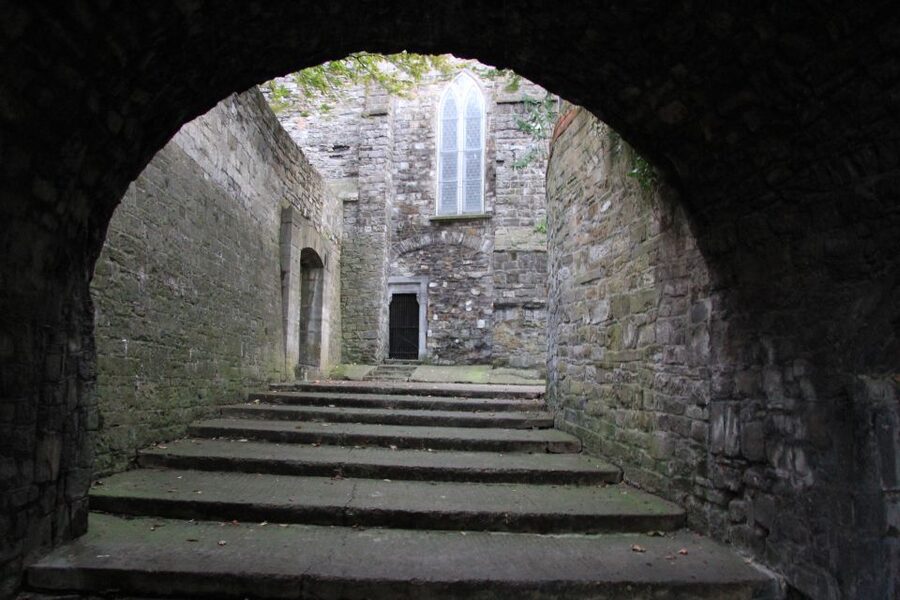
The Green Lady of St. Audoen’s is another central tale. St. Audoen’s gives the evening the kind of setting you want from a haunted-history walk: an old religious site with layers of memory and a story attached to a mysterious figure.
The value here is the connection between place and story. Hearing about the Green Lady while standing near the church gives the tale a physical setting. You are not listening to an abstract ghost story in a pub. You are looking at the sort of old Dublin surroundings that allowed these legends to survive.
The route is described as passing through cobbled streets, alleyways, and churchyard areas. That uneven ground creates atmosphere, but it also explains the repeated advice to wear comfortable shoes. The walk is not strenuous in the usual sense, yet you will be standing and moving for the full tour, sometimes in the dark or in wet conditions.
I would treat the church and churchyard sections as atmospheric history rather than a promise of paranormal activity. The experience is strongest when the setting helps you imagine past Dublin and the people who lived, died, and were remembered there.
Dublin’s Hell and the Hellfire Club
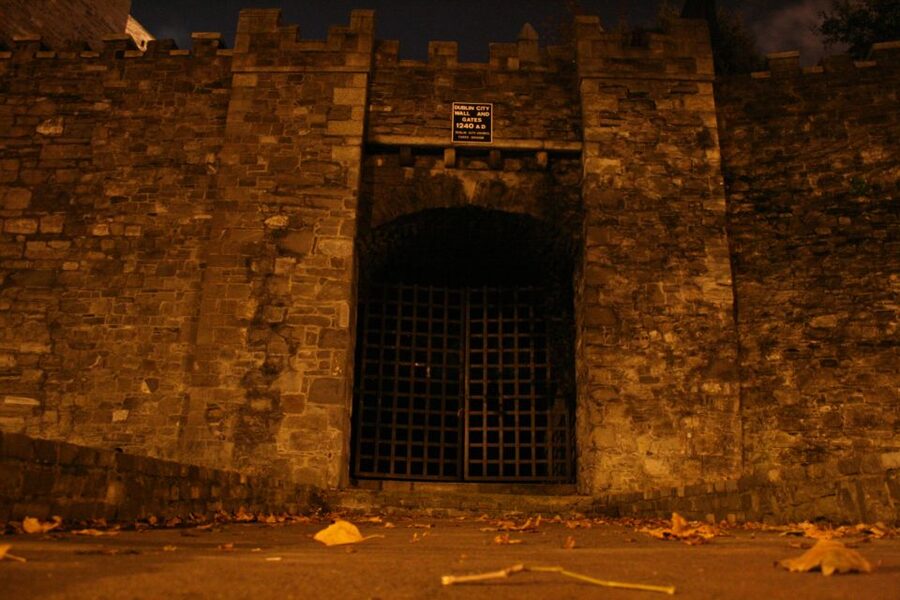
The tour also explains how Dublin’s Hell got its name and explores the dark origins of the 18th-century Hellfire Club. These stories broaden the evening beyond individual ghosts. They bring in reputation, secrecy, social power, and the ways frightening places acquire names.
The Hellfire Club material is especially useful for anyone who has already seen Dublin’s main sights and wants something less polished. It points toward the city’s uneasy relationship with privilege and moral judgment. The story has a supernatural edge, but the human behavior behind it is what gives the tale weight.
You should expect the tour to move between fact, folklore, and interpretation. One guide, described as a history teacher by day, placed more emphasis on the historical side than on the haunting itself. That is not a flaw if you prefer evidence and context, but it may disappoint you if you want a constant stream of ghost activity.
The best guides keep both sides in play. Lydia is praised for being funny while telling gruesome stories. Kate is described as passionate and good at finding the right atmosphere for each tale. That mix of humor and darkness helps prevent the walk from becoming a long chain of misery.
More walking routes in Dublin:
- 90 Minute Dublin Walking tour and Sightseeing tips
★ 5.0 · 916 reviews - 2-Hour Historical Walking Tour from Dublin
★ 5.0 · 875 reviews - Historical 2-Hour Guided Walking Tour of Dublin
★ 4.7 · 865 reviews - Dublin Traditional Irish 3 Course Meal Walking Tour with Local
★ 5.0 · 755 reviews
The Dolocher and Dublin’s criminal folklore
The Dolocher is another figure from the city’s darker folklore. The story of this character stalking Dublin’s streets adds a more direct sense of danger to the route. Instead of focusing only on spirits attached to buildings, the tale suggests a city where fear could move through ordinary streets after dark.
This is where the walking format earns its keep. You are following the geography of the stories, not simply hearing a lecture about them. The old streets become part of the narrative, and the guide can point out how narrow lanes, churchyards, and public spaces shaped the way people experienced Dublin in earlier centuries.
The guides also make room for questions. Several describe the experience as personal and interactive, with time to ask about the sites and stories. That makes a small group especially appealing. One particularly positive account suggested that a smaller group improved the enjoyment, while another wished the tour had lasted longer because there was so much material.
There is a tradeoff. A guide standing on a busy street may be difficult to hear, especially in a larger group. One person specifically felt a microphone was needed. Stay close to the guide and choose a spot near the front when possible.
What the guides add to the evening
The experience is tied to Paranormal Study and Investigation of Ireland, which gives the walk a clear paranormal identity. You are not just joining a general Dublin history tour with a ghost story added at the end. The guides are selected for their interest in both local history and supernatural accounts.
Still, their strongest quality is storytelling. Darragh is repeatedly described as warm, passionate, and well prepared. Finn is praised for making a short Dublin visit feel fuller by covering history beyond the usual guidebook. Lydia brings comedy and energy, while Kate is noted for her atmospheric delivery. Dara is described as highly researched and careful with historical detail.
That does not mean every guide will suit every person. If you want a serious academic lecture, the humor and theatrical touches may feel light. If you want a pure ghost show, the amount of historical background may be more than expected.
For me, that balance is a reason to book. The walk gives you stories you can remember, but it also gives you context for why those stories exist. You learn about people, institutions, punishments, and old beliefs, not only about things that may or may not have appeared after dark.
The pace, weather, and practical side
The advertised duration is 1.5 hours, but allow extra time. One tour continued for about 30 minutes beyond the expected finish, which pleased some people but left others cold and ready to go indoors. The route ends back at Bernardo Square, so you do not need to arrange transport from a distant neighborhood.
A 1.5-hour outdoor walk is easy to fit into a Dublin itinerary. You can place it after a daytime visit to the city center, then have dinner nearby. Starting times vary, so check availability when you book.
Dublin weather is the main practical concern. Rain did not stop one guide from keeping the group engaged, but wet streets and cold air change the experience. Wear shoes with a firm sole, bring rain protection, and do not assume that a mild afternoon means a comfortable evening.
There is no mention of transport during the tour, so plan to walk for the whole experience. The meeting point is beside City Hall, and the tour returns there. English is the stated language, with a live guide rather than an audio recording.
The cancellation terms are flexible: you can cancel up to 24 hours ahead for a full refund. You can also reserve now and pay later, which helps if your Dublin schedule is still shifting.
Is $31 a fair price?
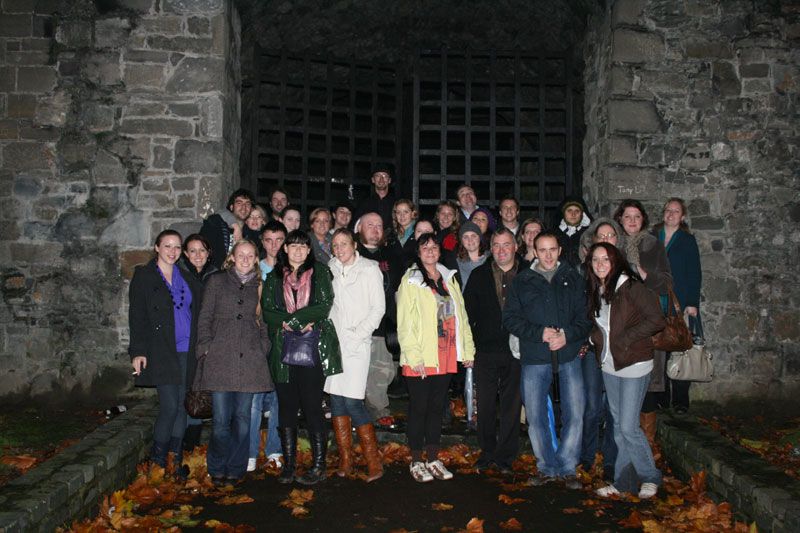
At $31 per person, this is not the cheapest way to spend 90 minutes in Dublin, but the value depends on what you want from a guided walk. You are paying for a live storyteller, a planned route through old parts of the city, and a subject that is not covered by every standard sightseeing tour.
The price makes more sense if you enjoy history presented through unusual characters and unsettling events. It is less convincing if you mainly want a list of haunted locations or a guaranteed supernatural encounter. There are no special effects, transport, food, or included entry attractions. The value is in the guide and the stories.
A strong guide can make $31 feel reasonable, especially if you are in Dublin for only a short stay. Finn’s approach, for example, is useful for a two-day visit because the tour gives you a different way to understand the center. The walk also helps you notice places you might otherwise pass without much thought.
Book it as a guided history experience with a spooky theme, not as proof that ghosts will appear. That expectation will make the price easier to judge.
Who will enjoy this Dublin walk most
This tour suits adults, older children, couples, families, and friends who like dark history without needing a full horror production. It is also a good choice for a repeat visitor who has already seen the obvious attractions and wants to look at Dublin from another angle.
You should especially consider it if you enjoy:
- Historical figures with complicated or grim stories
- Old churches, lanes, and cobbled streets
- Local legends tied to real places
- Guides who mix facts with humor
- A short evening activity that finishes where it began
You may want to skip it if you dislike walking in cold or rainy weather, have trouble hearing outdoor guides, or want a polished indoor performance. The stories can be gruesome, and the experience may run past its advertised time.
My verdict on Dublin’s Haunted History Walking Tour
I would book this if I wanted a thoughtful ghost walk that treats Dublin’s dark past as history first and folklore second. The strongest material centers on Darkey Kelly, the Green Lady of St. Audoen’s, the Dolocher, Dublin’s Hell, and the Hellfire Club. The cobbled route gives those tales a sense of place, while the guides bring humor and personality.
Choose a starting time that leaves room for the tour to run long. Wear comfortable shoes, dress for rain, and stay near the guide so you can hear every detail. If you are lucky enough to have Darragh, Finn, Lydia, Kate, or Dara, expect a guide with a strong personal style, though the quality of the evening will always depend on the person leading your group.
At 4.3 out of 5 from 345 ratings, the tour has a solid record without pretending to be perfect. For $31, it is a fair choice for curious visitors who want Dublin’s history with its darker corners left visible.
FAQ
Where does Dublin’s Haunted History Walking Tour start?
The tour starts at Bernardo Square, the small square next to Dublin City Hall.
Where does the tour finish?
The activity ends back at the meeting point beside City Hall.
How long is the tour?
The stated duration is 1.5 hours. Allow extra time, since one tour continued about 30 minutes beyond the expected length.
What language is the tour in?
The live guided tour is conducted in English.
What stories are covered?
The tour includes Darkey Kelly, the Green Lady of St. Audoen’s, Dublin’s Hell, the Dolocher, and the 18th-century Hellfire Club.
Is the tour suitable for all ages?
The walk is described as suitable for all ages, but some stories are gruesome and concern death, punishment, and violence. Use your judgment for young children.
How much does the tour cost?
The listed price is $31 per person.
Can I cancel the booking?
You can cancel up to 24 hours in advance for a full refund.
Can I reserve without paying immediately?
Yes. The reserve now and pay later option lets you hold a place without paying at the time of booking.
More history tours in Dublin
- Dublin Historical Centre Food Tour with 8 Food Tastings & Drinks
★ 5.0 · 1,718 reviews - Dublin to Cork, Blarney Castle & Cóbh Heritage Centre by train
★ 4.5 · 510 reviews - Dublin: Jeanie Johnston Tall Ship Irish Famine History Tour
★ 4.8 · 431 reviews - Deliciously Dublin: The Artisan Donut Walking & History Tour
★ 5.0 · 329 reviews
Just added around Dublin
- Dublin: Irish Famine Exhibition Entry Ticket★ 4.4 · 15 reviews
- Dublin: Howth Safari Hiking Tour★ 5.0 · 70 reviews
- Dublin: Trinity College, Castle, Guinness and Whiskey Tour★ 4.7 · 85 reviews
- Dublin: Howth Cliffs and Ireland’s Eye Boat Cruise★ 4.1 · 12 reviews
- Dublin: Hop-on Hop-off Tour with Live German Commentary★ 4.5 · 41 reviews
- Dublin: Howth Cliffs and Lighthouse Boat Tour★ 4.5 · 43 reviews
- Dublin: Highlights and Hidden Corners Walking Tour★ 4.8 · 79 reviews
- Dublin: Historical and Cultural Historical Walking Tour★ 4.8 · 6 reviews
Historical Tours, compared.

Dublin Historical Centre Food Tour with 8 Food Tastings & Drinks
Read our review →

Dublin to Cork, Blarney Castle & Cóbh Heritage Centre by train
Read our review →
Jeanie Johnston Tall Ship Irish Famine History Tour
Read our review →
Deliciously Dublin: The Artisan Donut Walking & History Tour
Read our review →


Historic Cork Delicious Donut Adventure by Underground Donut Tour
Read our review →Browse the lists this tour appears in