
Reviewed · HISTORICAL TOURS
Dublin LGBTQ Pride Historical and Cultural Walking Tour
Dublin’s queer story is written into the city center, but you can walk past its key places without seeing it. This two-hour tour connects Temple Bar, the GPO, Trinity College, and Dublin Castle with the people and struggles that shaped Ireland’s LGBTQ+ life.
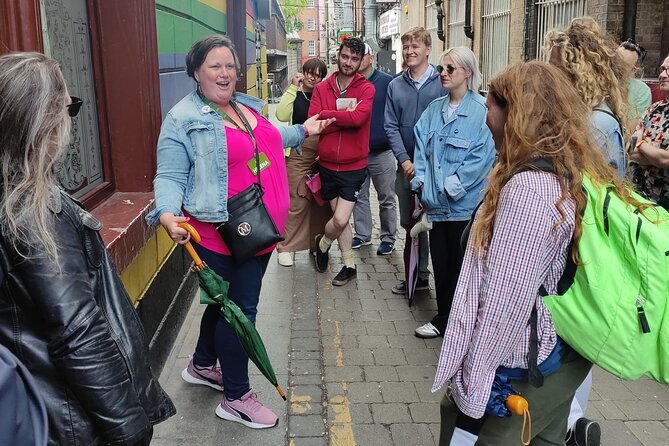
I like the route for two clear reasons: it shows you familiar Dublin sights from a fresh angle, and it treats queer history as part of Irish history, not as a side note. Guides including Helena and Deidre bring energy, personal interest, and useful context to stories that are easy to miss on a standard city walk.
The main thing to consider is pace. You cover many stops in two hours, usually pausing for about ten minutes at each one. That makes this a lively overview rather than a slow, detailed examination of every site, and the tour may not suit you if standing and walking for two hours is difficult.
Key points at a glance
- Temple Bar begins and ends the story: Start near Crown Alley and visit the area linked with Ireland’s first bona fide gay headquarters.
- The GPO adds political weight: Learn about gay figures connected with the 1916 Easter Rising and how they are remembered.
- The route includes Dublin’s major sights: See the Ha’penny Bridge area, Abbey Theatre, Trinity College, Liberty Hall, and Dublin Castle.
- The George gives the tour a living center: Dublin’s oldest operating gay bar remains an important part of the city’s LGBTQ+ community.
- Guides make or break a history walk: Helena and Deidre are noted for lively delivery, strong preparation, and attention to people often left out of the usual story.
- The $29.02 price is fair for a focused city walk: You get two hours of guiding across central Dublin, with no extra admission charges built into the route.
Why this Dublin walk is different
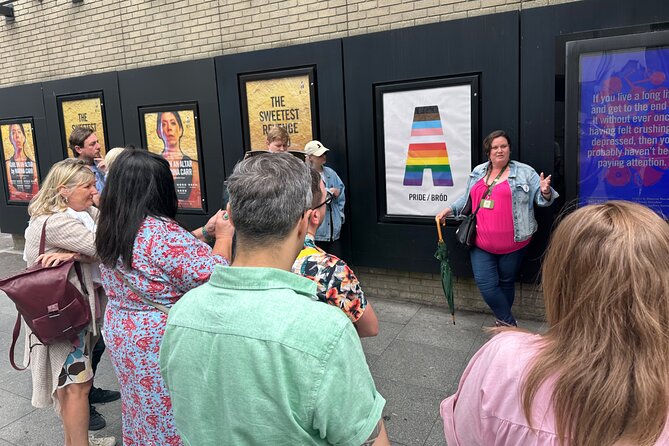
Many Dublin walking tours give you the broad strokes: Vikings, Georgian buildings, revolution, writers, pubs. This one asks a sharper question. Where are LGBTQ+ people in that story, and which names have been forgotten?
That approach changes the way you see the city. The GPO is no longer only the grand headquarters of the 1916 Easter Rising. The Abbey Theatre is not only Ireland’s national stage. Temple Bar is more than cobbled lanes and evening crowds. Each place becomes a setting for people whose lives, work, and activism helped change Ireland.
I like that the tour does not stay in one neighborhood. You move through central Dublin, crossing the city’s famous photographed bridge, following the River Liffey, and linking political, cultural, educational, and social sites. The route gives you a useful first look at queer Dublin while also helping you get your bearings.
The tour is offered in English and lasts about two hours. The advertised maximum is 100 people, though one account describes a smaller group experience. Group size can affect how easy it is to hear and ask questions, so keep that in mind when choosing your expectations.
More Walking Tours in Dublin
- Dublin Highlights and Hidden Gems Guided Walking Tour
★ 5.0 · 6,020 reviews - Dublin: Highlights and Hidden Gems Walking Tour
★ 4.9 · 2,140 reviews - 1916 Rebellion Walking Tour
★ 5.0 · 1,605 reviews
Crown Alley and Temple Bar: starting with community
Meet at 3 Crown Alley in Temple Bar. This is a convenient starting point in the center of Dublin, surrounded by well-known streets and easy to reach by public transport.
The first stop is brief, but the setting matters. Temple Bar is often reduced to pubs, music, and tourist traffic. Here, you begin looking at its connection to Dublin’s LGBTQ+ community and at the spaces that offered people somewhere to meet, socialize, and organize.
The walk then moves across one of Dublin’s best-known bridges. The supplied route does not name the bridge, but its place in the walk is clear: you cross the Liffey and leave the immediate Temple Bar area as the story broadens into Irish political and cultural history.
This opening works well because it puts the social side of queer life first. You are not simply being given dates and legal changes. You are being shown how people found one another and built community in a city that was not always welcoming.
The GPO and the gay figures of 1916
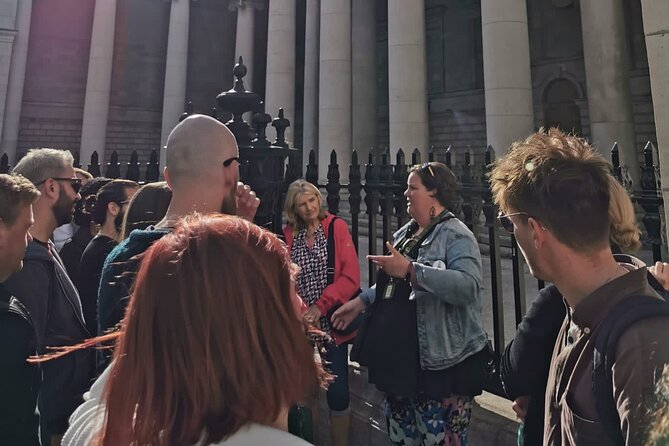
The General Post Office is one of Ireland’s most important public buildings. It was the center of the 1916 Easter Rising and remains a powerful place to discuss the making of modern Ireland.
The tour uses the GPO to bring attention to gay figures connected with the events of that week. That is a valuable correction to the familiar version of the Rising, which often focuses on a small group of famous names and leaves others at the edges.
You will spend about ten minutes here, with no admission charge included or needed for this stop. The format is best understood as an outdoor talk rather than a museum visit. You are there for the guide’s explanation, the setting, and the link between personal identity and national politics.
This part may be especially useful if you already know a little about Irish independence. You can place LGBTQ+ lives inside a wider story you may have heard before, rather than treating queer history as an isolated subject.
Abbey Theatre and modern Irish cultural life
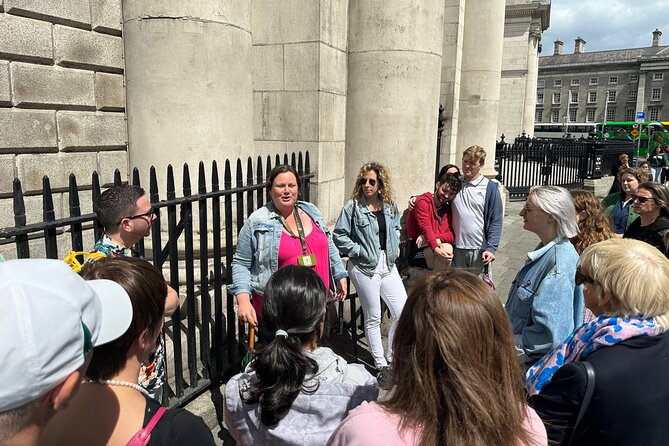
The Abbey Theatre is Ireland’s national stage, and the tour uses it to examine a contemporary gay Irish icon and their role in shaping modern Ireland.
The Abbey is a strong choice for this subject. Theatre can affect public ideas about identity, gender, and society, and the building has long been tied to debates about what Ireland is and who gets represented. The stop also gives the tour a welcome shift from political struggle to culture and public influence.
Again, the pause is about ten minutes. That is enough for a focused story, but not enough for a full theatre history or a detailed look inside the building. You should think of the Abbey as one chapter in a connected walk, not as a separate attraction.
Guides Helena and Deidre are praised for making these stories clear and energetic. That matters here. Cultural history can become vague if it is reduced to names and institutions. A strong guide gives you the human reason to care.
More walking routes in Dublin:
- 90 Minute Dublin Walking tour and Sightseeing tips
★ 5.0 · 916 reviews - 2-Hour Historical Walking Tour from Dublin
★ 5.0 · 875 reviews - Historical 2-Hour Guided Walking Tour of Dublin
★ 4.7 · 865 reviews - Dublin Traditional Irish 3 Course Meal Walking Tour with Local
★ 5.0 · 755 reviews
Liberty Hall and the first Pride parade
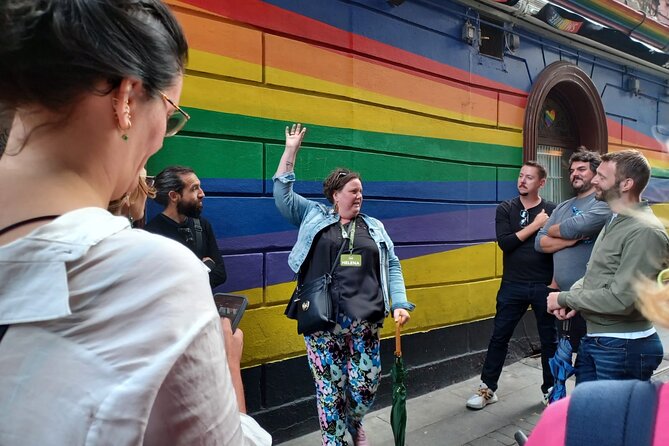
At Liberty Hall, the tone turns more difficult. You hear about the circumstances surrounding Ireland’s first gay Pride parade and about an inspirational trans activist.
This stop gives the tour its strongest sense of struggle. Pride is now widely recognized as a public celebration, but the first parade took place in a far more tense and uncertain setting. The tour connects that event to the people who helped push the community forward despite real hostility and danger.
The subject can be painful. That is not a flaw, but you should know that this is not a walk built only around cheerful pub stories and colorful anecdotes. It deals with discrimination, ridicule, fear, and the long fight for rights.
I appreciate that the route includes trans history instead of treating LGBTQ+ history as only a gay and lesbian story. The reference to an important trans activist helps show the range of people involved in building Ireland’s modern movement.
Trinity College and LGBTQ+ alumni
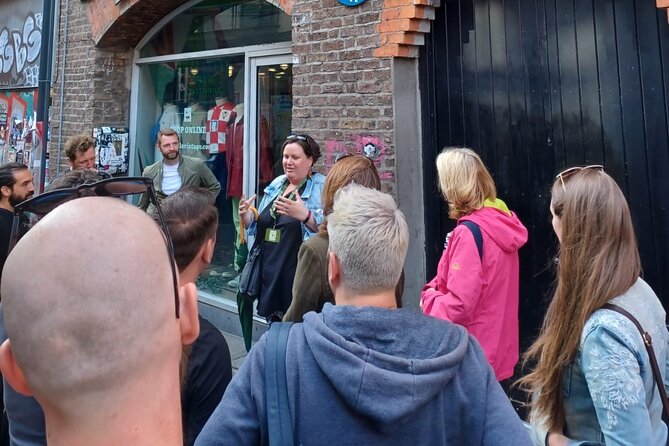
Trinity College Dublin brings you to one of Ireland’s best-known academic settings. You explore the college green area and hear about LGBTQI+ alumni who passed beneath the famous old arch.
This is a good reminder that queer history is not confined to bars, protests, or political offices. Universities have shaped Irish writing, public debate, law, and cultural life. Trinity also gives the walk a change of scenery after several city streets and civic buildings.
Admission to Trinity College is not included. The stop is an exterior visit and discussion, so you should not expect entry to every college building or to a paid exhibition. If you want to visit Trinity’s interior attractions separately, allow additional time and budget outside this tour.
The ten-minute format keeps the group moving, but it also means the guide must choose carefully. You will get selected examples of alumni and a wider view of the college area, not a complete academic history.
Meeting House Square and queer Dublin in the 1980s
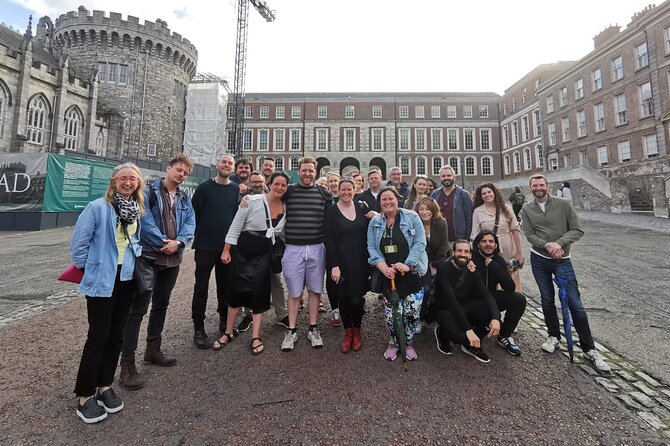
The route loops back through Temple Bar to Meeting House Square. Here, the focus moves to Dublin in the 1980s, a period marked by pressure and uncertainty but also by people who created hope and practical support.
This may be one of the most useful stops for understanding how a community grows. Political change does not happen only through famous speeches or court decisions. It also comes from people who create meeting places, offer support, publish ideas, and give others the confidence to keep going.
The tour highlights thinkers and change makers of the period. You are likely to get a blend of social history and personal stories, with the guide showing how Dublin’s queer community changed over time.
The route also crosses the River Liffey again, using both sides of the waterway. That helps the walk feel like a tour of the city rather than a single neighborhood talk.
Temple Bar’s first gay headquarters
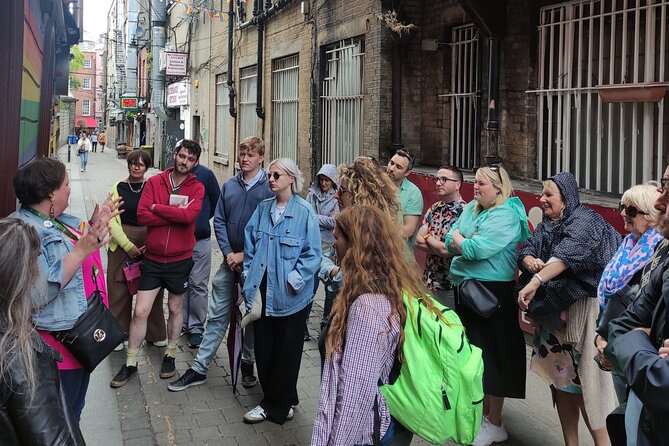
The second Temple Bar stop examines the site of Ireland’s first bona fide gay headquarters. The space included a café, disco, cinema, and other facilities.
This is a particularly strong detail because it shows community life in practical terms. A headquarters with places to eat, dance, watch films, and meet people is more than a symbolic address. It offers the ordinary social life that any community needs.
The stop also helps explain why physical spaces matter. Before online groups and instant messaging, finding a safe place to meet could change what was possible. You could build friendships, share information, organize events, and feel less alone.
The site is part of central Temple Bar, so you are seeing the area in its current public setting while learning what it once represented. That contrast is part of the value.
The George: a living part of Dublin’s queer story
The George is Dublin’s oldest operating gay bar and one of the most recognizable LGBTQ+ venues in the city. The tour finishes its social-history portion here, discussing the bar’s place in the community.
Unlike a purely historical site, The George remains connected to present-day Dublin nightlife. You are not simply looking at a plaque or an old address. You are learning about a cultural institution that still matters.
The tour does not state that admission, drinks, or time inside the bar are included. Treat it as a stop for discussion, not as a promised pub visit. If you want to return later for a drink or an evening out, you can use the location as a practical lead.
This stop should appeal to you if you want the tour to connect past and present. It also gives you a useful starting point for finding other LGBTQ+ bars in Dublin, since the guide can point out more places to explore.
Dublin Castle and a strong finish
The walk ends in the upper courtyard of Dublin Castle, at 9C5M8PVJ+6XV8PVJ+6XV Dublin 8, Dublin. The location details are unusual, so check the map carefully before the tour and after it ends.
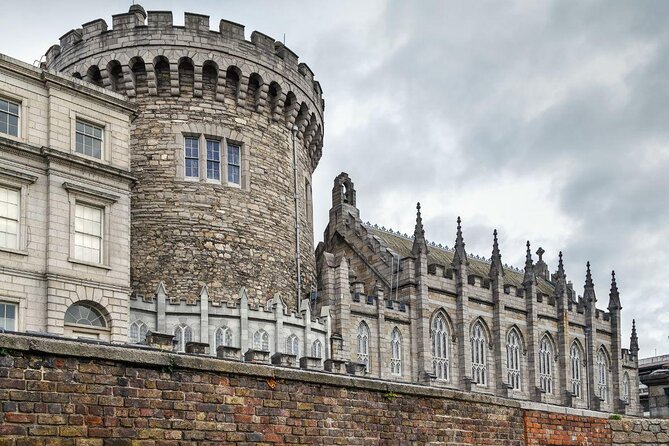
Dublin Castle brings together many of the tour’s themes. It is a place of government, authority, ceremony, and long political change. Ending here gives the walk a sense of connection between old power structures and the newer Ireland shaped by LGBTQ+ activism.
The tour does not include castle admission. The finish is in the courtyard, surrounded by the site’s long history and 18th-century architecture. You can continue sightseeing afterward, but the activity itself ends here.
I like this ending because it leaves you in a central, useful part of Dublin rather than at an out-of-the-way street. From here, you can continue sightseeing, find food, or return to Temple Bar.
Price, pace, and practical value
At $29.02 per person, this is a reasonable price for a two-hour guided walk in central Dublin. You are paying for a focused subject, a carefully linked route, and stories that a standard city tour may skip.
The value is strongest if you want interpretation rather than entry tickets. The route visits major public places, but most of the experience comes from the guide’s storytelling. No paid admissions are included, and Trinity College is specifically listed without admission.
The pace is brisk. There are around nine main stops or stopping points, with roughly ten minutes at each. You will cover a good stretch of the city, so wear comfortable shoes and be ready to stand outdoors.
The tour is suitable for someone with moderate physical fitness. Service animals are allowed, and the route is near public transport. Confirmation arrives at booking, and free cancellation is available up to 24 hours before the start time. Changes or cancellations inside that window are not accepted for a refund.
Who should book this walk?
I would choose this tour if you want LGBTQ+ history placed inside the wider story of Ireland. It suits first-time visitors who want to see central Dublin while learning about activists, artists, alumni, community organizers, and political figures.
It is also a good fit if you have already seen the main sights and want a more focused reason to revisit them. The GPO, Abbey Theatre, Trinity College, and Dublin Castle take on new meaning when connected by one subject.
You may want another option if you prefer long indoor visits, museum exhibits, or a slower walk with plenty of time at each stop. This tour gives you a broad two-hour picture, not a full research seminar or a nightlife excursion.
Should you book the Dublin LGBTQ Pride Historical and Cultural Walking Tour?
Book it if you want a lively, thoughtful introduction to queer Dublin and you value stories that standard tours often leave out. Helena and Deidre bring the kind of enthusiasm that helps a short history walk feel personal rather than academic.
The best reason to go is the combination of familiar Dublin sights and less familiar people. You will see the city center, but the real reward is learning how LGBTQ+ communities created space, fought for recognition, and helped shape modern Ireland.
FAQ
How long does the Dublin LGBTQ Pride Historical and Cultural Walking Tour last?
The tour lasts approximately two hours.
Where does the tour begin?
It begins at 3 Crown Alley, Temple Bar, Dublin, D02 CX67, Ireland.
Where does the tour end?
The tour ends in the upper courtyard of Dublin Castle.
Is admission to Trinity College included?
No. Admission to Trinity College is not included. The stop focuses on the college green area and LGBTQI+ alumni.
What language is the tour offered in?
The tour is offered in English.
Can I cancel for a full refund?
Yes. You can cancel at least 24 hours before the local start time for a full refund. Cancellations or changes made less than 24 hours before the tour are not accepted for a refund.
More history tours in Dublin
- Dublin Historical Centre Food Tour with 8 Food Tastings & Drinks
★ 5.0 · 1,718 reviews - Dublin to Cork, Blarney Castle & Cóbh Heritage Centre by train
★ 4.5 · 510 reviews - Dublin: Jeanie Johnston Tall Ship Irish Famine History Tour
★ 4.8 · 431 reviews - Dublin’s Haunted History Walking Tour
★ 4.3 · 345 reviews
Just added around Dublin
- Wicklow Mountains Private Day Tour including Glendalough★ 5.0 · 7 reviews
- Wicklow: Private Day Tour from Dublin★ 5.0 · 5 reviews
- Women Of Ireland: Trailblazers & Pioneers★ 5.0 · 4 reviews
- Premium Irish Whiskey Tasting Hosted by Local Dublin Expert★ 5.0 · 77 reviews
- Whiskey Tasting Tour of Dublin★ 5.0 · 117 reviews
- Wicklow Mountains & Glendalough Luxury Private Day Tour★ 5.0 · 23 reviews
- Wicklow tour of Glendalough★ 4.5 · 8 reviews
- Semi-Private (8people max) 2.5 Hr Dublin Walking Tour★ 5.0 · 69 reviews
Historical Tours, compared.

Dublin Historical Centre Food Tour with 8 Food Tastings & Drinks
Read our review →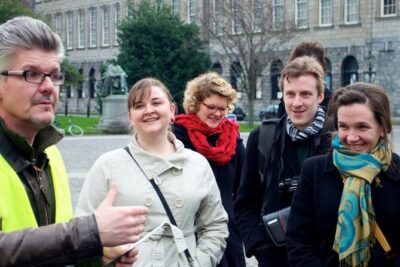
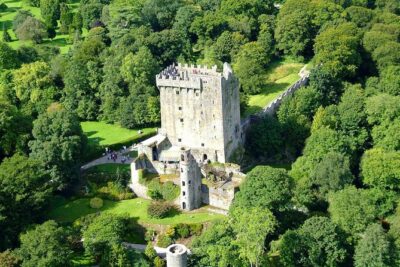
Dublin to Cork, Blarney Castle & Cóbh Heritage Centre by train
Read our review →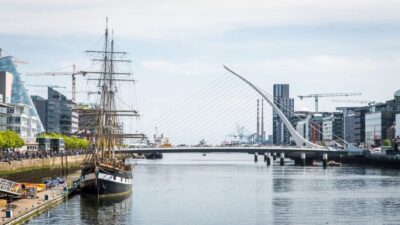
Jeanie Johnston Tall Ship Irish Famine History Tour
Read our review →

Deliciously Dublin: The Artisan Donut Walking & History Tour
Read our review →
Browse the lists this tour appears in