
Reviewed · WALKING TOURS
Small Group-Dublin Walking Tours
Dublin’s past is packed into a compact city center, and this walk connects the pieces unusually well. You move from the Viking origins of Dublin to the 1916 Easter Rising, with Damian McGrath’s storytelling, music, and occasional skits helping the city feel less like a list of monuments. I especially like the maximum of eight people and the route’s mix of famous sights and smaller details, including Bram Stoker, Leinster House, and the story behind the Liffey.
The main consideration is pace. Two hours covers ten stops, so this is an overview rather than a slow inspection of each site. You’ll mostly see buildings and landmarks from outside, and cobblestones make comfortable shoes a must. At $60.47 per person, the value depends on how much you prize a small, personal introduction over a longer tour with more formal admissions.
Key points to know before you book
- Damian McGrath leads a small, personal walk: The group is capped at eight, which leaves room for questions and some flexibility.
- The route links old and modern Dublin: You’ll cover Viking beginnings, the 1916 rebellion, Georgian architecture, shopping streets, parks, and pub culture.
- Music is part of the presentation: Musical interludes and short skits add variety to the history.
- It is best early in your Dublin stay: The route gives you a useful map of the center and helps you decide where to return.
- Most stops are exterior views: Admission is free, but this is a walking introduction, not a ticketed tour of Dublin Castle, Trinity College, or Christ Church Cathedral.
- Wear shoes suited to old streets: You’ll cross cobblestones and walk for about two hours.
Why this two-hour route works
This is a city orientation with a clear beginning, middle, and end. You start near Dublin Castle, cross the Liffey, reach Trinity College and the Georgian south side, then finish near Grafton Street at Powerscourt Townhouse Centre.
That route matters because Dublin can feel scattered at first. The river divides the north and south sides, while the major sights sit among shopping streets, offices, pubs, and parks. By the end, you have a basic mental map of central Dublin rather than a collection of unrelated stops.
The tour also has a useful rhythm. The listed stops range from about ten to fifteen minutes, with walking between them. You are not parked in one place listening to a long lecture. Instead, Damian can use a building, bridge, statue, or street corner as a prompt for a short story.
That approach suits you if you like history in manageable portions. If you want to enter every major building or spend half an hour at each monument, choose a more specialized tour.
More Walking Tours in Dublin
- Dublin Highlights and Hidden Gems Guided Walking Tour
★ 5.0 · 6,020 reviews - Dublin: Highlights and Hidden Gems Walking Tour
★ 4.9 · 2,140 reviews - 1916 Rebellion Walking Tour
★ 5.0 · 1,605 reviews
Starting behind Dublin Castle at Chester Beatty
The meeting point is the Chester Beatty Library, in the Dubh Linn Garden behind Dublin Castle. This is an easy place to find, and beginning here gives the tour an immediate sense of place.
The garden helps explain Dublin’s name and the physical setting of the early city. You’ll hear about the origins of Dublin before moving into the castle grounds, where the city’s political story begins to take shape.
There is no admission charge for this part of the walk. That does not mean you receive a full visit to the Chester Beatty Library or Dublin Castle. The emphasis is on the surrounding setting and the stories Damian uses to explain Dublin’s beginnings.
I like this start because it avoids a vague meet-up on a crowded street. You know to go behind the castle to a named institution and garden. Arrive ready to walk rather than expecting a waiting room or indoor briefing.
Dublin Castle and the city’s early foundations
The Dublin Castle stop continues the opening story. You’ll walk through the attractive grounds and consider how the city developed around water, trade, and settlement.
The castle is a useful first landmark because it represents several layers of Dublin’s past. Here, the tour is less about entering rooms and more about understanding the ground beneath you and the political importance of the area.
The short stop also shows the tradeoff built into the tour. You get context quickly, but you will not have time for a full castle visit. If the castle interiors are a priority, plan a separate visit for another part of your day.
Christ Church Cathedral and Viking Dublin
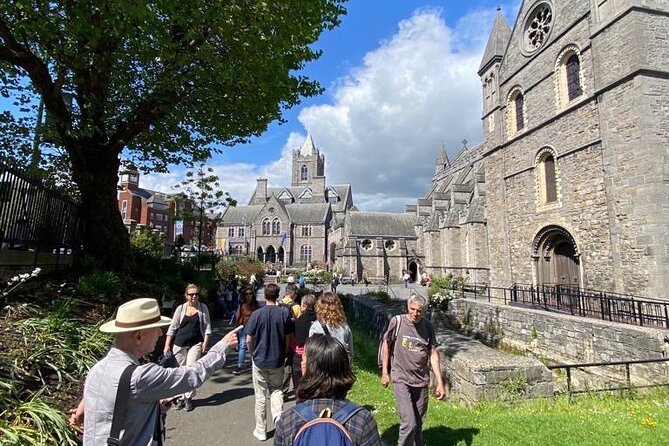
At Christ Church Cathedral, the focus shifts to the Catholic Church in Ireland and the early Viking presence that helped shape Dublin. You’ll also hear about the venue where Handel’s Messiah was first performed.
That combination is typical of the walk. A single sight opens several doors: religious change, music, urban growth, and the city’s early connections with Viking settlers from the north.
You pass along the cathedral rather than receiving an interior tour. This works well for a first look, especially if you want to keep moving, but it leaves you responsible for arranging a separate cathedral visit if you want to see the inside.
More walking routes in Dublin:
- 90 Minute Dublin Walking tour and Sightseeing tips
★ 5.0 · 916 reviews - 2-Hour Historical Walking Tour from Dublin
★ 5.0 · 875 reviews - Historical 2-Hour Guided Walking Tour of Dublin
★ 4.7 · 865 reviews - Dublin Traditional Irish 3 Course Meal Walking Tour with Local
★ 5.0 · 755 reviews
Temple Bar, the Ha’penny Bridge, and the Liffey
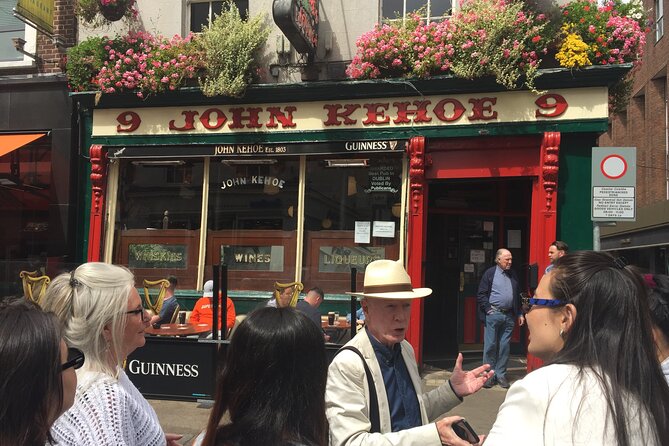
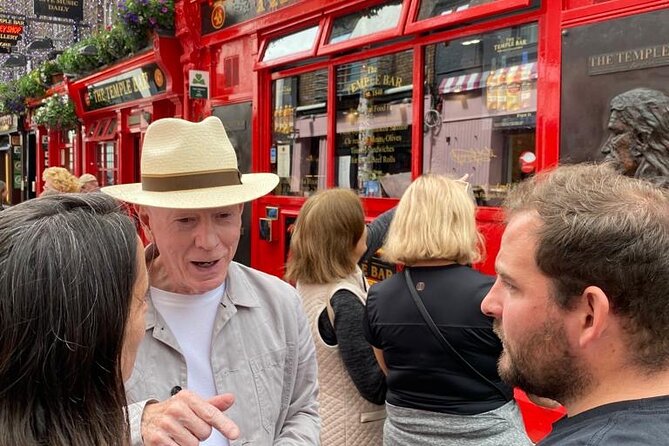
Temple Bar brings you into present-day Dublin’s entertainment district. The area is known for pubs, live music, and late-night social life, but Damian also uses it to explain trade and travel through the city center.
This is where the walk shifts from formal institutions to streets you may want to revisit after dark. You’ll see why Temple Bar draws so much attention, while also getting a reminder that its importance is tied to the city’s wider development, not just its nightlife.
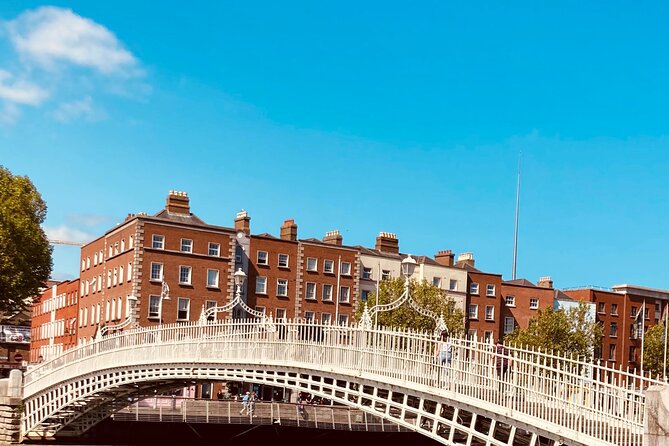
You then cross the Ha’penny Bridge, one of Dublin’s most recognizable crossings. The bridge gives you a direct view of the River Liffey and a natural pause between the old center and the north side.
This portion can be busy, especially around Temple Bar. Keep your group in sight and expect to walk at a steady pace. The bridge is scenic, but it is also a working crossing, so it is not a long photo stop.
O’Connell Bridge and the story of 1916
At O’Connell Bridge, the subject turns toward Daniel O’Connell, the River Liffey, and the approach to the area connected with the 1916 Easter Rising.
The bridge is a smart stop because it ties together geography and politics. You are not just hearing about the rebellion in an abstract way. You are standing near the city center and seeing how the river, roads, and public buildings shape Dublin’s civic life.
The famous Liffey Swim also comes into the conversation, giving the river a more everyday and distinctly Dublin association. This keeps the history from becoming too solemn or remote.
As with most stops, expect an outside explanation rather than a museum-style presentation. The reward is a quick, connected story that helps you notice the river as part of Dublin’s daily life.
Trinity College and Parliament House
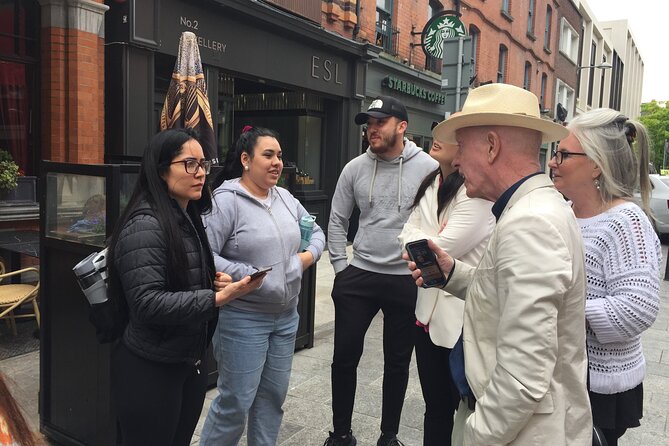
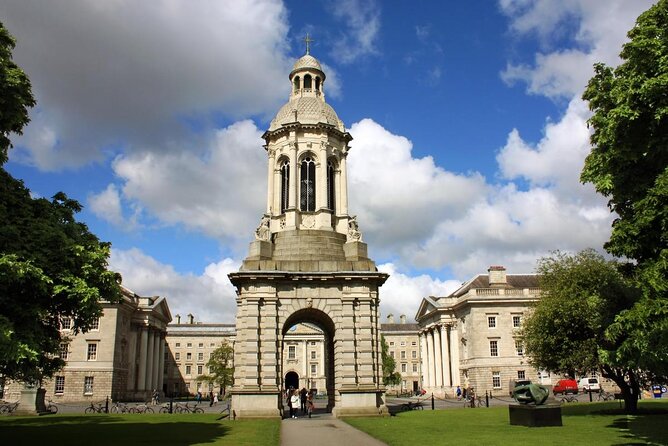
The Trinity College stop gives you a view of one of Ireland’s best-known universities. You can enter the courtyard for a few minutes and see the original architecture, while Damian explains the university’s connection with well-known historical figures.
The stop is brief, so think of it as an introduction. You will not have time for an extended campus visit or a full look at the famous library collections. Still, the courtyard gives you a strong sense of the institution and its place in the city.
Nearby, you also catch sight of Parliament House, known as the House of Lords. The building adds another layer to the story of Irish government and the relationship between Dublin’s past and present.
This is one of the places where the tour’s short format has both strengths and limits. You get the key orientation, then you can return later if Trinity or the surrounding buildings deserve more of your time.
St Anne’s Church, Bram Stoker, and Grafton Street
At St Anne’s Church on Dawson Street, the subject becomes Bram Stoker, the Irish writer who married there. This is a pleasing change from national institutions and political events. It brings literary Dublin into the route through a specific personal connection.
From there, the walk moves toward Grafton Street and Bewley’s Café. Grafton Street is the city’s main high-end shopping district, so you’ll see a more polished, commercial side of central Dublin.
The route does not treat shopping as a distraction from history. Instead, it shows how Dublin’s older streets function today. You pass through places used for cafés, shops, and daily errands while continuing to hear about the people and buildings that shaped them.
Damian’s style is part of the appeal here. Musical interludes are tailored to the group, and the presentation can include playful moments. That helps when the walk covers a lot of names and dates in a short time.
Leinster House and Dublin’s Georgian side
Kildare Street brings you to Leinster House, Ireland’s parliament. You’ll hear about its relationship to the White House in Washington, DC, and pass the National Museum of Archaeology.
You’ll also encounter the former home associated with Bram Stoker. This is a good example of the route’s range: literature, government, architecture, and national collections appear within a few blocks.
The Georgian-era streets around here provide a change in tone from medieval Dublin and the riverfront. You get a sense of the city’s later architectural order, with broad streets and formal buildings replacing the more tangled feel of the oldest center.
Again, the outside perspective is the key. This is not a parliament tour or museum visit. It is a street-level explanation of why these buildings matter.
St. Stephen’s Green and Powerscourt Townhouse
The route continues along Grafton Street toward St. Stephen’s Green. You’ll pass the Royal College of Surgeons, see more Georgian architecture, and reach the compact city park.
St. Stephen’s Green gives you a welcome breathing space after several urban streets. The stop is short, but the park helps show how central Dublin combines shopping, public institutions, historic buildings, and green space within a walkable area.
The final stop is Powerscourt Townhouse Centre on South William Street. The building is an architectural highlight with boutique shops and a café or restaurant in its atrium.
Ending here is practical. You finish near Grafton Street and several central Dublin streets, with options for food, shopping, or continuing your own sightseeing. The endpoint is between South William Street and Clarendon Street, so check the exact location before setting off.
What the small group changes
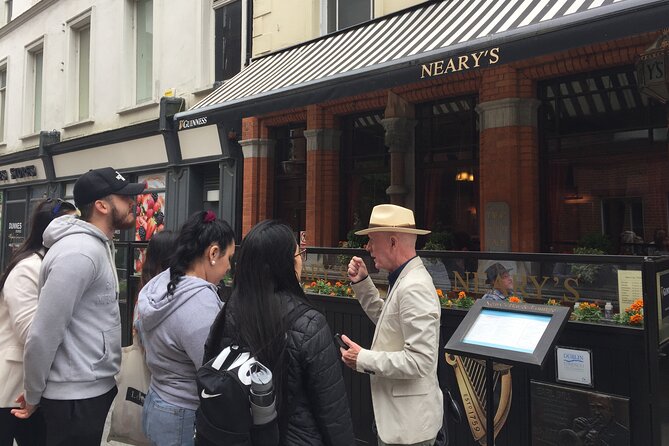
A maximum of eight people is one of the strongest features. In a group this size, you can ask about a building you just passed, request a little more detail on a subject, or tell Damian what interests you.
The experience can also be adjusted to the people present. The guide has accommodated different schedules and made the walk feel personal for families, couples, and people who wanted a particular pace. One person with a hip problem found the pace considerate, though you should still be prepared for continuous walking over uneven streets.
Music and skits add another useful touch. History told only through dates can blur together. A song or bit of performance gives the route a change of pace and makes the tour feel more like a hosted walk than a lecture.
That said, a small group does not remove the physical demands. You still walk for about two hours, cross cobblestones, and stop outdoors. Comfortable shoes are more important here than dressing for a formal attraction.
Price, timing, and who gets the best value
At $60.47 per person, this is not the cheapest way to see central Dublin. You are not paying for admission to the main attractions, since the stops are free and largely external.
The price makes more sense if you value a capped group, a named guide, and a tightly connected route. Damian’s role is not just to point at buildings. He links Viking Dublin, religion, music, literature, government, shopping, and the 1916 period into one story.
I see the best value on your first day or two in Dublin. The route helps you get your bearings fast and identifies places to revisit, such as Trinity College, Christ Church Cathedral, Temple Bar, or the museum.
It also suits a short stay or an unexpected layover. The two-hour length leaves most of the day open, and the central endpoint makes it easy to continue sightseeing.
The tour is less suitable if you want a long historical lecture, extensive indoor access, or a slow photography walk. You should also consider the price carefully if you already know central Dublin well.
You receive confirmation when booking, and free cancellation is available up to 24 hours before the start time. Service animals are allowed, the meeting area is near public transportation, and most people can take part, but the cobblestones and walking pace still deserve attention.
Should you book this Dublin walk?
Book it if you want a friendly, fast-moving introduction led by Damian McGrath, especially at the start of your stay. The strongest reasons are the small group, the connected route, the musical touches, and the useful mix of major sights with details such as Bram Stoker’s wedding, Leinster House, the Liffey Swim, and the origins of Dublin’s name.
Skip it if your main goal is to enter Dublin Castle, Christ Church Cathedral, or Trinity College for extended visits. You’ll see and discuss those places, but this experience is built around the streets between them.
For most first-time visitors who enjoy stories, questions, and a little performance, the walk offers a practical introduction to Dublin in two hours. Wear good shoes, arrive at Chester Beatty Library, and save time afterward for the sight that catches your interest most.
FAQ
How long does the Dublin walking tour last?
The tour lasts approximately two hours.
Where does the tour start?
It starts at the Chester Beatty Library in the Dubh Linn Garden behind Dublin Castle, at Castle Street, Dublin 2.
Where does the tour finish?
It finishes at Powerscourt Townhouse Centre, located between South William Street and Clarendon Street in Dublin 2.
How large is the tour group?
The group has a maximum of eight participants.
Is the tour offered in English?
Yes. The tour is offered in English.
Are attraction admission tickets included?
The listed stops have free admission, and the experience is primarily a walking tour of grounds, streets, courtyards, and exterior views. It does not list paid entry to the major attractions.
What should I wear for the walk?
Wear comfortable shoes because the route includes cobblestone streets and about two hours of walking.
Just added around Dublin
- Wicklow Mountains Private Day Tour including Glendalough★ 5.0 · 7 reviews
- Wicklow: Private Day Tour from Dublin★ 5.0 · 5 reviews
- Women Of Ireland: Trailblazers & Pioneers★ 5.0 · 4 reviews
- Premium Irish Whiskey Tasting Hosted by Local Dublin Expert★ 5.0 · 77 reviews
- Whiskey Tasting Tour of Dublin★ 5.0 · 117 reviews
- Wicklow Mountains & Glendalough Luxury Private Day Tour★ 5.0 · 23 reviews
- Wicklow tour of Glendalough★ 4.5 · 8 reviews
- Waterford Crystal and Kilkenny Full-Day Rail Tour from Dublin★ 5.0 · 3 reviews
Walking Tours, compared.
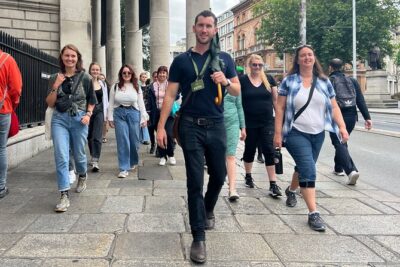
Dublin Highlights and Hidden Gems Guided Walking Tour
Read our review →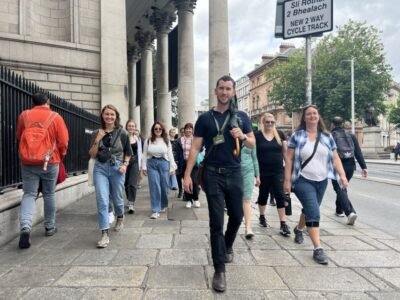

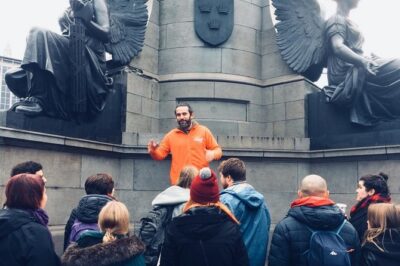
90 Minute Dublin Walking tour and Sightseeing tips
Read our review →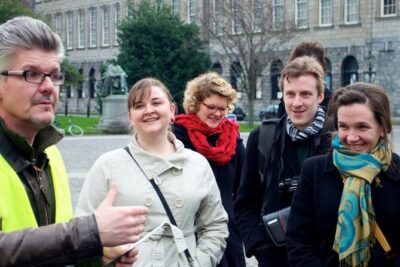

Dublin Traditional Irish 3 Course Meal Walking Tour with Local
Read our review →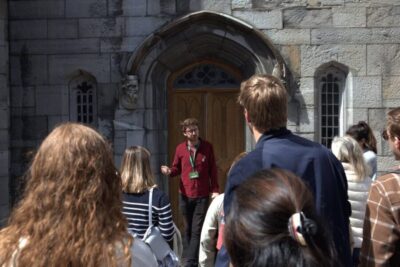
Browse the lists this tour appears in