
Reviewed · WALKING TOURS
Private Guided Walking Tour in Dublin
Dublin’s oldest stories come alive on foot, especially when you trace the medieval walls, Viking settlement, churchyards, and narrow lanes linking City Hall with Dublin Castle. I like the private format, which gives you room to ask Ben about Irish history, local pubs, dinner spots, or anything else that catches your interest. I also like the unusual video route map, complete with photos, clips, captions, and music.
The main consideration is distance and weather. You may walk for up to three and a half hours on cobbles and hills, and the visit inside St. Audoen’s Church depends on opening times. Snacks, drinks, and other refreshments are not included, so wear good shoes and plan a stop if you need one.
Key points at a glance
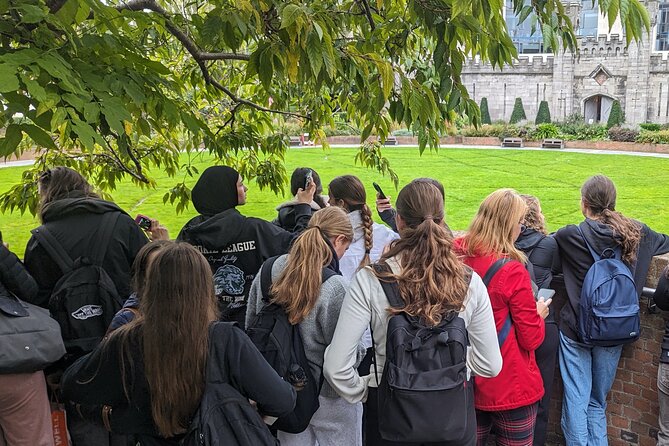
- A private walk for up to 15 people: You get direct time with your guide rather than joining a large public group.
- Dublin’s medieval core: Follow old walls, Fishamble Street, Viking settlement sites, ancient churches, and the Liberties.
- Ben’s flexible guiding style: Expect room for questions, local recommendations, and adjustments to suit your interests.
- St. Audoen’s Church access: The church and visitor center are included when open, generally from April through October.
- A useful digital souvenir: Your route map includes captioned photos, video clips, and music.
- Good value for a group: The $200.62 price covers the whole group, not each person individually.
Why this private Dublin walk works well
This is not a quick parade past Dublin’s famous facades. The route connects places that can seem separate when you explore alone. City Hall leads toward Temple Bar, Temple Bar gives way to the old walled city, and the medieval lanes then guide you into the Liberties and toward St. Patrick’s Cathedral.
That connection is the tour’s real strength. You are not just collecting photographs of Christ Church Cathedral or Dublin Castle. You are learning how the city grew around the Liffey, why certain streets carry their names, and how Viking, Norman, religious, political, and commercial stories overlap.
Ben is the named guide, and the feedback about his style is remarkably consistent. He is praised for clear explanations, humor, patience, and his habit of answering questions instead of rushing through a prepared speech. He also offers practical suggestions for dinner and later sightseeing. That matters on a private tour because you can use the time to shape the experience around your own interests.
The private setup suits couples, families, and small groups who want to stop often or ask detailed questions. A group of 15 can also book together, though a large party will naturally feel less intimate than two or four people. The tour is described as suitable for most participants, and service animals are allowed.
More Walking Tours in Dublin
- Dublin Highlights and Hidden Gems Guided Walking Tour
★ 5.0 · 6,020 reviews - Dublin: Highlights and Hidden Gems Walking Tour
★ 4.9 · 2,140 reviews - 1916 Rebellion Walking Tour
★ 5.0 · 1,605 reviews
City Hall and the first look at old Dublin
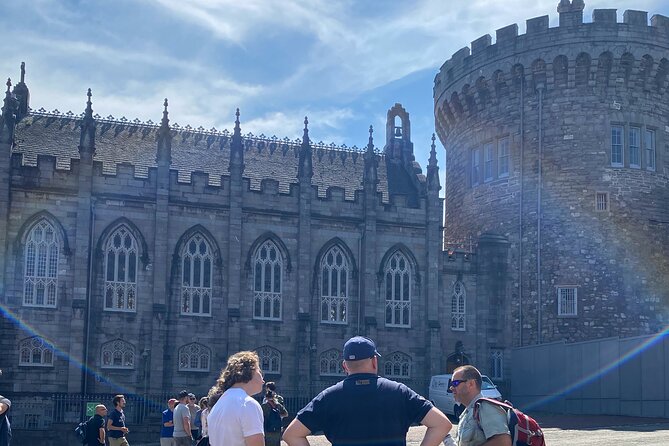
The walk begins at the Dublin Tourist Information Centre in Barnardo Square, beside Palace Street. The first major building is City Hall, an 18th-century structure originally built as the Royal Exchange. It later served as the headquarters of Dublin Corporation before the city authority moved to Wood Quay.
City Hall is a useful opening stop because it introduces Dublin as a working city, not only a collection of monuments. Its current role is broad, with events such as weddings and film shoots taking place inside. You will learn how a building created for commerce became part of the civic machinery of the city.
From here, you head along Parliament Street. This stretch brings several layers of Dublin together in a short walk. You pass the city’s oldest shop, a former customs house from the 17th century, and the edge of Temple Bar.
Temple Bar is famous, crowded, and easy to oversimplify. A guide adds value here by helping you see more than its pubs and colorful streets. You can ask about the district’s place in Dublin life while getting your bearings before the walk moves into quieter historic lanes.
Fishamble Street and the Viking story
The route turns onto Essex Gate, a cobbled street named for an entrance into the medieval walled city. The old name is a clue to how tightly Dublin was once contained. Today, the street is part of the modern city, but its shape and name still point back to the defensive walls and gates that controlled movement.
You pass a theater first opened in the 17th century and a Viking longboat displayed as a reminder of the seaborne visitors who arrived in Ireland. The walk continues to Wood Quay, the site of an ancient Viking settlement.
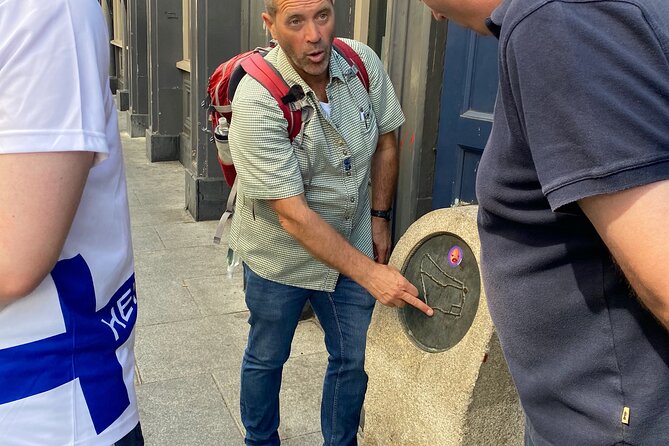
This is one of the places where a guide can make a major difference. A sign or display may tell you that Vikings lived here, but Ben can connect the settlement to the city’s later growth and explain why the riverside mattered. The route then turns onto Fishamble Street, one of Dublin’s oldest streets.
Fishamble Street takes its name from the fish market that once operated here. Street names around this part of town act like small historical labels, pointing to trades, people, and activities that shaped medieval Dublin. You may also hear about George Frideric Handel, whose connection to Fishamble Street gives the area a later musical chapter.
This part of the walk rewards curiosity. Look down as well as up. Cobbles, angles, old names, and surviving fragments often tell more than a polished modern facade.
Christ Church Cathedral from the cobbled lanes
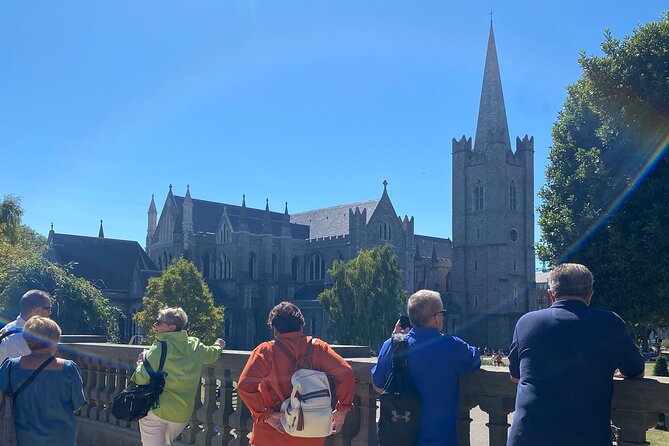
Christ Church Cathedral is one of the route’s most impressive sights. Founded by the Normans in the 12th century, it rises above the surrounding streets with a sense of age that is difficult to miss.
The walk takes you along a cobbled path near the cathedral rather than promising a full interior visit. That distinction matters. You get time for views, photographs, and historical explanation, but entrance to Christ Church is not listed as part of this experience.
The cathedral works well here because you have already heard about the medieval city walls, Viking Dublin, and Norman influence. By the time you reach it, the building feels like part of a larger story rather than an isolated church.
You will want shoes with firm soles. The cobbles add character, but they can be tiring, particularly in wet weather or after several hours on foot.
More walking routes in Dublin:
- 90 Minute Dublin Walking tour and Sightseeing tips
★ 5.0 · 916 reviews - 2-Hour Historical Walking Tour from Dublin
★ 5.0 · 875 reviews - Historical 2-Hour Guided Walking Tour of Dublin
★ 4.7 · 865 reviews - Dublin Traditional Irish 3 Course Meal Walking Tour with Local
★ 5.0 · 755 reviews
St. Audoen’s Church and the surviving city wall
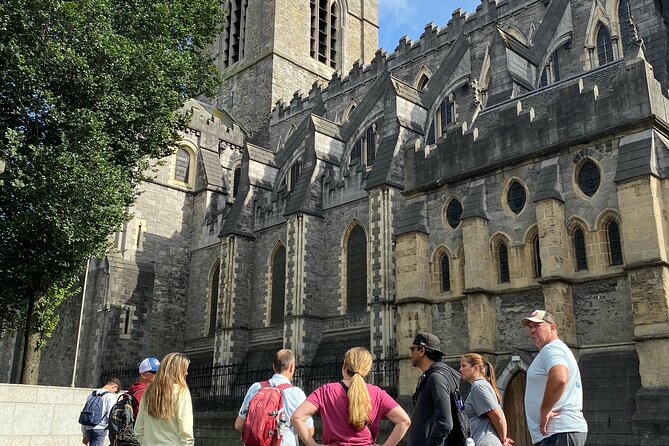
Crossing Winetavern Street, the route moves through a residential area where modern homes occupy ground that has remained residential from the medieval period to today. At Cook Street, you reach one of the longest surviving stretches of Dublin’s medieval city wall.
The walk passes the Gates of Hell before continuing toward St. Audoen’s Church. Services have continued here since the 12th century, making it one of the most meaningful stops on the route. This is not simply an old building to photograph. It remains tied to Dublin’s religious life and to the people who prayed, worked, and were buried in the medieval city.
The visit inside St. Audoen’s and its visitor center is included when open. The stated visiting period is April through October, and opening times can change. If access is unavailable, you should expect an exterior explanation rather than a guaranteed interior visit.
Allow about 20 minutes here. That is enough for a focused look, though anyone deeply interested in medieval religion or church architecture may wish for more time. Since the tour’s total duration can vary, ask Ben at the start how much flexibility you have at this stop.
The Brazen Head and a possible pub pause
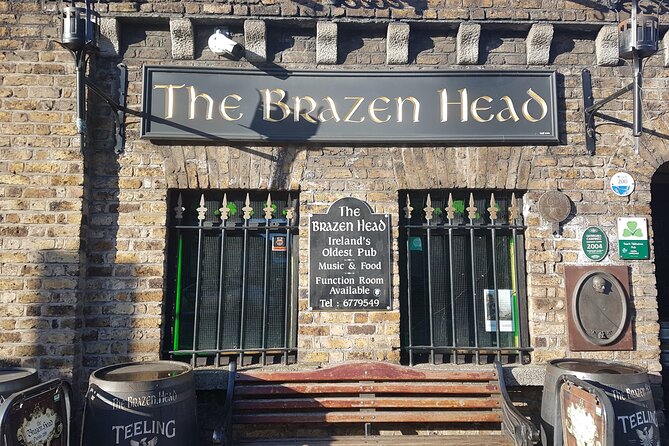
The Brazen Head is presented as Dublin’s oldest pub, with a founding date of 1198. Its name is linked to braziers, barrels of burning fuel used to warm the hands of people passing through on cold nights.
You can stop for a drink if timing allows, but this is optional and refreshments are not included in the tour price. That makes the stop flexible. You can hear the story, admire the old tavern setting, and continue, or pause for a drink if your group wants a break.
I like this kind of stop because it links the medieval route with living Dublin. The Brazen Head is not just an old date on a plaque. It remains a pub, and the guide can help you understand how drinking places fit into the city’s social life.
Still, keep an eye on the clock. A pub stop can make the walk longer, and the full route already covers a lot of ground.
The Liberties and St. Patrick’s Cathedral
After briefly doubling back and walking uphill, the route follows more of the medieval city perimeter. Lamb Alley leads into the Liberties, one of Dublin’s oldest neighborhoods.
This area has a strong local identity, and its streets carry the names of figures such as Jonathan Swift, John Dillon, and Thomas Davis. You pass St. Nicholas of Myra and the former Iveagh Market before reaching an arched alleyway near St. Patrick’s Cathedral.
The Liberties are valuable because they show a different side of central Dublin. You are away from the postcard focus of Temple Bar and among streets shaped by work, worship, markets, and local communities. The former Iveagh Market is a reminder of changing commerce, while the street names keep political and literary memory present.
St. Patrick’s Cathedral is the rival to Christ Church in both scale and importance. The stop focuses on the exterior, cathedral grounds, and the long sequence of events that shaped the site. You hear about Viking Dublin, Norman rule, the Reformation, Oliver Cromwell, Guinness, and the cathedral seen today.
The scheduled pause here is about 10 minutes. That is enough to admire the building and gardens, but not enough for a detailed interior visit. An outdoor cafe and garden seating may offer a chance to rest if the weather and timing cooperate. Do not count on this as a full meal break.
Dubh Linn Gardens and the meaning of Dublin
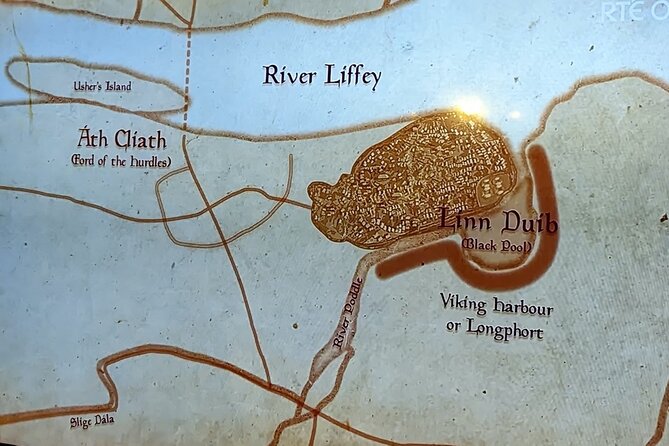
From St. Patrick’s, the route loops back toward another intact section of the Norman walls. The southern perimeter provides another look at how compact the medieval city once was.
Then comes Dubh Linn Gardens, a calm green space near Dublin Castle. The name Dublin comes from Dubh Linn, meaning dark pool, and this circular garden marks the site associated with that name.
This is one of the more pleasant pauses on the walk. After cobbles, walls, traffic, and cathedral stone, the garden gives you a moment to slow down. You also see the Garda Memorial, the David and Goliath statue, and a tribute to the Special Olympics.
The stop includes an introduction to the Chester Beatty Museum and Library. The experience does not list museum admission, so expect to hear about the collection and location rather than receive an included museum visit.
This section is a good example of the tour’s broad approach. You move from Viking settlement and medieval walls to modern public memorials, cultural institutions, and civic spaces within a few minutes.
Dublin Castle and the end of the walk
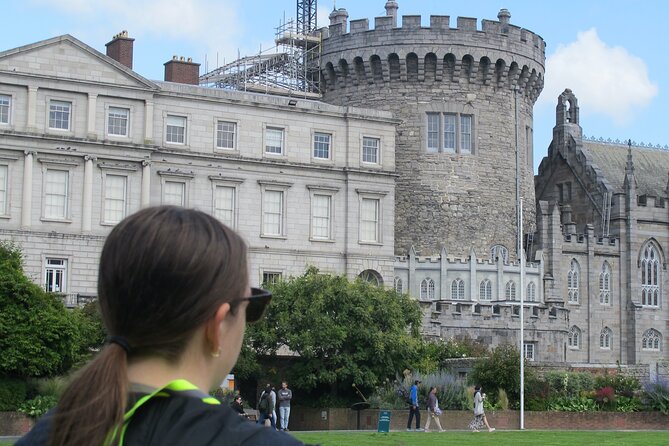
The final major attraction is Dublin Castle, once the center of government administration during British rule in Ireland. The complex lets you compare 18th-century architecture with surviving 12th-century Norman remains.
The Record Tower is especially important. It remains intact, and the guide shares the story of the 16th-century escape of the last Gaelic chiefs. These stories give the castle more weight than a quick photograph from the courtyard.
The tour passes through the courtyard and exits by City Hall, bringing you back to the starting area. Because the activity ends at the meeting point, you finish in a useful central location rather than being left across town.
The stated duration is approximately two hours and 20 minutes to three hours and 30 minutes. That wide range is worth noting. The shorter version may suit a tight schedule, while the longer version allows more questions, photo stops, and possibly a pub pause. The route includes walking time, so you do not need to add a separate allowance for getting between attractions.
Price, pace, and practical value
The price is $200.62 per group of up to 15 people. For two people, that works out to about $100 each. For four people, it is about $50 each. A full group of 15 would pay about $13.37 per person, before any optional drinks or food.
That pricing makes the tour most attractive for families or friends booking together. A couple pays a premium for privacy, but the benefit is direct access to Ben and the freedom to ask questions without waiting for a large group to catch up.
The included entrance to the medieval church and visitor center adds value, though access depends on opening times. The digital video route map is also more personal than a standard printed handout. You receive captioned photos, video clips, and music tied to the route, giving you a souvenir that can also help you remember the streets later.
Plan for good walking shoes, rain protection, and enough water for the route. Drinks and snacks are not included. The experience requires good weather, and poor conditions can lead to a new date or a full refund. Free cancellation is available up to 24 hours before the start time. Cancellations or changes made later are not accepted for a refund.
Who should book this Dublin walk
I would choose this tour if you want Dublin’s history explained in person rather than absorbed from plaques. It is particularly suitable for a first visit, a family group with mixed interests, or anyone who wants local suggestions for dinner and later sightseeing.
It also works well for a short stay because the route covers several major central sights without requiring public transport between them. A cruise stop may suit the tour if your timing allows, but you should confirm that your port schedule leaves enough room for the stated duration and walking distance.
I would think twice if you dislike long walks, cobbles, hills, or changing weather. It is also not the right pick if your top priority is extended interior time at Christ Church Cathedral, St. Patrick’s Cathedral, or Dublin Castle. The focus is on the connected story of the city, with exterior views and brief stops rather than lengthy admissions.
The strongest qualities are Ben’s clear and engaging commentary, his willingness to answer questions, and the route’s mix of famous landmarks and less obvious medieval remains. The main limitation is that the tour covers a lot in one outing. You see many places, but some deserve a separate visit if you want to go inside.
My call: book it if you want a private, history-led introduction to central Dublin and value conversation over a rigid script. For the best value, bring a group of four or more, wear comfortable shoes, and request the slower end of the time range if you want room for photographs and questions.
FAQ
How much does the private Dublin walking tour cost?
The price is $200.62 per group, with up to 15 people allowed in the group.
How long does the tour last?
The approximate duration is between two hours and 20 minutes and three hours and 30 minutes. Walking time between attractions is included.
Where does the tour begin?
It begins at the Dublin Tourist Information Centre in Barnardo Square, 3 Palace Street, Dublin 2.
Where does the tour end?
The activity ends back at the meeting point near the Dublin Tourist Information Centre.
Is the tour private?
Yes. Only your own group participates.
Is entrance to St. Audoen’s Church included?
Entrance to the medieval church and visitor center is included, subject to opening times. The visit is available between April and October when the site is open.
Are food and drinks included?
No. Snacks, refreshments, and drinks are not included.
What should I wear?
Wear comfortable walking shoes. The route includes cobbled streets, uphill sections, and several hours of walking.
Can I cancel for a full refund?
Yes, if you cancel at least 24 hours before the experience start time. Poor weather or failure to meet the minimum number of participants can also result in a new date or a full refund.
Just added around Dublin
- Wicklow Mountains Private Day Tour including Glendalough★ 5.0 · 7 reviews
- Wicklow: Private Day Tour from Dublin★ 5.0 · 5 reviews
- Women Of Ireland: Trailblazers & Pioneers★ 5.0 · 4 reviews
- Premium Irish Whiskey Tasting Hosted by Local Dublin Expert★ 5.0 · 77 reviews
- Whiskey Tasting Tour of Dublin★ 5.0 · 117 reviews
- Wicklow Mountains & Glendalough Luxury Private Day Tour★ 5.0 · 23 reviews
- Wicklow tour of Glendalough★ 4.5 · 8 reviews
- Semi-Private (8people max) 2.5 Hr Dublin Walking Tour★ 5.0 · 69 reviews
Walking Tours, compared.
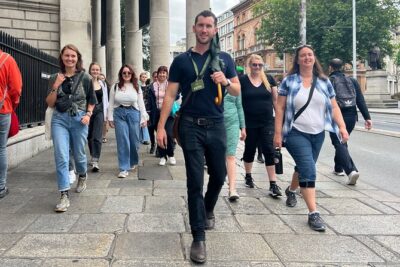
Dublin Highlights and Hidden Gems Guided Walking Tour
Read our review →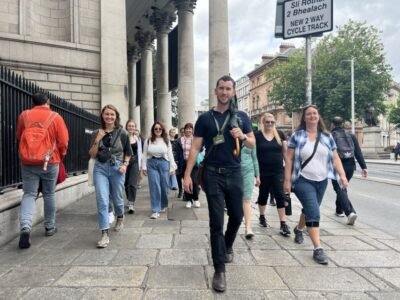

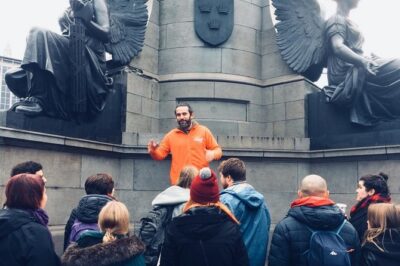
90 Minute Dublin Walking tour and Sightseeing tips
Read our review →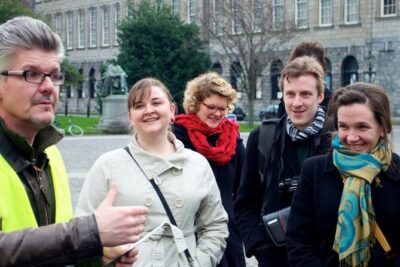

Dublin Traditional Irish 3 Course Meal Walking Tour with Local
Read our review →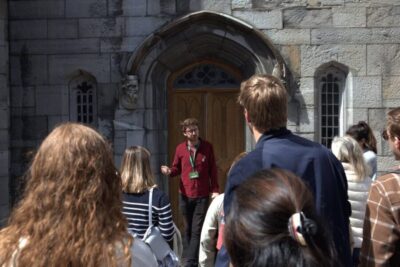
Browse the lists this tour appears in