
Reviewed · WALKING TOURS
Dublin Private Walking Tour | 3 hour Highlights & Hidden Gems
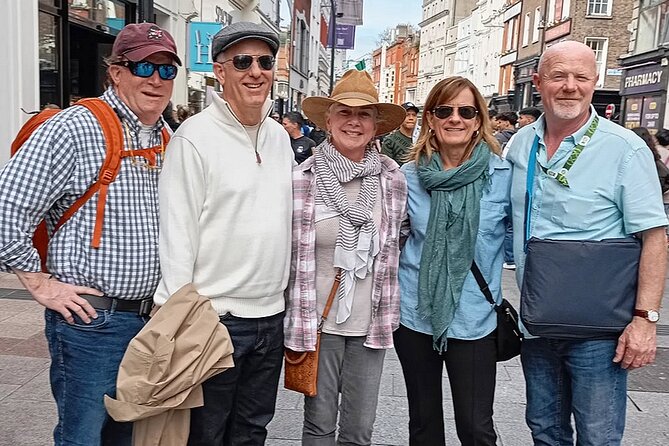
Dublin’s story unfolds in layers on this private walking tour, from the medieval power of Dublin Castle to the 1916 Easter Rising, the Great Famine, Irish music, and today’s pub culture. Guide David Ryan brings facts, songs, photographs, and personal enthusiasm to a route that reaches well beyond the usual postcard stops.
I like the one-to-one attention and the useful city advice, including transport guidance and a digital list of cafés, restaurants, pubs, and traditional music venues. I also like the flexible finish, which can be adjusted to suit plans for places such as the Guinness Storehouse or Christ Church Cathedral.
The main consideration is pace. Fourteen stops in about three hours means plenty of walking and short visits. Several sites are viewed from outside, and paid admission is not included, so this tour works best as a lively introduction rather than a slow, room-by-room look at Dublin’s major attractions.
Key points to know before booking

- David Ryan leads a private three-hour walk: Your group receives his full attention, with no strangers joining the tour.
- The route covers medieval, Georgian, nationalist, and modern Dublin: You move from Dublin Castle and Trinity College to the Famine Memorial, Wolfe Tone, and the 1916 Proclamation.
- You see fourteen major stops and side-street sights: The route includes famous landmarks along with places many first-time visitors might pass without noticing.
- Most stops are external and free: The walk does not include paid admission, though entry to the old Parliament House may be possible depending on opening times.
- You receive practical Dublin advice: The tour includes orientation, transport tips, and a digital PDF of food, drink, and Irish music recommendations.
- The meeting point and ending are flexible: The standard start is at the Molly Malone Statue, and the walk generally ends at College Green.
A fast but thoughtful introduction to central Dublin
This tour gives you a broad sweep of Dublin in a short time. You cover the central area on foot, linking landmarks that can otherwise feel like separate pieces of a city: the castle, university, river crossing, Georgian streets, parks, political monuments, and music history.
The route also moves through different periods rather than following one narrow theme. You hear about medieval Dublin, British administration, Irish nationalism, the Easter Rising, the Great Famine, and modern popular culture. That range is useful if you are new to Ireland and want a framework for the rest of your stay.
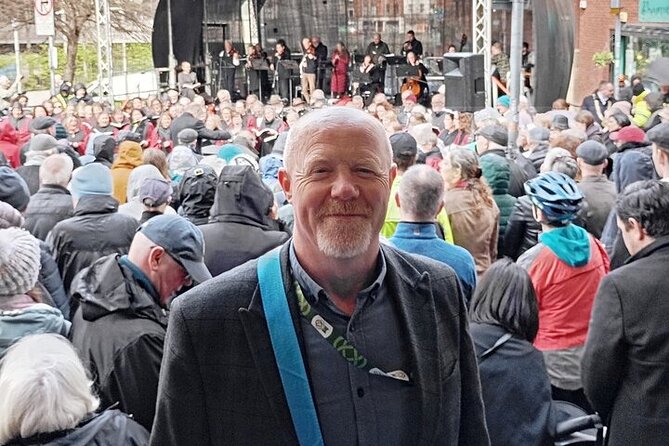
The private format matters here. David can focus on your interests, answer questions as they come up, and adjust the end point to fit your day. Past accounts describe him as especially strong on Irish politics, art, literature, folklore, and music. He may also use songs, photographs, and other items to make the stories easier to picture.
The tradeoff is clear: this is a highlights walk, not an in-depth visit inside each building. You should expect short stops, outdoor explanations, and steady movement. Wear comfortable shoes, keep the weather in mind, and avoid scheduling a tight appointment immediately afterward unless you have agreed on a precise finish.
More Walking Tours in Dublin
- Dublin Highlights and Hidden Gems Guided Walking Tour
★ 5.0 · 6,020 reviews - Dublin: Highlights and Hidden Gems Walking Tour
★ 4.9 · 2,140 reviews - 1916 Rebellion Walking Tour
★ 5.0 · 1,605 reviews
Starting with Molly Malone and Dublin Castle
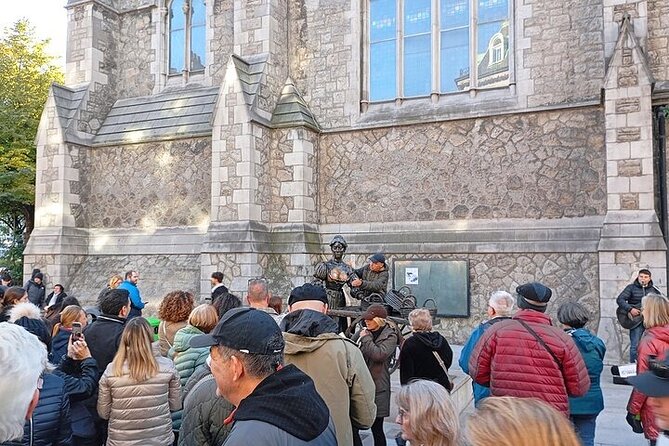
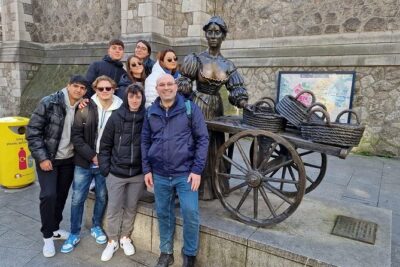
The standard meeting point is the Molly Malone Statue on Suffolk Street. The statue represents the woman from Dublin’s unofficial anthem and has become one of the city’s most photographed landmarks. It is a simple place to meet, near central sights and public transport.
From there, the tour goes to Dublin Castle, where the guide explains the site’s medieval beginnings and its long role in British rule and administration in Ireland. The first stone was laid in 1204, giving the castle more than eight centuries of political history.
The castle visit is external and listed for about 20 minutes. That makes it a good orientation stop, but you should not expect entry into the State Apartments or other paid areas. If you want a full interior visit, plan that separately.
This opening section sets up one of the tour’s useful themes: Dublin is not just a city of pubs and literary associations. Its streets also reflect power, conflict, government, and changing ideas about Ireland’s place in the world.
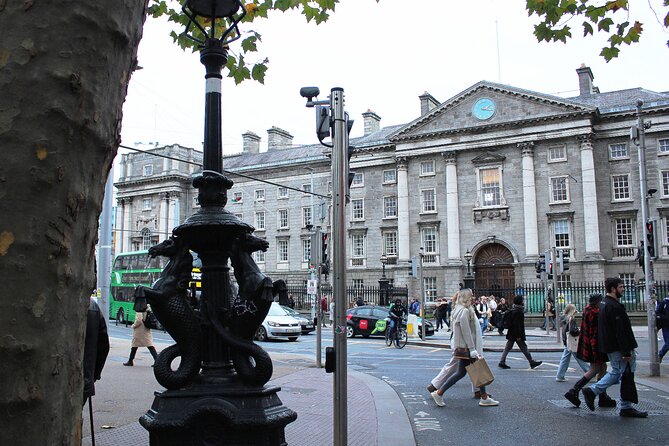
Trinity College, College Green, and the old Parliament House
Trinity College Dublin was founded by Queen Elizabeth I in 1592 and is Ireland’s oldest university. You walk through the grounds for about 15 minutes, taking in the historic campus and its architecture from the outside.
The stop is valuable even if you are not planning to visit the Book of Kells. The tour gives you the setting and history of the college, while leaving you free to return later if you decide to buy admission for the interior attractions.
Nearby, College Green makes a natural bridge between university life and political history. The three-sided plaza is bordered by Trinity College, the Bank of Ireland building, and monuments tied to Ireland’s past. The Bank of Ireland building was originally Ireland’s Parliament House.
The itinerary includes the old Parliament House, with the original House of Lords now part of the Bank of Ireland building. Entry into the House of Lords may be possible, but it depends on the opening schedule. Since paid or ticketed access is not included, treat this as a possible bonus rather than a guaranteed interior visit.
For me, this part of the walk is especially useful because it connects buildings to institutions. You are not simply looking at handsome stone facades. You are seeing where education, government, and public life met in the center of Dublin.
Temple Bar, the Ha’penny Bridge, and the River Liffey

Temple Bar is more than the famous pub with the same name. The district covers about 28 acres and includes lanes, alleys, restaurants, pubs, and places associated with Irish traditional music.
You spend around 20 minutes in the area. David’s role is important here because Temple Bar can be easy to reduce to a photo stop or a night out. The side streets carry stories of Dublin’s past, while the area’s current reputation reflects its role as a cultural and entertainment district.
I would use this part of the tour to ask for practical advice about where to hear traditional music and where to eat. The digital recommendations included with the tour are also useful after you leave the group, especially if you want options beyond the most famous Temple Bar venues.
The walk continues to the Ha’penny Bridge, Dublin’s oldest footbridge and one of its best-known symbols. The wrought-iron bridge crosses the River Liffey and offers views east and west along the center of the city.
The stop lasts about 10 minutes, which is enough for photos and a short explanation. It is not a long river walk. You get a sense of how the bridge connects the north and south sides of Dublin, with the river acting as a thread through the city center.
More walking routes in Dublin:
- 90 Minute Dublin Walking tour and Sightseeing tips
★ 5.0 · 916 reviews - 2-Hour Historical Walking Tour from Dublin
★ 5.0 · 875 reviews - Historical 2-Hour Guided Walking Tour of Dublin
★ 4.7 · 865 reviews - Dublin Traditional Irish 3 Course Meal Walking Tour with Local
★ 5.0 · 755 reviews
Powerscourt Townhouse and St Stephen’s Green
Powerscourt Townhouse Centre is an easy place to miss. Built in the 18th century as the city residence of Richard Wingfield, the second Viscount Powerscourt, and Lady Elizabeth, it once hosted the social life of Dublin’s wealthy elite.
Today it functions as a shopping and dining center, but the building’s earlier role gives it a different feel from a standard retail stop. The tour allows about 10 minutes here, enough to point out the architecture and explain why the building matters.
Next comes St Stephen’s Green, a 22-acre park in the heart of Dublin. Its paths, flower beds, lakes, sculptures, monuments, and plants offer a change from the stone and traffic of the central streets.
The listed stop is about 15 minutes. You will get an overview rather than a full circuit, so I would return on your own if you want a quiet walk through the park. Its central location makes that easy.
These two stops show the range of the route. One focuses on an 18th-century townhouse and Dublin’s social elite. The other gives you open space and reminders of Irish history in a public park. Neither requires a ticket, and both add variety to a day built around streets and buildings.
Dubh Linn Gardens and Dublin Castle’s quieter side
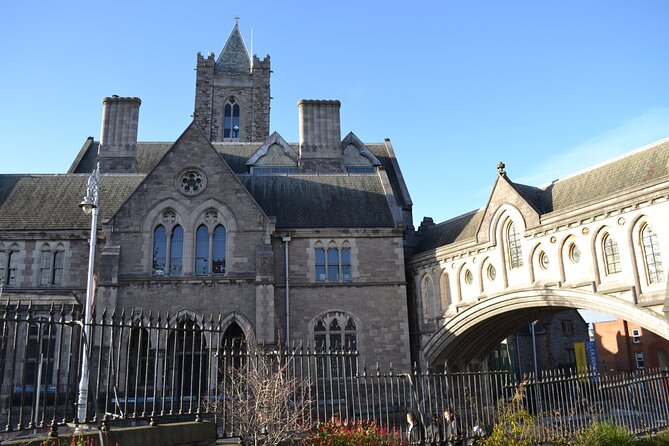
Dubh Linn Gardens is described as a quiet garden in the center of Dublin, with distinctive brickwork and Celtic patterns. The name connects with Dublin’s Irish name, often translated as black pool, and the garden sits near Dublin Castle.
The stop lasts about 10 minutes. It is not the largest or most famous place on the route, but that is part of its appeal. You get a brief pause in a more contained setting and hear stories that are easy to miss when moving between major attractions.
This is also where a private guide can add value. A sign or small design feature may not say much on its own. David can provide the background, explain the symbols, and connect the garden to the city’s older identity.
Do not expect a long garden visit or a major formal attraction. It is a compact stop, best understood as a small detail within the larger Dublin story.
The Famine Memorial and the hard parts of Irish history

Edward Delaney’s Famine Memorial presents emaciated figures in memory of more than one million people who died during the Great Irish Famine, which began in 1845. The sculptures also point to the displacement that helped create one of the world’s largest Irish diaspora populations.
This is one of the more serious moments of the walk. The memorial is not decorative background. Its figures force the human cost of starvation, poverty, and departure into view.
You spend about 10 minutes here, with the guide explaining the historical setting. That is enough for a focused introduction, though you may want more time afterward to look closely at the sculptures and think about the subject.
I value the inclusion of this stop because Dublin’s story is not only about architecture, wit, music, and political independence. The Famine shaped families and communities in Ireland and far beyond it. If your group includes children, consider their age and attention span. The tour is not recommended for babies or children under five.
Wolfe Tone, Dame Lane, and the 1916 Proclamation
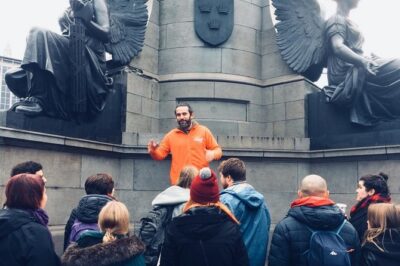
The Theobald Wolfe Tone statue introduces one of the key figures in Irish nationalism. Tone played a major role in the 1798 rebellion and is often regarded as the father of Irish nationalism.
The stop gives you a way to connect the earlier political struggles described at Dublin Castle and Parliament House with later movements for Irish independence. It is a short visit, about 10 minutes, but the subject is central to understanding Ireland’s political past.
At Dame Lane, the guide discusses the 1916 Easter Rising and shows a copy of the Irish Proclamation. Issued on April 24, 1916, the document declared an independent Irish Republic and outlined ideas about citizenship and rights.
This stop lasts about 10 minutes. The document is important, but the visit is not a museum exhibition with a long display of original materials. You are getting context, explanation, and a chance to see a copy within the city where the events took place.
For anyone interested in Irish independence, these stops may be among the most rewarding parts of the route. They also benefit from a guide who can explain the people and events without turning the walk into a list of dates.
Dublin’s music story and the Wall of Fame
The Dublin Music Wall of Fame honors Irish bands and singers who shaped Irish and international music. It adds a modern cultural note after the political and historical stops.
The visit is listed for about 15 minutes. It is a good place to connect the city’s cultural identity with the recommendations you receive for Irish traditional music venues.
David is described as a talented singer, and music is one of the personal touches he may bring to the walk. That can make this section more engaging than a simple explanation of names on a wall. Still, the music stop is brief, so you should not expect a live concert or a full history of Irish music.
If music is one of your main reasons for visiting Ireland, ask David for current suggestions during the tour. The included PDF recommendations are designed to help you continue that part of the experience after the walk.
What the $144.03 price means
The listed price is $144.03 per person. That is a serious cost for a three-hour walk, especially when most stops are free and ticketed attractions are not included.
The value comes from privacy and guidance rather than admission. If you are traveling as a couple, family, or small group, you are paying for a dedicated licensed guide who can shape the conversation, answer your questions, and adjust the ending. Group discounts are offered, so the final per-person value may improve as your party grows.
I would not book this solely to tick off free landmarks. You can reach many of them on your own. I would book it if you want a clear explanation of Dublin’s political and cultural story, personal attention, useful local recommendations, and a strong first-day orientation.
The included digital PDF also has value beyond the three hours. Food, pub, café, and traditional music suggestions can save time later, though the tour does not cover what you order or any attraction tickets.
Timing, meeting point, and practical details
The standard meeting point is the Molly Malone Statue on Suffolk Street, Dublin 2. Pickup can also be arranged from listed hotels, city-center accommodation, or another agreed location.
The walk generally ends at College Green, but you can request a different ending that fits your plans. This is especially useful if you are heading to the Guinness Storehouse, Christ Church Cathedral, or another central stop afterward.
Confirmation is provided when you book. The tour is in English, mobile tickets are accepted, and service animals are allowed. It is near public transport, and most people can take part.
Free cancellation is available if you cancel at least 24 hours before the start time. Changes or cancellations inside that window are not refunded, so check your schedule before the deadline.
Who should book this Dublin walk?
I would recommend it to first-time visitors who want a strong overview before exploring alone. It also suits history fans, couples, families with older children, and anyone who prefers asking questions rather than listening to a large group.
The private format is particularly useful for cruise passengers or anyone working around train times and fixed plans. One past booking required communication after a delayed tender from a cruise ship, and David waited and adjusted the meeting arrangements. That suggests the personal service can matter when a Dublin day does not go perfectly to schedule.
You should think twice if you want long interior visits, a slow photography walk, or extensive free time at each landmark. The route is packed, and the external treatment of Dublin Castle, Trinity College, and other sites may leave you wanting to return independently.
Should you book Dublin Walkabout Tours?
Book this tour if you want Dublin explained through people, politics, music, and memory, not just a checklist of sights. David Ryan’s strengths appear to be his energy, storytelling, local recommendations, and ability to add songs, photos, and extra context to the walk.
The best plan is to schedule it early in your stay, use it to get your bearings, and then return to the places that deserve more time. It is not the cheapest way to see central Dublin, but the private format and practical advice can make the price worthwhile for a small group that values personal attention.
If your priority is paid entry to Dublin Castle, the Book of Kells, or another major attraction, book those separately. If your priority is understanding how Dublin’s streets connect medieval rule, Irish independence, famine, parks, music, and daily life, this three-hour walk is a strong choice.
FAQ
How long is the Dublin private walking tour?
The tour lasts approximately three hours.
Where does the tour start?
The standard meeting point is the Molly Malone Statue on Suffolk Street, Dublin 2.
Where does the tour end?
The tour generally ends at College Green. You can request another convenient ending, such as near Christ Church Cathedral, if it suits your plans.
Is hotel pickup available?
Yes. Pickup can be arranged from listed hotels, city-center hotels, or other city-center accommodation. You can also meet at the Molly Malone Statue.
Is the tour private?
Yes. Only your group participates in the activity.
Is admission to Dublin Castle included?
The Dublin Castle stop is an external tour, and no admission ticket is included.
Can you enter the old Parliament House?
Entry into the old House of Lords at the former Parliament House may be available, but it depends on opening times. Ticketed admission is not included.
What is included in the price?
The price includes a three-hour private tour with a qualified licensed guide, a historical overview of Dublin and Ireland, city orientation, transport advice, and a digital PDF with recommendations for cafés, restaurants, pubs, and Irish traditional music venues. Food, drinks, and paid attraction tickets are not included.
Just added around Dublin
- Wicklow Mountains Private Day Tour including Glendalough★ 5.0 · 7 reviews
- Wicklow: Private Day Tour from Dublin★ 5.0 · 5 reviews
- Women Of Ireland: Trailblazers & Pioneers★ 5.0 · 4 reviews
- Premium Irish Whiskey Tasting Hosted by Local Dublin Expert★ 5.0 · 77 reviews
- Whiskey Tasting Tour of Dublin★ 5.0 · 117 reviews
- Wicklow Mountains & Glendalough Luxury Private Day Tour★ 5.0 · 23 reviews
- Wicklow tour of Glendalough★ 4.5 · 8 reviews
- Semi-Private (8people max) 2.5 Hr Dublin Walking Tour★ 5.0 · 69 reviews
Walking Tours, compared.
Dublin Highlights and Hidden Gems Guided Walking Tour
Read our review →

90 Minute Dublin Walking tour and Sightseeing tips
Read our review →

Dublin Traditional Irish 3 Course Meal Walking Tour with Local
Read our review →
Browse the lists this tour appears in