
Reviewed · WALKING TOURS
A Self Guided Walking Tour of Dublin’s Docklands
Dublin’s Docklands tells a big story in a compact walk. In about 50 minutes to 1 hour 10 minutes, you move from the Custom House and old quays to modern bridges, offices, theaters, and Grand Canal Square. The audio narration, delivered by a local insider, helps you notice the meaning behind buildings that can otherwise blur into the city streets.
I like the manageable pace and the freedom to pause whenever you want. I also like the offline maps and audio, which spare you from relying on mobile data. The main drawback is that this is an audio tour, not a live walk with questions and conversation, so you need your own smartphone and headphones.
Key points before you set out
- Follow Dublin’s waterfront story: The route links maritime trade, the labor movement, the Great Famine, modern finance, and new dockside development.
- Start at the Custom House: This grand neoclassical building gives the tour a clear historical beginning.
- Use the offline option: Download the maps, audio, and geodata before walking so the tour remains useful without a steady signal.
- Expect a self-guided pace: You can stop for photographs, replay sections, or take your time at the bridges and memorials.
- Finish at Grand Canal Square: The route ends near Red Sticks Dublin, surrounded by modern Docklands architecture and public art.
- Bring your own gear: A smartphone and headphones are not supplied.
Why Dublin’s Docklands makes a good walking tour
The Docklands is one of Dublin’s best areas for seeing old and new city life in the same hour. The riverfront carries traces of shipping, trade, emigration, labor activism, and engineering. At the same time, the district has become a center for offices, apartments, transport links, theaters, and major public buildings.
That mix gives the walk more range than a simple sightseeing loop. You are not just looking at attractive waterfront buildings. You are following the way Dublin changed as its port, transport system, industries, and public spaces changed around it.
The tour begins at the Custom House on North Wall. From there, it heads along the Liffey and across to the Grand Canal area. You pass important sights rather than entering most of them, so think of this as an orientation walk with historical narration, not a series of interior visits.
The audio format works best if you enjoy setting your own rhythm. You can pause beside a bridge, stop for a photograph, or replay a section when traffic noise gets in the way. One useful detail from the experience is its manageable pace. You should not need to hurry to keep up with a guide or a group.
More Walking Tours in Dublin
- Dublin Highlights and Hidden Gems Guided Walking Tour
★ 5.0 · 6,020 reviews - Dublin: Highlights and Hidden Gems Walking Tour
★ 4.9 · 2,140 reviews - 1916 Rebellion Walking Tour
★ 5.0 · 1,605 reviews
From the Custom House to Dublin’s working waterfront
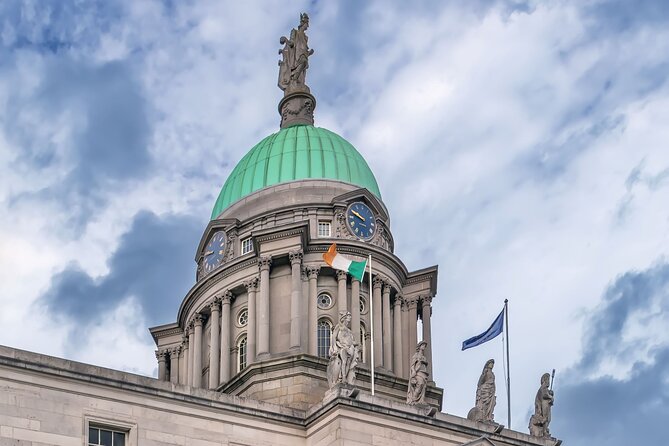
The Custom House is a strong starting point. Its neoclassical design reflects the importance of trade and commerce to Dublin, and its location beside the Liffey puts you immediately in the old port district.
As you walk away from the starting point, the quays show the area’s change over time. Historic warehouses sit near newer buildings, giving you a quick visual lesson in how the Docklands moved from a working maritime quarter toward a modern urban district.
The route then brings in the political and labor story of Dublin. You pass a memorial to James Connolly, an important figure in Ireland’s independence movement and in the struggle for workers’ rights. You also walk by Liberty Hall Theatre, a landmark connected with Dublin’s labor history.
These stops matter because the Docklands was not only about ships and cargo. It was also a place where transport workers, dock workers, political organizers, and city residents shaped Ireland’s public life. The audio narration gives these locations a connecting thread, which is useful when the buildings themselves do not immediately explain their importance.
You then pass Busáras, Dublin’s central bus station, and Connolly Train Station. These are practical city landmarks, but they also fit the route’s larger theme. The area has long been a point of movement, carrying people and goods into and out of Dublin.
The IFSC and the Docklands’ newer identity
The walk next passes the International Financial Services Centre, known as the IFSC. Its presence shows how sharply the Docklands has changed. The old port district is now also a major base for financial companies and multinational firms.
I find this contrast one of the more useful parts of the walk. You can look from older riverfront structures toward newer office buildings and see two versions of Dublin at once. The audio helps explain the district as a changing workplace rather than treating it as a collection of unrelated sights.
The route also includes the Triumphal Arch, a monument linked with Dublin’s maritime heritage and economic success. The name may suggest a grand ceremonial structure, but the important point here is its connection with the city’s trade and prosperity.
You then reach the Scherzer Rolling Lift Bridges. These engineering works once allowed maritime traffic to move through the area. They add a practical, mechanical side to the tour. Instead of seeing the river as scenery alone, you are reminded that the docks were built around water levels, access, cargo, and ship movement.
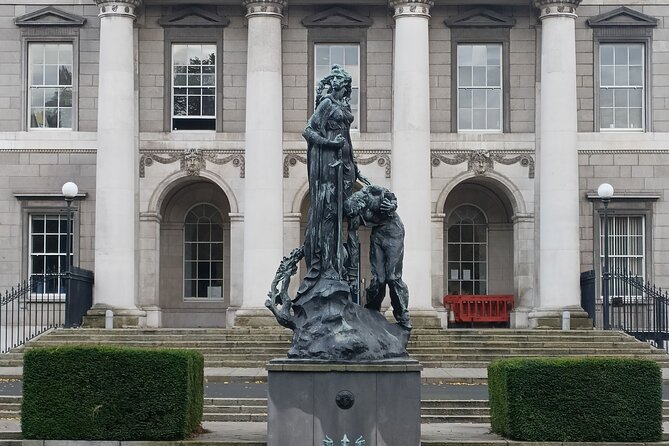
The tour continues past the Famine Memorial. This is one of the most serious stops on the route. The memorial honors those who suffered during Ireland’s Great Famine, and its position near the river connects the tragedy with emigration and departure.
You should allow yourself a little extra time here. The audio tour is short, but the subject deserves more than a quick glance. The memorial is also a useful reminder that the Docklands served both commerce and human movement during one of the hardest periods in Irish history.
Crossing the Liffey beside the Famine Memorial
The Seán O’Casey Bridge carries you across the River Liffey. From the bridge, you get views along the water and toward Dublin’s changing waterfront. It is a natural pause point, especially if you want photographs or need a moment away from the narration.
Crossing the river also gives the walk a clear sense of progress. You begin beside the Custom House and finish around Grand Canal Square, with the Liffey acting as the central thread between the two areas.
On the far side, the route passes a memorial to Irish seafarers who lost their lives at sea. This brings the maritime theme back into focus, but in a more personal way. The river, ships, and port were sources of work and trade, yet they also carried real danger.
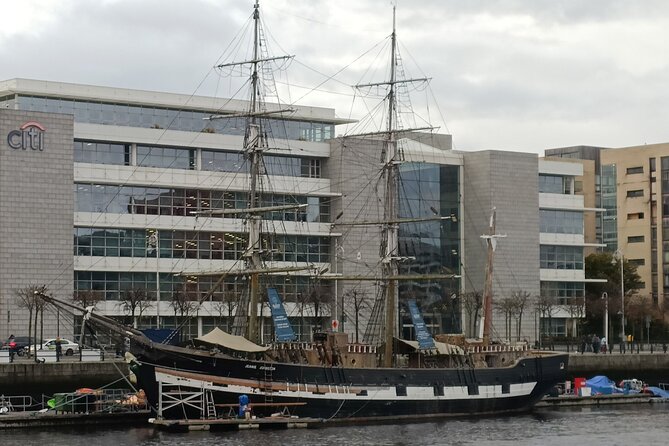
You then see a replica of the Jeanie Johnston. The historic ship carried Irish emigrants to North America during the Great Famine. Even from outside, it helps make the story of departure easier to picture. The ship is not just an object beside the water. It connects the Docklands with the many people who left Ireland by sea.
More walking routes in Dublin:
- 90 Minute Dublin Walking tour and Sightseeing tips
★ 5.0 · 916 reviews - 2-Hour Historical Walking Tour from Dublin
★ 5.0 · 875 reviews - Historical 2-Hour Guided Walking Tour of Dublin
★ 4.7 · 865 reviews - Dublin Traditional Irish 3 Course Meal Walking Tour with Local
★ 5.0 · 755 reviews
Bridges, performance spaces, and public buildings
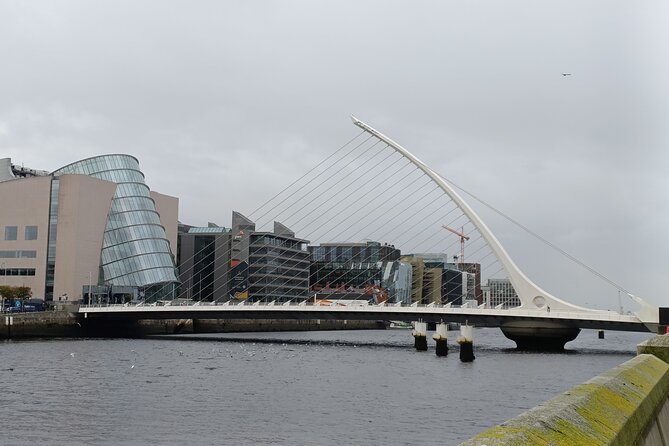
The Samuel Beckett Bridge is one of the route’s most recognizable modern sights. Its shape gives the waterfront a strong contemporary marker, while its name links the Docklands with one of Ireland’s best-known writers.
The bridge is particularly useful for understanding the visual change in this part of Dublin. Earlier stops focus on trade, labor, famine, and port work. Here, the city presents a newer face, built around design, culture, transport, and business.
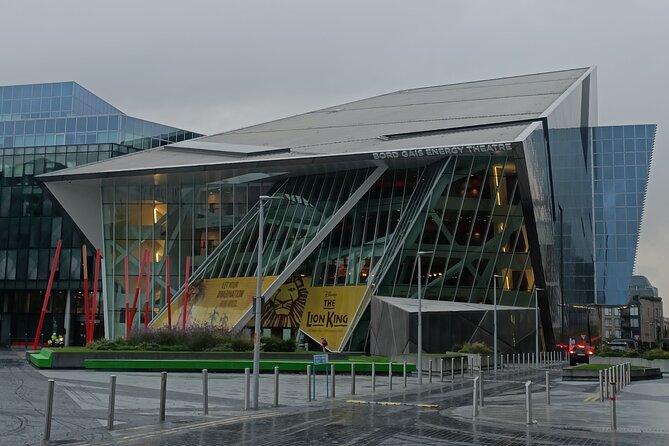
Nearby, the Convention Centre Dublin adds another modern landmark. It hosts conferences, events, and exhibitions, and it reflects the Docklands’ role as a place for large-scale business and public gatherings.
The route also passes a statue of Admiral William Brown, an Irish-born naval officer who founded the Argentine Navy. This is a detail you might easily miss without narration. It broadens the story beyond Dublin itself and shows how people from Ireland influenced maritime life elsewhere.
You then see the historic dock-maintenance bell, once used in the work of keeping Dublin’s port in order. It is a small but telling object. Large bridges and office buildings attract attention, but working ports also depended on ordinary tools and systems that kept the waterway usable.
From the East-Link Bridge to the Grand Canal Docks
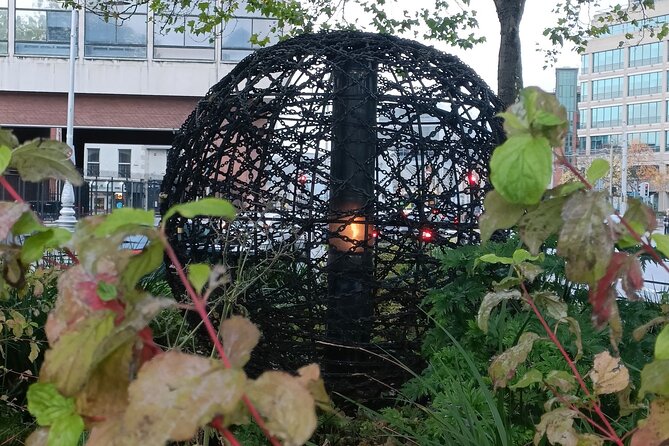
The tour passes the Tom Clarke Bridge, also called the East-Link Bridge. It is an important road connection between north and south Dublin, and it shows that the Docklands remains a working part of the city rather than a preserved historic quarter.
The route then moves toward BrewDog Outpost Dublin, a brewery with craft beer and a lively social setting. This is a different sort of stop from the memorials and transport landmarks. It gives you a practical place to pause, though the tour does not include food or drinks.
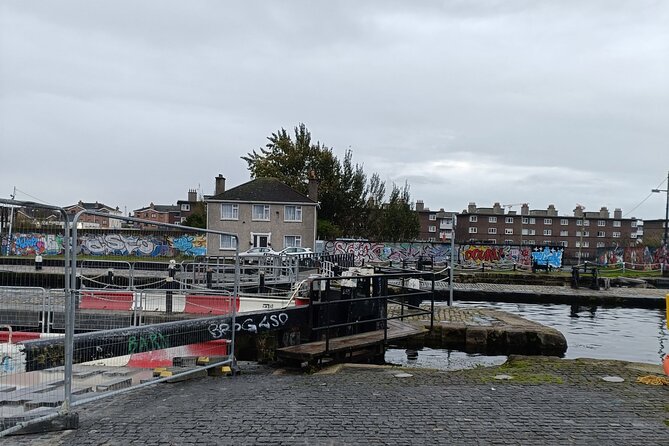
Next comes the sea lock, which regulates water levels in the docks. This is another technical feature that can seem easy to overlook. The audio makes the infrastructure part of the story, showing how the docks depend on careful control of water as well as roads, bridges, and buildings.
The Grand Canal Docks sign marks the entrance to the historic canal basin. From here, the route feels increasingly focused on the redeveloped Docklands. Hanover Quay combines residential and commercial buildings, and it helps you see how former working areas have been reshaped for present-day city life.
You also pass Hanover Quay Studios, a recording studio complex used by musicians and artists. This adds a cultural note to the route. The Docklands is not only an office district or transport zone. It also includes places connected with music and creative work.
Finishing at Grand Canal Square and Red Sticks Dublin
The walk ends at Grand Canal Square, near Red Sticks Dublin. The square is a modern public space with architecture and cultural attractions, and it provides a clear finish after the older quays, bridges, memorials, and working-port features earlier in the route.
Red Sticks Dublin is a landmark sculpture and the final point of the tour. Because the route ends in the Grand Canal area, you are well placed to continue exploring on foot or stop for a drink nearby. The stated opening hours run all day, every day, but remember that this refers to the tour’s availability rather than a live meeting with a guide.
The end point also gives you a useful sense of the Docklands’ identity. You have moved from the Custom House, a symbol of older trade administration, to a modern square shaped by redevelopment and public art.
What the $11.99 price includes
At $11.99 per person, this is a low-cost way to add structure to a walk you could otherwise make without narration. The value comes from the connections between the sights. You are paying for directions, spoken context, GPS guidance, maps, and offline access rather than admission to a building.
The lifetime, unlimited access is a helpful extra. You can use the tour before or after the booking date, and the virtual playback option lets you listen like an audiobook from another location. That may suit you if you want to preview the route, revisit the history later, or use the narration without walking.
The price is less compelling if you want a personal guide, inside access, or a long historical walk. There is no live person to answer questions, adjust the route, or add local conversation. Still, for a short, private walk through a district with many easily missed details, the cost is reasonable.
Timing, transport, and practical points
The walk takes about 50 minutes to 1 hour 10 minutes. Your actual time will depend on pauses, photographs, and how often you stop the audio. If you want to linger at the Famine Memorial, bridges, or waterfront, plan for more than the minimum.
The starting point is the Custom House on North Wall, Dublin 1. It is easy to reach by public transport from Busáras Luas and bus stops, as well as Tara Street DART station. The start is about a 10-minute walk from O’Connell Street and roughly 15 to 20 minutes from College Green.
You need to bring your own smartphone and headphones. Download the audio, maps, and geodata before you begin. Offline access is especially useful if you want to avoid mobile data charges or do not have dependable service.
The route is private to your group, but it is still self-guided. Service animals are allowed, the walk is near public transport, and most people can participate. The experience is non-refundable and cannot be changed after booking, so confirm your date before paying.
Who should choose this Docklands walk?
I would choose this tour if you want a short introduction to Dublin’s waterfront and prefer not to follow a fixed group. It suits independent visitors, couples, families with older children, and anyone with limited time who wants more context than a casual stroll provides.
It is also a good fit if you like history presented through places. The route moves from trade to labor, famine, emigration, engineering, finance, and redevelopment without requiring a full day.
I would choose a live walking tour instead if you want back-and-forth conversation, detailed answers, or a guide who can adapt the route. You should also skip it if you dislike listening through headphones while walking or if you are looking mainly for interiors and museum visits.
Should you book it?
Book this self-guided walk if you want an affordable, flexible way to understand Dublin’s Docklands in roughly an hour. The strongest reasons are the clear route, easy transport access, offline playback, and the range of stops, from the Custom House and Famine Memorial to the Jeanie Johnston and Samuel Beckett Bridge.
Think carefully before booking because the cancellation terms are strict and your phone and headphones are not included. If you are comfortable with an audio format, this is a practical introduction to a district where the most interesting details often sit outside the main tourist center.
FAQ
How long does the Dublin Docklands audio tour take?
The tour takes approximately 50 minutes to 1 hour 10 minutes. Stops for photographs or extra time at memorials and bridges can make the walk longer.
Where does the tour begin?
It begins at the Custom House on North Wall, Dublin 1, County Dublin.
Where does the tour finish?
It ends at Red Sticks Dublin in the Dublin Docklands, on the Grand Canal near Grand Canal Square.
What language is the audio tour offered in?
The tour is offered in English.
Do I need a smartphone and headphones?
Yes. You must bring your own smartphone and headphones.
Can I use the tour without mobile data?
Yes. The tour includes offline access to the audio, maps, and geodata. Download the material before you begin.
Is the tour led by a live guide?
No. It is a self-guided GPS audio tour with narration by a local insider. You can explore at your own pace and use the virtual playback option from anywhere.
Just added around Dublin
- Wicklow Mountains Private Day Tour including Glendalough★ 5.0 · 7 reviews
- Wicklow: Private Day Tour from Dublin★ 5.0 · 5 reviews
- Women Of Ireland: Trailblazers & Pioneers★ 5.0 · 4 reviews
- Premium Irish Whiskey Tasting Hosted by Local Dublin Expert★ 5.0 · 77 reviews
- Whiskey Tasting Tour of Dublin★ 5.0 · 117 reviews
- Wicklow Mountains & Glendalough Luxury Private Day Tour★ 5.0 · 23 reviews
- Wicklow tour of Glendalough★ 4.5 · 8 reviews
- Full Day Private Wicklow Tour★ 5.0 · 12 reviews
Walking Tours, compared.
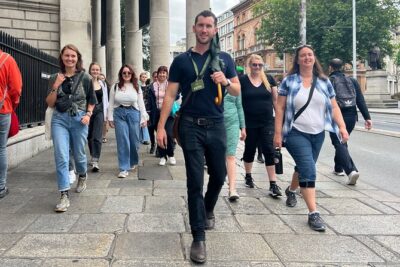
Dublin Highlights and Hidden Gems Guided Walking Tour
Read our review →

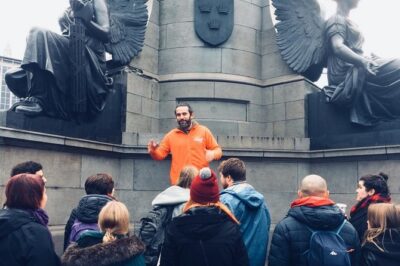
90 Minute Dublin Walking tour and Sightseeing tips
Read our review →

Dublin Traditional Irish 3 Course Meal Walking Tour with Local
Read our review →
Browse the lists this tour appears in