
Reviewed · WALKING TOURS
Dublin: Mythology, Folklore and Legends Walking Tour
Dublin’s streets carry more than buildings and pubs. They carry stories about fairies, warriors, banshees, and rebellions, and this two-hour walk brings those tales into the city center. You start at Temple Bar, explore less familiar corners, and finish on O’Connell Street with a look at modern Irish identity.
I like the way the tour connects mythology with real Dublin places, rather than treating folklore as a separate subject. I also like the guides’ apparent strength as storytellers. Helena, Emily, Lee, and Dave are all praised for warmth, humor, and a lively delivery. The main consideration is that this is an English-language walking tour, so anyone wanting a conventional monument tour or a quiet scholarly lecture may find the style more theatrical than expected.
Key points to know before you book
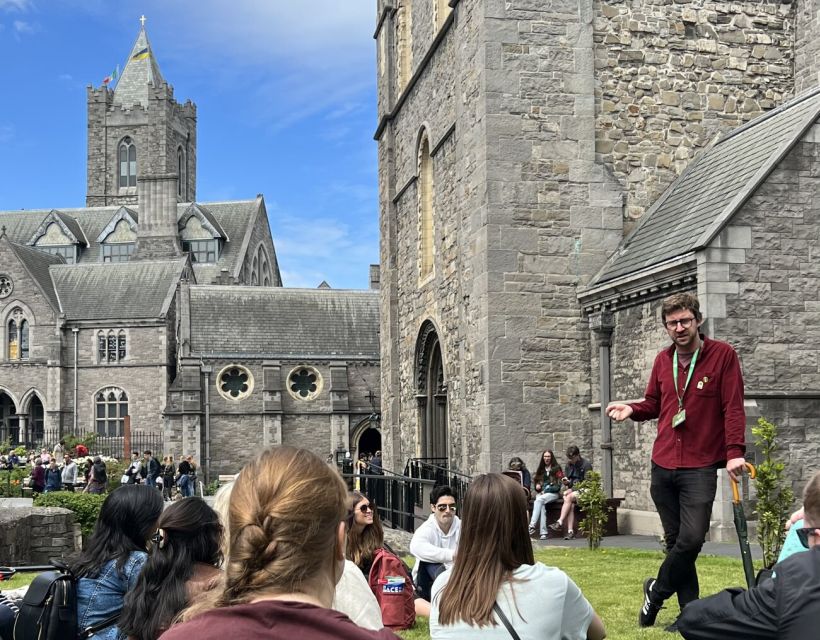
- Irish mythology in the city center: Hear about Celtic origins, fairies, banshees, púcas, leprechauns, and ancient warriors while walking through Dublin.
- A less usual route: The tour goes beyond the standard Temple Bar circuit and includes the darker side of the Georgian Quarter.
- Storytelling is the main event: Guides such as Helena, Emily, Lee, and Dave bring the material alive with humor and strong delivery.
- A useful two-hour format: Several stops allow you to listen without walking constantly, making the pace manageable for children and tired feet.
- Folklore meets modern Ireland: The final section covers the Gaelic revival and contemporary street characters on O’Connell Street.
- Good value at $27: You get a local guide and two hours of focused stories, with no transport or hotel pickup included.
Why Dublin’s myths make a good walking tour
A standard Dublin sightseeing walk might explain a church, a square, or a political event. This experience asks a different question: what stories did Irish people use to explain the world around them?
That shift gives familiar streets a new purpose. Temple Bar is not only a popular nightlife district. It becomes the setting for stories about Ireland’s mythical beginnings and the beliefs tied to Celtic culture. O’Connell Street is not only a broad central avenue. It becomes a place to discuss the revival of the Gaelic language and culture.
I find this approach useful early in a Dublin visit. It gives you a set of ideas to carry into the rest of your stay. A statue, street name, theater, or local custom may make more sense after you have heard how folklore and national identity connect.
The tour is also a reminder that Irish folklore is not limited to cheerful leprechaun imagery. You hear about the banshee, the púca, fairies, warriors, death, rebellion, and the uneasy boundary between the ordinary world and the supernatural one. That wider view feels far more useful than a tourist-shop version of Irish myth.
More Walking Tours in Dublin
- Dublin Highlights and Hidden Gems Guided Walking Tour
★ 5.0 · 6,020 reviews - Dublin: Highlights and Hidden Gems Walking Tour
★ 4.9 · 2,140 reviews - 1916 Rebellion Walking Tour
★ 5.0 · 1,605 reviews
Starting in Temple Bar with Celtic origins
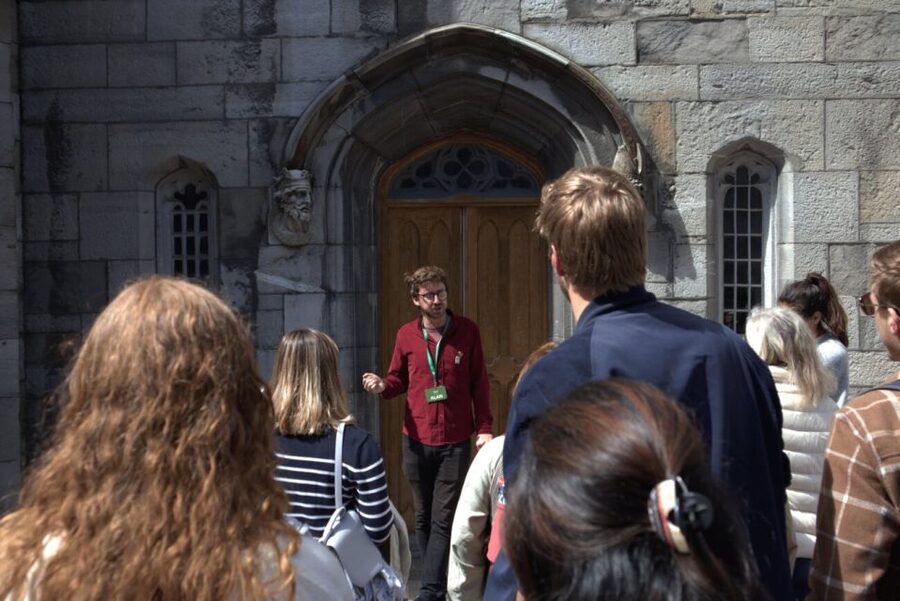
Meet outside The Old Storehouse pub in Temple Bar and look for the green umbrella. This is a busy part of central Dublin, so allow a little time to find the exact meeting point rather than arriving at the last minute.
The opening section introduces Ireland’s mythical origins and Celtic traditions. Your guide sets up the basic ideas behind Irish folklore, including the role of fairies and other supernatural figures. This is not simply a list of creatures. The stories show how beliefs, place, memory, and community can overlap.
You can expect the guide to talk about figures such as the banshee, púca, and leprechaun, along with ancient Irish warriors. The appeal is in the contrast. Some tales are comic or mischievous, while others are unsettling. The banshee brings a darker note, and the púca adds a less familiar character to the usual tourist picture of Ireland.
The precise stories and stops can vary with the guide, but the central theme remains clear: storytelling has long helped people explain danger, luck, death, nature, and belonging. That makes the opening useful for anyone who wants more than a collection of amusing legends.
The unusual value of the off-route stops
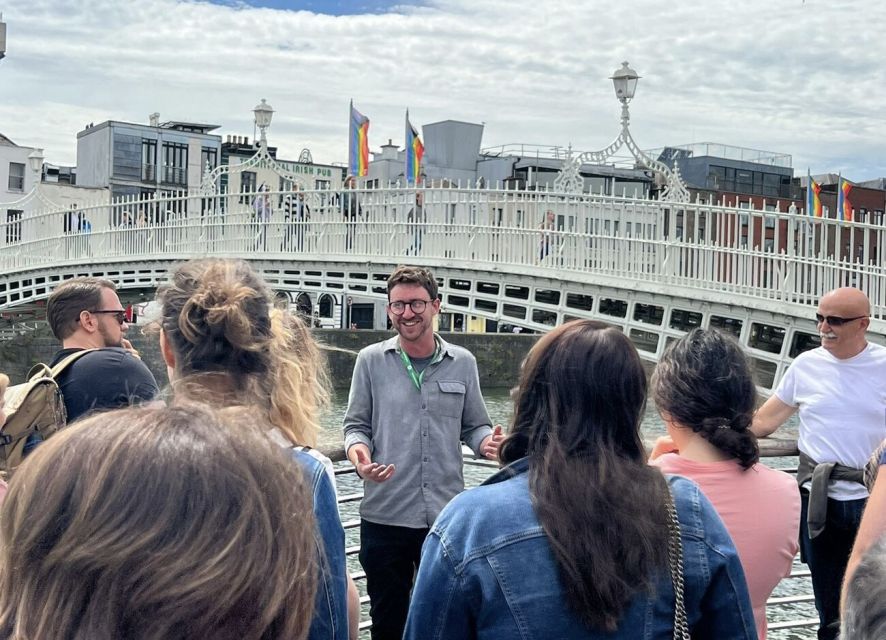
One of the strongest parts of this walk is the decision to leave the usual tourist path. You still see major areas such as Temple Bar and O’Connell Street, but the guide also takes you toward locations that many first-time visitors might pass without noticing.
That matters because folklore works best when attached to a real setting. A story told beside an ordinary street or overlooked corner can feel more immediate than one delivered as a detached lecture. You are encouraged to look at Dublin as a city shaped by memory, rumor, belief, and retelling.
The tour is not a long-distance trek. Several accounts describe longer stops where the group can stand or rest while listening. That makes the two-hour length feel manageable, especially if you have already spent the morning on your feet.
You should still wear comfortable shoes and be ready to walk through central Dublin. The route is described as wheelchair accessible, but the experience remains a moving city walk, so it is sensible to consider your own pace and energy. The guides have been praised for paying attention to the group’s ability and for choosing suitable places to pause.
The Georgian Quarter’s darker side
The Georgian Quarter section changes the mood. Here, the guide covers rebellions, grave robbing, and revolutions, along with the macabre side of Dublin’s past.
This part should appeal to you if you prefer the less polished version of a city. Dublin’s story is not only literary charm, friendly pubs, and grand facades. It also includes fear, political unrest, death, and the practical problems that shaped earlier generations.
Grave robbing is an especially striking subject because it brings home how medicine, poverty, crime, and social inequality could collide. Rebellions and revolutions add political weight to the tour, but the format remains rooted in storytelling rather than a formal classroom lesson.
The guide’s personality matters here. Helena is repeatedly described as enthusiastic, funny, and able to make difficult material accessible. Emily is praised for combining warmth with strong storytelling. Dave is noted for humor and for answering questions. Lee has been described as friendly and energetic, even while leading a newer version of the tour.
Those details suggest that the experience depends partly on who leads your group. That is normal for a story-based walk. A good guide can make a grim subject compelling, while a less confident delivery could make the same section feel like a string of facts. The consistently high rating of 4.9 from 703 reviews points to a strong overall standard, but you should book this for the subject and format, not for a guaranteed performance by one particular person.
More walking routes in Dublin:
- 90 Minute Dublin Walking tour and Sightseeing tips
★ 5.0 · 916 reviews - 2-Hour Historical Walking Tour from Dublin
★ 5.0 · 875 reviews - Historical 2-Hour Guided Walking Tour of Dublin
★ 4.7 · 865 reviews - Dublin Traditional Irish 3 Course Meal Walking Tour with Local
★ 5.0 · 755 reviews
The Abbey Theatre and the power of cultural memory
The Abbey Theatre receives its own portion of the tour, with attention to its tragic history. The details provided do not specify which events are covered, so you should expect an introduction rather than a full theater history.
Its place on this walk is important. The Abbey is tied to Ireland’s cultural self-definition, and its story helps show how theater can carry arguments about language, identity, politics, and the nation. This connects naturally with the tour’s wider interest in storytelling.
I like this section because it broadens the meaning of folklore. Folklore is not only an old tale about a supernatural creature. It also includes the stories a society tells about itself, the voices it preserves, and the conflicts that shape public culture.
If you are especially interested in Irish literature or theater, this may leave you wanting more. The tour cannot cover every detail in two hours. Treat it as a useful introduction and a prompt to explore the Abbey Theatre further during your time in Dublin.
Finishing on O’Connell Street and meeting modern Dublin
The walk ends back at the meeting point after reaching O’Connell Street, where the guide introduces the revival of Gaelic language and culture. This gives the tour a clear arc, from mythical origins to contemporary identity.
That final movement is one of the experience’s most valuable features. You are not left thinking of folklore as something safely locked in the past. The guide shows how language, cultural memory, and old stories can continue to influence public life.
The tour also includes contemporary street characters. The available information does not define exactly who you will meet or what form this part takes, so expect observations and stories about present-day Dublin rather than a scheduled performance or personal encounter.
One particularly interesting theme in the guiding is the link between past and present. Emily, for example, has been praised for giving current examples of folklore’s influence on Irish communities, including stories connected with Gay Pride and HIV awareness. That suggests the tour can move beyond familiar Celtic figures and examine how communities create meaning in the present.
This is where the experience becomes more than a supernatural story walk. You get a sense of how Irish and Gaelic culture continue to be discussed, adapted, and expressed in modern Dublin.
How the guides shape the experience
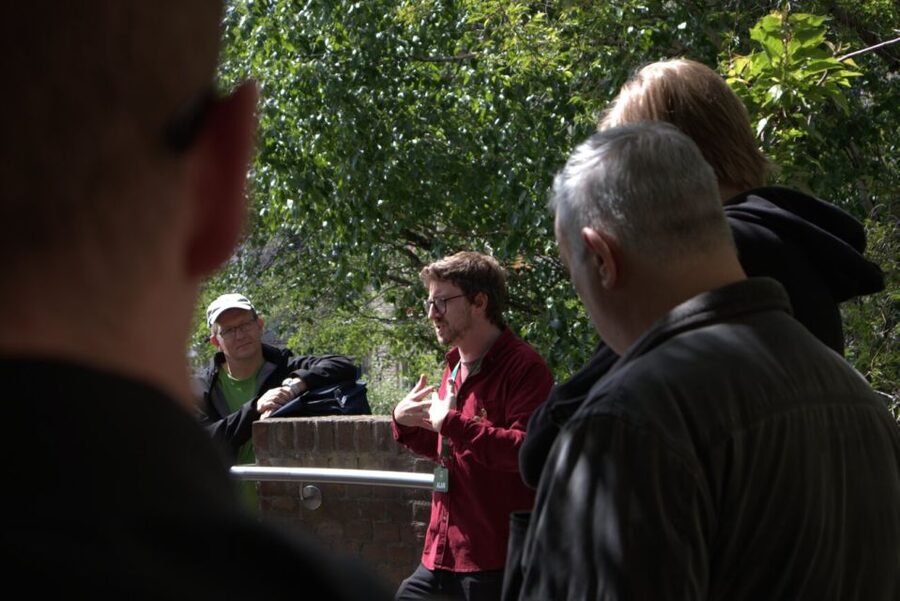
The guides are central to the value of this tour. You are not buying admission to a site or a fixed audio program. You are paying for a person who can choose the right pace, explain unfamiliar references, and make a spoken story hold your attention in a public street.
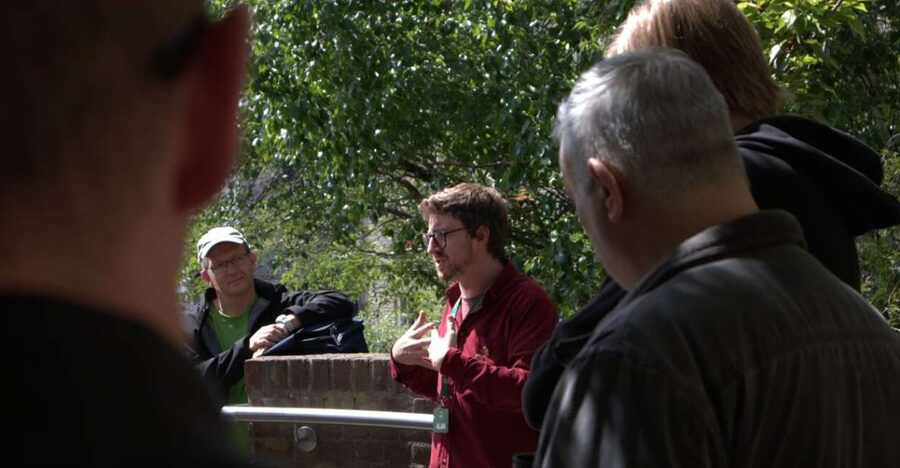
Helena is repeatedly praised for her enthusiasm, humor, and ability to keep the group involved. Emily receives similar praise for her storytelling, warmth, and thoughtful links between old folklore and current Irish life. Dave is described as funny, informative, and especially good at answering questions and offering Dublin suggestions. Lee is noted for good energy, an easy manner, and a pleasant connection with the group.
That range of guides is useful to know, but their names do not guarantee who will lead your departure. The practical takeaway is to expect an engaging, conversational style rather than a dry lecture.
Several accounts also suggest the walk works well for families. One guide kept children interested throughout, and another account praised the manageable amount of walking. The stories can be spooky, especially around death and grave robbing, but the overall tone includes plenty of humor.
Price, timing, and what you receive for $27
At $27 per person, the tour is reasonably priced for a two-hour guided walk in central Dublin. The fee covers the guide and walking tour, not transport, food, drinks, or hotel pickup and drop-off.
The value depends on what you want from Dublin. If you only want a quick introduction to the main sights, a conventional city walk may give you more standard landmarks. If you want context that changes how you look at those landmarks, this tour offers a more distinctive use of two hours.
It can also help you avoid spending an entire day on your feet. The walk includes several pauses, and the length is long enough to develop its themes without becoming a full-day commitment. You can fit it between other central Dublin plans.
Booking is flexible: you can reserve now and pay later, and cancellation is free up to 24 hours in advance for a full refund. Starting times vary, so check availability for the date you want.
The tour is conducted in English. That is important because storytelling depends on rhythm, humor, and word choice. You will get the most from it if you are comfortable following spoken English for two hours.
Who should book this Dublin folklore walk
I would recommend it to you if you enjoy myths, oral storytelling, unusual city details, or the link between culture and national identity. It is also a good fit if you have already seen Dublin’s main sights and want a different way to read the city.
Families may find the combination of stories, humor, and short walking stretches easier than a long historical march. People with tired feet may appreciate the rest stops, although you should still be prepared for a walking tour.
It is less suitable if you want a detailed tour inside major attractions, a private experience, or a full academic treatment of Irish mythology. You also should not book it expecting every stop to be a famous landmark. The point is often the story attached to a less obvious place.
Starting with this tour can be smart. The material may help you understand later visits to Dublin’s streets, cultural sites, and public monuments. Emily’s recommendations for further places to explore are an added benefit when available, as are Dave’s practical suggestions for affordable things to do around the city.
Should you book the Dublin Mythology, Folklore and Legends Walking Tour?
Book it if you want Dublin explained through stories rather than a checklist of buildings. The strongest reasons are the skilled, humorous guides, the unusual route, and the final connection between old folklore and modern Gaelic culture.
At $27, it offers good value for a focused two-hour experience, especially when you want something more distinctive than a standard city introduction. Keep your expectations realistic: it is a group walk, the guide can vary, and the English-language storytelling is the main attraction.
If banshees, púcas, Celtic beliefs, dark Georgian tales, and Irish cultural identity sound more appealing than another basic monument tour, this is a worthwhile choice.
FAQ
How long does the Dublin mythology walking tour last?
The tour lasts two hours. Check availability for the starting times offered on your chosen date.
Where does the tour start?
Meet outside The Old Storehouse pub in Temple Bar. Look for the green umbrella.
Where does the tour finish?
The activity ends back at the meeting point.
What language is the tour in?
The live tour is conducted in English, and English is the listed tour language.
Is the tour wheelchair accessible?
Yes, the activity is listed as wheelchair accessible.
What is included in the price?
The price includes the guide and walking tour. Hotel pickup and drop-off are not included.
Just added around Dublin
- Gin School, distill you own gin, cocktails, tastings, food★ 5.0 · 8 reviews
- Dublin : Street Art Walking Tour★ 5.0 · 3 reviews
- Dublin: Personal Photographer- Travel Photography Experience★ 4.5 · 8 reviews
- Dublin: Skip-the-line Book of Kells & Old Town Private Tour★ 5.0 · 6 reviews
- Dublin: Howth Coastal Craft Beer and Seafood Tour★ 5.0 · 62 reviews
- Vikings In Dublin (Walking Tour)★ 5.0 · 8 reviews
- Dublin: Silent Disco Walking Tour★ 4.9 · 21 reviews
- Dublin: Private Tour of City Monuments in Spanish★ 5.0 · 6 reviews
Walking Tours, compared.
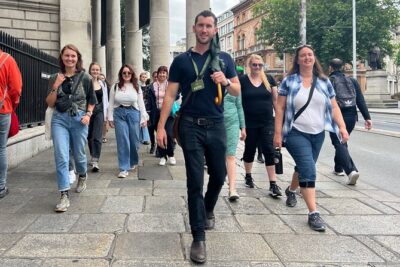
Dublin Highlights and Hidden Gems Guided Walking Tour
Read our review →

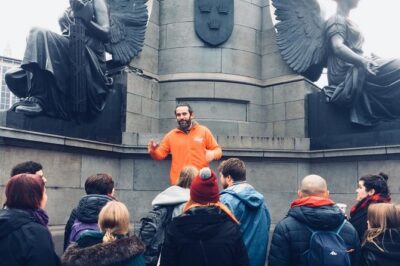
90 Minute Dublin Walking tour and Sightseeing tips
Read our review →

Dublin Traditional Irish 3 Course Meal Walking Tour with Local
Read our review →
Browse the lists this tour appears in