
Reviewed · MUSEUMS
Dublin: Irish Famine Exhibition Entry Ticket
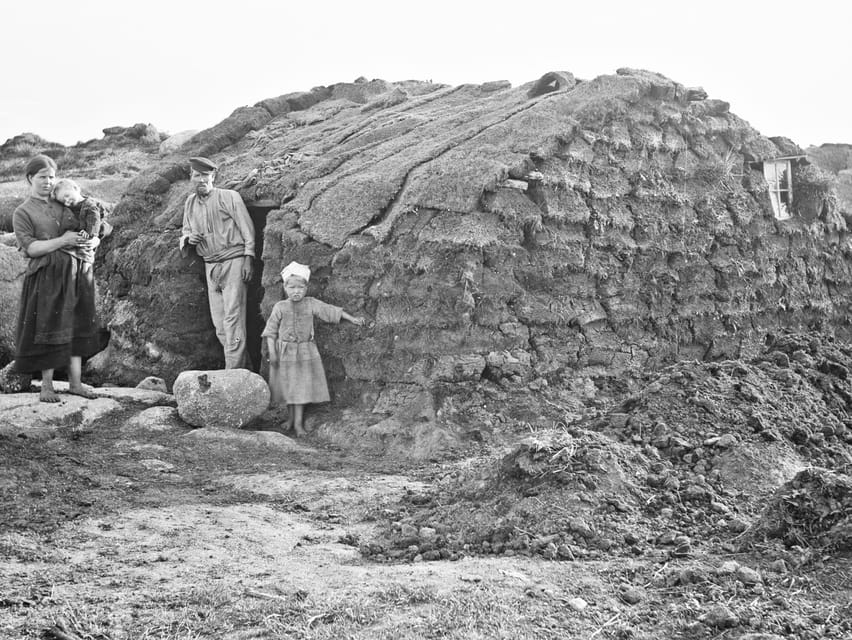
The Irish Famine Exhibition tackles one of Ireland’s hardest stories inside an unexpected setting: the top floor of a city shopping centre. Its step-by-step storyboards explain how crop failure, poverty, policy, eviction, disease, and mass emigration combined to create a national disaster.
I like the original letters and newspapers, which turn a huge historical event into something personal and immediate. I also like the rare 19th-century photographs and short film, since they give you faces, places, and visual evidence rather than only dates and statistics. The subject is grim, and the exhibition is compact rather than grand, so readers seeking a large museum with many galleries may find it limited.
Key points to know before you go
- A self-paced visit of at least one hour: You move from room to room at your own speed, with a bench in each room.
- Original objects add weight: See two newspaper articles, two personal letters, and a cast iron soup pot connected to the catastrophe.
- A 15-minute overview film: Seating is provided, making it easy to pause and absorb the main story.
- The location is central but easy to miss: Find unit 200b on the second floor of Stephens Green Shopping Centre.
- The price is $16 per person: That is fair if you value focused historical interpretation, film, and primary-source material.
- Translation help is included: A manual is available in French, German, and Italian.
Why this small exhibition matters
The Irish Potato Famine was not simply a story of potatoes failing. The exhibition asks a more difficult question: how did more than a million people die from starvation and disease while Ireland still had food available during the famine years?
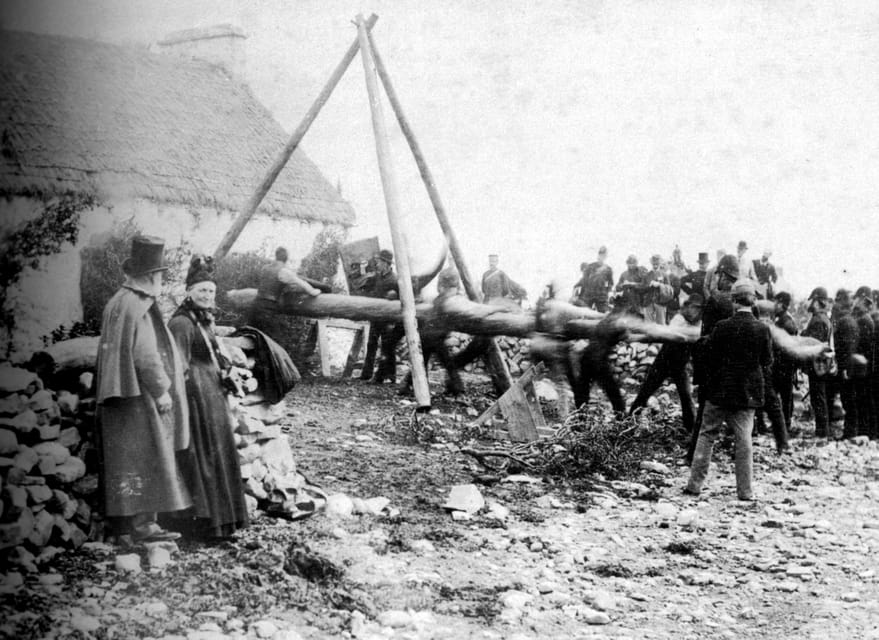
At the time, Ireland was part of the British Empire, then one of the wealthiest empires in the world. The use of the word famine remains controversial because food continued to leave the country while huge numbers of people suffered. The exhibition presents this background in plain, ordered stages, helping you see the disaster as a mix of crop failure, poverty, government policy, landlord and tenant relations, disease, and forced migration.
I appreciate that framing because it keeps the subject from becoming a simple story of bad weather. The failed potato crop was the trigger, but the human cost grew through the way society and institutions responded. You leave with a clearer sense of why the event remains central to Irish identity and political memory.
This is serious material. You will encounter starvation, illness, eviction, workhouses, coffin ships, and death. The exhibition does not turn these subjects into entertainment. It gives you a quiet place to read, watch, and think, which is exactly the right tone.
A few more things to do around Dublin worth a look
- Irish Rock ‘N’ Roll Museum Experience Dublin
★ 5.0 · 6,112 reviews - The Little Museum of Dublin Famous Guided Tour
★ 5.0 · 2,948 reviews - Dublin EPIC Museum Admission Ticket
★ 4.5 · 1,729 reviews
Finding unit 200b at Stephens Green Shopping Centre
The exhibition is in unit 200b on the top floor of Stephens Green Shopping Centre. From the main entrance on Grafton Street, take the elevator about 20 metres inside on the right. Go to the second floor, then turn left.
If you enter from the car park, the exhibition is at the opposite end of the centre. That detail matters because the unit is not presented as a separate street museum with an obvious entrance. Give yourself a few extra minutes to find it, especially if you are fitting the visit between other Dublin sights.
Opening hours are every day from 12pm to 6pm. Your ticket is valid for 180 days, with starting times checked through availability. This gives you useful flexibility during a city break, though you should confirm the available time before setting out.
The exhibition is wheelchair accessible. The elevator route also makes the visit practical for anyone who cannot manage stairs.
The storyboard rooms build the story in order

Once inside, you walk through several rooms containing storyboards. The material is arranged in an easy-to-follow sequence, so you can begin with the conditions that shaped Irish life and then see how the crisis worsened.
That order is one of the exhibition’s main strengths. The famine can be hard to grasp when presented only as a list of dates and death totals. Here, the story develops in stages. You see the spread of hardship, the pressure placed on tenants, the role of workhouses, the impact of evictions, and the illnesses that followed hunger and overcrowding.
Each room has a bench. This is a small but helpful touch. You do not have to remain standing while reading, and you can pause when a section needs more time. The exhibition is self-paced, so you are not waiting for a guide or trying to keep up with a group.
Allow at least one hour. You could move faster, but doing so would defeat the point. The displays are concise, yet they contain enough information to make a careful reading worthwhile. One short review described the visit as taking about an hour while still delivering a good amount of information. That is a useful way to think about the experience: compact, but not thin.
Rare photographs put faces to the crisis
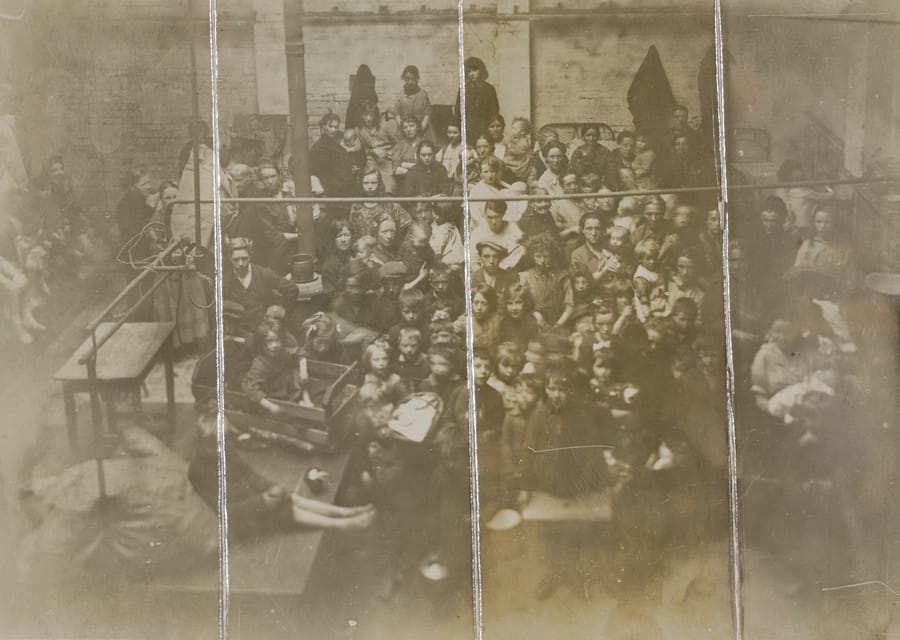
The 19th-century photographs are among the most valuable parts of the visit. Statistics tell you how many people died or left Ireland, but photographs make the period more concrete.
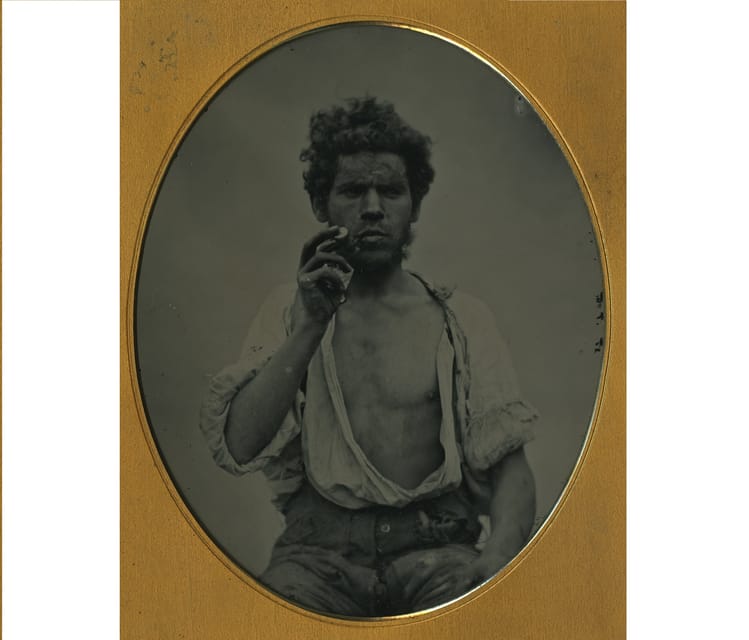
You will see rare images of Ireland from the 19th century, giving you visual evidence of the people and places caught in this period of change. Photography cannot show every part of the famine years, and these images should not be treated as a complete record. Still, they help connect the written story to real communities and living people.
I like this combination of text and images. The storyboards explain the causes and consequences, while the photographs slow you down. They remind you that words such as tenant, landlord, emigrant, or workhouse describe individuals and families, not just social categories.
The display is especially useful for visitors who know the broad outline of the famine but want a more human sense of it. You do not need a strong background in Irish history to follow the material.
Same base, a very different sort of day:
- Dublin to Cliffs of Moher, including Wild Atlantic Way and Galway
★ 5.0 · 23,331 reviews - From Dublin: Cliffs of Moher, Burren & Galway City Day Tour
★ 4.8 · 18,888 reviews - Dublin: Guinness Storehouse Entry Ticket
★ 4.6 · 16,863 reviews - Dublin to Cliffs of Moher, Burren, Wild Atlantic Way, Galway Tour
★ 5.0 · 12,924 reviews
Original letters and newspapers make the history personal
Two original newspaper articles describe the catastrophe. Their value is not only in the words on the page. They show how the crisis was recorded at the time, and they give you a direct connection to the public view of events.
Two personal letters are also displayed. One is from a tenant to a landlord, and the other is from a father to his son. These are the items I would make sure not to skip. A letter carries a different force from a general explanation because it shows a person trying to communicate through fear, hardship, and uncertainty.
The tenant’s letter points toward the pressure within the landlord and tenant system. The father’s letter brings the family cost into view. Together, they help you move from national history to private life.
These displays are original artifacts, not modern recreations. That does not make them tell the whole story, but it gives the exhibition a direct link to the people who lived through the crisis. Read them slowly. They are likely to stay with you longer than a panel full of figures.
The soup pot and the 15-minute film
An original cast iron soup pot is another simple but effective object. It is not a glamorous artifact, and that is precisely why it works. A soup pot points to the basic struggle to feed people and to the relief efforts that became part of famine life.
The exhibition also includes a 15-minute overview film. Seating is provided for the film, so you can take a break from reading and hear the main account presented in a different format. If you have limited time, the film gives you a useful introduction, but I would not treat it as a replacement for the rooms.
The film is also included on the optional USB version of the exhibition. At the reception desk, you can purchase the exhibition in book format or on a USB stick. Neither is included in the $16 entry price, so consider these extras only if you want a take-home version of the material.
The USB format presents the storyboards as films with suitable mood music and includes the 15-minute overview film. That may appeal to visitors who want to revisit the subject later or share it with family. It is not necessary for a satisfying visit.
How the difficult themes are handled
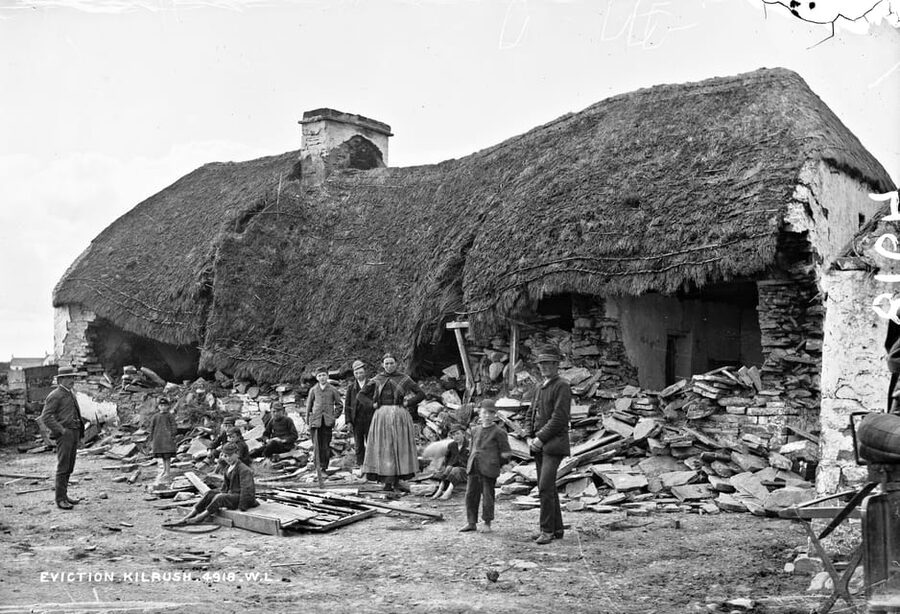
The exhibition covers workhouses, evictions, coffin ships, and disease. These are not side notes. They explain why the famine became a crisis of death and displacement rather than a short period of food shortage.
Workhouses reveal the harsh limits of formal assistance. Evictions show what happened when tenants could no longer meet obligations. Coffin ships point to the dangerous conditions faced by people forced to leave Ireland, while disease shows how hunger weakened communities and made survival still harder.
The exhibition’s wording is designed to be easy to understand, which makes the material accessible to a wide range of visitors. The trade-off is that a compact exhibition cannot explore every debate or local variation in detail. You get a clear foundation, not a full academic study.
That is not a serious flaw if you know what you are booking. I would recommend this visit as an introduction, a thoughtful addition to a Dublin itinerary, or a way to give wider Irish history more human meaning. If you already know the subject well, you may want a larger museum or a longer guided program for more depth.
Is $16 good value?
At $16 per person, the ticket is reasonably priced for a focused historical attraction. You receive entry, access to the original artifacts, the film, and a translation manual in French, German, and Italian. The visit lasts at least an hour for most careful readers, though the exact length depends on your pace.
The value comes from the concentration of material. This is not a large attraction filled with many rooms and unrelated objects. It is a compact presentation built around one subject, with visual material and primary sources that help explain it.
I would not recommend judging the price by square footage. The exhibition’s purpose is interpretation, not spectacle. If you want a polished account of the famine with rare photographs, letters, newspapers, and a film, $16 is a sensible spend. If you expect an expansive national museum with extensive collections, the price may feel less attractive.
The included translation manual is useful if you are more comfortable reading French, German, or Italian. The supplied information lists French twice, but the practical point is that language support is available in those languages.
Who should make time for this visit?
I would choose this exhibition for several types of Dublin visitors:
- First-time visitors to Ireland: It gives essential context for understanding Irish politics, migration, poverty, and memory.
- History-minded visitors: The original letters, newspapers, photographs, and soup pot provide more than a basic text display.
- Families with older children: The story is clearly structured, though the subject is difficult and parents should decide if it suits their children.
- Visitors with limited time: One hour is enough for a meaningful visit, and the central shopping-centre location is convenient.
- People seeking a quieter indoor stop: Benches in each room and seating for the film make the pace manageable.
- Visitors with access needs: The exhibition is wheelchair accessible.
I would be less likely to recommend it if your Dublin plans already include an extensive treatment of the famine and you are looking for something light or entertaining. This is a reflective stop, not a cheerful break between shopping and sightseeing.
Practical tips for a better visit
Plan to arrive with enough time to read. The exhibition is open from 12pm to 6pm, and one hour is the minimum sensible allowance. If the famine is a major interest, leave extra room for the film and the original documents.
Use the elevator from the Grafton Street entrance, then go left on the second floor. The car park entrance takes you to the opposite end of the centre, so do not assume the first visible retail route will lead directly there.
Start with the storyboards, then spend time with the photographs and original documents. Watch the film either as an introduction or near the end as a review of the main points. The benches make it easy to pause without blocking the displays.
You can cancel up to 24 hours in advance for a full refund, and reserve now while paying later. Those terms are helpful if your Dublin schedule is still shifting. The ticket remains valid for 180 days, with start times checked through availability.
Should you book the Irish Famine Exhibition?
Book it if you want a clear, one-hour introduction to one of Ireland’s most painful chapters. The personal letters, original newspapers, rare photographs, and cast iron soup pot give the subject a human scale, while the storyboards and film keep the wider causes in view.
Do not book it expecting a huge museum or a lively guided tour. The exhibition is compact, self-paced, and emotionally serious. For $16, I think it offers good value to visitors who want historical context and primary-source material in a manageable format, especially if this is your first visit to Ireland.
FAQ
Where is the Irish Famine Exhibition located?
It is in unit 200b on the top floor of Stephens Green Shopping Centre in Dublin. From the Grafton Street main entrance, take the elevator on the right about 20 metres inside, go to the second floor, and turn left.
How long should I allow for the exhibition?
Allow at least one hour. The visit is self-paced, and each room has a bench. Seating is also available for the 15-minute overview film.
What is included with the entry ticket?
The ticket includes entry to the Irish Famine Exhibition and a translation manual in French, German, and Italian.
Are the book and USB version included?
No. The book and USB stick are available to purchase separately at the reception desk.
Is the exhibition wheelchair accessible?
Yes, the exhibition is wheelchair accessible.
Can I cancel the booking?
Yes. You can cancel up to 24 hours in advance for a full refund. You can also reserve now and pay later, and the ticket is valid for 180 days.
Just added around Dublin
- Dublin: Howth Safari Hiking Tour★ 5.0 · 70 reviews
- Dublin: Trinity College, Castle, Guinness and Whiskey Tour★ 4.7 · 85 reviews
- Dublin: Howth Cliffs and Ireland’s Eye Boat Cruise★ 4.1 · 12 reviews
- Dublin: Hop-on Hop-off Tour with Live German Commentary★ 4.5 · 41 reviews
- Dublin: Howth Cliffs and Lighthouse Boat Tour★ 4.5 · 43 reviews
- Dublin: Highlights and Hidden Corners Walking Tour★ 4.8 · 79 reviews
- Dublin: Historical and Cultural Historical Walking Tour★ 4.8 · 6 reviews
- Dublin: Highlights and Hidden Gems Walking Tour★ 4.4 · 12 reviews
Museums, compared.
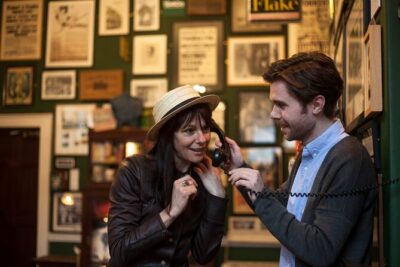
The Little Museum of Dublin Famous Guided Tour
Read our review →

Giant’s Causeway with the Titanic Exhibition and the best of Northern Ireland
Read our review →
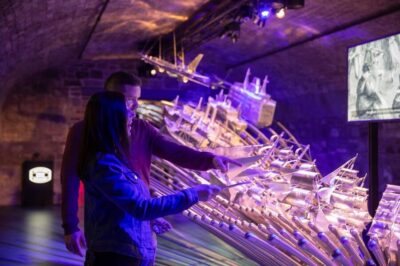
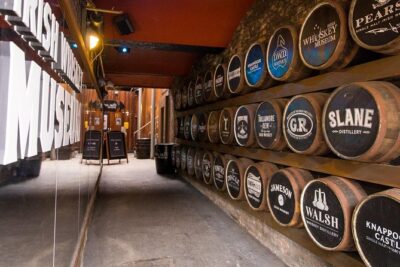
Irish Whiskey Museum: Whiskey Blending Experience
Read our review →
Irish Whiskey Museum Blending Tour with Tastings
Read our review →Browse the lists this tour appears in