
Reviewed · MUSEUMS
Dublin: EPIC Museum Entrance Ticket
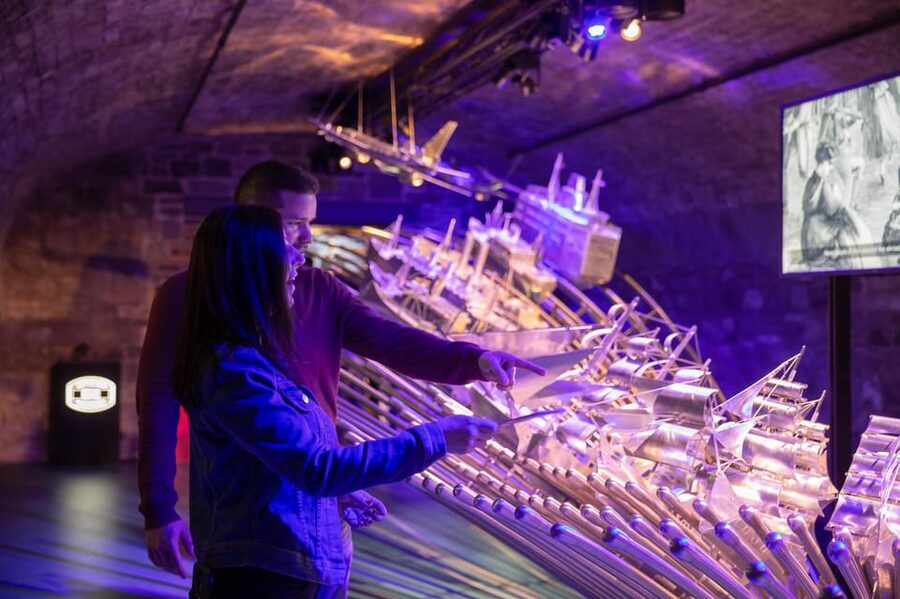
Irish history takes on a worldwide scale at EPIC, where the focus is not only on Ireland itself but on what Irish emigrants did after leaving home. Interactive galleries replace long blocks of text with touch screens, motion quizzes, sound, and film, making the subject easier to follow than a conventional museum display.
I especially like the free return visit within 10 days, which lets you see the museum in sections instead of racing through it. The souvenir passport is another smart touch, giving you a simple way to mark your progress. The main consideration is time: two hours is a sensible minimum, and the multimedia approach may feel like too much if you prefer quiet, object-filled museums.
Key points to know before you go
- Irish stories with a worldwide reach: Follow the people who left Ireland and went on to shape politics, science, music, art, literature, and other fields.
- A self-guided visit: Your ticket includes an audio guide app, but not a guided tour. Bring headphones and a charged smartphone.
- Useful repeat entry: Return free within 10 days, a rare bonus for a museum that can take two or more hours to see properly.
- Easy Docklands location: EPIC is in the CHQ building, about a 10-minute walk from central Dublin and close to Connolly and Tara Street stations.
- Good add-ons nearby: The Jeanie Johnston Famine Ship is directly opposite, while the Irish Family History Centre and cafés are in the same building.
- Accessible for a wide range of visitors: The museum is wheelchair accessible, with seating and secure lockers for bags and coats.
What EPIC is really about
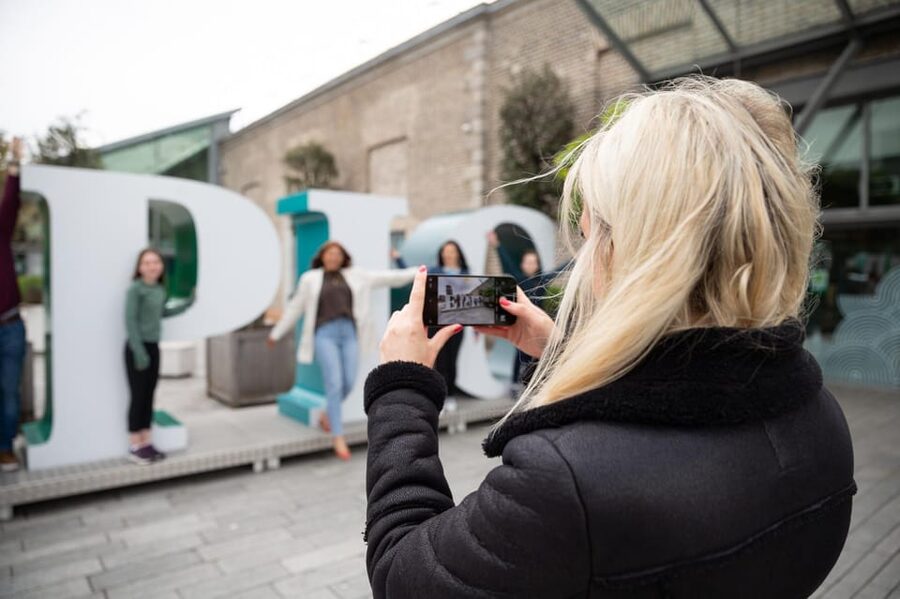
EPIC The Irish Emigration Museum tells the story of Ireland through the people who left it. That sounds simple, but it gives the museum a useful angle. Instead of presenting Irish culture as a collection of familiar symbols, it asks how Irish people carried their ideas, skills, faith, music, politics, and ambitions across the world.
You will encounter stories of emigrants who became scientists, politicians, poets, artists, musicians, inventors, convicts, and outlaws. The subject reaches well beyond the best-known chapters of Irish history. It also helps explain why Irish identity is claimed by so many people far beyond the island itself.
For anyone with Irish ancestry, the museum can feel personal without requiring you to know your family tree in advance. You may recognize names, places, or themes, but you can also simply follow the larger story of departure and adaptation.
I like that EPIC treats emigration as more than a tale of hardship. Leaving Ireland was often forced by famine, poverty, punishment, or limited opportunity, but Irish emigrants also created new lives and influenced the societies they entered. That broader view gives the visit more balance.
A few more things to do around Dublin worth a look
- Irish Rock ‘N’ Roll Museum Experience Dublin
★ 5.0 · 6,112 reviews - The Little Museum of Dublin Famous Guided Tour
★ 5.0 · 2,948 reviews - Dublin EPIC Museum Admission Ticket
★ 4.5 · 1,729 reviews
Entering the CHQ building in Dublin Docklands
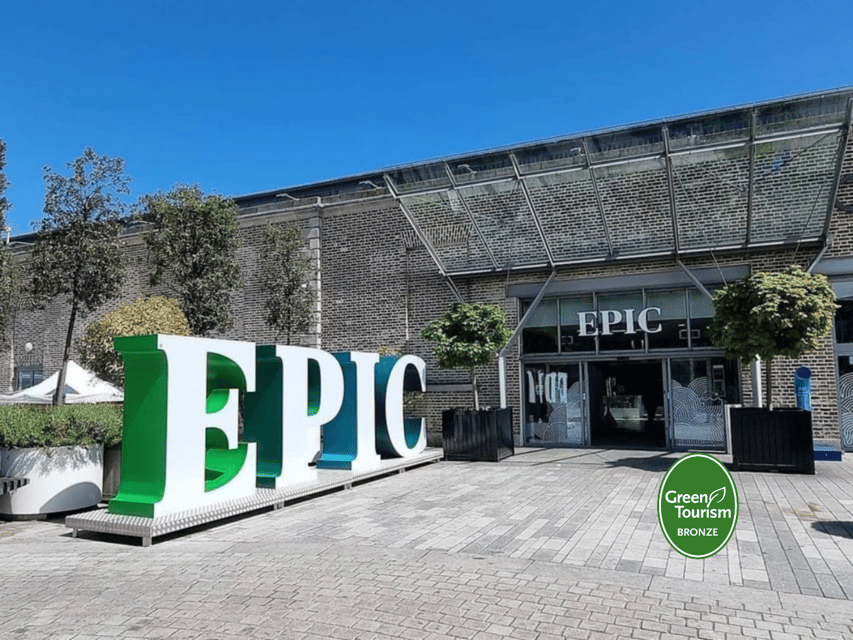
EPIC is located in the CHQ building at George’s Dock on Custom House Quay. You present your voucher at the museum ticket desk, then begin the visit inside the former docklands building.
The location is easy to add to a Dublin day. It is about a five-minute walk from Connolly and Tara Street train stations and roughly a 10-minute walk from the city centre. That makes it practical if you are already visiting the Custom House, the Docklands, or the Jeanie Johnston.
The building also gives you useful options before and after the museum. Cafés and restaurants are located on-site, so you do not need to leave the area to find a meal or coffee. Food and drinks are not allowed inside the museum, so plan to use those facilities before entering or after you finish.
The Jeanie Johnston Famine Ship sits directly opposite EPIC. Its admission is not included, but combining the two can give you a more physical sense of famine-era emigration after EPIC provides the wider story. Entry to the Irish Family History Centre is also separate, even though it is located on-site.
How the interactive galleries work
EPIC is designed as a self-guided experience. You move through a series of galleries at your own pace, using touch screens, motion-sensor quizzes, audio, and video. The format keeps you involved rather than asking you to read every panel from start to finish.
Your ticket includes access to an app with an audio guide. You need a charged smartphone and headphones, so do not arrive with a nearly empty battery or assume that phone speakers will be convenient. The audio adds useful context, especially when a display gives only a short introduction.
The technology is a major reason the museum works well for families and for anyone who loses interest in traditional displays. The quizzes and touch screens give you something to do, while the video and sound help bring distant stories closer.
There is a trade-off. One visitor found the multimedia content excessive, and that is a fair warning. If you like quiet galleries, original objects, and long stretches of contemplation, EPIC may feel busy. The museum is built around digital interaction, so you should choose it because you want an active, guided-by-you format.
Following the story of Irish emigration
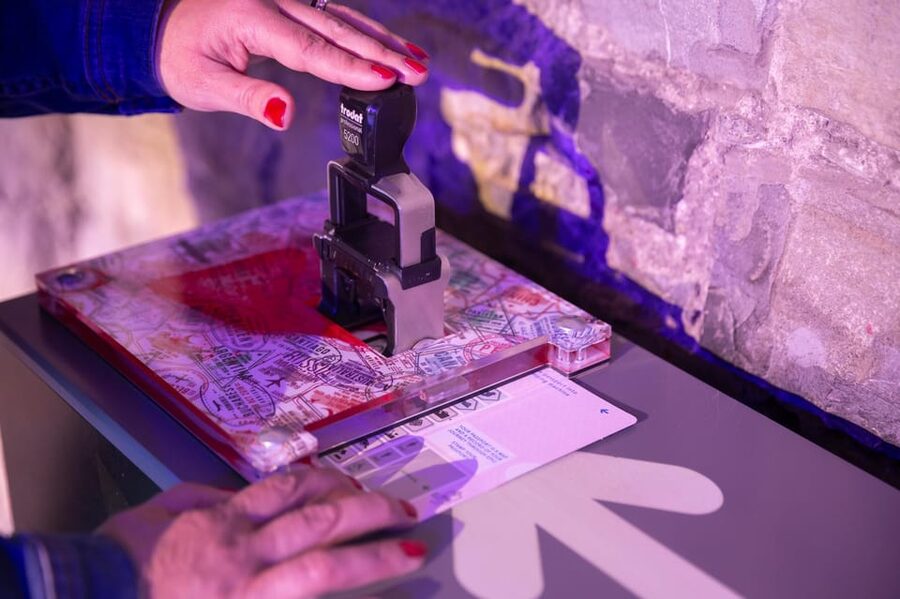
The museum’s central strength is its subject. Irish emigration is not treated as a brief chapter inserted into a general museum about Ireland. It is the organizing idea, so the galleries can connect personal movement with larger events and worldwide influence.
You will learn about the reasons people left and what happened after they arrived elsewhere. The story includes famine, religion, punishment, invention, politics, music, and culture. It also shows how Irish people contributed to places far from home.
The museum works particularly well if you are curious about the worldwide Irish diaspora. Around 70 million people around the world claim Irish heritage or ancestry, and EPIC gives that connection a framework. You do not need to be Irish to appreciate it. The museum also makes clear that national identity can travel, change, and take on new meaning in a different country.
I would allow at least two hours if you want to listen to the audio, try the interactive features, and read the displays at a comfortable pace. Several sections are presented in bite-sized units, so you can pause often without losing the thread. If you examine every exhibit closely, two and a half hours may be more realistic.
Same base, a very different sort of day:
- Dublin to Cliffs of Moher, including Wild Atlantic Way and Galway
★ 5.0 · 23,331 reviews - From Dublin: Cliffs of Moher, Burren & Galway City Day Tour
★ 4.8 · 18,888 reviews - Dublin: Guinness Storehouse Entry Ticket
★ 4.6 · 16,863 reviews - Dublin to Cliffs of Moher, Burren, Wild Atlantic Way, Galway Tour
★ 5.0 · 12,924 reviews
Why the souvenir passport matters
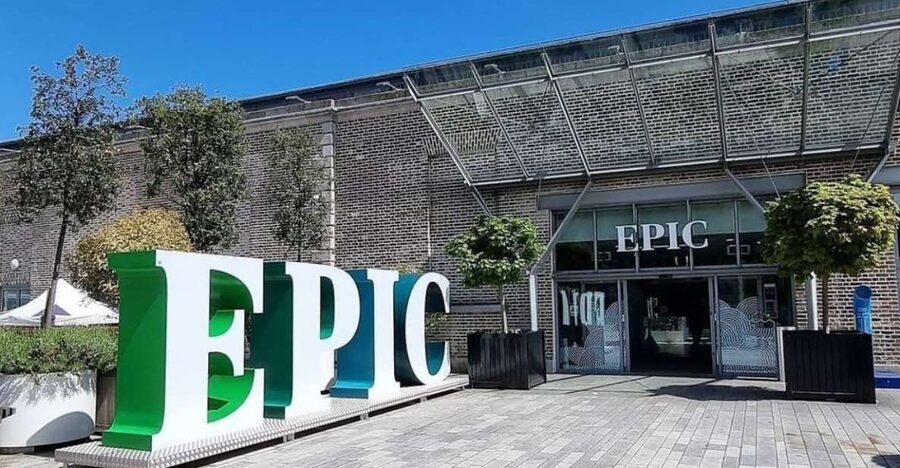
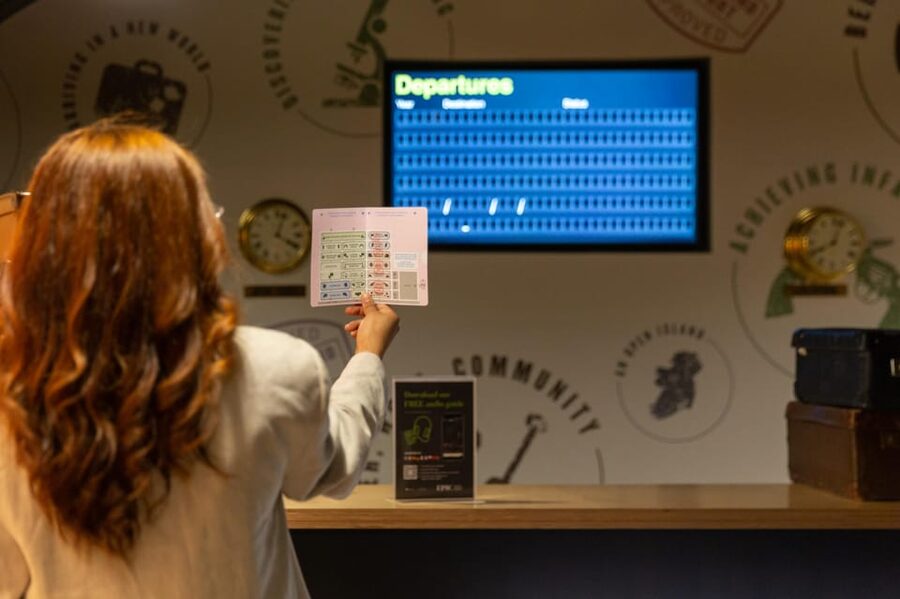
The souvenir passport is more than a piece of paper to keep in your bag. It gives the visit a clear sense of movement through the galleries and adds a small hands-on element to a museum already built around participation.
It can be especially useful for children, who may enjoy having a task while adults take in the historical material. Adults may also appreciate it as a modest keepsake, particularly if the visit is part of a family heritage trip.
The free return visit within 10 days is the more important benefit. You can make one visit to understand the overall story, then return to focus on sections that caught your attention. This is helpful if you are visiting with children, using the audio guide, or trying to fit EPIC around other Dublin plans.
The ticket is valid for one day, with starting times based on availability. The return privilege extends beyond that initial day, allowing another visit within 10 days. Check the exact entry details when booking so your schedule matches the available time.
Is $24 a fair price?
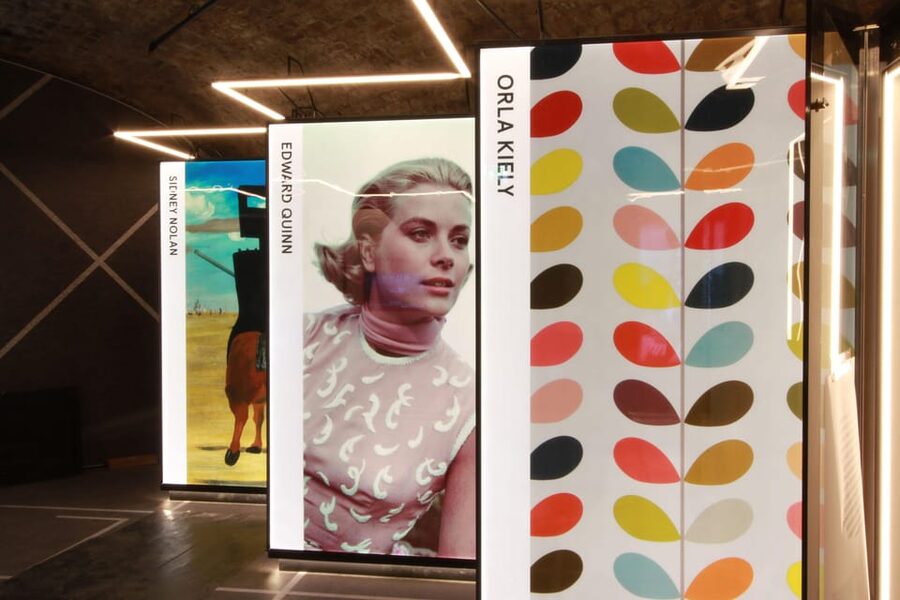
At $24 per person, EPIC is not a throwaway stop, but the price becomes easier to justify if you use the museum properly. You receive museum admission, the audio guide app, a souvenir passport, access to the current temporary exhibition, and the option to return within 10 days.
The repeat entry is important value. Many museums charge once for a single visit, and you may feel pressured to see everything in one pass. Here, you have a practical reason to return if you need more time or want a second look at the audio and interactive material.
The value depends on your interests. If you want a large collection of historic objects, this may not be the best use of your money. EPIC is strongest as a story-driven, multimedia museum. You are paying for the presentation, the structure, and the chance to connect many individual stories into one worldwide account of Irish emigration.
Booking online is also worth checking because the online price may be lower than buying in person. The listed price is $24, but availability and booking details can affect what you pay.
Planning a two-hour visit
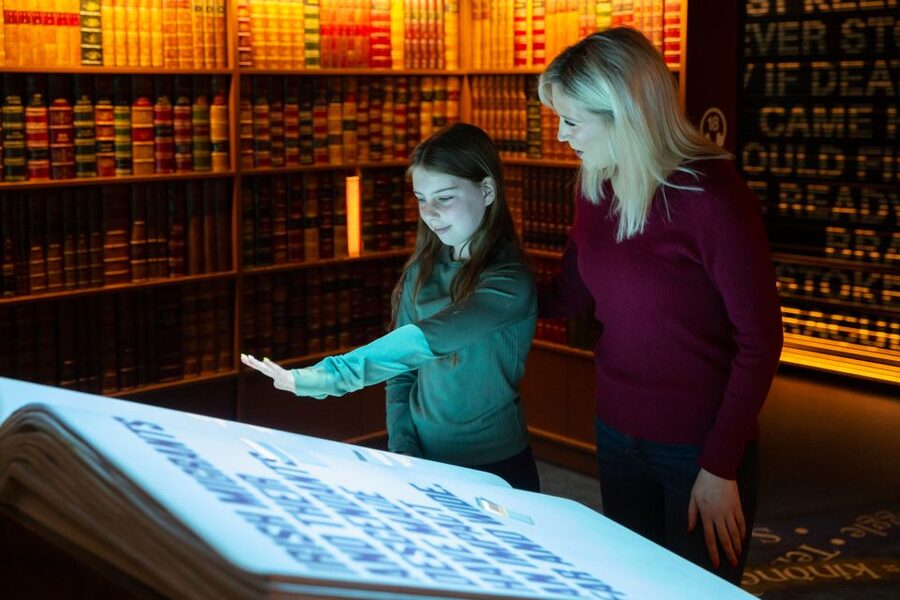
A good visit begins with enough time. Do not squeeze EPIC into a short gap between other appointments if you want to hear the audio guide and use the interactive displays.
Start by getting familiar with the souvenir passport and the app. Keep your phone charged, connect your headphones, and use the lockers for bags and coats if needed. Seating is available, which helps if you need regular breaks or are visiting with someone who cannot stand for long periods.
Move steadily through the galleries, but do not feel you must stop at every screen. The museum contains a lot of information, and the return ticket gives you permission to be selective. On the first pass, follow the main story. On a second visit, spend more time with the people or subjects that interest you most.
If you arrive hungry, eat first. Food and drinks are not allowed inside, and the nearby cafés and restaurants make it easy to handle this before or after the visit. Coming late in the afternoon may also work less well if you want to see every section without rushing.
Who will get the most from EPIC?
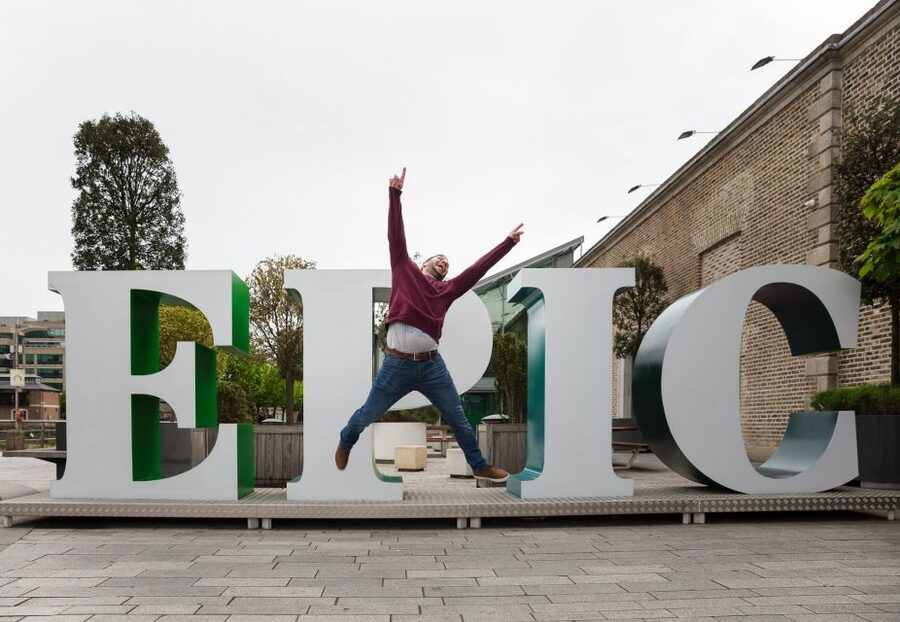
EPIC is a strong choice for anyone interested in Irish ancestry, family history, migration, or the worldwide influence of Irish people. It also suits visitors who prefer museums with sound, video, touch screens, and short interactive activities.
Families may find the passport and quizzes helpful, though the amount of information means younger children may not stay focused throughout. Adults who enjoy genealogy can pair EPIC with the Irish Family History Centre, but remember that the family history centre requires its own admission.
The museum also works for visitors who have only a general interest in Ireland. You do not need specialist knowledge, and the displays introduce the main ideas as you go. It is a useful choice when rain makes outdoor sightseeing less appealing, or when you want an indoor stop close to central Dublin.
I would be less quick to recommend it to someone seeking a traditional museum filled mainly with historic objects. EPIC is about personal stories and presentation. Its greatest strength, the interactive format, is also the feature most likely to divide opinion.
Accessibility and practical comfort

The museum is fully wheelchair accessible, making it a sensible option for visitors who need step-free access. Seating is available throughout the facilities, and secure lockers can hold bags and coats.
The staff can assist with practical needs, and a wheelchair is available for use. Since the visit can last two hours or more, these details matter. You can take breaks rather than treating the museum as a nonstop walk through galleries.
The experience is in English, including the host or greeter and audio guide. There is no guided tour included, so you remain responsible for choosing your pace and using the app. That flexibility is helpful, but you need to prepare your phone and headphones before arrival.
EPIC, the Jeanie Johnston, and the Docklands
EPIC works well as part of a small Docklands itinerary. The Jeanie Johnston is a two-minute walk away, directly opposite the museum, and focuses on the famine ship experience. Its admission is separate, but the two attractions complement each other.
You can use EPIC to understand the larger movement of Irish people around the world, then visit the ship for a more concentrated look at one part of that story. The Irish Family History Centre offers another separate option if you want to investigate your own ancestry.
The cafés and restaurants in the CHQ building make the area easy to use for several hours. You could spend much of a day in the same location without repeated trips across Dublin. That is especially handy when the weather is poor or when your group has different energy levels.
Should you book EPIC?
Book EPIC if you want an engaging account of Irish emigration, especially if you have Irish family connections or enjoy interactive museums. The audio guide, passport, temporary exhibition, and free return visit give you more flexibility than a standard one-entry museum ticket.
Allow at least two hours, bring headphones and a charged smartphone, and avoid arriving hungry. Pair it with the Jeanie Johnston if you want another perspective on Irish emigration, but budget separately for that attraction.
Skip it only if you strongly prefer quiet, object-based museums or dislike multimedia displays. For most visitors who want to understand how Irish people shaped the wider world, EPIC is a worthwhile Dublin stop at $24, with the return visit making the price easier to defend.
FAQ
Where is EPIC The Irish Emigration Museum?
EPIC is in the CHQ building at George’s Dock, Custom House Quay, in Dublin’s Docklands. It is about a five-minute walk from Connolly and Tara Street train stations and roughly a 10-minute walk from the city centre.
How long should I allow for EPIC?
Allow at least two hours for a comfortable visit. If you listen to the audio guide and examine the exhibits closely, you may need two to two and a half hours or more.
Is the museum a guided tour?
No. A guided tour is not included. The ticket includes access to an app with an audio guide, allowing you to move through the museum at your own pace.
What should I bring?
Bring headphones and a charged smartphone for the audio guide app. Food and drinks are not allowed inside the museum.
Can I return to EPIC after my first visit?
Yes. Your ticket includes a free return visit within 10 days. The initial ticket is valid for one day, with starting times depending on availability.
Is EPIC wheelchair accessible?
Yes. The museum is fully wheelchair accessible. Seating and secure lockers for bags and coats are also available, and a wheelchair can be used during the visit.
Is admission to the Irish Family History Centre included?
No. Entry to the Irish Family History Centre is not included in the EPIC ticket. It is located on-site but requires separate admission.
Is entry to the Jeanie Johnston included?
No. The Jeanie Johnston Famine Ship is directly opposite EPIC, but admission to the ship is separate.
Can I cancel the booking?
Yes. You can cancel up to 24 hours in advance for a full refund. A reserve-now, pay-later option is also available.
Just added around Dublin
- Gin School, distill you own gin, cocktails, tastings, food★ 5.0 · 8 reviews
- Dublin : Street Art Walking Tour★ 5.0 · 3 reviews
- Dublin: Personal Photographer- Travel Photography Experience★ 4.5 · 8 reviews
- Dublin: Skip-the-line Book of Kells & Old Town Private Tour★ 5.0 · 6 reviews
- Dublin: Howth Coastal Craft Beer and Seafood Tour★ 5.0 · 62 reviews
- Vikings In Dublin (Walking Tour)★ 5.0 · 8 reviews
- Dublin: Silent Disco Walking Tour★ 4.9 · 21 reviews
- Dublin: Private Tour of City Monuments in Spanish★ 5.0 · 6 reviews
Museums, compared.
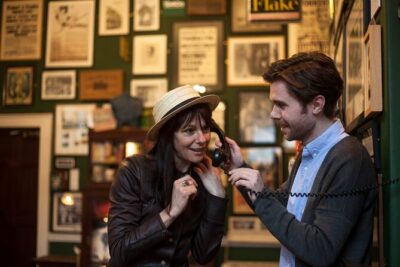
The Little Museum of Dublin Famous Guided Tour
Read our review →

Giant’s Causeway with the Titanic Exhibition and the best of Northern Ireland
Read our review →

Irish Whiskey Museum: Whiskey Blending Experience
Read our review →
Irish Whiskey Museum Blending Tour with Tastings
Read our review →
Browse the lists this tour appears in