

Reviewed · MUSEUMS
Dublin EPIC Museum Admission Ticket
EPIC tells the story of Ireland through the people who left it. Across 20 galleries, you’ll follow journeys shaped by famine, work, faith, politics, adventure, and necessity, then see how Irish people and their descendants influenced life around the world. The interactive exhibits make a large subject easier to follow.
I like the playful passport, which gives children and adults a simple reason to keep moving from gallery to gallery. I also like the freedom to enter during opening hours and set your own pace, with a free audio guide available in nine languages. The main caution is that EPIC covers a lot, so you may need three hours, not the suggested 90 minutes, and some sections may feel less relevant to you than others.
Key points to know before you go
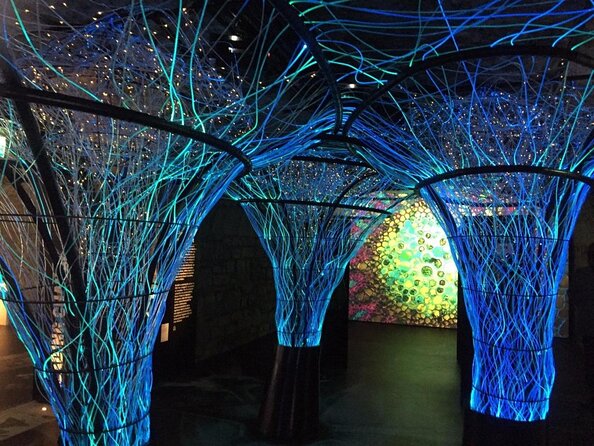
- Twenty galleries cover Irish emigration from several angles, including hardship, achievement, music, sport, politics, invention, and modern life.
- Your souvenir passport becomes part of the visit, with a stamp available in each gallery.
- The free audio guide comes through a phone app in nine languages, while a device costs an extra €2 if you cannot download it.
- You can explore independently, without joining a guided group or following a fixed route speed.
- The Irish Family History Centre costs extra, but it offers access to genealogy help and consultations with a professional genealogist.
- The visit usually takes 1.5 hours, though you should allow up to three hours if you read carefully or use the interactive displays fully.
Why EPIC works better than a standard museum
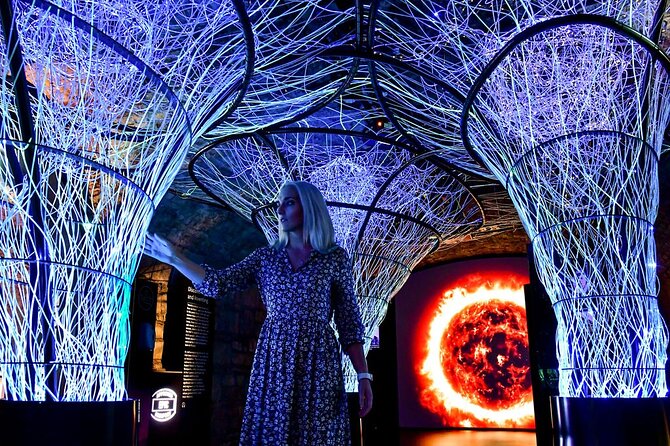
The central idea is simple: Irish history is not only the story of the island. It is also the story of the more than 10 million people who left, and of the estimated 70 million people around the world who claim Irish ancestry today.
That wider view gives EPIC its purpose. You are not simply walking past objects in glass cases. You are following personal journeys and seeing how departure changed families, communities, and countries. The museum looks at why people left, where they went, and what they did after reaching a new home.
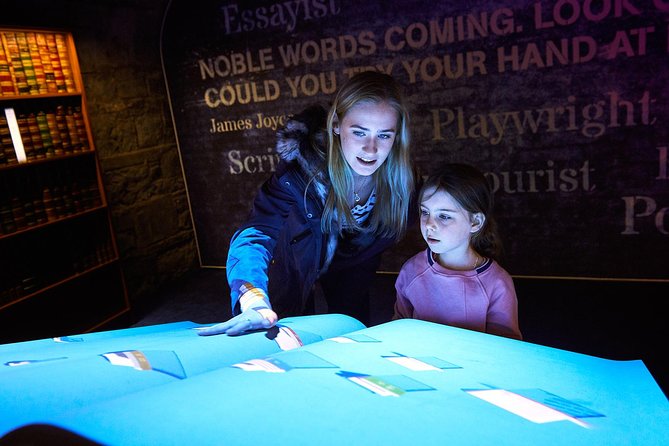
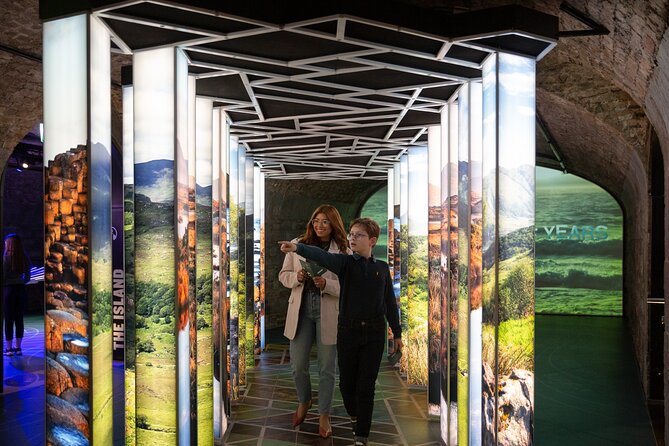
The modern presentation helps with a subject that can otherwise feel broad and hard to organize. Screens, sound, touch-based activities, and short stories break the material into manageable pieces. You can read, listen, watch, and interact rather than relying only on long blocks of text.
I especially like the way the museum connects well-known Irish figures with ordinary family stories. You may recognize names from politics, music, sport, invention, or public life, but the main thread remains the everyday experience of leaving home and building a new life elsewhere.
This approach also explains why the museum can feel emotional. Emigration is not presented as one neat success story. It includes loss, pressure, survival, ambition, and pride. Some people left by choice. Others had very little choice at all.
A few more things to do around Dublin worth a look
- Irish Rock ‘N’ Roll Museum Experience Dublin
★ 5.0 · 6,112 reviews - The Little Museum of Dublin Famous Guided Tour
★ 5.0 · 2,948 reviews - Giant’s Causeway with the Titanic Exhibition and the best of Northern Ireland
★ 5.0 · 1,122 reviews
Arriving at the CHQ building in Dublin
EPIC is in Dublin’s CHQ building, a short walk from O’Connell Street or Trinity College. That makes it easy to add to a central Dublin day, especially if you are already visiting the city center.
You check in with your electronic or paper voucher and receive a souvenir passport for the visit. The passport is more than a keepsake. You collect a stamp in each gallery, giving the route a clear sense of progress. For families, this small activity can keep younger visitors interested while adults spend more time with the displays.
The museum is self-guided. You can enter at your chosen time during opening hours and move through the galleries at a speed that suits you. There is no need to stay with a group or wait for a guide to finish a section.
Staff are located around the museum and can answer questions. That is useful if you want help with an exhibit or need to understand how one part connects to the next.
The pre-booked ticket is most useful if you want to protect a place at a popular Dublin attraction. It also removes one small task from your day. Your ticket is mobile, so you can show the voucher on your phone, though a paper voucher is also accepted.
The 20-gallery journey through Irish emigration
The itinerary has one main stop, EPIC itself, but the 20 galleries create a series of smaller chapters. The displays cover Irish departures across different periods rather than focusing on one event alone.
You begin by considering why people left the island. The reasons varied. Economic hardship, political pressures, famine, religious issues, family circumstances, and the search for work all shaped individual decisions. That matters because it prevents the story from becoming a single explanation for a very large movement of people.
As you move along, you learn where Irish emigrants went and how they adapted. The museum follows their struggles and achievements without treating either side as the whole story. You will see how Irish communities formed abroad and how descendants kept links to Irish identity.
The subject reaches beyond famine-era emigration. The galleries also cover modern times and the contributions of Irish people and their descendants around the world. Music, sport, politics, inventions, and other forms of public life appear along the way.
That range is one of EPIC’s strengths, but it can also be a weakness. A museum trying to cover centuries of movement, dozens of subjects, and millions of people must move quickly. If you want detailed treatment of one event or one family, you may find the material broad rather than exhaustive.
I suggest using the passport to keep your route moving, then pausing in galleries that connect most strongly with your interests. You do not need to give every room the same amount of time.
Interactive displays and the free audio guide

EPIC uses technology throughout the experience. The interactive design is especially helpful if you do not usually choose museums. Instead of only reading labels, you may be asked to listen, watch, respond, or explore information on a screen.
The audio guide adds another layer. You can download the free app for iPhone or Android, with audio available in nine languages. Listening can help you make sense of the displays and put individual stories into a larger order.
Bring headphones if you prefer to control the sound around you, although the supplied information does not specify whether headphones are provided. One practical point is worth noting: several screens or audio points may operate at once. In a busy moment, competing sound can be distracting.
If you cannot download the app, an audio guide device is available for an additional €2. That small charge is easy to overlook, so include it in your budget if you need a physical device.
You do not have to use the audio guide. The museum can be followed without it, and some people will prefer to read and interact at their own speed. If you want more context, use the audio. If you are visiting with children or a mixed-interest group, you may prefer to switch between the app and the displays.
Same base, a very different sort of day:
- Dublin to Cliffs of Moher, including Wild Atlantic Way and Galway
★ 5.0 · 23,331 reviews - From Dublin: Cliffs of Moher, Burren & Galway City Day Tour
★ 4.8 · 18,888 reviews - Dublin: Guinness Storehouse Entry Ticket
★ 4.6 · 16,863 reviews - Dublin to Cliffs of Moher, Burren, Wild Atlantic Way, Galway Tour
★ 5.0 · 12,924 reviews
How much time should you allow?
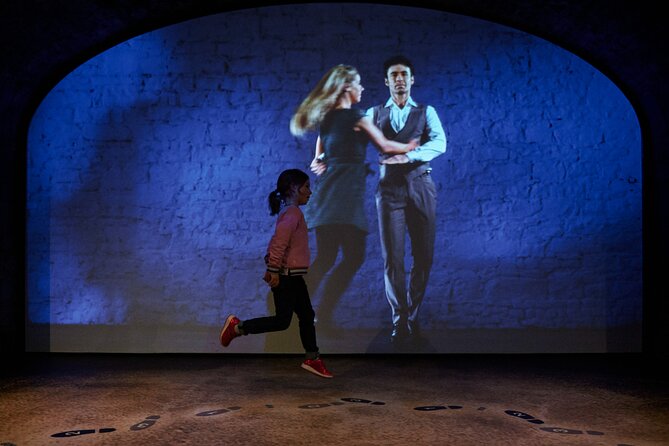
The usual visit takes about 1.5 hours. That is a reasonable target if you move steadily and do not stop at every screen.
I would allow two to three hours if you care about Irish family history, plan to use the audio guide, or want time for the interactive sections. Some people can finish in roughly 90 minutes, while others may still be engaged after three hours.
Your pace will also depend on who is with you. Children may move quickly through some galleries but spend extra time collecting passport stamps. Adults interested in politics, music, sport, or genealogy may pause often. One section can hold your attention while another may not suit you at all.
The open-ended format is helpful here. You can move ahead, slow down, or return to an earlier point. A particularly useful feature is the reported flexibility to return the next day if you cannot finish on the day of your visit. Confirm this arrangement with staff when you arrive, since it may depend on the ticket conditions and opening schedule.
Restrooms and a place to get a snack are available, which makes a longer visit easier. The museum also has a gift shop. You can combine the visit with nearby central Dublin sights rather than treating it as a full-day activity.
Is the museum good for children and mixed-interest groups?
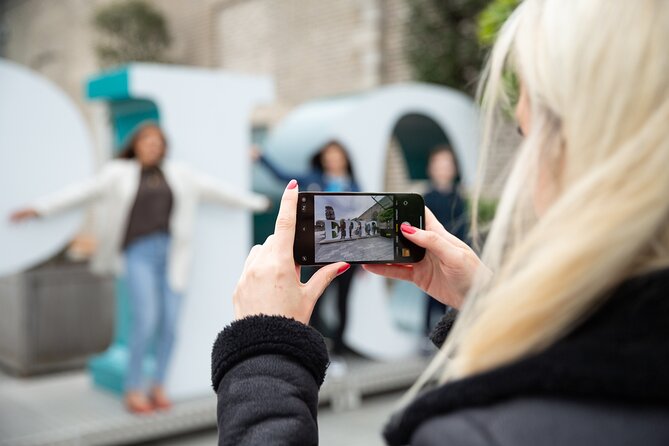
The passport stamps make EPIC more family-friendly than many history museums. Children have a clear task in each gallery, and the interactive elements offer more variety than a traditional display of objects and labels.
Still, the subject is large and sometimes serious. Younger children may enjoy the stamps and screens without fully following the reasons people left Ireland. Older children and teenagers may get more from the sections on famous Irish figures, sport, music, inventions, and migration.
The museum also works well for adults who do not usually seek out museums. The design gives you something to do, and the route is easy to follow. You do not need specialist knowledge of Ireland before arriving.
Mixed groups should plan for different levels of interest. One person may want to study family stories and letters, while another may be ready to leave after an hour. Since the tour is self-paced, you can split up briefly and meet afterward.
The displays may feel overwhelming if you try to absorb everything in one pass. I would not treat that as a problem. Pick the areas that matter most to you, and accept that a single visit cannot cover every detail equally.
The Irish Family History Centre costs extra
Standard EPIC admission does not include entry to the Irish Family History Centre. If you want to investigate your own Irish ancestry, you will need to pay an additional admission fee.
The centre can help you explore ancestors, family connections, and your personal story. You can also schedule a consultation with a professional genealogist. This is the part of the experience most likely to add real value for someone who already knows family names, locations, or dates and wants help taking the research further.
Do not assume the regular museum ticket includes a personal family search. It does not. Think of EPIC as the broad context, and the Family History Centre as the optional personal research service.
That separation is useful. You can visit the museum simply to understand Irish emigration, then decide if you want to spend more time and money on your own family. For some people, learning about the pressures faced by earlier generations will make the family research feel more meaningful.
Is the $25.40 price good value?
At about $25.40 per person, this is not the cheapest museum admission in Dublin. The value depends on how much time you give it and how interested you are in Irish emigration, ancestry, or interactive museums.
For a 90-minute visit, the price is reasonable if the subject matters to you. For a two to three-hour visit, it becomes easier to justify, especially since the ticket includes the souvenir passport and access to the free app-based audio guide.
The ticket also offers practical value. Pre-booking helps secure entry, and the mobile format is convenient. You are paying for an organized, self-paced experience rather than a short guided talk.
The price is less appealing if you prefer small, object-focused museums or want a detailed study of one narrow period. EPIC aims to cover a huge subject for a general audience. That breadth is part of its appeal, but it means some areas receive only a short treatment.
I would also keep the extra Family History Centre fee in mind. If genealogy is your main reason for going, calculate the total cost before booking.
Practical details that affect your visit
Children must be accompanied by an adult. Service animals are allowed, and the museum is near public transportation. Most people can take part in the self-guided experience.
You receive booking confirmation at the time of purchase. The ticket can be shown electronically or on paper. Free cancellation is available if you cancel at least 24 hours before the experience start time. A cancellation within 24 hours is not refunded, and changes are not accepted inside that period.
The cut-off uses Dublin local time, so check the time carefully if you are booking from another country.
For the best experience, arrive with enough phone battery if you plan to use the app. Set aside at least 90 minutes, and use two or three hours as your working estimate if you like to read closely. If you are visiting with children, make the passport stamps part of the plan rather than rushing through them.
Who should book EPIC?
You should consider EPIC if you have Irish ancestry, enjoy migration stories, or want an approachable introduction to Ireland’s global connections. It is also a smart choice for a family group because the passport and interactive displays give children something concrete to do.
I would recommend it to first-time Dublin visitors who want a museum that explains Ireland beyond castles, churches, and political landmarks. It adds a human side to the city’s story and shows how much of Irish identity was shaped outside the island as well as within it.
You may want to skip it if you dislike screens, audio points, and broad survey-style museums. The amount of information can be tiring, and not every gallery will match your interests. If you prefer a quiet collection of original objects, this may not be your ideal Dublin stop.
For most people, the best plan is to book the standard admission, use the passport, and decide on the audio guide once you arrive. Add the Family History Centre only if you want personal genealogy help.
Should you book the Dublin EPIC Museum ticket?
Book it if you want an engaging, self-paced look at why more than 10 million Irish people left and how their descendants shaped the world. The 20 galleries, passport stamps, optional audio, and flexible timing give you plenty of control.
Allow more than the basic 1.5-hour estimate if you want to read, listen, and use the interactive displays fully. The experience is broad, sometimes emotionally heavy, and not every section will hold your attention equally. But if Irish identity, family history, or global migration interests you, the $25.40 ticket offers a thoughtful and well-organized use of your Dublin time.
FAQ
Where is EPIC The Irish Emigration Museum located?
EPIC is in Dublin’s CHQ building, a short walk from O’Connell Street or Trinity College.
How long does the museum visit take?
The usual visit takes about 1.5 hours, but you can spend up to three hours if you use the audio guide and explore the interactive galleries carefully.
Can I visit EPIC at any time?
You can enter during opening hours at your chosen time. The experience is self-guided, so you do not need to follow a fixed group schedule.
Is an audio guide included?
A free audio guide app is available for iPhone and Android in nine languages. If you cannot download the app, an audio guide device is available for an additional €2.
Is the Irish Family History Centre included?
No. Entry to the Irish Family History Centre is not included with standard EPIC admission. It requires an extra fee and can include help from a professional genealogist.
Are children allowed to visit alone?
No. Children must be accompanied by an adult.
Can I cancel my ticket for a refund?
Yes, if you cancel at least 24 hours before the experience start time. Cancellations made within 24 hours are not refunded, and changes are not accepted during that period.
Just added around Dublin
- Dublin: Howth Safari Hiking Tour★ 5.0 · 70 reviews
- Dublin: Trinity College, Castle, Guinness and Whiskey Tour★ 4.7 · 85 reviews
- Dublin: Irish Famine Exhibition Entry Ticket★ 4.4 · 15 reviews
- Dublin: Howth Cliffs and Ireland’s Eye Boat Cruise★ 4.1 · 12 reviews
- Dublin: Hop-on Hop-off Tour with Live German Commentary★ 4.5 · 41 reviews
- Dublin: Howth Cliffs and Lighthouse Boat Tour★ 4.5 · 43 reviews
- Dublin: Historical and Cultural Historical Walking Tour★ 4.8 · 6 reviews
- Dublin: Highlights and Hidden Gems Walking Tour★ 4.4 · 12 reviews
Museums, compared.

The Little Museum of Dublin Famous Guided Tour
Read our review →
Giant’s Causeway with the Titanic Exhibition and the best of Northern Ireland
Read our review →

Irish Whiskey Museum: Whiskey Blending Experience
Read our review →
Irish Whiskey Museum Blending Tour with Tastings
Read our review →
Browse the lists this tour appears in