
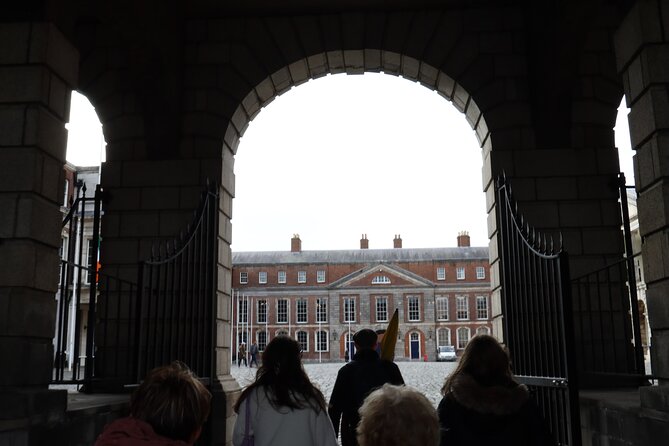
Reviewed · WALKING TOURS
Macabre, Ghostly & Bloody Walking Tour
Dublin’s darker stories are waiting in plain sight. This two-hour walk connects the Spire, the old city walls, Fishamble Street, and St. Michan’s Church with tales of Viking rituals, plague, grave robbing, murder, and bodies that refused to decay.
I like the route’s unusual subject matter, and I like that it moves beyond the usual pub-and-literary view of Dublin. Guides Peter and Rob bring different strengths: Peter adds wider Irish history and local tips, while Rob is described as enthusiastic, funny, and captivating. The possible drawback is that this is a story-led walk, not a series of interior visits, so anyone wanting lots of paid sights may find the outdoor format limited.
Key points to know before booking

- The route covers eight central Dublin stops, from the Spire to Fishamble Street and St. Michan’s Church.
- The stories are genuinely grim, including Victorian grave robbers, Black Death quarantine cages, a man-eating rat tale, and a legless serial killer.
- The 6:00 pm start gives the walk a fitting mood, though you should be ready to walk through central streets for about two hours.
- The group can reach 25 people, small enough for a guide-led walk but not necessarily intimate.
- The price is $20.43 per person, a fair rate for a professional English-speaking guide and a focused route.
- The tour ends near Christchurch Cathedral and Temple Bar, useful for planning dinner or an evening drink afterward.
Why Dublin’s macabre past works so well on foot
Dublin is a city where layers of history sit close together. On this route, you are not simply told that the past was harsh. You hear how death, disease, crime, punishment, religion, and superstition shaped particular streets and buildings.
That is the main appeal. The stories are tied to recognizable places rather than presented as a detached lecture. The Spire is a modern landmark, the General Post Office is linked with a heroic death, and Fishamble Street becomes the setting for a brutal punishment. The walk keeps shifting between famous Dublin and the parts of town that many visitors pass without a second look.
The tone also matters. This is not presented as a solemn historical seminar. The guide uses humor alongside the grisly material, which can make two hours easier to follow. Rob is described as funny and enthusiastic, while Peter is praised for adding general Irish history and useful suggestions about the area.
You should still know what you are booking. The title is accurate. Stories include corpses, executions, plague, violent death, and criminal acts. If you prefer light sightseeing, this may feel too grim. If you enjoy folklore, old crimes, and the uncomfortable corners of urban history, the subject gives the walk a clear purpose.
More Walking Tours in Dublin
- Dublin Highlights and Hidden Gems Guided Walking Tour
★ 5.0 · 6,020 reviews - Dublin: Highlights and Hidden Gems Walking Tour
★ 4.9 · 2,140 reviews - 1916 Rebellion Walking Tour
★ 5.0 · 1,605 reviews
Starting at the Spire on O’Connell Street
Meet beside the Spire on O’Connell Street Upper at 6:00 pm. The 120-meter sculpture is easy to identify in the center of Dublin, which makes this a practical meeting point for a walking tour.
The first stop is brief, about 15 minutes. That matters because the guide can establish the mood without spending too long on the modern monument itself. You begin in one of Dublin’s busiest central areas, then move toward stories that are far less polished.
The Spire is also a sensible place to arrive by public transportation, since the tour is near transit connections. Your mobile ticket and booking confirmation should make meeting the guide straightforward.
The General Post Office and the death of Cuchulainn
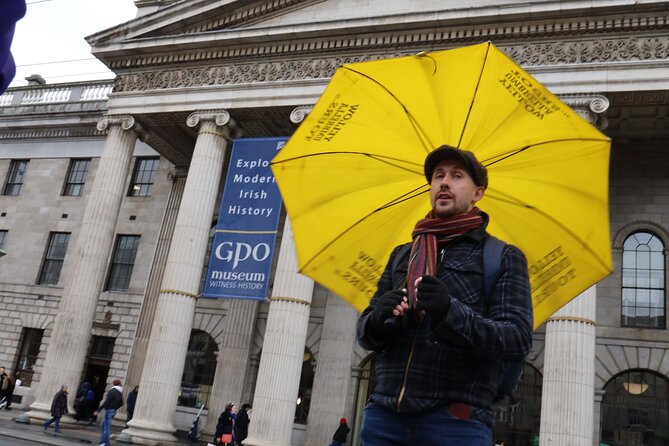
The second stop is An Post’s General Post Office, another 15-minute visit from the outside. Here, the focus shifts to the statue and the story of Cuchulainn’s death.
Cuchulainn is one of the great heroic figures of Irish legend, so this part gives the tour a mythic opening before it moves into more recent crime and disease. The story also shows how Dublin’s public spaces can carry several meanings at once. A building known to many people for modern Irish history is placed beside an older tale of heroic death.
Do not expect an extended building tour. The supplied details describe viewing the statue and hearing the story, not entering the post office. That keeps the route moving, but it means the value comes from the guide’s telling rather than access to the site.
Wolfe Tone Park, grave robbers, and Arthur Guinness
At Wolfe Tone Park, the guide turns to Victorian grave robbers and the wedding venue of Arthur Guinness. The contrast is part of the fun. One story deals with bodies being stolen from graves, while the other connects the same area with a celebrated name in Dublin’s commercial past.
The grave-robbing material fits the tour’s central theme particularly well. It brings up a disturbing reality of medical and social history without requiring a museum display. You hear about the practice in the place where the story belongs, then continue on foot.
The reference to Arthur Guinness adds a change of pace. A macabre walk needs occasional relief, and a wedding story helps prevent the evening from becoming one long procession of corpses and executions. This is also where Peter’s wider historical knowledge could add value, since the tour is not limited to supernatural tales.
More walking routes in Dublin:
- 90 Minute Dublin Walking tour and Sightseeing tips
★ 5.0 · 916 reviews - 2-Hour Historical Walking Tour from Dublin
★ 5.0 · 875 reviews - Historical 2-Hour Guided Walking Tour of Dublin
★ 4.7 · 865 reviews - Dublin Traditional Irish 3 Course Meal Walking Tour with Local
★ 5.0 · 755 reviews
Oxmantown and the darker side of Viking Dublin
Outside the old fruit and vegetable market in Oxmantown, the route reaches the Viking chapter. The guide describes the history of the area and some of the more disturbing parts of Viking ritual.
This stop is useful because it widens the tour beyond Victorian crime. Dublin’s dark past did not begin with crowded nineteenth-century streets. The Viking material places the city in a much older setting and links a present-day neighborhood with violence, belief, and ritual.
Again, expect an outdoor explanation rather than an archaeological site visit. The stop lasts about 15 minutes, enough for a focused account but not a long historical treatment. If you want a full study of Viking Dublin, this walk will only provide one sharp section of that story. If you want a memorable introduction with a gruesome edge, it fits the route well.
Father Matthew Bridge and the man-eating rats
At Father Matthew Bridge, the guide tells the story of the soldier devoured by man-eating rats. It is one of the tour’s most startling tales, and it gives the walk a strong piece of urban horror.
The exact appeal here is the setting. A bridge is an ordinary piece of city infrastructure, yet the story turns it into a place connected with fear and survival. This is the kind of stop that works best when the guide controls the pace and explains the local connection clearly.
Some people may find this section too sensational. The tour is built around macabre storytelling, though, so the grisly subject is not a surprise. You are not being asked to treat the story as a neutral architectural fact. The guide’s delivery, including the balance of humor and horror, will shape how well this stop works for you.
St. Audoen’s Church and the old quarantine cages
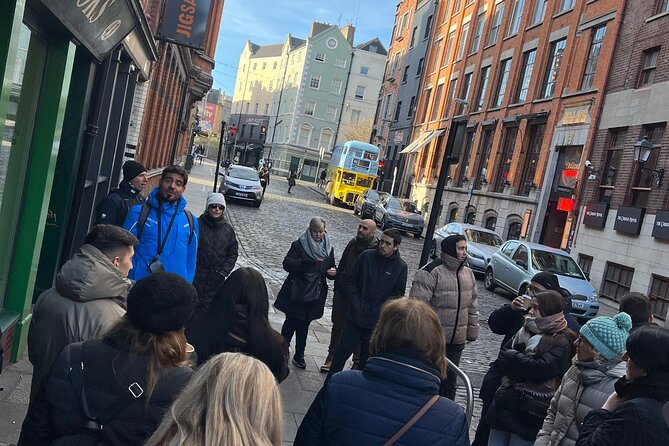
St. Audoen’s Church provides one of the route’s strongest physical details: the quarantine cages at the old city walls, connected with the Black Death.
This stop gives the tour a powerful historical anchor. Instead of hearing only about plague in general, you are shown a feature associated with efforts to control disease and isolate the sick. The cages make the fear of contagion easier to picture, and they show how harsh public health measures could become.
The church also changes the rhythm of the walk. After stories about Vikings, grave robbers, and violent death, the plague material brings in a wider social disaster. You get a sense of how disease affected the whole city, not just individual victims.
The experience remains guided from the street. The information provided does not promise entry to St. Audoen’s Church, so plan on seeing the exterior area and hearing the account there.
Fishamble Street and a death by fire
Fishamble Street brings the tour to a story about an infamous brothel keeper and her death by fire at the stake. It is one of the clearest examples of the walk’s interest in crime, punishment, and the treatment of notorious figures.
The story has a strong location link, which makes it more effective than a general account of an old criminal. You are standing on the street where the tale is placed, close to the historic center and the route’s final area.
This is also the end point listed for the walk. You finish on Fishamble Street in Wood Quay, beside Christchurch Cathedral and near the Temple Bar District. That is convenient if you want to continue your evening, but it also means the tour does not loop back to the Spire. Plan your journey from the ending area rather than assuming you will return to the meeting point.
St. Michan’s Church and Dublin’s mummified corpses
The final stop is St. Michan’s Church, where the guide discusses mummified corpses in the cellar and a legless serial killer. This is the most naturally Gothic part of the route, and it gives the walk a memorable closing image.
The mummified bodies fit the tour’s central promise better than almost anything else on the route. They connect the physical remains of Dublin’s past with the stories you have heard throughout the evening. The mention of the serial killer adds another criminal tale, keeping the final section firmly within the tour’s macabre theme.
The supplied details do not say that the tour enters the church or cellar. That is important. You should book this for the guide’s explanation and the surrounding location, not on the assumption that a cellar visit is included. If access matters to you, confirm it with Yellow Umbrella Tours Ltd before booking.
What $20.43 buys you
At $20.43 per person, this is priced as an accessible evening activity rather than a major sightseeing splurge. You receive a professional English-speaking guide and roughly two hours of structured storytelling across eight locations.
I see good value here if you want a focused introduction to Dublin’s darker side. The route covers a lot of ground, and the locations are spread across different periods: Irish legend, Viking Dublin, Victorian crime, plague, punishment, and notorious deaths. Paying for a guide also saves you from trying to connect these scattered sites on your own.
The value is less clear if you want extensive entry to historic buildings. The listed stops are presented as outdoor viewing points, and admission tickets are not included because the itinerary does not describe paid interior access. In that case, you are paying for interpretation, organization, and the guide’s delivery.
The 4.9 rating from 15 ratings, with 100 percent recommending the experience, points to strong early satisfaction. I would treat that as encouraging rather than conclusive, since the number of ratings is still modest. The repeated praise centers on the guides’ storytelling, humor, professionalism, and ability to add general history beyond the grisly material.
Timing, group size, and practical comfort
The tour lasts about two hours and begins at 6:00 pm. That schedule gives you a full afternoon for other Dublin sights, then places the walk in the evening when its subject feels most fitting.
The group limit is 25 people. That is not a private walk, but it is controlled enough for a guide to address the group without the scale of a large coach excursion. If you want a quiet, one-to-one conversation, a group of 25 may feel too large. If you like the energy of a shared walk, it should be manageable.
The tour is offered in English and uses a mobile ticket. Service animals are allowed, and most people can participate. It is near public transportation, which helps at the beginning and end. The route finishes near Christchurch Cathedral and Temple Bar, so you can combine it with an evening meal or continue exploring from central Dublin.
Cancellation is free up to 24 hours before the start time for a full refund. Changes or cancellations made less than 24 hours before the 6:00 pm start are not accepted for a refund.
Who will enjoy this Dublin ghost walk
I would choose this tour if you like history with a dark edge, local legends, old crimes, and stories that make familiar streets feel different. It is especially useful early in a Dublin visit, since Peter’s habit of adding area tips could help you decide what to see afterward.
The walk also suits repeat visitors who have already seen the standard sights. You get a new reason to look at the General Post Office, Fishamble Street, St. Audoen’s Church, and St. Michan’s Church.
I would think twice if you dislike graphic subjects or want a relaxed introduction to Dublin. The stories include death by fire, plague, grave robbing, violent crime, mummified bodies, and a disturbing animal attack. The humor may soften the material, but it does not remove the grim content.
Should you book the Macabre, Ghostly & Bloody Walking Tour?
Book it if you want two hours of tightly themed Dublin storytelling at a reasonable price, especially if the names Cuchulainn, Viking ritual, plague cages, and mummified corpses catch your attention. The strongest part is the range of stories and the way they connect to actual streets and landmarks.
Skip it if you want extensive interior access, a gentle sightseeing walk, or a large amount of conventional Dublin history. For most people who enjoy unusual local history, the $20.43 cost, central route, and strong guide-led focus make this a worthwhile evening choice.
FAQ
Where does the tour start?
The tour starts beside the Spire on O’Connell Street Upper in North City, Dublin.
What time does the tour begin?
The tour begins at 6:00 pm.
How long does the walking tour last?
The tour lasts approximately two hours.
Where does the tour finish?
The tour finishes on Fishamble Street in Wood Quay, near Christchurch Cathedral and the Temple Bar District.
What language is the tour offered in?
The tour is offered in English.
What is included in the price?
A professional guide is included.
How many people can join the tour?
The maximum group size is 25 people.
Is the tour suitable for most people?
The provided information says most people can participate. Service animals are also allowed.
Can I cancel for a full refund?
Yes. You can cancel at least 24 hours before the start time for a full refund. Cancellations or changes made less than 24 hours before the start time are not refunded or accepted.
Just added around Dublin
- Wicklow Mountains Private Day Tour including Glendalough★ 5.0 · 7 reviews
- Wicklow: Private Day Tour from Dublin★ 5.0 · 5 reviews
- Women Of Ireland: Trailblazers & Pioneers★ 5.0 · 4 reviews
- Premium Irish Whiskey Tasting Hosted by Local Dublin Expert★ 5.0 · 77 reviews
- Whiskey Tasting Tour of Dublin★ 5.0 · 117 reviews
- Wicklow Mountains & Glendalough Luxury Private Day Tour★ 5.0 · 23 reviews
- Wicklow tour of Glendalough★ 4.5 · 8 reviews
- Waterford Crystal and Kilkenny Full-Day Rail Tour from Dublin★ 5.0 · 3 reviews
Walking Tours, compared.
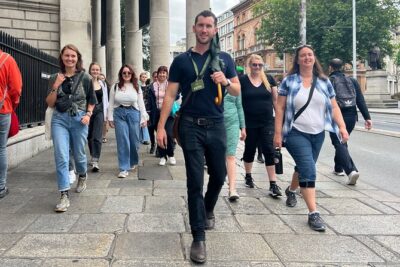
Dublin Highlights and Hidden Gems Guided Walking Tour
Read our review →

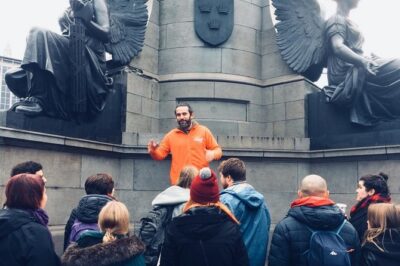
90 Minute Dublin Walking tour and Sightseeing tips
Read our review →

Dublin Traditional Irish 3 Course Meal Walking Tour with Local
Read our review →
Browse the lists this tour appears in