
Reviewed · MUSEUMS
Irish Famine Museum / Exhibition Dublin
The Irish Famine Exhibition tells a painful national story in a surprisingly compact setting: an upstairs room inside St. Stephen’s Green Shopping Centre. You move at your own pace through photographs, newspapers, simple explanatory panels, and objects linked to the Great Hunger, then watch a 15-minute film.
I like the self-guided format, which lets you stop with the material that matters most to you, and the rare views over St. Stephen’s Green add an unexpected Dublin bonus. The main drawback is that this is a temporary, text-based exhibition rather than a large, fully equipped museum. If you dislike reading, the hour may feel thin.
Key points to know before you go
- The original soup pot and 19th-century photographs give the exhibition a physical link to the famine years.
- A 15-minute documentary adds moving images and spoken context to the wall displays.
- Rare aerial views of St. Stephen’s Green offer something beyond the history panels.
- Self-guided admission takes about one hour, so it fits neatly into a day of sightseeing.
- Translation guides in four languages are available in French, German, Italian, and Spanish.
- The exhibition is temporary, with the stated season ending September 30, 2026.
Why this small exhibition matters
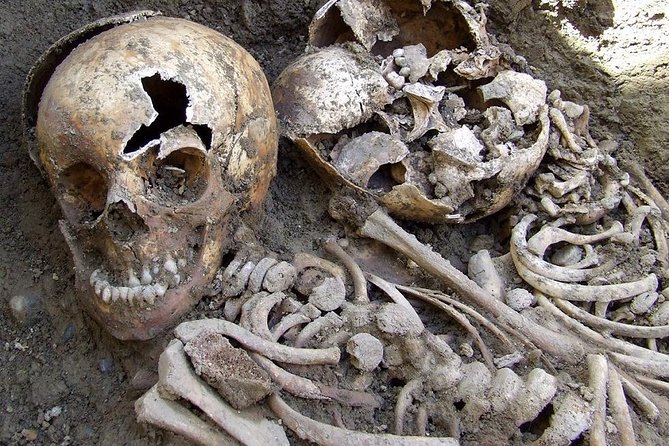
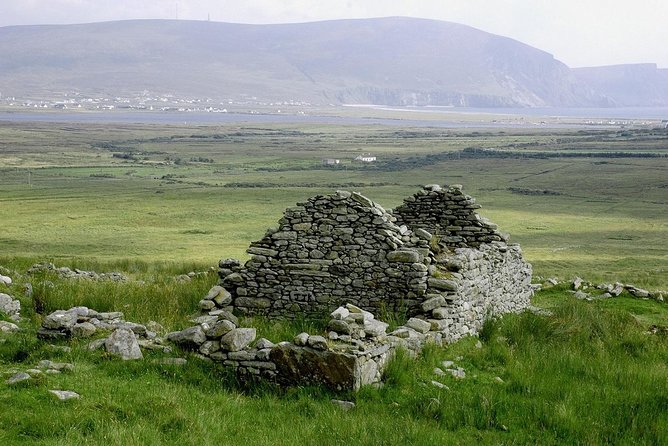
The Great Hunger is often reduced to one sentence about a failed potato crop. That misses the human scale of the disaster and the political choices around it. This exhibition focuses on the famine as a national catastrophe shaped not only by crop failure, but also by slow aid, poor decisions, and the response of the British government and landowners.
You will encounter a simple, direct presentation of what happened to Irish families and communities. The displays also connect the famine to emigration, a subject that helps explain why so many Irish families left the island during and after those years. One of the strongest reactions to the exhibition comes from seeing how a food crisis became a crisis of displacement, death, and lasting memory.
I appreciate the plain approach. The material does not depend on theatrical effects or a grand building to make its point. Instead, it asks you to read, look closely, and consider the consequences of decisions made far from hungry communities.
That approach also has limits. This is not a major museum with extensive galleries, interactive stations, or a long guided presentation. It is best understood as a focused temporary exhibition, not as a full day of Irish history.
A few more things to do around Dublin worth a look
- Irish Rock ‘N’ Roll Museum Experience Dublin
★ 5.0 · 6,112 reviews - The Little Museum of Dublin Famous Guided Tour
★ 5.0 · 2,948 reviews - Dublin EPIC Museum Admission Ticket
★ 4.5 · 1,729 reviews
Finding the exhibition inside St. Stephen’s Green Shopping Centre
The meeting point is St. Stephen’s Green Shopping Centre, at St. Stephen’s Green, Dublin, D02 HX65. The location is central and near public transportation, making it easy to fit into a walking day around central Dublin.
The setting may surprise you. You are not entering a traditional museum building. The exhibition is upstairs in a shopping centre, which gives the visit a practical, slightly makeshift feel. Some people will find that unusual and memorable. Others may feel that the setting lacks the atmosphere expected from a museum about such a serious subject.
If you have booked ahead, your mobile ticket is designed to help you avoid an entrance line. Confirmation is provided at booking. The stated operating season runs from April 1 through September 30, 2026, with opening hours from noon to 6 p.m. every day during that period.
That late-morning opening matters. You cannot use this as an early museum stop, so plan it around lunch or an afternoon walk. Because the visit takes about an hour, it works well before or after time in St. Stephen’s Green, shopping, or nearby central Dublin sights.
What you see in the main exhibition room
The exhibition is self-guided. There is no named guide listed, and no scheduled tour commentary is provided. You enter, take your time with the displays, and decide how much attention to give each section.
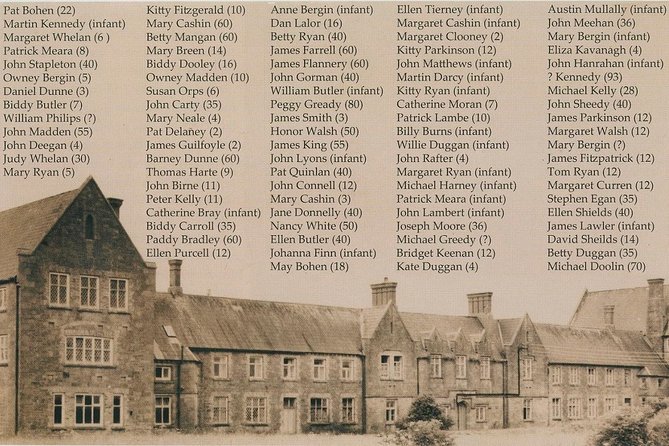
Expect a room built around written information, photographs, newspapers, and a small group of museum objects. The material aims to explain the famine in clear terms rather than present a highly technical academic study. That makes it approachable if you have only a basic understanding of Irish history.
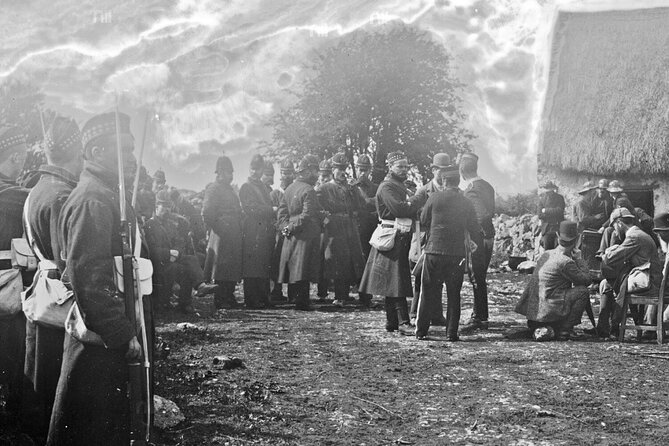
The 19th-century photographs are especially important. Written facts can feel distant, but photographs bring faces, clothing, poverty, and living conditions closer to the present. They also help you see the famine as a human event rather than an abstract statistic.
An original soup pot adds another useful connection to daily life. It is a modest object, but that is part of its value. The famine was not experienced through grand political speeches alone. It was experienced through the search for food, public relief, hunger, and the hard decisions made by families trying to survive.
Newspapers add a different viewpoint. They show how the crisis was discussed and recorded at the time. Together, the newspapers and photographs give the room more substance than a display made only from modern text panels.
The exhibition also explains the political response. The message is critical of what it presents as poor decisions and a slow disaster response. You will need to read the panels carefully, since the self-guided format gives you no guide to draw out the connections or answer questions as you go.
The 15-minute film and the value of a slower visit
A short documentary is included in the admission. At 15 minutes, it is long enough to give the exhibition a change of pace without taking over the visit.
I like the way the film can help you organize what you have just read. A wall panel may explain a policy or event, while film can add a more immediate sense of sequence and human impact. If you prefer listening and watching to reading, this is the part most likely to hold your attention.
The film area has one practical weakness: the exhibition is not climate controlled, and the room can become warm, particularly while you are seated watching the documentary. That is worth knowing if you are sensitive to heat or expect a cool museum environment.
You should not assume the documentary replaces the written material. It is only 15 minutes, while the rest of the experience depends mainly on reading the displays. Give yourself enough time before and after the film to look at the photographs, objects, and newspapers.
A visit of one hour is a sensible estimate. You can move faster if you want a brief introduction, but a slower pace gives the subject more weight. If you are visiting with a child, teenager, or family member who does not enjoy reading, plan for a shorter attention span and use the film and objects as anchors.
Same base, a very different sort of day:
- Dublin to Cliffs of Moher, including Wild Atlantic Way and Galway
★ 5.0 · 23,331 reviews - From Dublin: Cliffs of Moher, Burren & Galway City Day Tour
★ 4.8 · 18,888 reviews - Dublin: Guinness Storehouse Entry Ticket
★ 4.6 · 16,863 reviews - Dublin to Cliffs of Moher, Burren, Wild Atlantic Way, Galway Tour
★ 5.0 · 12,924 reviews
The unexpected view over St. Stephen’s Green
The exhibition includes rare aerial views of St. Stephen’s Green. This is a small but welcome feature because it links the historical material to the Dublin outside the room.
After looking at famine-era photographs and documents, seeing the park from above gives you a new sense of place. The view is not the main reason to book, but it adds variety to an otherwise text-heavy visit. It also gives you a chance to pause and look outward after concentrating on difficult material.
The park itself is part of what makes the location useful. You can continue your day outdoors after the exhibition rather than treating the museum as an isolated stop. The experience begins and ends at the same meeting point, so there is no separate drop-off or return arrangement to manage.
How much information can you absorb in one hour?
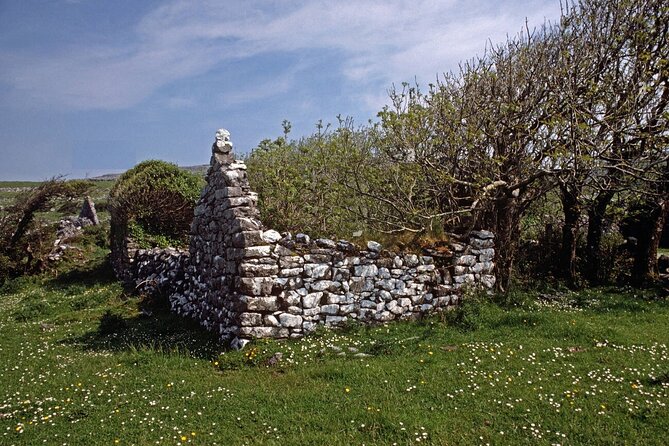
The exhibition presents a lot of information in a small space. The strongest way to handle it is to accept that you will not retain every date or policy detail. Focus instead on the main chain of events: the crop failure, hunger, government response, relief efforts, landlord involvement, emigration, and the long effect on Irish society.
The written material is described as simple and factual. That can be a benefit. You do not need specialist knowledge before arriving, and you can build a basic understanding as you move around the room.
It can also feel dense. A person who prefers objects, interactive displays, or a guide-led story may find the experience too dependent on reading. The exhibition tries to limit text and includes many photographs, but the written panels remain central.
I would allow extra mental space after the visit. This is not a light attraction that you rush through before shopping. The subject includes starvation, displacement, political failure, and the treatment of Irish people during a crisis. The exhibition is short, but the material is not emotionally small.
For families, children must be accompanied by an adult. Most people can participate, and service animals are allowed. The maximum stated group size is 90 people, though the self-guided format means your actual experience will depend on how busy the room is.
Translation help and language options
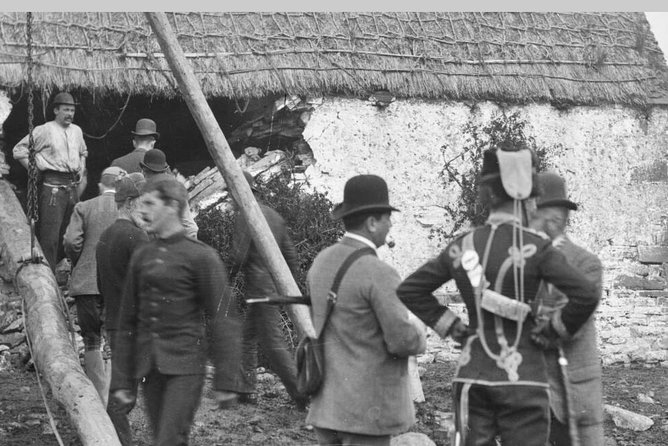
The exhibition is offered in English. A translation guide is available in French, German, Italian, and Spanish.
This is useful because the experience is built around reading. If English is not your first language, the translation guide can make the panels easier to follow and reduce the pressure to move quickly. It also means you can spend more time with the photographs and objects rather than trying to understand every sentence in English.
No audio guide or additional language service is specified. If you need a format beyond the listed translation guides, check before booking rather than assuming one is available.
Is $18.15 a fair price?
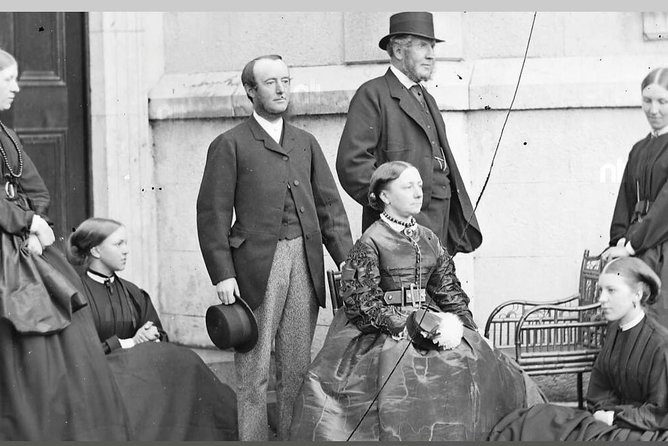
At $18.15 per person, the value depends on what you want from a museum visit.
If you want a large collection, several hours of galleries, or a guided tour, this will probably feel expensive for a one-hour temporary exhibition in a shopping centre. The admission does not include a book of the exhibition, though you may purchase one separately.
If you want a compact introduction to the Irish Famine, the price is easier to justify. Admission includes the exhibition, the original objects, the photographs and newspapers, the short documentary, and the chance to see the park from above. The central location also saves you the trouble of traveling to a distant museum for a focused presentation.
The best value comes when you already plan to be in central Dublin. Pair it with St. Stephen’s Green and nearby sights, and the one-hour length becomes an advantage rather than a weakness.
The exhibition has earned a 4.7 rating from 247 ratings, with 93 percent recommending it. Those figures suggest that the subject matter and clear presentation work well for most people, while the lower scores point to the same practical concerns: the pop-up setting, the amount of reading, and the warm film area.
Who should book this experience?
I would recommend it most strongly to:
- First-time visitors who want a short introduction to the Irish Famine.
- People tracing Irish family history and looking for emotional and historical context.
- Adults and older children who are comfortable reading exhibit panels.
- Visitors interested in how political choices shaped a humanitarian crisis.
- Anyone who wants a serious indoor stop near St. Stephen’s Green.
- Visitors who value a self-guided pace instead of a fixed tour schedule.
I would be more cautious if you want an interactive attraction or a guide who explains every display. The exhibition does not provide that style of visit. You will need to read, pause, and make your own connections.
The subject may also be difficult for young children. The activity allows children with an accompanying adult, but that does not mean every child will find the material suitable or engaging. Use your judgment based on your child’s age and interest in history.
Booking, timing, and cancellation advice
The mobile ticket lets you book admission in advance and avoid entrance lines. The experience is offered in English, with translation guides in French, German, Italian, and Spanish.
Free cancellation is available if you cancel at least 24 hours before the start time. A cancellation made less than 24 hours before the start time is not refundable, and changes within that period are not accepted. The cut-off uses local Dublin time.
Since the attraction is open from noon to 6 p.m., do not schedule it before midday. I would choose a time that leaves room for reading rather than squeezing it between two fixed appointments. The film and room can become warm, so a visit earlier in the afternoon may feel more comfortable than arriving near the end of the day.
Should you book the Irish Famine Exhibition?
Book it if you want a short, serious, accessible introduction to one of the defining events in Irish history. The photographs, newspapers, original soup pot, documentary, and simple factual panels create a useful visit, especially when paired with time in St. Stephen’s Green.
Skip it if you expect a large museum, a guided tour, extensive interactive displays, or a cool, carefully designed gallery. The shopping-centre setting and reading-heavy format are real limitations.
For the right reader, this is a worthwhile one-hour stop. Go in expecting a temporary exhibition rather than a major national museum, take time with the human stories, and use the central location to build it into a wider Dublin day.
FAQ
Where is the Irish Famine Exhibition located?
It is located inside St. Stephen’s Green Shopping Centre at St. Stephen’s Green, Dublin, D02 HX65, Ireland.
How long does the experience take?
The visit lasts approximately one hour.
Is the tour guided?
No. It is a self-guided exhibition that you explore at your own pace.
Is a film included?
Yes. A 15-minute documentary film is included with admission.
What languages are available?
The exhibition is offered in English. Translation guides are available in French, German, Italian, and Spanish.
What are the opening hours?
From April 1 through September 30, 2026, it is open Monday through Sunday from noon to 6 p.m.
What is included in the admission price?
Admission includes entry to the exhibition and the 15-minute documentary. A book of the exhibition is not included but may be purchased separately.
Can children attend?
Yes, but children must be accompanied by an adult.
Can I cancel my booking for a refund?
Yes, you can receive a full refund if you cancel at least 24 hours before the experience start time. Cancellations or changes made less than 24 hours before the start time are not accepted for a refund.
Just added around Dublin
- Gin School, distill you own gin, cocktails, tastings, food★ 5.0 · 8 reviews
- Dublin : Street Art Walking Tour★ 5.0 · 3 reviews
- Dublin: Personal Photographer- Travel Photography Experience★ 4.5 · 8 reviews
- Dublin: Skip-the-line Book of Kells & Old Town Private Tour★ 5.0 · 6 reviews
- Dublin: Howth Coastal Craft Beer and Seafood Tour★ 5.0 · 62 reviews
- Vikings In Dublin (Walking Tour)★ 5.0 · 8 reviews
- Dublin: Silent Disco Walking Tour★ 4.9 · 21 reviews
- Dublin: Private Tour of City Monuments in Spanish★ 5.0 · 6 reviews
Museums, compared.
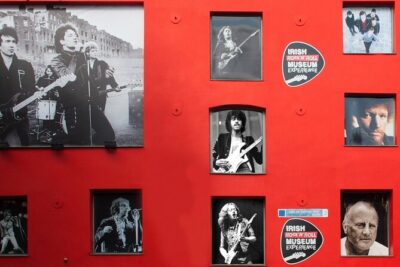
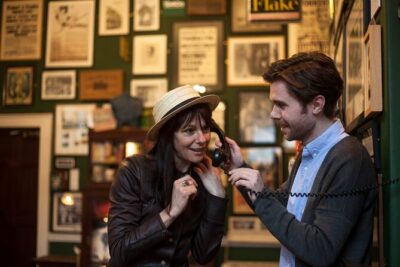
The Little Museum of Dublin Famous Guided Tour
Read our review →
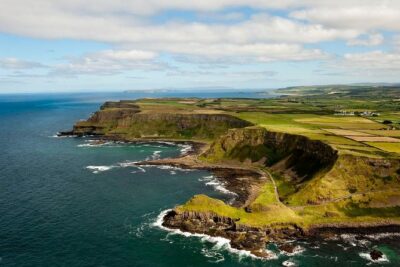
Giant’s Causeway with the Titanic Exhibition and the best of Northern Ireland
Read our review →
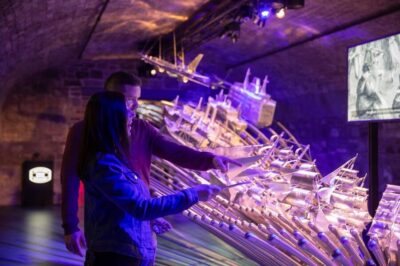
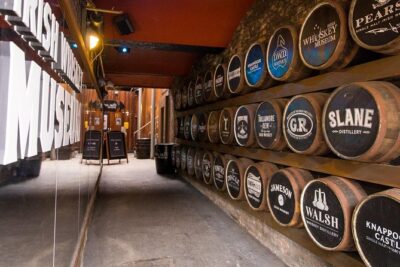
Irish Whiskey Museum: Whiskey Blending Experience
Read our review →
Irish Whiskey Museum Blending Tour with Tastings
Read our review →Browse the lists this tour appears in