Reviewed · TOURS IN DUBLIN
A Self-Guided Stroll Along Dún Laoghaire’s East Pier
Dún Laoghaire’s East Pier is best enjoyed at walking speed, with Dublin Bay opening up beside you and the town’s past appearing in churches, memorials, old railway remains, and harbor structures. This self-guided route links those details into an easy outing of about an hour.
I like the offline VoiceMap access, which means you can follow the map and hear the commentary without relying on a live data connection. I also like the mix of stories: the route covers the RMS Leinster tragedy, a Russian cannon, Irish emigration, and the making of one of Ireland’s major harbors.
The main drawback is that this is an audio tour, not a personal guide. You need your own smartphone and headphones, and the fixed, non-refundable booking policy gives you little room to change plans.
Key points to know before you go
- Start at St Michael’s Church: The route begins on Marine Road in the center of Dún Laoghaire and returns to the same meeting point.
- Follow the old Metals: Former railway remnants now form part of the walking route, linking the town’s transport past with its harbor.
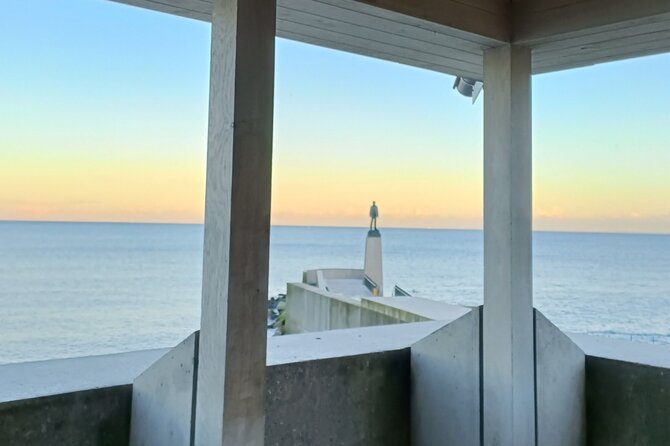
- Reach the East Pier Lighthouse: The pier provides broad views across Dublin Bay and toward the city.
- Expect several memorial stops: The RMS Leinster Memorial and Forgotten Irish Memorial add serious historical weight to the walk.
- Use the offline option: VoiceMap includes audio, maps, and geodata for offline use, but you must bring your own phone and headphones.
- Allow 60 to 75 minutes: The route is short enough for a free afternoon, yet detailed enough that you should not rush the stops.
Starting beside St Michael’s Church
Your walk begins at St Michael’s Church, on Marine Road. Established in the 1820s, the church gives you an immediate sense of Dún Laoghaire as a settled community rather than simply a seaside promenade.
The starting point is practical as well as atmospheric. It is near public transportation, and the tour both begins and ends there, so you do not need to arrange a second pickup point. The exact meeting point is St Michael’s Church, Marine Road, Dún Laoghaire, County Dublin.
From here, the audio guide sets up the town’s story. Dún Laoghaire grew from a coastal settlement into an important port, and the route keeps returning to that change. You are not just walking toward a lighthouse. You are following the line of a town shaped by ships, railways, emigration, war, and public memory.
Because the experience is self-guided, you decide the pace. You can pause near the church, stop for photographs, or move quickly through sections that interest you less. The tradeoff is that nobody is there to answer a question or point out a detail you missed.
A few more things to do around Dublin worth a look
- St Patrick’s Cathedral: Self-Guided Cathedral Admission
★ 4.5 · 2,126 reviews - Christ Church Cathedral Entrance Ticket & Self-Guided Tour
★ 4.6 · 773 reviews - Dublin Ghost Hunt Exploration Game and Tour
★ 4.0 · 34 reviews
From the Pavilion Theatre to the town’s public monuments
The next part takes you past the Pavilion Theatre, a modern cultural venue. Its presence helps show how Dún Laoghaire combines old harbor traditions with present-day arts and community life.
This is a useful early stop because it prevents the walk from becoming a string of old stones and solemn plaques. You see the town as it functions now, not only as it appeared in the nineteenth century. The audio commentary also gives the route a wider frame, showing how newer parts of town sit beside older civic landmarks.
You then pass the King George IV Monument and the RMS Leinster Memorial. These two places point in very different directions. The royal monument recalls the town’s links with the British monarchy, while the RMS Leinster Memorial honors people lost in one of Ireland’s worst maritime disasters.
The RMS Leinster was sunk during World War I. Its memorial gives the walk a quiet, serious pause, and it connects international conflict with the local community. The story is especially effective here because the harbor is not an abstract historical setting. You are looking toward the water where ships departed and arrived, while hearing about lives lost at sea.
I would give this portion your full attention. It is easy to focus only on the route to the pier, but these monuments explain why Dún Laoghaire matters beyond its views.
Walking the Metals, an old railway route
The route then follows the Metals, remnants of the former railway track that have become a promenade. This is one of the more distinctive parts of the walk because the old transport route helps explain how Dún Laoghaire changed from a fishing village into a major port town.
Railways altered the relationship between Dublin and the coast. Goods, mail, and people could move more easily, and Dún Laoghaire became tied to a larger network. The route presents that change through the physical shape of the walkway rather than through a museum display.
You will want comfortable shoes, even though the tour is not described as strenuous. The total distance and exact walking surface are not specified, so it is best to treat this as an ordinary outdoor stroll, not a formal accessible path with guaranteed conditions.
The Metals also provide a change of mood. After the church and monuments, you get a more open route with room to walk and listen. Since this is self-guided, keep the phone volume low enough to hear the recording clearly, or use headphones and remain aware of your surroundings.
Reaching Dún Laoghaire’s East Pier Lighthouse
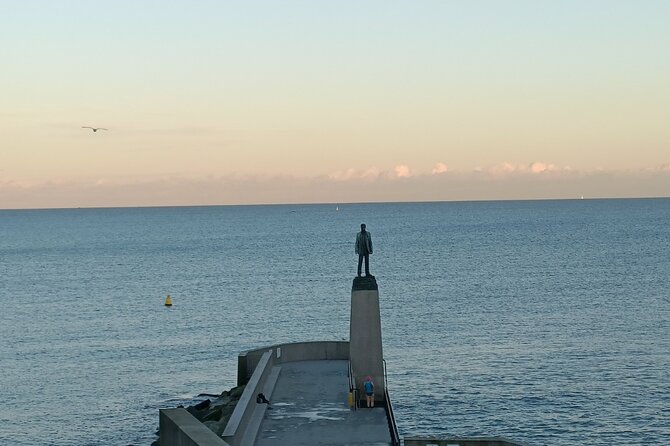
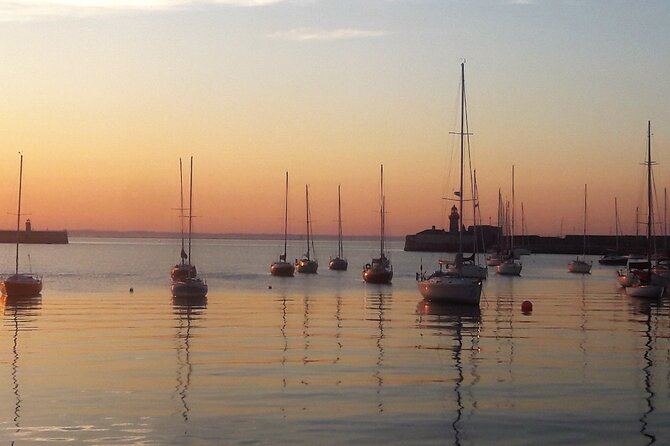
The main reward comes as you continue along Dún Laoghaire Pier toward the East Pier Lighthouse. The harbor opens out, and you gain panoramic views across Dublin Bay and toward the city.
This is the point where the route’s historical material and scenery work together. The harbor was built for a practical purpose, but it also shaped the town’s identity and Ireland’s connections by sea. The commentary explains how the harbor was constructed and why it played such an important role in the country’s development.
You can expect the pier to be the most scenic stretch of the experience. It is also the part most affected by weather. The tour is available every day and is listed with opening hours from midnight to 11:59 p.m., but a flexible time window does not make wind or rain disappear. Check the conditions before setting out and bring suitable clothing if the forecast looks unsettled.
The route lasts roughly one hour to one hour and fifteen minutes. That estimate gives you enough time to hear the commentary and pause at major points, but not necessarily to linger for a long meal or extended photography session. If you want a leisurely harbor visit, plan extra time before or after the audio route.
Same base, a very different sort of day:
- Dublin to Cliffs of Moher, including Wild Atlantic Way and Galway
★ 5.0 · 23,331 reviews - From Dublin: Cliffs of Moher, Burren & Galway City Day Tour
★ 4.8 · 18,888 reviews - Dublin: Guinness Storehouse Entry Ticket
★ 4.6 · 16,863 reviews - Dublin to Cliffs of Moher, Burren, Wild Atlantic Way, Galway Tour
★ 5.0 · 12,924 reviews
Carlisle Pier and the Forgotten Irish Memorial
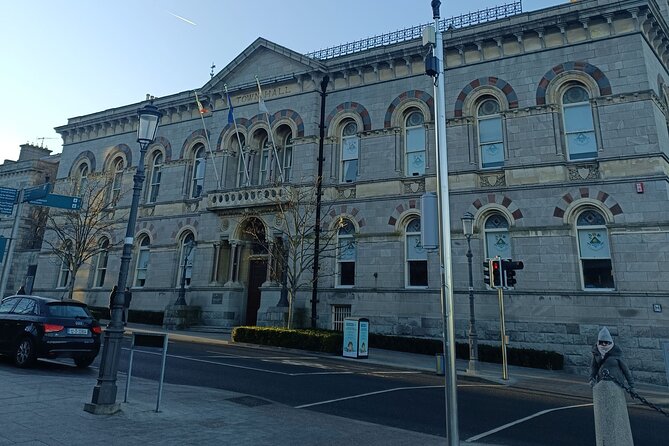
The walk also brings you to Carlisle Pier, which dates from the 1820s. It acts as a reminder that Dún Laoghaire’s waterfront was not created only for recreation. It was a working maritime gateway, with a long connection to passengers, ships, and overseas travel.
Carlisle Pier helps you picture the town before modern leisure culture took over the waterfront. Its value is in the connection between surviving structures and the people who once used them. The tour treats the pier as part of a larger story about movement: people leaving, arriving, working, and building lives around the sea.
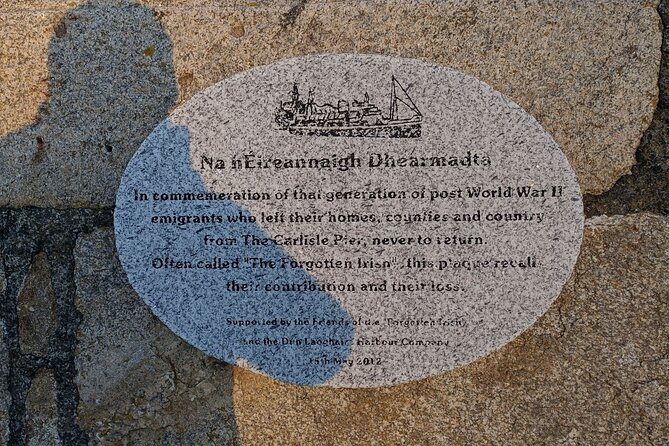
Nearby, the Forgotten Irish Memorial shifts the focus from harbor construction to emigration. It honors Irish people who left home for new opportunities and faced the uncertainty of making lives in distant places.
This is one of the most human stops on the route. A harbor can look grand in photographs, but memorials like this show the personal cost and hope behind maritime travel. If you have family connections to Irish emigration, you may find this stop especially meaningful. Even without that connection, it adds social history to what could otherwise be a simple waterfront walk.
The East Pier Bandstand Sun Shelter and the Russian cannon
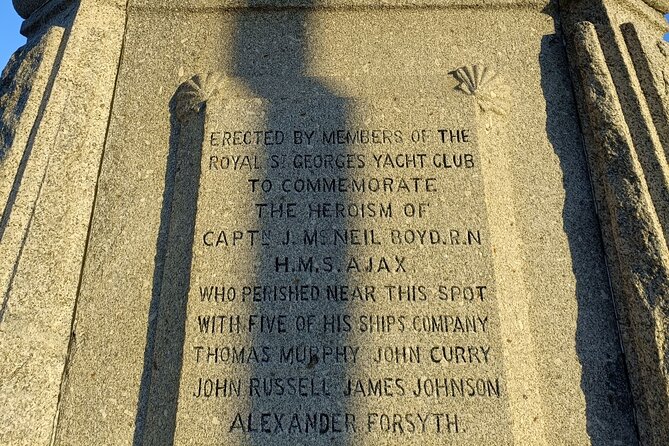
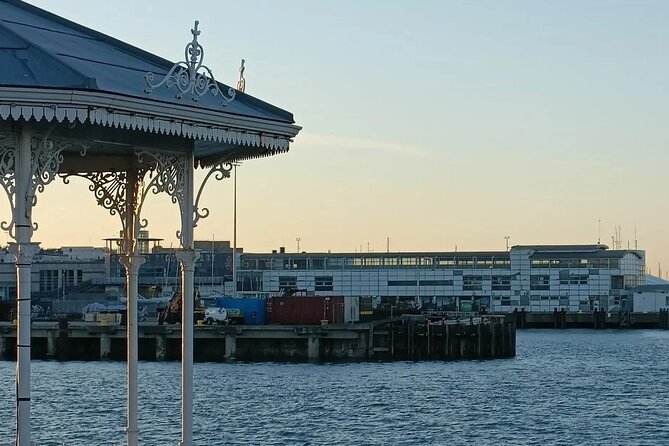
The route includes the unusual architecture of the East Pier Bandstand Sun Shelter. It is a small detail, but that is part of its appeal. Good walking tours do not only point to the largest monument. They also draw your eye to structures that help define the character of a place.
You then come across a Crimean War cannon with an eagle motif associated with the Romanov family. Its presence in Dublin is an unexpected detail, and the audio explains how a Russian cannon found its way here.
This is the kind of story that gives the tour variety. You move from church history to railway remains, from wartime loss to emigration, and then to a piece of military history that feels far removed from Dublin Bay. The cannon also rewards looking closely. Do not simply walk past it while watching the water.
The route does not appear to require timed admission to any of these places. You are walking through public areas and listening at the points along the way. That makes the experience simple, but it also means the quality depends on your phone battery, headphones, and ability to follow the map.
Finishing near the Roger Casement Statue
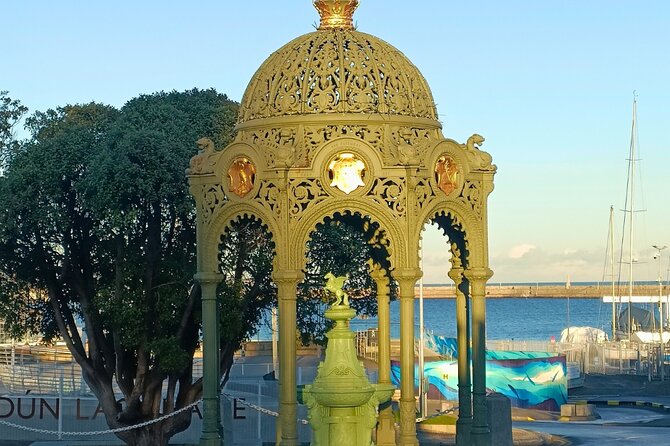
The final stop is near the Roger Casement Statue, honoring the Irish revolutionary and political figure. Ending here gives the walk a strong contrast with the earlier royal monument.
The route begins with an established church, passes symbols of monarchy and empire, remembers wartime loss and emigration, and finishes with an Irish figure associated with rebellion and national independence. That progression gives the outing a clear shape without turning it into a long museum lecture.
You finish back at the starting point, so nearby eateries are available for continuing your visit. The experience itself does not include food or drink, and no transportation is included. You are paying for the audio route, app access, and map data, not for a meal, a vehicle, or a live guide.
This is also a good point to stop the audio and enjoy Dún Laoghaire at your own pace. The tour gives you a framework, but you can add a café visit or more time around the harbor if your schedule allows.
What the $8.99 price really buys
At $8.99 per person, the tour is inexpensive compared with a private guided walk. The value comes from flexibility and repeat access rather than personal attention.
Your purchase includes lifetime access to the English-language tour through the VoiceMap app for Android and iOS. Audio, maps, and geodata are available offline, which is useful if you want to avoid using mobile data while walking.
That lifetime access matters if you expect to return to Dún Laoghaire or want to pause the route and finish later. It also makes the tour practical for a private group, since only your party participates. You can avoid matching the pace of strangers and can stop when you wish.
The price is less appealing if you want conversation, local recommendations, or answers to questions. A live guide can adjust the route and add personal stories. Here, the content is fixed, and your experience depends on your own preparation.
Remember to bring a smartphone and headphones. Neither is included. Food, drinks, and transportation are also separate costs. The booking is non-refundable and cannot be changed, so make sure your date and plans are firm before paying.
Who will enjoy this self-guided walk?
I would recommend this experience to you if you like short historical walks with scenic stops and prefer to explore independently. It suits a solo visitor, a couple, or a private group that wants control over its pace.
It also works well for a first visit to Dún Laoghaire because the route gives you several ways into the town: architecture, harbor engineering, transport, memorials, emigration, military history, and Irish political history. You do not need to build your own route from scattered points.
Families may appreciate the freedom to pause, though the tour is still an audio history walk rather than a child-focused activity. The cannon, lighthouse, and open pier may hold attention better than the memorial sections, depending on the age of the group.
You should think twice if you dislike listening to a phone while walking or if you want an expert guide beside you. The listing says most people can participate and service animals are allowed, but it does not provide detailed information about surface conditions, seating, restrooms, or step-free access along every part of the route.
The overall rating is 4.5 from six reviews, with one recorded score of four out of five. The written comment is heavily distorted by automatic translation, so it offers little usable detail about the route itself. I would place more weight on the clear practical features: the offline map, private format, harbor views, and concentration of historic sites.
Should you book the Dún Laoghaire East Pier walk?
Book it if you want an affordable, flexible way to connect Dún Laoghaire’s town center with its East Pier. The best parts are the broad Dublin Bay views, the story of the Metals, the RMS Leinster Memorial, and the lesser-known details such as the Romanov eagle on the Crimean War cannon.
Skip it if you need a live guide, a changeable reservation, or a fully planned outing that includes transport and refreshments. You will need to bring your own phone and headphones, and you should be ready to manage the route yourself.
For the right visitor, $8.99 is a fair price for a focused walking introduction with lifetime access. Give yourself at least an hour, allow extra time for photographs, and choose a reasonably comfortable day for the pier.
FAQ
Where does the self-guided Dún Laoghaire tour begin?
It begins at St Michael’s Church on Marine Road, Dún Laoghaire, County Dublin, Ireland.
Where does the tour end?
The activity ends back at the meeting point near St Michael’s Church.
How long does the walk take?
The estimated duration is about one hour to one hour and fifteen minutes.
What language is the audio tour offered in?
The tour is offered in English.
What does the booking include?
It includes lifetime access to the English tour, the VoiceMap app for Android and iOS, and offline access to the audio, maps, and geodata.
Do I need to bring anything?
You need to bring your own smartphone and headphones. Food, drinks, and transportation are not included.
Can I cancel or change the booking?
No. The experience is non-refundable and cannot be changed for any reason.
Just added around Dublin
- Wicklow Mountains Private Day Tour including Glendalough★ 5.0 · 7 reviews
- Wicklow: Private Day Tour from Dublin★ 5.0 · 5 reviews
- Women Of Ireland: Trailblazers & Pioneers★ 5.0 · 4 reviews
- Premium Irish Whiskey Tasting Hosted by Local Dublin Expert★ 5.0 · 77 reviews
- Whiskey Tasting Tour of Dublin★ 5.0 · 117 reviews
- Wicklow Mountains & Glendalough Luxury Private Day Tour★ 5.0 · 23 reviews
- Wicklow tour of Glendalough★ 4.5 · 8 reviews
- Waterford Crystal and Kilkenny Full-Day Rail Tour from Dublin★ 5.0 · 3 reviews
Tours in Dublin, compared.
Dublin to Cliffs of Moher, including Wild Atlantic Way and Galway
Read our review →
Cliffs of Moher, Burren & Galway City Day Tour
Read our review →

Dublin to Cliffs of Moher, Burren, Wild Atlantic Way, Galway Tour
Read our review →
Dublin to Belfast Black Cab, Dunluce Castle and Giant’s Causeway
Read our review →
Kilkenny, Wicklow Mountains & Glendalough Day Tour from Dublin
Read our review →
Wicklow Mountains, Glendalough & Kilkenny Tour
Read our review →