
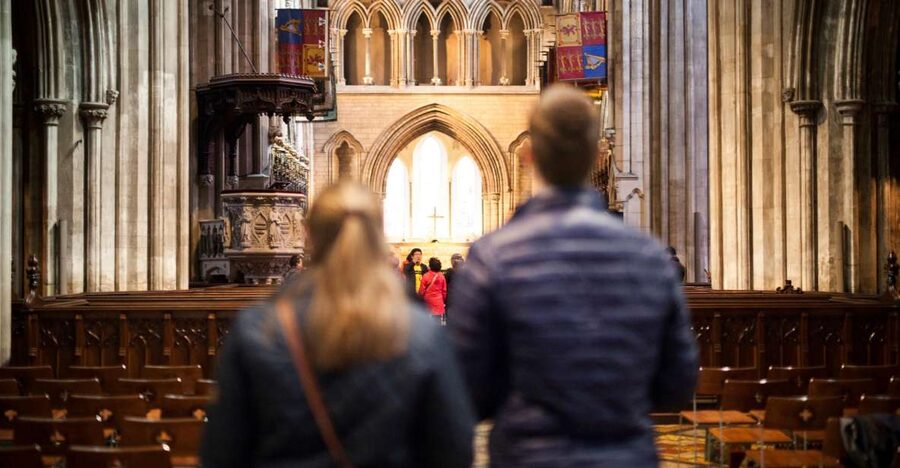
Reviewed · TOURS IN DUBLIN
St Patrick’s Cathedral: Self-Guided Cathedral Admission
Saint Patrick’s Cathedral gives you a rare chance to walk through more than 800 years of Irish religious and cultural history in one quiet Gothic interior. I like the freedom to move at your own pace, and I like the excellent audio guide, available in English, French, German, Italian, Spanish, and Irish. The cathedral’s stained glass and Jonathan Swift connections give the visit plenty of focus.
The main drawback is that the building can feel crowded, especially around midday, and there may not be enough printed material for visitors who prefer a booklet. The audio guide does most of the teaching, so bring wired headphones if you have them, or be ready to use the supplied equipment.
Key points to know before you go

- Jonathan Swift’s cathedral: Visit the burial place and displays connected with the author of Gulliver’s Travels, who served as dean from 1713 to 1745.
- A famous Irish doorway: See the Door of Reconciliation, linked to the expression to chance your arm.
- A useful self-guided format: Listen in six languages and spend as long as you like during the one-day admission period.
- Hands-on history: Use the Discovery Space touchscreens, hear samples of the choir on iPads, and make a brass rubbing.
- A striking stained-glass story: Look for the window that tells Saint Patrick’s life in 39 separate images.
- Good practical value: Admission costs $12 per person, includes the audio guide, and allows you to skip the ticket line.
Why Saint Patrick’s Cathedral deserves your time
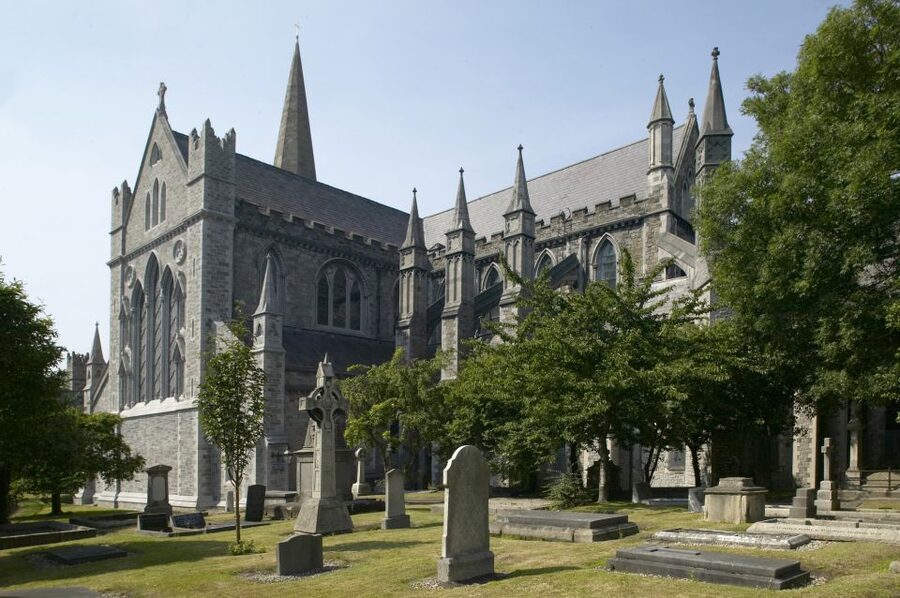
Saint Patrick’s Cathedral is not simply a pretty church to photograph and leave. It has been tied to Dublin’s religious life since the medieval period, and its connection with Ireland’s patron saint gives the building a special place in the country’s story.
The cathedral was built in 1220 beside the famous well where tradition says Saint Patrick baptized converts during his visit to Dublin. It now serves as the National Cathedral of the Church of Ireland, while also welcoming people who come for architecture, literature, music, and Irish history.
I find the building most rewarding when you give it time. The stonework, narrow vertical lines, stained glass, memorials, and historic objects work together slowly. You do not need to understand every detail to appreciate the atmosphere, but the audio guide helps explain why the details matter.
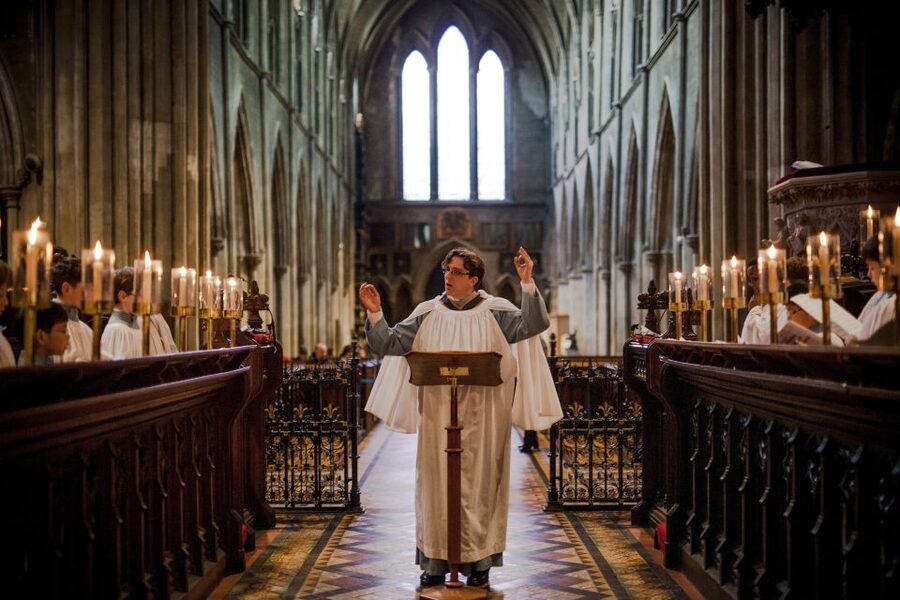
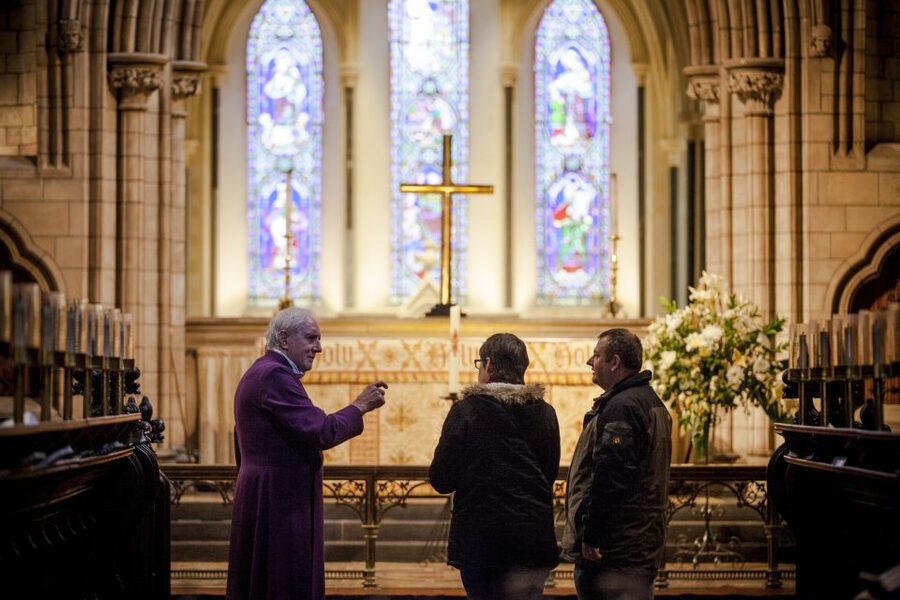
This is also a working place of worship. Sung services are held twice daily from Sunday through Friday. The cathedral therefore has a purpose beyond sightseeing, and that can affect how you move through the space. Keep your voice low, watch for areas being used for prayer or music, and treat the interior as a living church rather than a museum set.
A few more things to do around Dublin worth a look
- Christ Church Cathedral Entrance Ticket & Self-Guided Tour
★ 4.6 · 773 reviews - Self-Guided Bike Tour of Killarney National Park, Muckross Gardens & Waterfall
★ 5.0 · 223 reviews - Cork: City Gaol Tour with Audio Guide
★ 4.8 · 108 reviews
Entering the 1220 cathedral
Your visit begins at Saint Patrick’s Cathedral itself and ends there, with no transportation or separate meeting point involved. Admission is valid for one day, so you can plan around the rest of your time in Dublin rather than committing to a tightly timed walking tour.
The skip-the-ticket-line access is useful if you have only a short window. Starting times depend on availability, so check the schedule before you go. The attraction is wheelchair accessible, and anyone under 18 must be accompanied by a parent or guardian.
Once inside, take a moment before reaching for the audio guide. The first impression comes from the scale and shape of the building: Gothic stonework, tall spaces, colored light, and the sense that generations have used the same interior. A quick circuit can take little time, but you will get more from the visit if you pause at the marked points.
The cathedral is maintained as both a religious building and a visitor attraction. That balance is important. You can inspect the architecture and listen to historical explanations, but you may also encounter services, choir activity, or a quieter mood than you would find at a standard museum.
Using the audio guide at your own pace
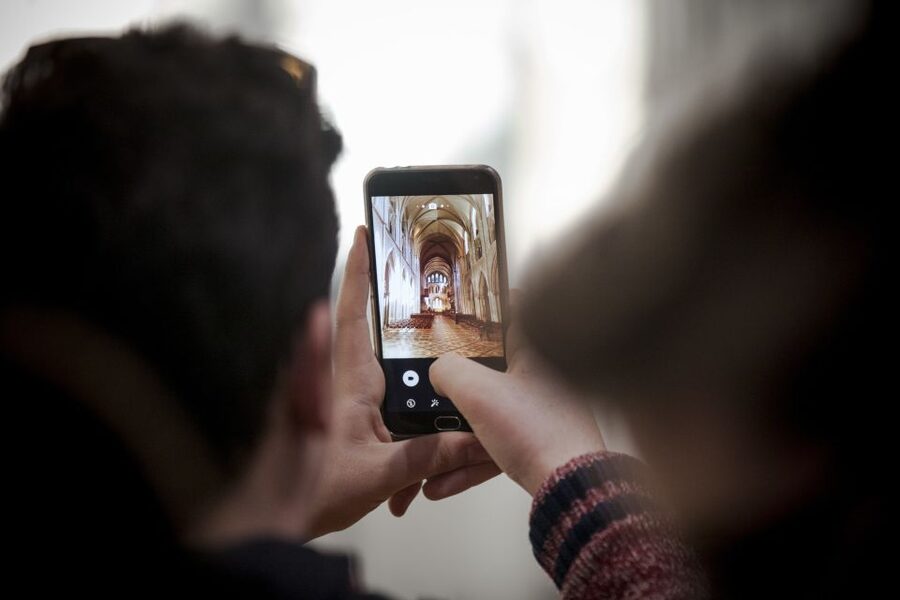
The audio guide is included with admission and is one of the strongest parts of the visit. You can choose English, French, German, Italian, Spanish, or Irish, which makes the cathedral easier to understand for a wide range of visitors.
The self-guided format gives you control. You can listen to every stop, skip material that does not interest you, or revisit a section after looking more closely at an object. That is especially useful in a church with many layers of information. You may want architectural details, while someone with you may care more about literature, religious history, or Irish politics.
Several people find it easier to bring their own wired headphones. Some equipment may be supplied, but personal headphones can make listening more comfortable and reduce the need to hold a device to your ear. The audio commentary is detailed enough to give structure to the visit, so you do not need to hire a separate guide to understand the main sights.
On some days, guided tours are also offered at set times. The exact arrangement can vary, so do not assume you will be able to join one immediately. If a guided departure has already gone, the self-guided option lets you continue without wasting your visit.
A guide named David has been praised for his friendly and clear presentation, and Anna has also led visitors through the cathedral while answering questions and pointing out key features. These names are useful to know if you happen to join a live tour, but the booked activity itself is self-guided.
Jonathan Swift and the human side of the building

Literature lovers should make Jonathan Swift a priority. Swift, author of Gulliver’s Travels, served as dean of Saint Patrick’s Cathedral from 1713 to 1745 and is buried here.
His connection gives the building a more personal edge. Instead of seeing the cathedral only as a medieval monument, you begin to see it as a place where a major writer worked, preached, argued, and spent much of his adult life. Displays connected with Swift help explain his role and keep the story tied to a real person.
I like this part of the visit because it links Dublin’s literary identity with its religious institutions. Swift was not an unrelated name added to a tourist display. He was part of the cathedral’s daily life for decades.
Use the audio guide here, then take a quiet look at the surrounding stonework and memorials. The cathedral’s history is easier to remember when you connect it to individuals such as Swift rather than trying to absorb a long list of dates.
Same base, a very different sort of day:
- Dublin to Cliffs of Moher, including Wild Atlantic Way and Galway
★ 5.0 · 23,331 reviews - From Dublin: Cliffs of Moher, Burren & Galway City Day Tour
★ 4.8 · 18,888 reviews - Dublin: Guinness Storehouse Entry Ticket
★ 4.6 · 16,863 reviews - Dublin to Cliffs of Moher, Burren, Wild Atlantic Way, Galway Tour
★ 5.0 · 12,924 reviews
The Door of Reconciliation and Irish expression
One of the cathedral’s most memorable details is the Door of Reconciliation. It is associated with the story behind the Irish expression to chance your arm.
The name refers to a moment of conflict and an attempted gesture of peace. The door gives that story a physical focus. You are not just hearing an explanation of an old phrase; you are looking at the object connected with the event.
This is exactly the kind of small detail that makes a self-guided visit worthwhile. Large buildings can blur together after a while, but a doorway with a political and linguistic story gives you something concrete to carry away.
Listen to the explanation, then look closely at the door and its setting. It is an easy stop to miss if you rush through the cathedral, so keep an eye on the audio guide points and allow time for the smaller features between the grand views.
The 39 scenes in Saint Patrick’s stained glass
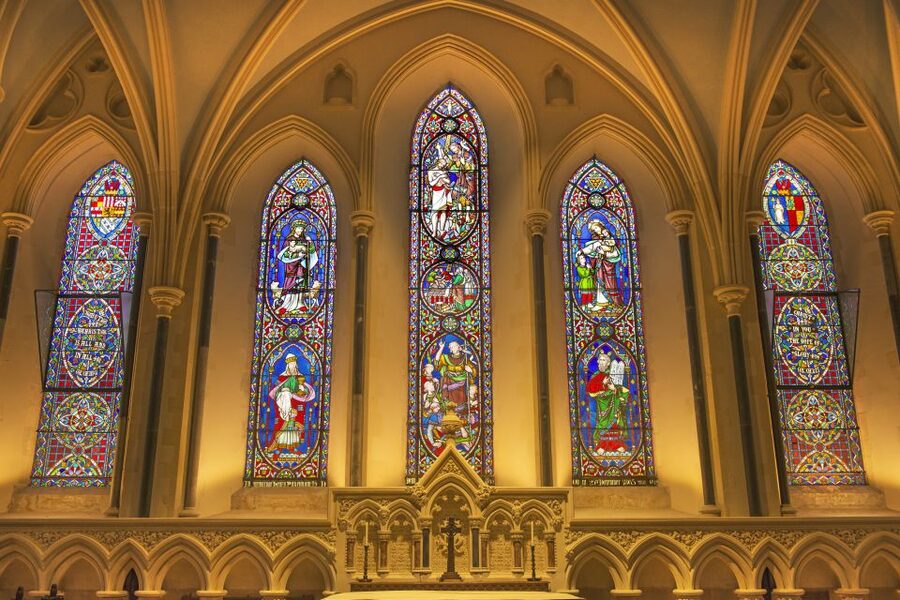
The stained glass is likely to be one of your main reasons for coming. A window showing Saint Patrick’s life in 39 images offers a visual account of the saint’s story, and it rewards close inspection.
From a distance, the window reads as a field of color. Up close, the separate scenes become easier to follow. The 39-image format gives you a reason to slow down rather than glance at the glass as decoration.
The cathedral contains other beautiful windows and carefully worked architectural details as well. Light levels can change during the day, so the appearance of the glass may not be exactly the same from one visit to another. If photography matters to you, take your time and look from more than one position.
A printed guide to the stained glass would be useful for some visitors, particularly those who want to study the images after leaving. The audio guide provides helpful background, but anyone who prefers visual reference material may find the interpretation less satisfying than a dedicated booklet.
The Discovery Space and brass rubbing
The Discovery Space gives the visit a more active side. Touchscreens explain parts of the cathedral’s long history, while iPads play samples of the choir. This is especially useful for younger visitors and for anyone who learns better through sound and images than through labels alone.
You can also make a brass rubbing. That simple activity changes the pace of the visit and gives children something practical to do. It can also help you notice the patterns and lettering used in church memorials and decorative work.
The technology does not replace the building itself. It provides context, then sends you back to look at the stone, glass, and objects with better questions in mind. I would give the Discovery Space extra time if you are visiting with a family, since the main nave may hold attention for adults longer than it does for children.
The choir recordings are another good touch. Saint Patrick’s is still a place of sung worship, so hearing the music helps you understand the building as an active cathedral rather than only a historic site.
How long to spend inside
The admission is valid for one day, but the supplied information does not set a fixed visit length. Your timing will depend on how many audio stops you hear, how long you spend with the windows, and whether you join a live tour.
For a quick look, you can focus on the main architecture, Swift, the Door of Reconciliation, and the Saint Patrick window. A slower visit should include the Discovery Space, brass rubbing, audio commentary, and time to sit quietly in the nave.
I would avoid treating this as a ten-minute stop between other attractions. The $12 price is fair because it includes admission and the audio guide, and because the material gives you enough to occupy a meaningful part of a Dublin sightseeing day.
Crowds can affect the experience. One afternoon visit was described as busy but still manageable, while another found the cathedral overcrowded. Midday periods may feel less peaceful, so an earlier or later visit could suit you better if quiet matters most. The exact crowd level will depend on the day and time.
Practical value at $12
At $12 per person, this is a reasonably priced Dublin attraction, especially if you use the included audio guide rather than paying separately for a tour. You are paying for access to one of Ireland’s most important cathedrals, along with interpretation in six languages and hands-on material in the Discovery Space.
The value is strongest for visitors who enjoy history, religious art, literature, architecture, or places that still serve their original purpose. If you only want a quick photograph of the exterior, the ticket may feel less worthwhile. The interior is where the visit earns its price.
The flexible cancellation policy also helps. You can cancel up to 24 hours in advance for a full refund, and the reserve-now, pay-later option lets you hold a place without paying at the time of booking. Keep in mind that availability and starting times still need to be checked before you plan your day.
There is a small shop at the end of the visit. It can feel a little out of place to some people because of its position near the solemn cathedral interior, but it gives you a chance to browse after the visit rather than interrupting the main route.
Who will enjoy this cathedral visit most
I would recommend Saint Patrick’s Cathedral to you if you like places where architecture and history are tied together. It is a particularly good match for:
- First-time Dublin visitors who want one major historic interior with clear interpretation.
- Literature fans interested in Jonathan Swift and his years as dean.
- Families who can use the brass rubbing and Discovery Space to break up the sightseeing.
- Music lovers who want to hear choir samples and may encounter sung worship.
- Independent sightseers who dislike being rushed by a group schedule.
- Visitors who need language choice, since the audio guide is available in six languages.
You may prefer a live guided tour if you want to ask questions throughout or enjoy a guide’s storytelling more than recorded commentary. Still, the self-guided format is a sensible choice if your timing is uncertain or you arrive after a scheduled tour has begun.
Should you book Saint Patrick’s Cathedral?
Book it if you want more than another beautiful church interior. The combination of Jonathan Swift, the Door of Reconciliation, the 39-image Saint Patrick window, choir recordings, touchscreens, and brass rubbing gives the visit real substance.
I especially like it for a flexible Dublin itinerary. You can enter, choose your own pace, listen only to the sections that interest you, and spend extra time on the stained glass or Swift displays. Bring wired headphones if possible, and allow more time than you would for a quick photo stop.
Skip it only if your schedule is extremely tight or if you strongly prefer printed information to audio and digital interpretation. For most visitors interested in Ireland’s past, the $12 admission offers a useful and memorable look at one of Dublin’s central historic buildings.
FAQ
Where does the Saint Patrick’s Cathedral visit begin and end?
The activity begins at Saint Patrick’s Cathedral and ends back at the same meeting point.
How long is the admission valid?
Admission is valid for one day. Check availability for the starting times offered on your chosen date.
Is an audio guide included?
Yes. An audio guide is included with admission and is available in English, French, German, Italian, Spanish, and Irish.
Is Saint Patrick’s Cathedral wheelchair accessible?
Yes, the cathedral is wheelchair accessible.
Can children visit on their own?
No. Anyone under 18 must be accompanied by a parent or guardian.
Can I cancel the booking?
Yes. You can cancel up to 24 hours in advance for a full refund. The reserve-now, pay-later option also lets you book without paying immediately.
Just added around Dublin
- Gin School, distill you own gin, cocktails, tastings, food★ 5.0 · 8 reviews
- Dublin : Street Art Walking Tour★ 5.0 · 3 reviews
- Dublin: Personal Photographer- Travel Photography Experience★ 4.5 · 8 reviews
- Dublin: Skip-the-line Book of Kells & Old Town Private Tour★ 5.0 · 6 reviews
- Dublin: Howth Coastal Craft Beer and Seafood Tour★ 5.0 · 62 reviews
- Vikings In Dublin (Walking Tour)★ 5.0 · 8 reviews
- Dublin: Silent Disco Walking Tour★ 4.9 · 21 reviews
- Dublin: Private Tour of City Monuments in Spanish★ 5.0 · 6 reviews
Tours in Dublin, compared.

Dublin to Cliffs of Moher, including Wild Atlantic Way and Galway
Read our review →
Cliffs of Moher, Burren & Galway City Day Tour
Read our review →

Dublin to Cliffs of Moher, Burren, Wild Atlantic Way, Galway Tour
Read our review →
Dublin to Belfast Black Cab, Dunluce Castle and Giant’s Causeway
Read our review →
Kilkenny, Wicklow Mountains & Glendalough Day Tour from Dublin
Read our review →
Wicklow Mountains, Glendalough & Kilkenny Tour
Read our review →
Browse the lists this tour appears in