Reviewed · TOURS IN DUBLIN
Dublin Ghost Hunt Exploration Game and Tour
Dublin’s past gets a playful twist on this self-guided mystery walk, which links museums, churches, theaters, Georgian streets, and the River Liffey. You solve clues on your phone as you go, with ghost stories and historical characters giving the route a light game-show feel.
I like the freedom to start at any hour and stop for a pub, coffee, or photo without holding up a guide. I also like the route itself: it connects major central sights with odd corners of Dublin’s past, from Viking treasures to the mysterious death of Wolfe Tone.
The main catch is the app. Some answers need exact spelling, capitalization, or spacing, and a weak internet connection can cause trouble. Play earlier in the day if you want to inspect every clue, and keep your group to one or two working phones.
Key points to know before you go
- A private game for your own group: You do not join strangers, and groups larger than 15 can make multiple bookings.
- Six central Dublin stops: The route runs from the National Museum of Ireland on Kildare Street to the River Liffey near Usher’s Quay.
- About 90 minutes, with no fixed start time: You can begin whenever you like after booking, pause during the route, and continue later.
- History with a spooky edge: Expect stories about bog bodies, Wolfe Tone, famous Dublin writers, theaters, Vikings, and the city river.
- Audio stories replace a live guide: The experience is led through the Questo mobile app, with no physical guide included.
- Very low cost: At about $6.01 per person, it is inexpensive entertainment, especially for a small group, though each participant is charged separately.
A playful way to meet central Dublin
This is not a traditional walking tour with a guide holding an umbrella. It is a location-based exploration game. Your phone directs you from one stop to the next, gives you a story, and asks you to find an answer in the surroundings.
That format works well in Dublin because the city center is compact and full of details that are easy to pass without noticing. A statue may reveal a political drama. A church may connect to Oscar Wilde and Bram Stoker. A municipal building may point you toward Viking Dublin. The game gives you a reason to stop and look closely.
You can play alone, with a partner, or with your family. Kids are free, which helps make this a budget-friendly choice for families, although the game is still best for children who can read clues and stay interested during a city walk.
The route is private, so your pace belongs to you. You can stop for lunch, step into a shop, or take a break at a pub and return to the game later. That flexibility is more useful than it sounds, especially in Dublin, where weather and opening hours can change your plans quickly.
A few more things to do around Dublin worth a look
- St Patrick’s Cathedral: Self-Guided Cathedral Admission
★ 4.5 · 2,126 reviews - Christ Church Cathedral Entrance Ticket & Self-Guided Tour
★ 4.6 · 773 reviews - Private Dublin Treasure Hunt Self Guided Tour
★ 4.5 · 14 reviews
Starting at the National Museum of Ireland

The walk begins outside the National Museum of Ireland, Archaeology branch, at 35A Kildare Street. This is a strong starting point because the museum sets up several themes that suit the game: ancient Ireland, Viking Dublin, gold objects, and the unsettling story of the bog bodies.
The bog men are preserved human remains found in wetlands, and their stories have an eerie power even before the game adds its own fictional layer. You are asked to inspect your surroundings and solve a question connected to an ancient creature. It is a clever way to turn the museum area into a puzzle site.
You should know that the experience does not appear to include admission to the museum itself. The route begins at the museum location, but the activity is an outdoor, app-led walk. If you want to visit the exhibits, treat that as a separate stop and allow extra time.
I like this opening because it gives you a quick sense of Ireland’s long past without asking you to sit through a formal lecture. The drawback is that some clues can be hard to spot if you rush. Look around carefully before entering an answer, and keep the app open as you move.
Wolfe Tone and the political ghost story
The next stop is the statue of Theobald Wolfe Tone. He was a founding figure in Irish republicanism and helped form the Society of United Irishmen in 1791, a movement that sought to end British rule in Ireland.
The game turns his political story into a mystery about his capture and death. That is a good fit for the statue, since public monuments often give you only a name and a date unless someone provides the wider story. Here, you are pushed to consider the man behind the bronze figure.
This section adds useful context to a Dublin walk. You are not simply looking at another statue. You are connecting it to revolution, imprisonment, and the difficult road toward Irish independence.
The tone is more theatrical than academic. If you want a detailed history of the 1798 rebellion or Wolfe Tone’s political ideas, you will need another source. If you want a short, memorable introduction while walking, the game does its job.
St. Ann’s Church and Dublin’s literary connections
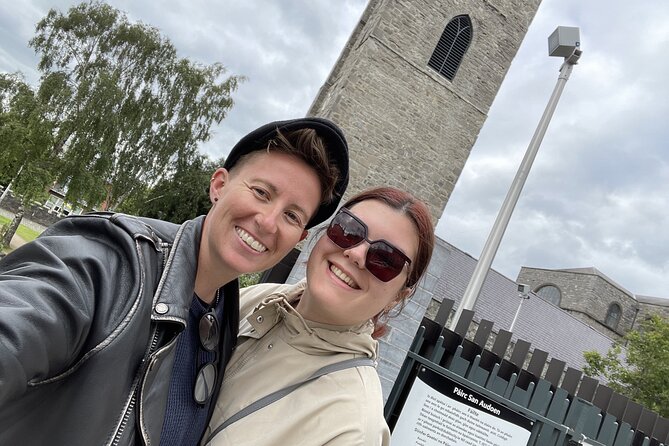
St. Ann’s Church brings the route into a quieter setting. The church is associated with notable Dublin figures, including Oscar Wilde and Bram Stoker, the author of Dracula. That link makes the stop especially well suited to a ghost-themed walk.
The game asks you to look for a darker story connected with the church. You get a change of mood here, moving from political unrest to religious and literary associations. It is one of the better examples of how the route uses real places to create atmosphere without requiring a costumed performance.
You should pay attention to access. A location may be visible during the day but harder to inspect after gates close. One useful piece of advice is to play earlier rather than late at night if you want the best chance of seeing every clue clearly.
The church stop also shows the limits of an app tour. A live guide could answer questions or explain which details matter most. Here, you work it out yourself, using the prompt and the surrounding signs or objects.
Same base, a very different sort of day:
- Dublin to Cliffs of Moher, including Wild Atlantic Way and Galway
★ 5.0 · 23,331 reviews - From Dublin: Cliffs of Moher, Burren & Galway City Day Tour
★ 4.8 · 18,888 reviews - Dublin: Guinness Storehouse Entry Ticket
★ 4.6 · 16,863 reviews - Dublin to Cliffs of Moher, Burren, Wild Atlantic Way, Galway Tour
★ 5.0 · 12,924 reviews
Olympia Theatre brings a lighter mood
After the church, the route heads to the Olympia Theatre. This gives the walk a welcome change of pace. The building evokes concerts, performers, and the kind of theatrical memories that can make an old venue feel alive.
The story here encourages you to picture performers such as David Bowie or Charlie Chaplin. The clue asks you to examine the theater area and identify what is missing from the puzzle.
This is less about a full theater history lesson and more about imagination. The stop works because you are already moving through a real entertainment district, and the prompt helps you see the building as more than a facade.
If you are playing with friends, this is likely to be one of the livelier parts of the route. Different people may notice different details, and talking through the answer is part of the fun. If you are alone, the experience still works, but it has less of the shared puzzle-solving energy that makes these games appealing.
City Hall and Dublin’s Viking past
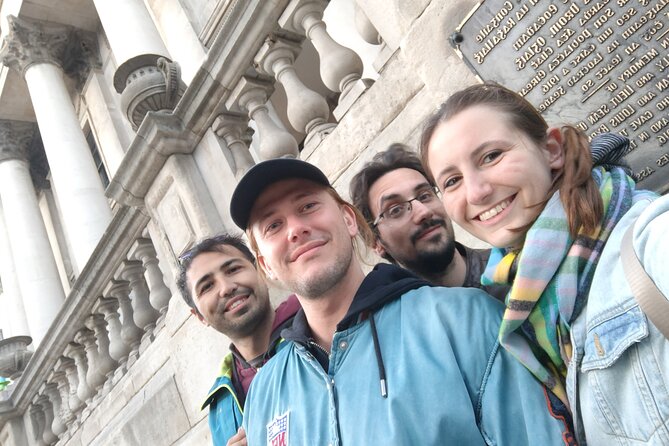
City Hall, on Parliament Street, is the next major stop. Its Georgian architecture gives you a strong visual change from the theater and church. The building also connects directly to Dublin’s civic story.
The game points you toward the city’s Viking past and asks you to find a hidden message. That theme is especially fitting because Dublin grew as a Viking settlement before becoming the Irish capital you see today.
Inside City Hall, an interactive multimedia exhibition covers Dublin’s story from the Vikings to the present. The tour itself does not automatically include entry to that exhibition, so check access separately if you want to see it. The outdoor route still gives you a reason to study the building and its setting.
I like this stop because it joins architecture with history. You are not just solving a random word puzzle. You are looking for a clue in a place connected to how Dublin developed. That gives the game more substance than a string of unrelated challenges.
Finishing beside the River Liffey
The final destination is near the River Liffey at 20 Bridge Street Lower, Usher’s Quay. The river divides Dublin’s north and south sides and provides a natural finish to the walk.
The last clue is not necessarily down by the water. You need to examine what is around you and find the final part of the puzzle. This ending gives you a chance to look across the river, notice the bridges, and consider how much of Dublin’s life is organized around the Liffey.
The route ends in a useful location for continuing your evening. You can walk along the river, find a pub, or make your way back to your accommodation. If you finish after dark, use the main roads and plan your return route before you set off. The game can be played at night, but your attention should stay on both the clues and your surroundings.
What the app experience is really like

The audio stories are an important part of the appeal. They keep the walk from feeling like a list of directions and give each stop a small narrative hook. The storytelling has been singled out positively, including praise for a guide named Ciarán, so you may find his voice and delivery part of the experience depending on the version provided through the app.
The app also gives clear directions, which helps you move between stops without constantly checking a separate map. This matters for a first-night activity because it gives you a quick orientation to central Dublin.
Still, do not treat the app as foolproof. A few technical problems can affect the fun:
- Some players have needed a strong internet connection at the start, despite expectations that downloading the game would allow offline play.
- Answers may be rejected if they do not match the required capitalization, spacing, or wording.
- If the app loses progress, a location-based game may require you to return to an earlier point before continuing.
- Using several phones does not necessarily improve the experience, and paying for every participant may not be worthwhile if one phone can serve the group.
I would have one person enter the answers and keep a second phone available for directions or backup. Read the clue twice before submitting it. If the answer is a sign or name, copy it carefully, including spaces.
Timing, price, and group value
The advertised duration is about one hour and 30 minutes. That is a fair estimate for a steady walk with limited stops, but your actual time can vary. One group completed the game in about three hours while stopping at pubs and taking a slower pace.
That flexibility is a major part of the value. You are not paying for a fixed 90-minute performance. You are paying for a route, a story, and a game that can fit around the rest of your day.
At about $6.01 per person, the price is low for a private activity in central Dublin. It becomes especially good value for two people who want something inexpensive and different from a standard sightseeing walk. The calculation is less attractive for a larger group because every participant is charged, even if only one or two phones are being used.
Groups larger than 15 can make multiple bookings. The activity is private, so you do not share the route with another group through the booking.
Free admission for kids improves the family value. Service animals are allowed, public transportation is nearby, and the activity is suitable for most people who can take part in a city walk. No physical tour guide is included, so you need a charged phone and enough confidence to follow directions on your own.
Who should choose this Dublin walk
I would choose this experience if you want a low-cost introduction to Dublin with a little mystery and a lot of freedom. It works particularly well on your first evening because the route passes several central sights and helps you get your bearings.
It is also a good pick for friends who enjoy puzzles, couples looking for a casual activity, and families with older children. The game gives you a reason to talk, look around, and make decisions together instead of simply following a guide.
I would not choose it as your main history tour if you want detailed explanations, deep political context, or a guide who can answer questions on the spot. The stories are short and entertaining, not a substitute for a museum visit or a specialist walking tour.
Play during daylight or early evening if possible. You will have a better chance of seeing signs, gates, and architectural details. If you prefer a nighttime atmosphere, the route can feel more mysterious, but take the practical advice seriously and use main roads when returning to your accommodation.
Should you book it?
Book it if you like self-guided activities, want a private route, and enjoy solving clues while seeing Dublin’s central sights. The low price, free admission for kids, flexible start time, and audio storytelling make it an easy add-on to a Dublin stay.
Skip it if app glitches and exact-answer puzzles quickly irritate you, or if you want a live guide with a steady flow of historical detail. For the best experience, use one reliable phone, start before locations close, and allow extra time for a pub or photo stop.
FAQ
Where does the Dublin Ghost Hunt start?
It starts at the National Museum of Ireland, Archaeology branch, at 35A Kildare Street, Dublin 2.
Where does the experience finish?
It finishes at 20 Bridge Street Lower, Usher’s Quay, Dublin, near the River Liffey.
How long does the tour take?
The advertised duration is about one hour and 30 minutes. You can take longer if you pause, stop at pubs, or explore at a slower pace.
Is this a guided walking tour?
No physical tour guide is included. You follow the Questo mobile app, which provides directions, audio stories, and location-based clues.
Can I start the game at any time?
Yes. It can be played at any hour after booking, and you can stop and resume later without rescheduling.
Is the activity private?
Yes. Only your group participates. Groups larger than 15 can make multiple bookings.
Are children charged?
Kids can take part for free.
What happens if I need to cancel?
You can receive a full refund if you cancel at least 24 hours before the experience start time. Cancellations or changes made less than 24 hours in advance are not accepted for a refund.
Just added around Dublin
- Wicklow Mountains Private Day Tour including Glendalough★ 5.0 · 7 reviews
- Wicklow: Private Day Tour from Dublin★ 5.0 · 5 reviews
- Women Of Ireland: Trailblazers & Pioneers★ 5.0 · 4 reviews
- Wicklow Mountains & Glendalough Luxury Private Day Tour★ 5.0 · 23 reviews
- Wicklow tour of Glendalough★ 4.5 · 8 reviews
- Premium Irish Whiskey Tasting Hosted by Local Dublin Expert★ 5.0 · 77 reviews
- Whiskey Tasting Tour of Dublin★ 5.0 · 117 reviews
- Semi-Private (8people max) 2.5 Hr Dublin Walking Tour★ 5.0 · 69 reviews
Tours in Dublin, compared.

Dublin to Cliffs of Moher, including Wild Atlantic Way and Galway
Read our review →
Cliffs of Moher, Burren & Galway City Day Tour
Read our review →

Dublin to Cliffs of Moher, Burren, Wild Atlantic Way, Galway Tour
Read our review →
Dublin to Belfast Black Cab, Dunluce Castle and Giant’s Causeway
Read our review →
Kilkenny, Wicklow Mountains & Glendalough Day Tour from Dublin
Read our review →
Wicklow Mountains, Glendalough & Kilkenny Tour
Read our review →