
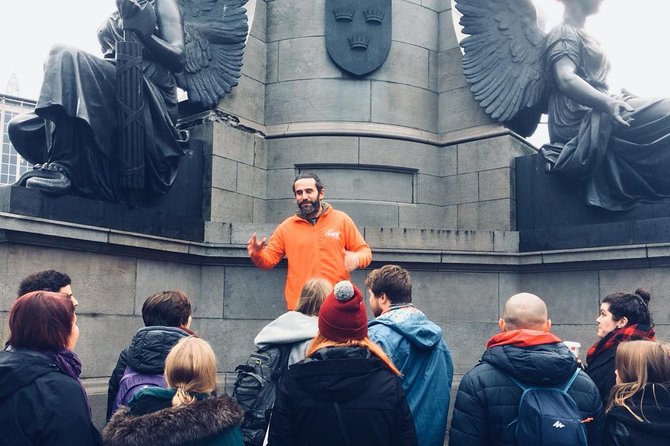
Reviewed · WALKING TOURS
90 Minute Dublin Walking tour and Sightseeing tips
Dublin’s story comes at you fast on this walking tour: Viking settlement, rebel bullets, Georgian streets, Trinity College, Temple Bar, Dublin Castle, and Christ Church Cathedral all fit into one compact route. I like the way it links famous sights with lesser-known details, such as the lost Viking settlement of Dubhlinn and the damage still visible on the General Post Office.
I also like the practical finish. You get suggestions for pubs, Irish music, restaurants, and places worth returning to after the walk. Guides such as Alex and Sam are praised for adjusting the talk to the group, answering questions, and turning dates and buildings into stories. The main drawback is pace: the tour is history-heavy, and one visitor found the commentary too focused on architecture and that the walk ran long.
Key points to know before booking
- A fast orientation to central Dublin: Walk from Aston Quay to Christ Church Cathedral, crossing the city center and covering its main historic districts.
- A strong focus on Irish history: Expect detailed stories about the 1916 Rising, independence, the Civil War, Viking Dublin, and British rule.
- Useful local suggestions: Temple Bar is the place to ask about music, Guinness, restaurants, and where to spend the rest of your evening.
- Personal, question-friendly guiding: Alex is frequently praised for his storytelling and ability to tailor the walk, while Sam is noted for her enthusiasm and care with the group.
- Mostly an outdoor experience: Admission to the sights is not included, so you see the exteriors and public areas rather than taking a full interior tour.
- Good value at $21.77: For a first look at Dublin, the price is modest, especially if the walk helps you plan several later visits.
Begin at Aston Quay and get your bearings
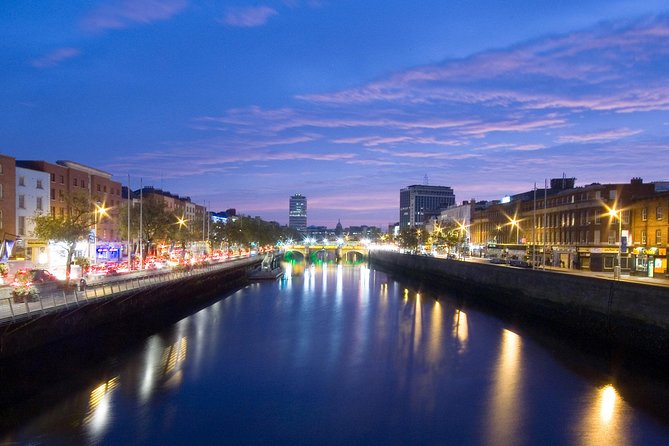
The meeting point is at 12 Aston Quay, near Temple Bar and the River Liffey. The opening five minutes are a quick introduction with your guide, but this small start matters. You can explain what interests you, ask about the city, and get a sense of the guide’s approach before the route gets moving.
I would use this moment well. Tell the guide if you care most about political history, architecture, pubs, Irish literature, food, or local life. The walk is designed to respond to questions, and the strongest accounts describe guides adjusting the route or emphasis when the group is small.
The tour is offered in English and uses a mobile ticket. You need a moderate level of fitness because the experience is on foot, with repeated stops and city streets rather than a seated lecture. Good shoes and weather protection are sensible. Dublin weather can change quickly, and the walk may be canceled in poor weather if another date or a full refund is not possible.
More Walking Tours in Dublin
- Dublin Highlights and Hidden Gems Guided Walking Tour
★ 5.0 · 6,020 reviews - Dublin: Highlights and Hidden Gems Walking Tour
★ 4.9 · 2,140 reviews - 1916 Rebellion Walking Tour
★ 5.0 · 1,605 reviews
O’Connell Street: monuments, rebellion, and a missing pillar
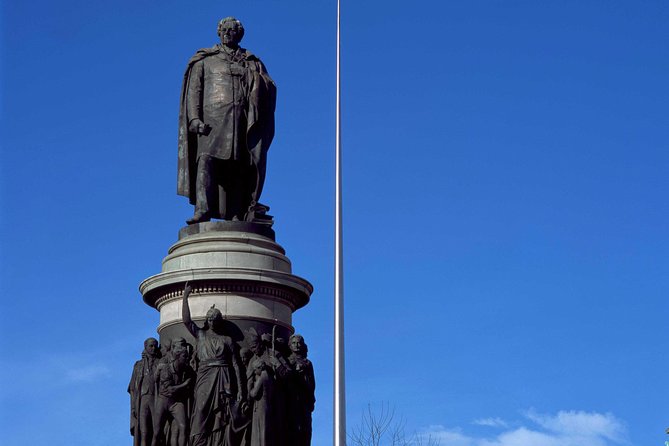
From Aston Quay, the group heads toward O’Connell Street, described as Ireland’s widest street and one of the main stages of Dublin’s political life. This is where the walk begins to explain how public spaces can hold several layers of memory at once.
You’ll hear how the street was renamed twice, meet its statues, and learn about the Irish War of Independence and the Civil War that followed. The guide also covers the destruction of Nelson’s Pillar and the curious story of windows breaking across the street at the same time.
This stop should appeal to you if you like history tied to physical evidence. Instead of treating O’Connell Street as a shopping road or traffic route, the guide uses it as a place to explain rebellion, occupation, independence, and modern Dublin. The references range from some of the city’s darkest episodes to the playful nickname Stiletto in the Ghetto, connected with the tall Spire of Dublin.
The stop is listed at five minutes, so do not expect a long architectural lecture here. It is a brisk introduction that sets up the next major point, the General Post Office.
The General Post Office and the 1916 Rising
The General Post Office is one of the most important stops on the route. Its connection to the 1916 Easter Rising gives the building a central role in the story of Irish independence.
Your guide explains the fighting on O’Connell Street, the arrival of the gunboat Helga on the River Liffey, and the bombardment of the city center. You’ll also hear what happened to the rebels after the fighting and how their executions changed public feeling and helped shape the revolution that followed.
Look closely at the exterior. Bullet damage from more than a century ago remains visible, giving the story a direct physical anchor. Depending on the day, you may also get a chance to step inside the high-ceilinged post office, though interior access is not promised.
A statue of the legendary warrior Cú Chulainn adds another layer. The Death of Cú Chulainn, cast in 1935 by Oliver Sheppard, connects Irish mythology with the modern political meaning of the building. I like this pairing because it shows how Ireland has used old legends to express newer ideas about sacrifice and national identity.
Allow about ten minutes here. The guide does most of the work through explanation, so this is one of the places where a clear voice matters. One person found the guide’s volume a little forceful, while another wished for a microphone when traffic noise rose. That is worth keeping in mind if you have difficulty hearing outdoors.
Trinity College and the crossing from north to south
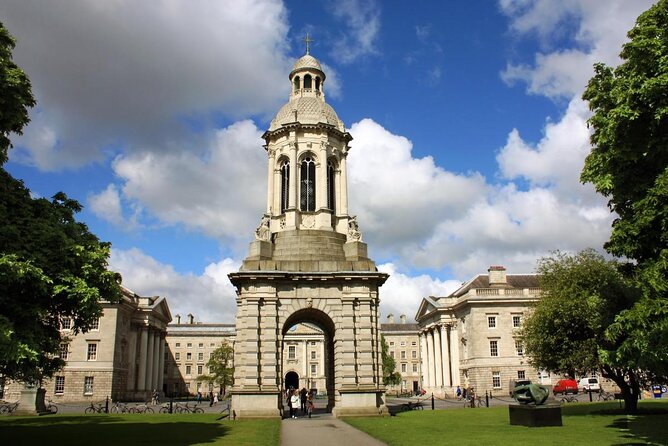
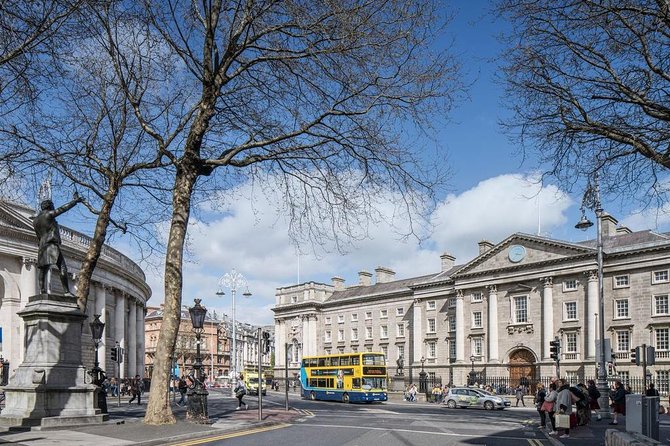
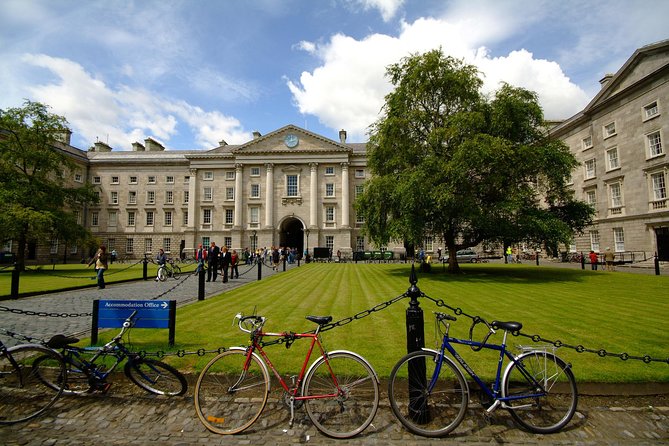
The walk then heads toward Westmoreland Street and the area around Trinity College and College Green. Crossing from the north side of Dublin to the south side gives you a useful sense of the city’s layout, even though the distance is not great.
This area reaches back to early Christian Dublin and traditions connected with St Patrick. The guide moves from Celtic rituals and early Christianity to the founding of Trinity College, then onward to the habits and traditions of modern students.
You will not receive an extended visit to the Book of Kells or a full college tour. Instead, Trinity is part of the wider city story. That makes this stop useful on your first day, when you want to know what deserves a later visit and how the college fits into Dublin’s political, religious, and cultural past.
The five-minute timing makes this a quick look rather than a deep architectural stop. If Trinity is high on your list, plan a separate visit. This walking tour gives you context and location, but not the full interior experience.
More walking routes in Dublin:
- 2-Hour Historical Walking Tour from Dublin
★ 5.0 · 875 reviews - Historical 2-Hour Guided Walking Tour of Dublin
★ 4.7 · 865 reviews - Dublin Traditional Irish 3 Course Meal Walking Tour with Local
★ 5.0 · 755 reviews - Dublin: Mythology, Folklore and Legends Walking Tour
★ 4.9 · 703 reviews
Temple Bar beyond the famous pub sign
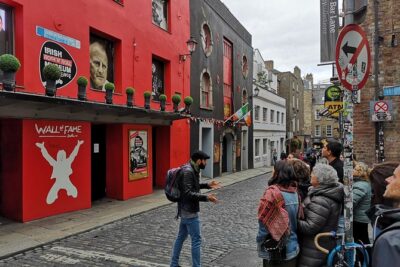
At Meeting House Square, the guide pauses to talk about Temple Bar. This is a good place to ask practical questions, since Temple Bar can be confusing for a first-time visitor. Its name is famous, but the district is more than one pub and more than a convenient nightlife photograph.
You can ask where to look for Irish music, how to think about the area’s famous Guinness claims, and which parts are worth your time. The guide’s advice is especially useful here because the district can feel expensive and heavily oriented toward visitors. A local perspective may help you decide when to stay, when to eat elsewhere, and what kind of evening you want.
The ten-minute stop is short, but the surrounding streets provide plenty to notice. Meeting House Square and the nearby lanes give you a taste of the district’s history and entertainment life without asking you to commit the rest of your day to it.
This is also a natural place to leave the group if you only want a shorter introduction, though the advertised route continues toward Dublin Castle. The full experience works better if you stay, since the Viking origins of Dublin are explained just ahead.
City Hall and the Viking settlement of Dubhlinn
The route continues through Temple Bar toward City Hall and Dublin Castle, following the area where the original Viking settlement of Dubhlinn was established. The story of how Dubhlinn became Dublin gives the city name a clear sense of place rather than leaving it as a fact to memorize.
The settlement was later lost, rediscovered, buried, and built over. That cycle is a useful reminder that modern Dublin sits on top of earlier cities. The guide also brings in unexpected links, including Shakespeare’s Hamlet, Handel’s Messiah, and old soap factories.
This is one of the more eclectic sections of the walk. It may suit you if you enjoy connections between politics, trade, music, literature, and urban change. If you prefer a clean sequence of major monuments, the varied material may feel scattered.
The stop is listed at about ten minutes. I would listen for the broad idea rather than trying to remember every date: Dublin developed in layers, and the city’s most familiar streets often conceal earlier settlements and industries.
Dublin Castle and the old center of authority
Dublin Castle was once the main center of authority in Ireland. It was the home of the Lord Lieutenants of Ireland until 1922, and its construction was completed around 1230 under King John of England, son of Richard the Lionheart.
The guide uses the castle to explain several centuries of power, from English rule to soldiers, rebels, and the political changes that led to Irish independence. This is a good point in the walk for putting the earlier stories together. The GPO represents rebellion, O’Connell Street represents public memory, and Dublin Castle represents the authority those movements challenged.
You will also hear about the castle’s architecture, the Dubh Linn Gardens, and the Chester Beatty Library. The garden offers a quiet contrast to the traffic and movement of the center, while the library is noted for its spiritual texts. These places are worth marking for a later visit because the tour does not include admission or a full interior exploration.
The ten-minute stop cannot cover every part of the complex. Think of it as a useful preview. If you want rooms, collections, and detailed architecture, return independently. If you want to understand why this site mattered, the guide gives you a practical starting point.
Christ Church Cathedral and the final questions
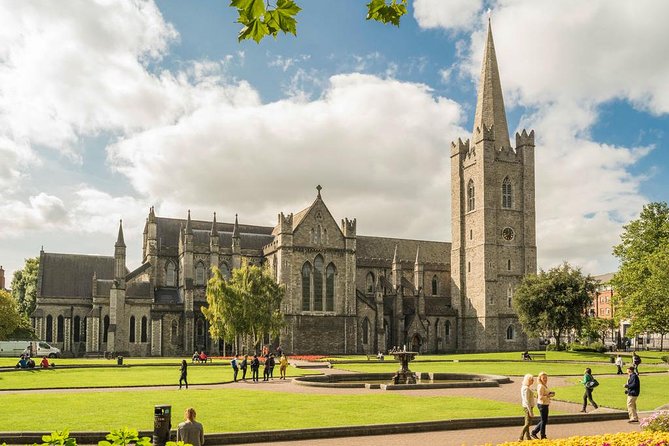
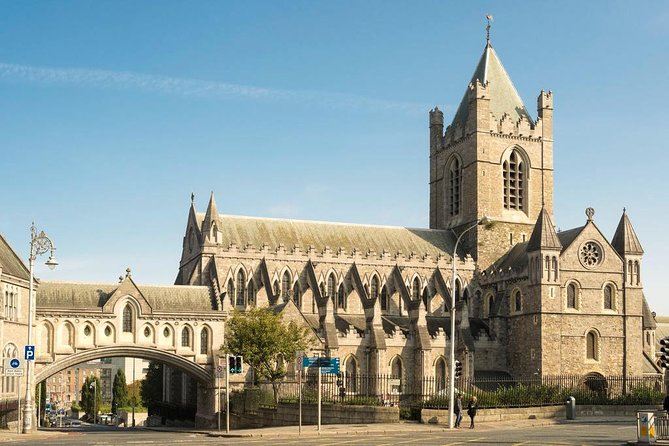
The route ends at Christ Church Cathedral, founded by the Viking king Sigtrygg Silkbeard. He ruled for more than 40 years before his defeat at the Battle of Clontarf, placing the cathedral in the long story of Viking Dublin rather than treating it as a later church with no connection to the city’s first settlers.
The cathedral has watched over the area beside the Liffey through several eras, from Viking longships to Guinness barges and modern Dublin. The walk finishes outside, in the cathedral’s shadow, with time for final questions and suggestions.
This ending is useful because it leaves you in a practical part of the city. You can continue exploring Christ Church, Dublin Castle, the Chester Beatty Library, or nearby streets after the guide departs. The guide may also suggest places for food, music, drinks, or further sightseeing.
The final stop is listed at five minutes, but the entire experience may last closer to 1 hour 45 minutes. The title calls it a 90-minute tour, so I would avoid scheduling a tight appointment immediately afterward. One person found the walk ran long and lacked a clear ending, while most accounts describe the duration as comfortable. Give yourself a little breathing room.
What the guiding is like
The strongest part of this experience is the guide’s storytelling. Alex is repeatedly praised for making Irish history easy to follow, using anecdotes, humor, and links to events familiar to American visitors. He also adapted private or very small tours to the interests of the people present rather than delivering the same speech without adjustment.
Sam is described as enthusiastic, well informed, and attentive to the group. That matters on a walking tour because a good guide does more than recite dates. The best moments come when a guide answers a question, changes emphasis, or points out something you might have missed alone.
The tone is informal, but the content can be detailed. If you prefer light sightseeing with only a few historical facts, this may feel too academic. One person wanted more attention to architecture, legends, and famous places, while another felt the tour was mainly about dates and Irish history.
Traffic noise is another practical issue. The route passes through central streets, and one person suggested an audio system. Stay near the guide when possible, and ask for a repeat if you miss a point.
Is $21.77 good value?
At $21.77 per person, I see this as a strong-value first-day orientation. You get a local guide, a route through several major parts of central Dublin, and practical suggestions for continuing on your own. The tour also includes taxes and fees, so the advertised price is not just an entry point before extra handling charges.
The value depends on how you use it. If you simply walk along and then forget the suggestions, it is a pleasant introduction. If you use the guide’s tips to choose later visits, pubs, music, restaurants, and museums, the tour can save you time and help you avoid wandering without a plan.
There is no food, lunch, or attraction admission included. You are paying for the walking route and the guide’s interpretation, not for access to the interiors of Trinity College, Dublin Castle, or Christ Church Cathedral.
The activity is limited to 25 participants, though the booking information also gives a maximum of 40 per booking. If group size is important to you, confirm the expected number before paying. Small groups have received especially personal guiding, but you should not assume every departure will be private.
Who should book this Dublin walk?
I would book it near the start of a Dublin stay, especially if you have just arrived and want a clear map of the center. It suits solo visitors, couples, families with older children, and anyone who likes to ask questions rather than follow a silent audio guide.
It is also a good choice if Irish political history interests you. The GPO, O’Connell Street, Dublin Castle, and Christ Church Cathedral are more meaningful when you understand how Viking settlement, English authority, rebellion, and independence connect.
I would think twice if you want a relaxed architecture tour, a pub crawl, or a full interior visit to Dublin’s major sights. The walk is quick, outdoor, and history-led. Cold, wind, rain, traffic noise, and the occasional long explanation can affect the experience.
Children must be accompanied by an adult, and you should be comfortable walking for about 90 minutes to 1 hour 45 minutes. Free cancellation is available up to 24 hours before the start time. A late arrival, including a delayed cruise ship, does not qualify for a refund.
Should you book it?
Book this tour if you want a lively Dublin orientation with serious historical content and practical ideas for the rest of your visit. The route covers an impressive amount of ground, and guides such as Alex and Sam can make the city easier to understand within a short time.
Skip it if you want a slower sightseeing tour with long interior visits and more architecture than politics. For most first-time visitors, though, $21.77 is a reasonable price for a compact introduction that ends near several of Dublin’s best places to explore on your own.
FAQ
How long does the Dublin walking tour last?
The tour is described as a 90-minute walk, while the approximate duration is also given as 1 hour 45 minutes. Allow up to 1 hour 45 minutes so you are not rushed afterward.
Where does the tour begin?
The meeting point is ThingsToDoDublin at 12 Aston Quay, Temple Bar, Dublin, D02 TE81, Ireland.
Where does the tour end?
The tour ends at Christ Church Cathedral, Christchurch Place, Wood Quay, Dublin, D08 TF98, Ireland.
What sights are included on the route?
The walk includes O’Connell Street, the General Post Office, Trinity College, Temple Bar, City Hall, Dublin Castle, and Christ Church Cathedral.
Is the tour offered in English?
Yes. The tour is offered in English and includes a local professional guide.
Are attraction entry fees included?
No. The tour includes the guide, taxes, fees, and handling charges, but food, drinks, lunch, and attraction admission are not included.
How many people can join the tour?
The activity information gives a maximum of 25 participants. The booking details also mention a maximum of 40 people per booking, so confirm the group size if this is important to you.
Can I cancel for a refund?
Yes. You can cancel at least 24 hours before the start time for a full refund. Changes or cancellations made less than 24 hours before the start time are not accepted, and poor weather or failure to meet the minimum group size may lead to a different date or a full refund.
Just added around Dublin
- Gin School, distill you own gin, cocktails, tastings, food★ 5.0 · 8 reviews
- Dublin : Street Art Walking Tour★ 5.0 · 3 reviews
- Dublin: Personal Photographer- Travel Photography Experience★ 4.5 · 8 reviews
- Dublin: Skip-the-line Book of Kells & Old Town Private Tour★ 5.0 · 6 reviews
- Dublin: Howth Coastal Craft Beer and Seafood Tour★ 5.0 · 62 reviews
- Vikings In Dublin (Walking Tour)★ 5.0 · 8 reviews
- Dublin: Silent Disco Walking Tour★ 4.9 · 21 reviews
- Dublin: Pub Tour. Pour The Perfect Guinness, Whiskey & Music★ 5.0 · 3 reviews
Walking Tours, compared.
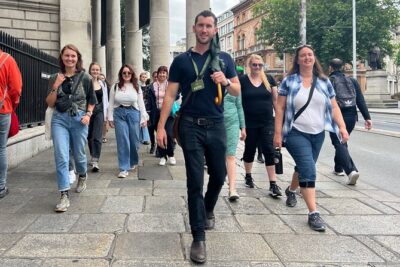
Dublin Highlights and Hidden Gems Guided Walking Tour
Read our review →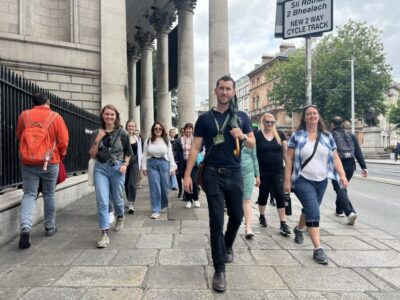

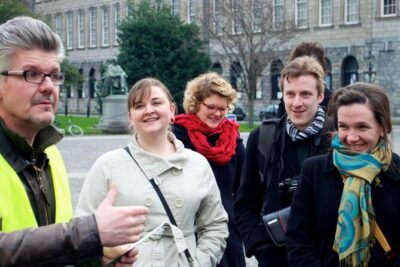

Dublin Traditional Irish 3 Course Meal Walking Tour with Local
Read our review →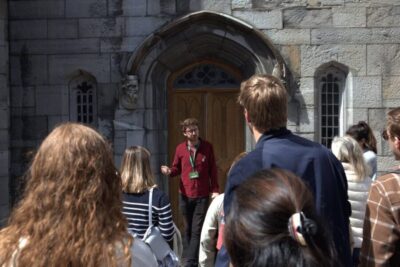
Browse the lists this tour appears in