
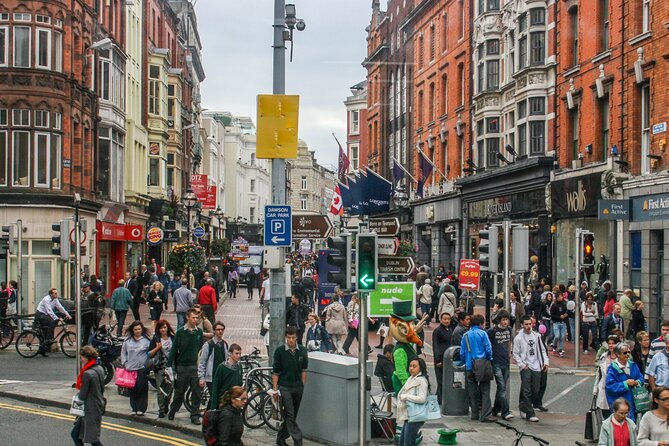
Reviewed · WALKING TOURS
2 Hour Walking Tour of Dublin’s City Centre
Dublin’s story comes into focus on this compact walk, which links medieval churches, political buildings, literary landmarks, and lively streets in about two hours. You move from the Gaiety Theatre to St. Stephen’s Green, with guides such as Alin or Alan adding old photos, questions, and stories along the way.
I like the small maximum group of 10, which makes it easier to ask questions and hear the guide. I also like the route’s practical use: you see the outside of major sights first, then decide which ones deserve your own entry time later.
The main consideration is pace. Eight stops in two hours means this is an orientation walk, not a full visit inside each landmark. Admission fees are not included, and much of the experience takes place outdoors, so bring sensible shoes and a rain layer.
Key points to know before you book
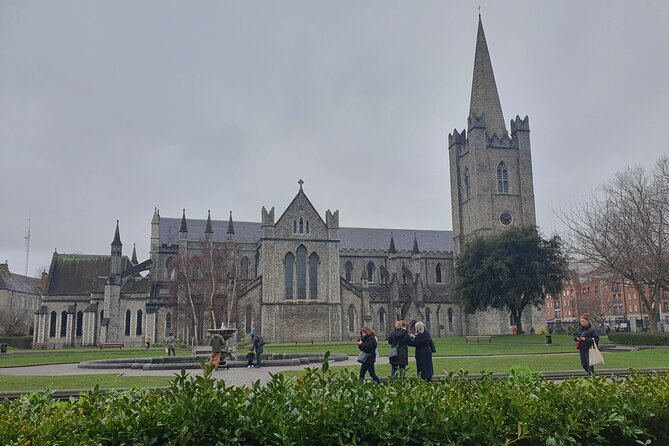
- Eight central Dublin stops in two hours: The route covers the Gaiety Theatre, St. Patrick’s Cathedral, Dublin Castle, Christ Church Cathedral, Temple Bar, Trinity College, the Bank of Ireland, and St. Stephen’s Green.
- A small-group format: The tour has a maximum of 10 people, though some departures may be even smaller, sometimes turning into a near-private walk.
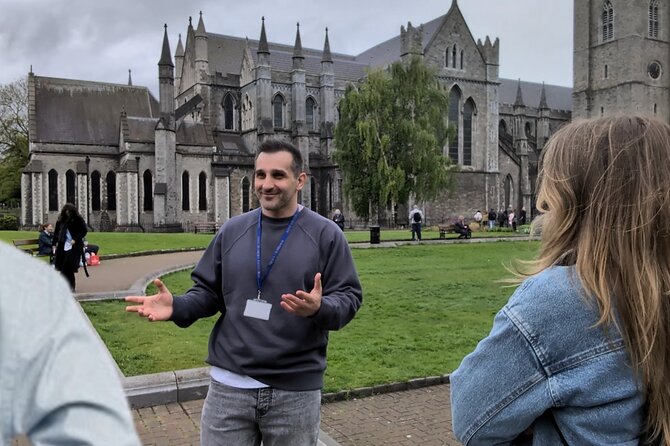
- Guides use more than a script: Alin and Alan have used old photographs, questions, quizzes, and personal recommendations to keep the history moving.
- A useful first-day activity: Morning and afternoon departures let you fit the walk around your plans, and the route gives you a clear idea of what to revisit.
- Mostly an outside introduction: Entry fees are not included, so plan separate time and money if you want to see the interiors of the cathedrals or Dublin Castle.
- Good value for a city overview: At $28.96 per person, you are paying for a focused introduction and local orientation rather than a series of paid admissions.
Why this Dublin walk works as a first outing
The best thing about this tour is its range. In one short walk, you get medieval Dublin, British rule, Irish politics, Georgian city planning, university life, pub culture, and public parks. That is a useful first layer for a city that can otherwise feel like a collection of handsome buildings and busy streets.
I like starting with a guide who can explain how the pieces connect. St. Patrick’s Cathedral and Christ Church introduce Dublin’s religious and medieval past. Dublin Castle and the Bank of Ireland show how power was exercised. Temple Bar and Trinity College bring you into modern city life, while St. Stephen’s Green gives the route a calm finish.
The guide style appears to be one of the tour’s strongest features. Alin is described as friendly, funny, and full of useful local suggestions. Alan has used a binder of old photographs to show how Dublin’s streets and buildings changed. Leonor is also named as a guide, so the exact personality and presentation may vary by departure.
You should expect conversation, not a recorded audio track. Guides have used quizzes and questions to involve children and adults, and they have allowed time for photographs and questions. That matters on a short walk because a steady stream of dates can become tiring fast.
More Walking Tours in Dublin
- Dublin Highlights and Hidden Gems Guided Walking Tour
★ 5.0 · 6,020 reviews - Dublin: Highlights and Hidden Gems Walking Tour
★ 4.9 · 2,140 reviews - 1916 Rebellion Walking Tour
★ 5.0 · 1,605 reviews
Starting at the Gaiety Theatre
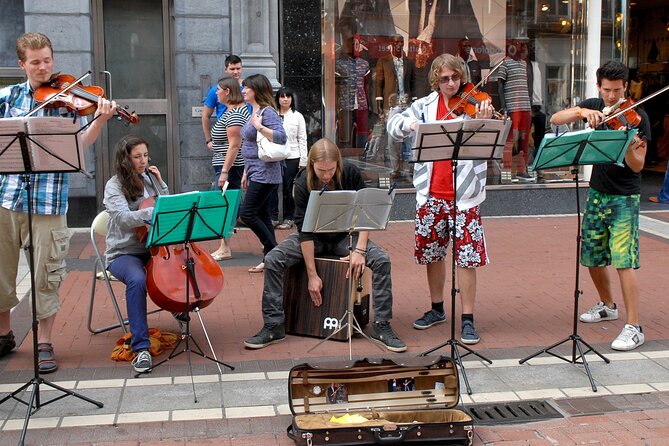
The meeting point is outside the Gaiety Theatre on King Street South in Dublin 2. This is a practical place to begin because it is in the central sightseeing area, close to the route’s main landmarks.
The first stop is brief, about 15 minutes. You are not buying a theatre ticket as part of this activity. Instead, the guide uses the location to begin the story of Dublin and set the tone for the walk.
From here, you can expect a quick introduction before moving toward the older heart of the city. If you are arriving by public transport, allow enough time to find King Street South and gather before the start. A mobile ticket is accepted, and confirmation is sent at booking.
St. Patrick’s Cathedral and Dublin’s medieval story
St. Patrick’s Cathedral is one of the tour’s most important historical stops. The site is linked with St. Patrick, and its story reaches from an Anglo-Norman building through periods of decline and near ruin to rescue connected with the Guinness family.
That gives the guide plenty to work with. You are not simply looking at a church facade. You are hearing how buildings survive, change, and sometimes depend on private money for restoration.
The scheduled stop is about 15 minutes, which is enough for an outside explanation and questions but not a full interior visit. Admission is not included. If you want to see the inside, treat this stop as a preview and return later with separate admission arrangements.
This is a good example of how to use the walk well. Pay attention to the guide’s explanation, note what catches your eye, and decide after the tour if the cathedral deserves more of your afternoon.
Dublin Castle, from tower to seat of power
Dublin Castle began with the Anglo-Normans as a simple tower and grew into a larger complex. Over time, it served as a seat of power and a prison, and its story includes a daring jewel heist.
That mix of government, security, and crime gives this stop a lively edge. You get a sense of Dublin as a place where official power was concentrated, guarded, and sometimes challenged.
Again, the 15-minute visit is an outside introduction rather than a full castle tour. Admission is not included. I would not book this walk expecting to explore every room or courtyard in detail. Its value is that you learn where the castle fits into Dublin’s political story, then you can return if the interiors appeal to you.
The short format also helps you keep moving through the city. Instead of spending the whole morning in one attraction, you see how the castle relates to the cathedral quarter and the streets around it.
More walking routes in Dublin:
- 90 Minute Dublin Walking tour and Sightseeing tips
★ 5.0 · 916 reviews - 2-Hour Historical Walking Tour from Dublin
★ 5.0 · 875 reviews - Historical 2-Hour Guided Walking Tour of Dublin
★ 4.7 · 865 reviews - Dublin Traditional Irish 3 Course Meal Walking Tour with Local
★ 5.0 · 755 reviews
Christ Church Cathedral and Viking Dublin
Christ Church adds another layer to the city’s religious history. It was founded by Vikings in 1030, then changed under Anglo-Norman rule and later received a 19th-century restoration funded through whiskey money.
That is the kind of detail that makes a walking tour useful. You begin to see Dublin’s past as a series of overlapping periods rather than one fixed medieval scene. Viking foundations, Norman additions, and later restoration all remain part of the same building’s story.
The stop lasts about 15 minutes, with admission not included. You will want to check the cathedral separately if you hope to go inside. The walk gives you context, but it does not replace an admission visit.
For me, this is one of the more valuable stops because it connects architecture to politics, religion, and money. The guide’s job here is not just to identify the building, but to explain why it looks the way it does.
Temple Bar beyond the pub signs

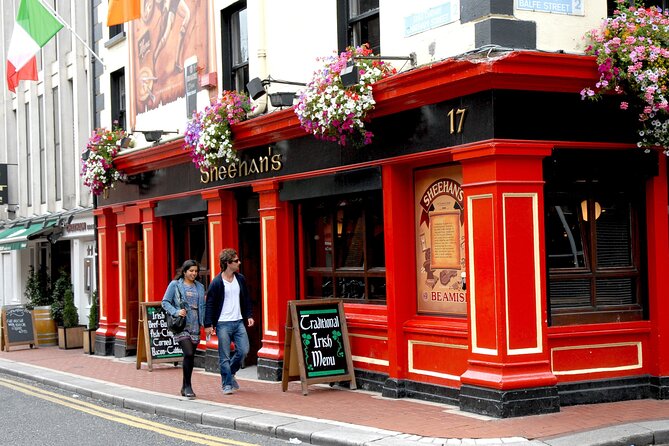
Temple Bar is now one of Dublin’s best-known visitor districts, but the area was once a maze-like neighborhood with a poor reputation. Today, it is filled with pubs, art galleries, and nightlife.
The tour gives you a chance to see the area in context instead of treating it as a simple pub stop. That is important because Temple Bar can feel heavily aimed at short-term visitors. A little background helps you understand why this small district became such a major part of Dublin’s public image.
The visit is free and lasts about 15 minutes. There is no indication that the tour includes drinks or a pub visit, so think of this as a guided look at the area. Your guide may also point you toward places to eat or drink later. Alin, in particular, has been praised for suggesting local restaurants and pubs away from the main tourist spots.
That practical advice may be one of the most useful parts of the day. Write down recommendations as you walk, since the route moves quickly and Dublin offers plenty of tempting distractions afterward.
Trinity College and the Bank of Ireland
Trinity College is another short stop with a large story behind it. The college has had a turbulent past and is now known for learning, its handsome campus, and the Book of Kells.
The tour does not include admission to the Book of Kells exhibition. That distinction matters. You will see Trinity College as part of the city walk and hear why it matters, but you should set aside extra time and money if you want to enter and see the famous manuscript display.
I like placing Trinity in the wider route. It shifts the focus from medieval churches and government buildings to education and cultural life. The campus also makes a useful reference point for planning the rest of your day.
The next stop, the Bank of Ireland, was once the Old Parliament House. It witnessed major political changes, including the Act of Union. The building also connects to the way architectural ideas traveled between Ireland and Britain.
This stop is especially helpful if you want a basic explanation of Irish political history without signing up for a long specialist lecture. The guide can tell you why the building mattered and how its role changed. You see the exterior as part of the walk, with no included admission.
Ending at St. Stephen’s Green
The final stop is St. Stephen’s Green, a public park with a social history of its own. It began as an exclusive green space for Dublin’s elite, then became open to everyone with help from the Guinness family.
The park is a fitting place to finish. After two hours of streets, churches, government buildings, and city noise, you end at a large open space in central Dublin.
The official end is at the Fusiliers Arch, the grand entrance to the park on Grafton Street. It is beside the Luas tram stop, which makes it easy to continue sightseeing or head elsewhere.
The end point is also useful for planning. Grafton Street is close by, and you can stay in the area for shopping, lunch, or further sightseeing. If you took the tour in the morning, this is a good point from which to continue to a cathedral interior or Trinity College. An afternoon departure works well if you want to spend the morning on your own and use the walk to organize your next day.
What the guides add to the experience
A city walk is only as good as its guide, and the feedback here points to a clear pattern: the guides focus on storytelling, questions, and personal help rather than simply reciting facts.
Alin is repeatedly described as personable and engaging. He has answered questions, adjusted the walk to suit the group, and offered restaurant and pub suggestions. Alan has also been praised for his history knowledge, clear speaking, and use of old photos. Leonor is named as another guide who made a strong impression.
Do keep in mind that you may not get the same guide on every departure. That means the tone can vary. The shared approach appears to be interactive, with quizzes, photos, and time for questions.
Families may find that useful. A group with children aged 11, 13, and 15 reportedly enjoyed the games and interactive style. The walk has also worked for mixed-age groups, including a family with a 73-year-old parent and an adult daughter.
The small group is another real advantage. With a maximum of 10 people, you have a better chance of hearing the guide and asking about a building that catches your eye. Some departures have had only two people, though you should not assume you will receive a private tour.
Price, pace, and what you get for $28.96
At $28.96 per person, this is a reasonable price for a guided orientation in central Dublin. The value comes from the guide, the route, and the time saved figuring out the city yourself.
You are not paying for entry to St. Patrick’s Cathedral, Dublin Castle, Christ Church Cathedral, or the Book of Kells. If you want to go inside any of them, budget separately. That can make the total cost higher, but it also gives you control. You can choose only the attractions that interest you instead of paying for admissions you may not use.
The pace is brisk. Eight stops in two hours means the walk averages about 15 minutes at each location, not counting the time between them. You get a clear overview, but you do not get long pauses at every building.
You should have a moderate level of fitness and be comfortable walking through the city for two hours. Service animals are allowed, and the route is near public transportation. Wear comfortable shoes, especially if you plan to keep sightseeing after the tour.
Free cancellation is available if you cancel at least 24 hours before the start time. Changes or cancellations made inside that window are not accepted for a refund, and the cut-off follows Dublin local time.
Who should book this Dublin walking tour?
I would choose this tour for a first visit, especially if you want a quick sense of direction before exploring on your own. It is also a good fit if you enjoy history in small portions and want a guide who can suggest places to eat and drink afterward.
Families may appreciate the questions and games. Solo visitors and couples can benefit from the small group, particularly if they like asking questions instead of listening from the back of a large crowd.
I would look elsewhere if you want long interior visits, extensive architectural detail, or a slow photography walk. The tour shows you the major landmarks from the outside and gives you the background to choose your next stops.
Should you book the two-hour Dublin city centre walk?
Book it if you want a lively introduction to Dublin that covers the major central sights without taking over your whole day. The route is compact, the group is limited to 10, and guides such as Alin and Alan bring in old photos, quizzes, local food tips, and stories that make the buildings easier to remember.
The best plan is to take it early in your stay, then return to one or two places that interest you most. At $28.96, it is a practical way to get your bearings, learn the city’s basic story, and avoid spending your first day staring at a map.
FAQ
How long is the Dublin city centre walking tour?
The tour lasts approximately two hours.
Where does the tour begin?
It begins at the Gaiety Theatre on King Street South, Dublin 2, Ireland.
Where does the tour end?
It ends at the Fusiliers Arch at the main entrance to St. Stephen’s Green on Grafton Street. The Luas tram stop is nearby.
What sights are included on the route?
The route includes the Gaiety Theatre, St. Patrick’s Cathedral, Dublin Castle, Christ Church Cathedral, Temple Bar, Trinity College Dublin, the Bank of Ireland, and St. Stephen’s Green.
Are admission fees included?
No. Admission fees and taxes are not included. The tour provides an introduction to the sights, while entry to places such as the cathedrals, Dublin Castle, or the Book of Kells requires separate arrangements.
How large is the group?
The tour has a maximum of 10 people. Service animals are allowed, and you should have a moderate level of physical fitness.
Can I cancel for a refund?
Yes. You can cancel at least 24 hours before the start time for a full refund. Cancellations or changes made less than 24 hours before the tour are not accepted for a refund.
Just added around Dublin
- Wicklow Mountains Private Day Tour including Glendalough★ 5.0 · 7 reviews
- Wicklow: Private Day Tour from Dublin★ 5.0 · 5 reviews
- Women Of Ireland: Trailblazers & Pioneers★ 5.0 · 4 reviews
- Premium Irish Whiskey Tasting Hosted by Local Dublin Expert★ 5.0 · 77 reviews
- Whiskey Tasting Tour of Dublin★ 5.0 · 117 reviews
- Wicklow Mountains & Glendalough Luxury Private Day Tour★ 5.0 · 23 reviews
- Wicklow tour of Glendalough★ 4.5 · 8 reviews
- Full Day Private Wicklow Tour★ 5.0 · 12 reviews
Walking Tours, compared.
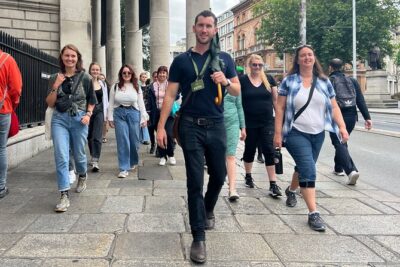
Dublin Highlights and Hidden Gems Guided Walking Tour
Read our review →

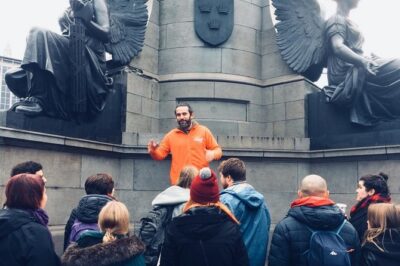
90 Minute Dublin Walking tour and Sightseeing tips
Read our review →

Dublin Traditional Irish 3 Course Meal Walking Tour with Local
Read our review →
Browse the lists this tour appears in