
Reviewed · MUSEUMS
The Medieval Mile Museum Guided Tour
Kilkenny’s past is packed into one old church and its graveyard. Inside the Medieval Mile Museum, you’ll see artifacts found by archaeologists, then hear how plague, religion, burial, and daily life shaped the town. The setting gives the history some weight: this is not just a row of display cases.
I like the local storytelling, especially when guides such as Joe, John, and Lyn connect the objects to Kilkenny itself. I also like the short format and the chance to keep exploring after the guided hour. The main drawback is scale. This is a small museum, so anyone expecting a large collection or a full-day history program may find it brief.
Key points to know
- A medieval church anchors the visit: The museum occupies a historic church with a graveyard and monuments covering about 800 years.
- Local guides make the difference: Joe, John, and Lyn are praised for clear explanations, humor, and strong knowledge of Kilkenny.
- The Black Death is part of the story: You’ll learn how the plague fits into medieval Irish history.
- Archaeological finds add fresh interest: Some objects were recently uncovered, giving the museum a link to ongoing discoveries.
- The tour is easy to fit into a day: Plan on 55 minutes to one hour, with extra time afterward for your own look around.
- The group can reach 20 people: That is small enough for a focused tour, though the experience may feel less intimate at full capacity.
Entering Kilkenny’s medieval church
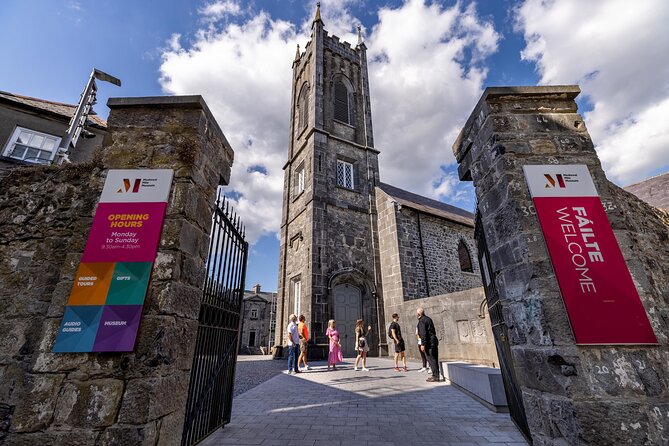
The tour begins at 86 High Street, in the Gardens area of Kilkenny, at the Medieval Mile Museum. The building itself is the first major exhibit: a former church dating to the medieval period, described in the tour details as a 12th-century church and highlighted elsewhere as a 13th-century church.
That slight variation in dating does not change the heart of the experience. You are entering a place shaped by centuries of worship, burial, and town life. The old church gives the guide a real setting to point to, rather than asking you to picture medieval Kilkenny from a modern room.
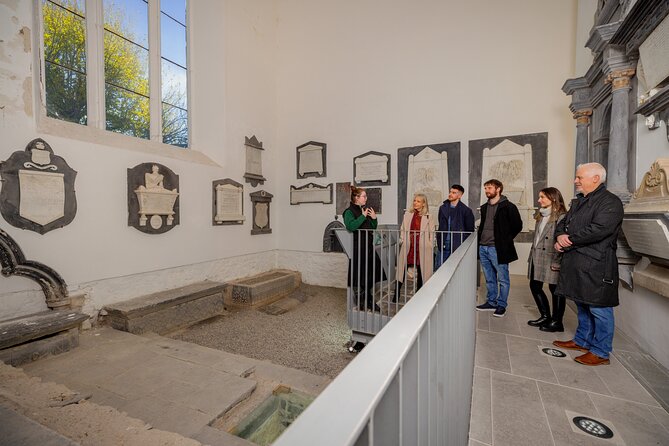
The graveyard adds another layer. Monuments and remains help show how the town remembered its dead, while the church explains how religion touched everyday life. I find this kind of setting more useful than a history lecture alone because the building and burial ground keep bringing the conversation back to real people and real places.
You should allow roughly an hour for the guided visit. That is enough time to get a clear introduction to the site without turning the stop into an exhausting block of facts. It also leaves room in your Kilkenny day for other sights along the Medieval Mile.
A few more things to do around Kilkenny worth a look
- Medieval Mile Museum Self Guided Audio Tour
★ 5.0 · 91 reviews - Irish Rock ‘N’ Roll Museum Experience Dublin
★ 5.0 · 6,112 reviews - The Little Museum of Dublin Famous Guided Tour
★ 5.0 · 2,948 reviews
What the one-hour route covers
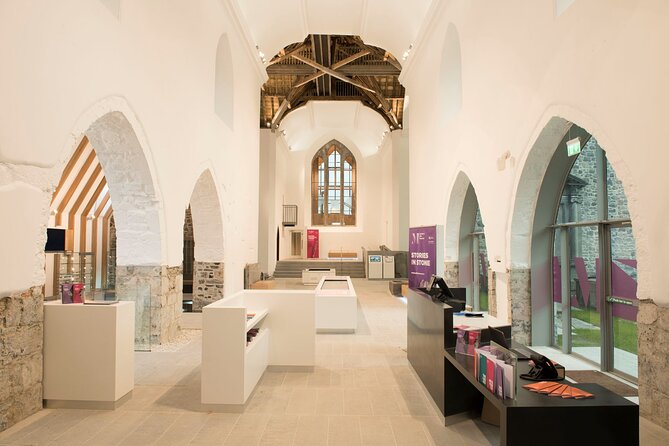
The single listed stop is the museum, but it has several parts. The guide brings you through the church, the graveyard, the monuments, and the museum displays. The exact order and emphasis may depend on the guide and the group, but the themes remain firmly tied to Kilkenny’s medieval past.
Expect the church to provide the broad setting. You’ll learn why the building matters and how it fits into the town’s story. From there, the graveyard makes the subject more personal. Tombs and monuments are not decorative extras here. They are part of the evidence for how earlier communities lived, worshipped, and marked death.
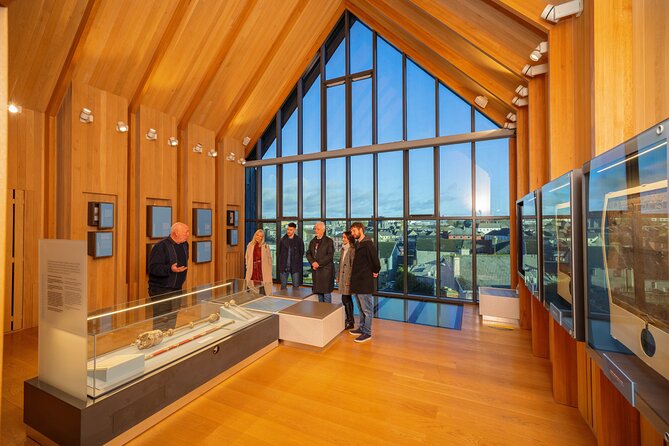
The museum’s artifacts add detail. Some objects were recently found by archaeologists, which gives the visit a useful sense of discovery. You are not only looking at old things preserved for display. You are seeing evidence that has helped add to what is known about Kilkenny.
The tour also covers medieval Ireland more widely, including the Black Death. That matters because the plague was not an isolated event in a textbook. It affected communities, population, work, religion, and attitudes toward death. A good guide can use Kilkenny as the starting point, then show how local events fit into the wider Irish story.
Guides who make the history easier to follow
The strongest part of this experience is the guiding. Joe is described as witty, local, and able to answer questions from the group. John is praised for combining historical stories with humor. Lyn is noted for her passion for both the museum and Kilkenny, along with useful suggestions for other places to visit in town.
That gives you a good sense of the tour’s style. This is not designed as a silent walk through labeled displays. You are there to listen, ask questions, and let the guide explain why a church, graveyard, or artifact matters.
I especially value the local connection. A guide who grew up in Kilkenny can add a sense of place that a standard audio guide may miss. The goal is not simply to memorize dates. It is to put the museum into the town around you.
The humor also helps. Medieval subjects can become a blur of names, religious terms, and dates. Clear stories and a few well-placed jokes make it easier to remember the main ideas. The feedback about the guides repeatedly emphasizes that the explanations are informative without becoming too heavy.
Guide quality can vary on any scheduled tour, and the individual named for your visit may not be Joe, John, or Lyn. Still, the repeated praise for these guides points to a strong guiding culture at the museum.
Artifacts, archaeology, and the Black Death
The museum’s objects are important because they give physical form to the history. You can hear about medieval life, but seeing preserved artifacts makes the subject more concrete. The displays also connect the old church to recent archaeological work.
Recently discovered objects are especially useful for visitors who like the process of history, not just the finished story. Archaeology can change what people understand about a place. New finds may confirm old ideas, add detail, or raise fresh questions. At the Medieval Mile Museum, that sense of discovery is part of the appeal.
The Black Death is another major subject. If your knowledge of medieval Ireland begins and ends with castles and kings, this section widens the picture. Disease affected ordinary people as much as rulers, and it changed communities in ways that can be hard to grasp from dates alone.
The museum’s setting helps here. A graveyard beside the church makes discussions of mortality direct and tangible. This is not a light attraction in every moment, but the subject is handled as part of the town’s story rather than as a shock display.
You may find the artifacts more interesting if you first listen to the guide’s explanation. Small objects can be easy to overlook when you do not know what they were used for or why they matter. After the guided portion, take time to look again at anything that caught your attention.
Same base, a very different sort of day:
- Smithwick’s Experience Kilkenny Entrance Ticket
★ 5.0 · 601 reviews - Shenanigans Walks – Guided Walking Tour in Kilkenny
★ 5.0 · 485 reviews - Kilkenny Boat Trip
★ 5.0 · 323 reviews - Kilkenny Walking Tour with Local Certified Guide
★ 5.0 · 274 reviews
Why the graveyard is more than an outdoor add-on
The graveyard is one of the experience’s best features because it changes your sense of time. Inside the museum, the past is explained through architecture and objects. Outside, the monuments show how generations used the same place to remember people and express belief.
A local guide can point out details you might otherwise pass without notice. Even when the tour stays broad, the graveyard gives the history a human scale. You are reminded that medieval Kilkenny was not only a place of institutions and events. It was a town of families, workers, worshippers, and mourners.
Weather may affect how much you enjoy this part. The tour includes an historic graveyard, so sensible shoes and a coat are practical choices in Ireland. The supplied information does not promise specific ground conditions, so you should be ready for an outdoor section rather than assuming the entire visit takes place indoors.
The graveyard also makes this tour a useful partner to a wider walk through Kilkenny. You get a focused introduction at the museum, then a stronger frame for seeing old streets and buildings elsewhere in town.
Getting good value from $13.31
At $13.31 per person, the tour is priced as an affordable cultural stop rather than a major ticketed attraction. The value comes from the guide. You are paying not only to enter a historic church and museum, but to have someone explain the building, artifacts, graveyard, and medieval subjects in about an hour.
That price is especially fair if you enjoy local history but do not want a long formal tour. You can get a useful overview, then keep exploring the museum on your own. The included guided tour and unlimited exploration time give you both structure and flexibility.
The value is less obvious if you only want to browse objects quickly. A small museum can be seen in less time without a guide, though you would lose the stories and context that make the artifacts easier to understand.
I would treat this as a strong first stop in Kilkenny. It can help you make sense of the town before you continue along the Medieval Mile. At just under an hour, it does not consume much of your day, and the low price leaves room in your budget for other sights.
Group size, timing, and practical details
Bookings can include up to 20 people. That is a reasonable maximum for a small museum. A group of that size may feel less personal than a private visit, but it should still allow the guide to speak to everyone and take questions.
The activity is offered in English. Children must be accompanied by an adult, and most people can participate. Service animals are allowed, and the museum is near public transportation, which makes the meeting point on High Street fairly practical for a day in town.
You receive confirmation when booking. The tour starts and ends at the same meeting point, so you do not have to arrange a separate return transfer.
One useful point: arriving on time is still the best plan. A late arrival was handled kindly on one occasion, but that should not be treated as a guarantee. If you are booking other timed activities afterward, leave a little breathing room rather than scheduling them immediately at the one-hour mark.
You can cancel for a full refund up to 24 hours before the start time. Changes or cancellations made less than 24 hours before the start are not accepted for a refund, and the cut-off follows local time.
Who will enjoy this museum most
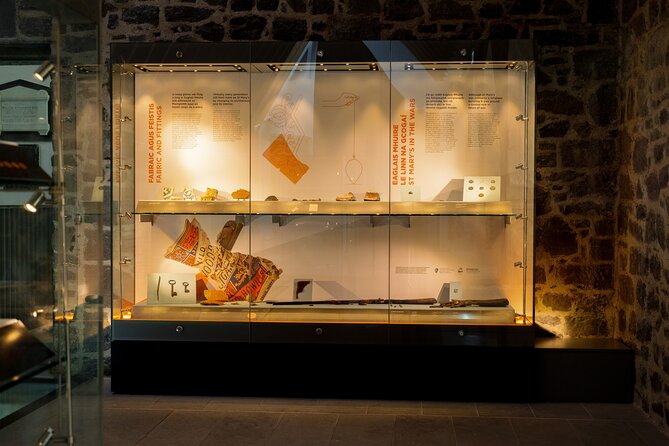
I would recommend the tour to you if you like archaeology, old buildings, burial sites, and stories about ordinary life. It is also a good choice if you want a guided introduction to Kilkenny before exploring more of the town on foot.
Families can use it as a compact history lesson, provided children stay with an adult. The short duration helps, though the themes of plague and death may not suit every young child.
History fans will appreciate the mix of local and national subjects. You get Kilkenny’s church, graveyard, and artifacts, along with wider discussion of medieval Ireland and the Black Death.
You may want to skip it if your priority is a large museum with many rooms and a huge collection. The attraction is described as small, and its strength is the combination of place and storytelling. It is not built around quantity.
Should you book the Medieval Mile Museum Guided Tour?
Book it if you want a short, affordable way to understand Kilkenny’s past. The medieval church and graveyard give the visit a strong sense of place, while guides such as Joe, John, and Lyn bring humor and clear local context to the artifacts.
The best reason to go is not the size of the museum. It is the quality of the hour you spend there. You get archaeology, church history, burial monuments, the Black Death, and a local guide who can connect the pieces. For $13.31, that is good value, especially when you have time to keep exploring afterward.
Skip it only if you prefer large museums or want a longer walking tour through the whole town. For most visitors with an interest in medieval Kilkenny, this is an easy stop to fit into the day and a useful way to see the city with better context.
FAQ
Where does the Medieval Mile Museum Guided Tour begin?
It begins at 86 High Street, Gardens, Kilkenny, R95 WR82, Ireland.
How long does the tour take?
The guided experience lasts about 55 minutes to one hour.
What language is the tour offered in?
The tour is offered in English.
Is admission included?
Yes, admission to St. Mary’s Medieval Mile Museum is included, along with the guided tour.
Can I continue exploring after the guided tour?
Yes. Unlimited exploration time is included after the guided portion.
What is the cancellation policy?
You can cancel up to 24 hours before the experience start time for a full refund. Cancellations or changes made less than 24 hours before the start are not accepted for a refund.
Just added around Kilkenny
- Waterford Crystal & Kilkenny City Small Group Tour★ 4.7 · 6 reviews
- Kilkenny Food and Brewery Tour★ 4.5 · 6 reviews
- Medieval Mile Museum Self Guided Audio Tour★ 5.0 · 91 reviews
- Walk the Medieval Mile with Pat★ 5.0 · 132 reviews
- Kilkenny Romance: Private Tour with Professional Guide★ 4.5 · 6 reviews
- Guided tour of Kilkenny in French with an Irish guide★ 5.0 · 26 reviews
- Medieval Mile Street Tour★ 5.0 · 24 reviews
- Kayak and SUP Tours Kilkenny★ 5.0 · 20 reviews
Museums, compared.
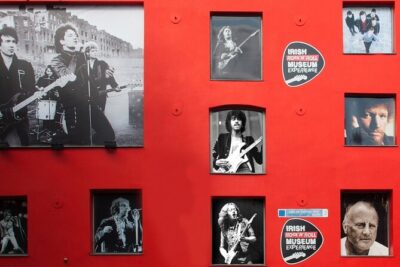
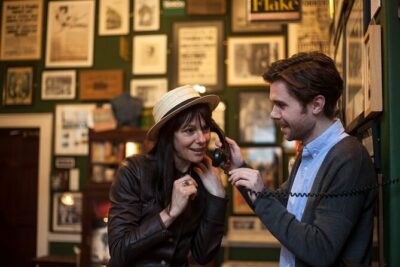
The Little Museum of Dublin Famous Guided Tour
Read our review →

Giant’s Causeway with the Titanic Exhibition and the best of Northern Ireland
Read our review →
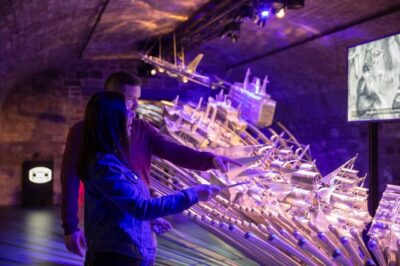

Irish Whiskey Museum: Whiskey Blending Experience
Read our review →
Irish Whiskey Museum Blending Tour with Tastings
Read our review →Browse the lists this tour appears in