
Reviewed · MUSEUMS
General Entry Tickets to Foynes Flying Boat and Maritime Museum
Foynes was once a key Atlantic air stop, and this museum lets you step into the age when crossing the ocean meant boarding a flying boat, not a cheap overnight flight. I like the way the visit mixes real aviation history with hands-on flight simulators, and I especially like the 3D presentation about the birth of Irish Coffee.
The main drawback is its limited opening schedule: the museum is open Tuesday through Sunday, 10:00 a.m. to 4:30 p.m., from March 15 through December 19. If you arrive late in the day, 90 minutes can feel tight, especially if you want time for the control tower and Maritime Museum.
Key points before you go

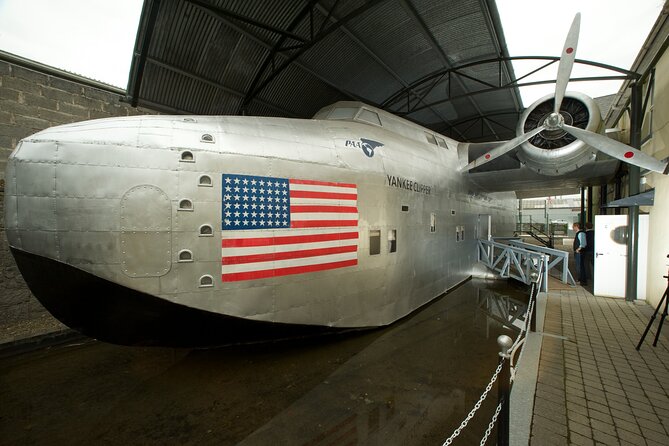
- Board the world’s first Airforce One: See what long-distance air travel looked like before modern jets made the Atlantic crossing routine.
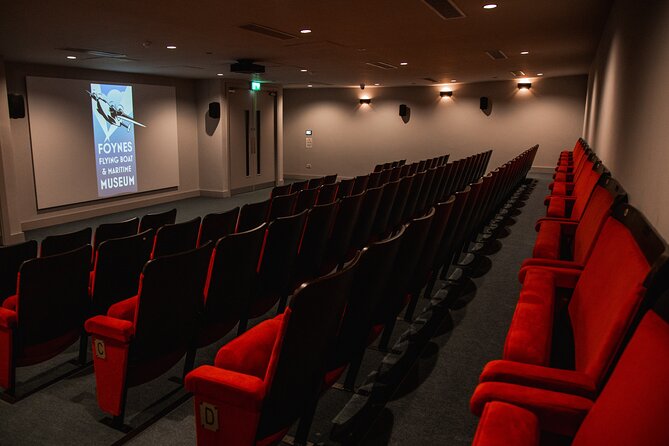
- Start with the film: The opening film sets the scene and helps make the exhibits easier to understand.
- Test a flight simulator: You can take the pilot’s seat instead of only reading about early aviators.
- See where Irish Coffee began: A 3D hologram recreates the drink’s origin, followed by an Irish Coffee Masterclass in a 1940s-style setting.
- Climb to the control tower: The panoramic view reaches across the Shannon Estuary.
- Allow extra money for a drink: Irish Coffee is available at O’Regan’s restaurant on site, but it is sold separately.
Foynes and the age of ocean-crossing aircraft
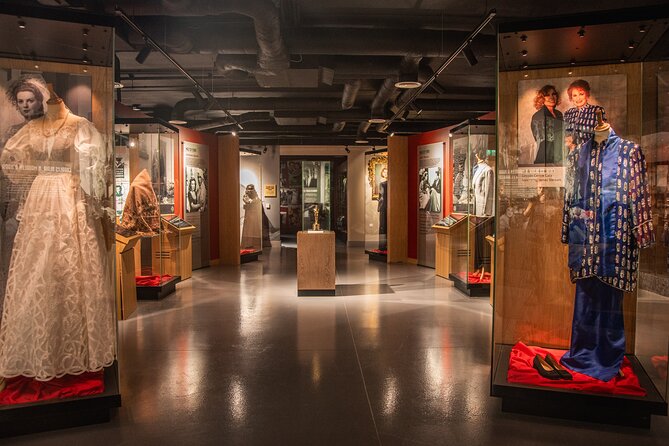
The most interesting part of this visit is the chance to see aviation before airports and jetliners took over. Foynes Flying Boat Museum is not simply a collection of old aircraft photographs. It places you in the period when passengers crossed the Atlantic in flying boats, large aircraft designed to land on water.
That change in scale matters. Modern air travel can make the Atlantic feel like a short hop. At Foynes, you get a clearer sense of how much skill, courage, and planning were needed when aircraft had to take off from and land on the river rather than use a paved runway.
The museum also connects aviation with ordinary life in Foynes. Pilots and airline staff played a part, but so did passengers and local residents. The section on wartime Foynes helps show how an international air station affected a small Irish community during a difficult period.
I like that the story includes Hollywood icons and famous passengers as well as pilots. That gives the museum a human angle. The Atlantic route was not only a technical achievement. It was also a glamorous, sometimes tense way for people to move between Europe and North America.
A few more things to do around Limerick worth a look
- Skip the Line: Hunt Museum Ticket
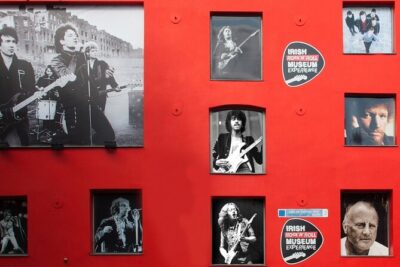
★ 4.5 · 22 reviews - Irish Rock ‘N’ Roll Museum Experience Dublin
★ 5.0 · 6,112 reviews - The Little Museum of Dublin Famous Guided Tour
★ 5.0 · 2,948 reviews
Let the opening film set the scene
I recommend beginning with the initial film. It gives you the basic story before you start looking at aircraft, photographs, and displays, so the rest of the visit has a clearer shape.
The film is useful if you know little about flying boats. You do not need to arrive with a background in aviation or Irish history. The museum can introduce the key ideas first, then let you examine the details at your own pace.
A guide also helps bring the displays to life. The guide who showed one recent group around was described as personable and informative, and that is the sort of setting where a good explanation makes a real difference. Ask questions if you have them, particularly about the Atlantic crossings, wartime operations, or the people connected with Foynes.
The exact guide may vary, so I would not plan around a particular person. Still, the guided element is worth taking seriously. This is not a huge museum where you need a full day to read every panel. A short explanation can point out what deserves your attention.
Step inside a famous flying boat
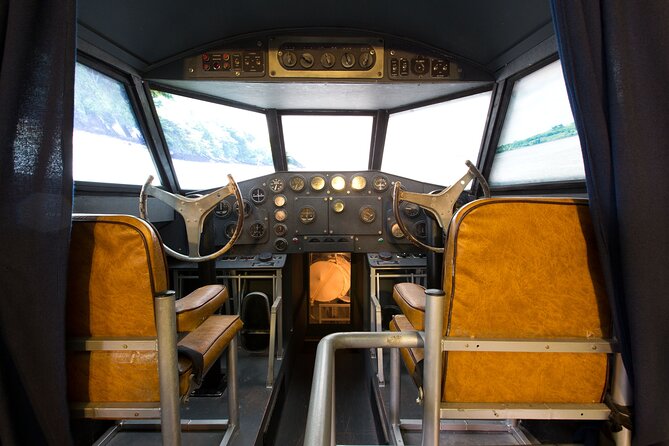
The flying boats are the heart of the museum. You can come aboard and get a sense of what ocean-liner-style air travel was meant to feel like.
The phrase ocean-liner luxury sounds grand, but it is useful here. Early long-distance air travel was presented as a special experience, not as a cramped way to reach a destination. The aircraft represented comfort, prestige, and adventure, even though the Atlantic crossing demanded far more effort than a modern flight.
As you move through this part of the museum, pay attention to the contrast between the polished image of air travel and the risks faced by the crews. The exhibition gives space to the pioneering aviators who took on the Atlantic, so you see both sides of the story: the elegance offered to passengers and the hard work behind it.
You will also learn about the aircraft known as the world’s first Airforce One. That detail gives the collection extra interest for visitors who enjoy presidential, military, or aviation history. Even if you are not an aircraft enthusiast, seeing the machine connected with that title gives the visit a memorable focal point.
The museum’s strongest moments come when you stop thinking of the flying boat as an object and picture the people using it. Passengers were not simply buying transport. They were entering a new chapter in long-distance travel.
Take the pilot’s seat on the flight simulators
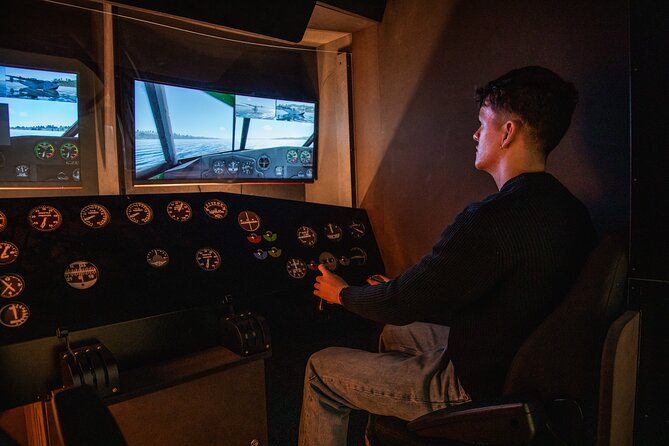
The flight simulators provide a welcome change of pace. After reading about pilots who crossed the Atlantic, you can try a small version of their work yourself.
I like this feature because it gives children and adults something active to do. It also makes the risks of early aviation easier to understand. Reading that a flight required courage is one thing. Trying to control an aircraft, even in a simulator, gives the idea more weight.
The information provided does not specify how many simulators are available or how long each session lasts. I would treat them as an added activity rather than the main reason for buying admission. If you have only 90 minutes, do not spend the whole visit waiting for or using the simulator.
Families may find this section particularly useful because it breaks up the displays. It also suits anyone who prefers practical activities to long stretches of reading. You can learn a little about the pilot’s role while having some fun with the controls.
Same base, a very different sort of day:
- From Limerick: Full-Day Guided Tour of Cliffs of Moher
★ 4.2 · 523 reviews - Cliffs of Moher Day Tour from Limerick: Wild Atlantic Way
★ 4.0 · 286 reviews - Skip the Line: Bunratty Castle and Folk Park Admission Ticket
★ 4.5 · 200 reviews - Kayaking & Canoeing in Limerick City
★ 5.0 · 128 reviews
See Foynes during wartime

The wartime section broadens the visit beyond aircraft and famous passengers. It looks at what life was like for passengers, airline staff, and local people during the war.
That wider view is important. An international air station does not exist apart from its town. Staff had to keep operations moving, passengers had to deal with uncertainty, and local people lived alongside a place with an unusual role in world events.
This section may be more serious than the flight simulators or Irish Coffee presentation. That contrast works well. You get the glamour of early aviation, then a reminder that Foynes operated during a period of danger and disruption.
I would give this area time rather than treating it as a quick passage between the aircraft and the café. It helps answer a simple question: what did this place mean to the people who worked and lived there? The museum’s answer is broader than a story about machines.
Discover the Irish Coffee story in a 1940s setting
Foynes is also known as the birthplace of Irish Coffee, and the museum handles that story with more than a printed panel. A 3D hologram recreates the night the drink was invented, then an Irish Coffee Masterclass takes place in a quaint 1940s setting.
This is one of the museum’s most distinctive features. Many aviation museums focus only on aircraft. Here, a famous drink becomes part of the social story of the airport and its passengers.
The hologram should help you picture the moment rather than simply memorize a date or name. The 1940s setting adds atmosphere without requiring a long performance or a separate excursion. It gives the visit a strong Irish character and helps explain why Foynes is remembered outside aviation circles.
Do not confuse the museum presentation with a complimentary drink. Irish Coffee is available at O’Regan’s restaurant on site, but it is sold separately. If you want to try one, budget for it in addition to the $21.63 admission price.
I like this optional extra because it lets you choose how much time and money to spend. You can enjoy the story without ordering a drink, or you can stay for a taste after learning where the tradition began.
Look across the Shannon Estuary from the control tower
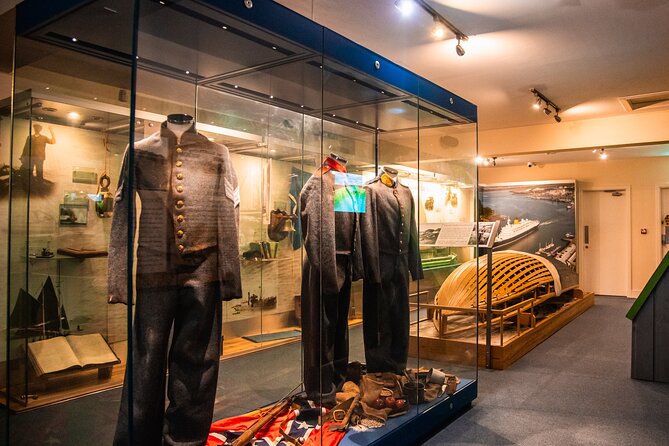
The control tower offers panoramic views of the Shannon Estuary. This is more than a photo stop. It connects the indoor exhibits with the setting that made Foynes important in the first place.
From the tower, you can think about the practical reason flying boats operated here. The water was not just scenery. It was part of the transport system, a place where aircraft could land and take off.
The supplied information does not promise a particular weather view, so keep expectations sensible. On a clear day, the estuary should add a strong visual finish. In poor weather, the tower still gives you a useful sense of the site’s position and purpose.
I would try to visit the control tower before leaving rather than assuming you can squeeze it in at the end. With an approximate visit time of 90 minutes, the tower, film, aircraft, simulators, Irish Coffee display, and Maritime Museum can fill the schedule quickly.
Continue into the Maritime Museum
The Maritime Museum adds another layer to the visit by looking at Ireland’s maritime heritage and people from Foynes who helped shape Irish history.
This section is a good reason to visit even if flying boats are not your main interest. It places the aviation story inside a wider relationship with the sea, the estuary, and the town. You can move from aircraft to maritime subjects without feeling that you have entered an unrelated attraction.
The details supplied do not list each collection or object in this section, so I would not promise a particular ship, model, or artifact. Instead, expect a broader look at Ireland’s connection with the water and at notable people linked with Foynes.
For a first-time visitor to the area, the Maritime Museum can help explain why the location matters beyond one famous airport. It also gives older children and adults more historical material after the hands-on simulator section.
Is $21.63 good value for 90 minutes?
At $21.63 per person, the admission is not a bargain-basement museum ticket. The value depends on how much of the visit you use.
You are paying for several connected features: the flying boat exhibition, the opening film, flight simulators, wartime displays, the Irish Coffee presentation and Masterclass, the control tower, and the Maritime Museum. That is a fuller visit than a single-room aircraft display.
I think the price is fair if you care about aviation, Irish transport history, maritime subjects, or the Irish Coffee story. It is also reasonable for families if the simulators help keep younger visitors engaged. You get a mix of watching, reading, moving through exhibits, and trying an activity.
The value is weaker if you are passing through with only a few minutes or if you plan to look at one aircraft and leave. The museum needs attention. Give it close to the full 90 minutes, and consider ordering Irish Coffee separately only if that part interests you.
The attraction currently has a rating of 5 from 33 reviews, with 100 percent recommending it. That suggests a strong level of satisfaction, but I would still match it to your interests rather than treating the score as a guarantee. Small museums work best when you arrive ready to appreciate their subject.
Timing, access, and planning your visit
The museum is open Tuesday through Sunday from 10:00 a.m. to 4:30 p.m. during the stated periods, March 15 through December 19, in both 2025 and 2026. It is not listed as open on Mondays, so check your day before setting out.
A mobile ticket is provided, and confirmation arrives at the time of booking. The museum is near public transportation, which helps if you are not driving. The information does not give specific bus routes or travel times, so you will need to check your own route separately.
Most people can participate, and service animals are allowed. No special physical requirements are listed, but the visit includes moving through several museum areas and reaching the control tower. If you have specific mobility concerns, contact the provider before booking because the supplied details do not describe every access feature.
You can cancel free of charge up to 24 hours before the experience starts for a full refund. Changes or cancellations inside that 24-hour period are not accepted for a refund, and the cut-off uses local time.
Who will enjoy Foynes most?
I would choose this museum for anyone interested in early aviation, ocean travel, Irish history, or the story behind Irish Coffee. It also suits families who want a museum with at least one hands-on element.
The visit works well for adults because the subject has real historical weight. It works for children because the simulators and hologram provide movement and visual interest. The Maritime Museum gives the attraction more range than a single aircraft display.
I would be less likely to recommend it if you want a large attraction with many hours of entertainment, a wide restaurant menu included in admission, or a full-day outing. The visit is compact, and its appeal depends on curiosity about Foynes and the early Atlantic routes.
You should also plan around the opening hours. A late arrival can turn a relaxed museum visit into a quick checklist. The opening film, flying boat, control tower, and Irish Coffee presentation deserve more than a hurried glance.
Should you book the Foynes Flying Boat Museum?
Book it if you want a focused, unusual museum visit with a clear sense of place. The aircraft, wartime story, flight simulators, Irish Coffee presentation, and estuary views give you several ways into the subject.
I especially recommend it when you are already near Limerick or Foynes and can spare about 90 minutes. At $21.63, the admission makes the most sense when you use the whole museum rather than treating it as a brief stop.
Skip it only if your schedule is too tight or if early aviation and maritime history do not interest you. For the right visitor, this is an engaging look at a time when crossing the Atlantic felt like a major adventure, and Foynes sat at the center of it.
FAQ
Where is the Foynes Flying Boat and Maritime Museum?
The museum is in Foynes, in County Limerick, Ireland.
How long does a visit take?
The experience lasts approximately 1 hour and 30 minutes.
What does general admission include?
Admission includes the Foynes Flying Boat Museum, the flying boat exhibits, flight simulators, wartime displays, the Irish Coffee presentation and Masterclass, access to the control tower, and the Maritime Museum.
Is Irish Coffee included in the ticket price?
No. Irish Coffee is available at O’Regan’s restaurant on site, but it is sold separately.
What are the opening hours?
From March 15 through December 19 in 2025 and 2026, the museum is open Tuesday through Sunday from 10:00 a.m. to 4:30 p.m.
Is the ticket mobile?
Yes. The experience provides a mobile ticket, and confirmation is received at the time of booking.
Are service animals allowed?
Yes. Service animals are allowed.
Can I cancel for a refund?
Yes. You can cancel at least 24 hours before the experience start time for a full refund. Cancellations or changes made less than 24 hours before the start time are not accepted for a refund.
Just added around Limerick
- Limerick City: Private transfer to & from Shannon Airport★ 5.0 · 7 reviews
- Ring of Kerry Day Tour from Limerick: Including Killarney National Park★ 4.0 · 80 reviews
- Private Walking Tour of Limerick City★ 4.0 · 10 reviews
- Guided eBike Tour – Killaloe and the Lough Derg Shore★ 5.0 · 9 reviews
- Skip the Line: Hunt Museum Ticket★ 4.5 · 22 reviews
- Self Guided Bike Tour on the Limerick Greenway★ 5.0 · 33 reviews
- Private Walking Tour of Adare★ 5.0 · 6 reviews
- Dingle Peninsula Day Tour from Limerick: The Wild Atlantic Way★ 4.5 · 50 reviews
Museums, compared.
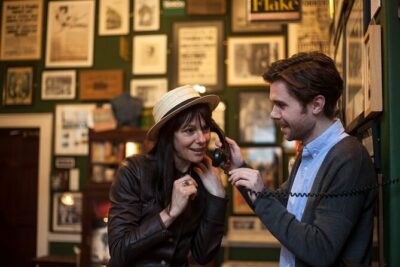
The Little Museum of Dublin Famous Guided Tour
Read our review →

Giant’s Causeway with the Titanic Exhibition and the best of Northern Ireland
Read our review →
Irish Whiskey Museum: Whiskey Blending Experience
Read our review →
Irish Whiskey Museum Blending Tour with Tastings
Read our review →Browse the lists this tour appears in