
Reviewed · TOURS IN DUBLIN
Kildare: Irish National Stud & Gardens
The Irish National Stud is where Ireland’s horse-breeding tradition becomes a hands-on visit. You can watch stallions, mares, and foals in working paddocks, then meet retired champions such as Hurricane Fly, Beef, Salmon, and Faugheen. It is a rare chance to see a thoroughbred farm that welcomes the public.
I like the mix of live animals and polished exhibits. The Japanese Gardens offer quiet paths and careful planting, while the Irish Racehorse Experience turns breeding, auction, training, betting, and race day into an interactive story. The main drawback is seasonal: from October onward, the stud has fewer horses on site and fewer public tours.
Key points to know
- Free guided tour: Public tours usually run at 10:30, noon, 2pm, and 4pm, with more choices in summer.
- Living Legends: See retired racehorses through large windows as they graze in their paddock.
- Two very different gardens: The Japanese Gardens trace the human journey, while St Fiachra’s Garden celebrates Irish plants and wildlife.
- Interactive race day: Choose and buy a virtual yearling, then watch its progress through training and a simulated race.
- Best season: February through September offers the strongest chance of seeing good numbers of horses on the grounds.
- Good value for horse lovers: At $22, the ticket covers the stud, both gardens, the guided tour, and the Irish Racehorse Experience.
Why Kildare’s National Stud is worth your time
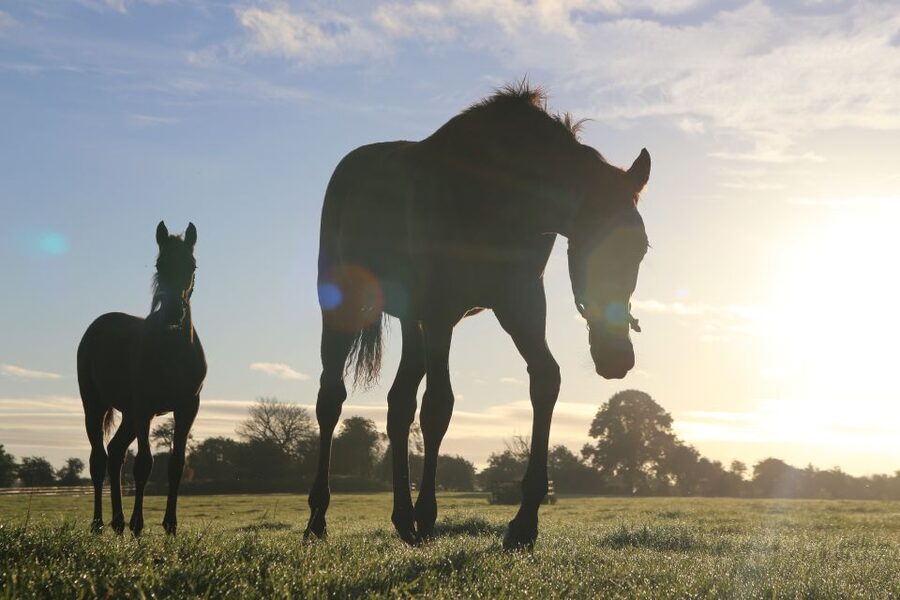
County Kildare is Ireland’s horse country, and the Irish National Stud gives you a close look at the business behind the sport. This is not simply a garden with a few animals added for atmosphere. It is a working thoroughbred breeding farm, set across 850 acres of rolling green ground.
The visit works well because it gives you several ways to understand the place. You can watch living horses, hear how breeding decisions are made, follow the development of a racehorse, and then step away from the sporting world in two very different gardens.
From Dublin, the stud is about 40 minutes away. That makes it a practical day trip if you want something beyond castles, city museums, and crowded sightseeing stops. The ticket costs $22 per person, a fair price when you use the included tour and allow time for the gardens and racehorse exhibit.
I would not treat this as a quick one-hour stop. You can walk through the grounds quickly, but you will get much more from it if you allow several hours. The interactive exhibit alone deserves about 40 minutes, and the public tour lasts just over an hour according to the timing available on site.
Other days out people book from Dublin:
- Dublin to Cliffs of Moher, including Wild Atlantic Way and Galway
★ 5.0 · 23,331 reviews - From Dublin: Cliffs of Moher, Burren & Galway City Day Tour
★ 4.8 · 18,888 reviews - Dublin: Guinness Storehouse Entry Ticket
★ 4.6 · 16,863 reviews
Start with the public tour of the stud
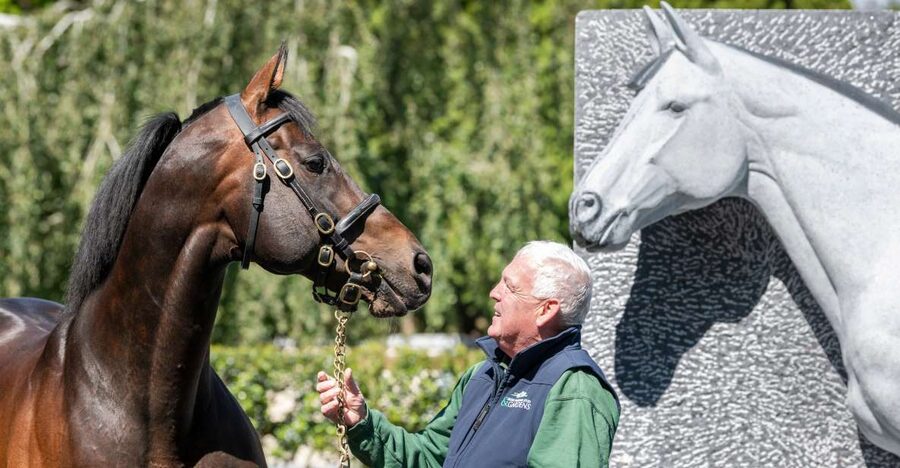
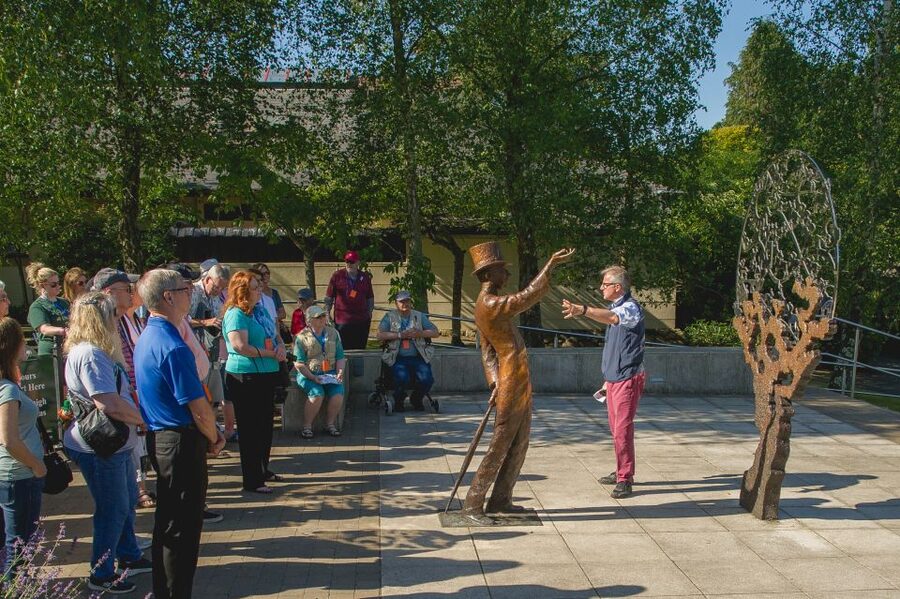
The public tour is the best way to understand how the National Stud operates. A guide takes you through the stallion area, then toward the mares and foals, explaining the work involved in producing a future racehorse.
The horses are the main attraction, but the setting helps you appreciate their value. Stallions are carefully bred athletes, and mares with foals are closely protected. Seeing the animals in their paddocks gives the visit a sense of place that a museum display cannot match.
The guides can make a real difference. Sue has led an especially clear and enjoyable tour, and Amanda has given an informative talk about how the stud works, how it earns income, and how a potential future stallion is selected. Guide schedules can change, so do not assume you will meet either person on your visit, but expect the tour to provide the practical background that the exhibits alone cannot.
The tour usually runs at set times. Standard times are 10:30am, noon, 2pm, and 4pm. During summer, you may find tours at 10:30am, noon, 1pm, 2pm, 3pm, and 4pm. From October, the schedule becomes more limited, with tours at 11am and 2pm.
If you arrive late in the day, check the schedule before you start wandering. A visitor who began the racehorse exhibit first had to leave it early to catch a public tour. The simple fix is to plan around the tour time, then use the gardens and Living Legends area afterward.
Meet the stallions, mares, and foals
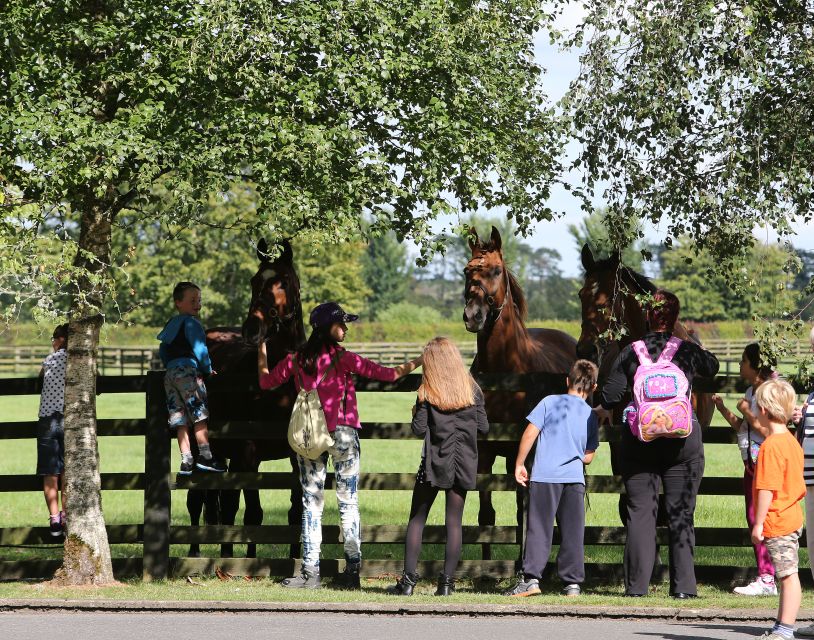
The living horses give the visit its strongest sense of reality. You are not only learning about breeding in theory. You are looking at the stallions, mares, and young foals that make the work possible.
The foals are often the most appealing part for families. They are lively and playful, but the visit also shows why breeding is a serious business. Mares and foals receive careful protection, and the staff must manage the animals with patience and precision.
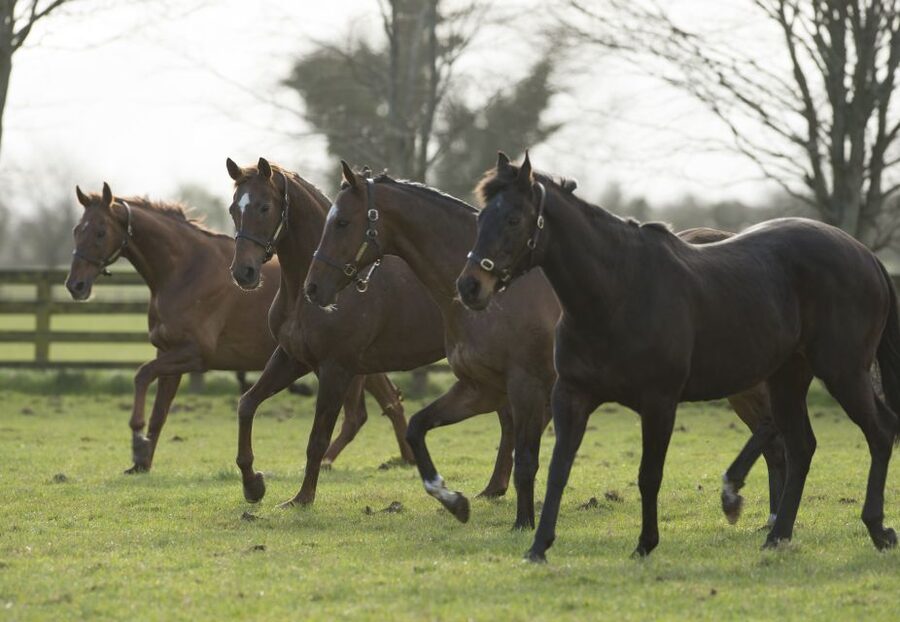
The stallions offer a different sight. Their size, strength, and controlled movement make it easy to understand why bloodlines matter so much in racing. The guide helps explain the steps used to identify a promising future stallion, rather than leaving you to guess from appearance alone.
This part of the visit is outdoors, so your experience depends partly on Irish weather. Light rain does not ruin the outing, but waterproof shoes and a rain jacket will make it more comfortable. The grounds are extensive, and you should expect some walking between the animal areas, gardens, and indoor displays.
The Living Legends room and Ireland’s racing stars
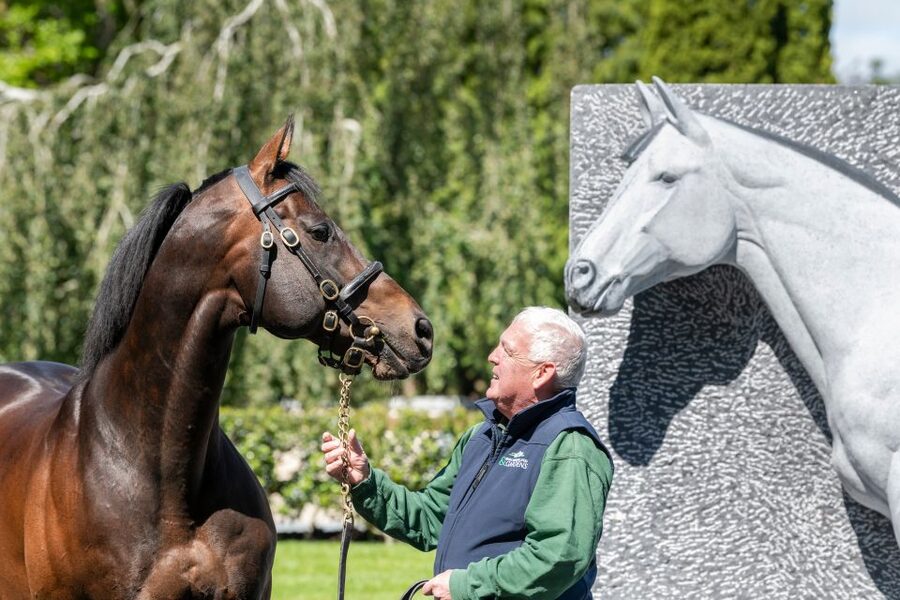
The Living Legends team includes retired racehorses such as Hurricane Fly, Beef, Salmon, and Faugheen. These are not names added simply to decorate a sign. They are former racing stars, and seeing them in retirement adds an important second chapter to the sport.
The final room has floor-to-ceiling windows looking out toward the paddock. You can watch the horses graze while learning about life after racing, along with the careers of famous horses and people connected with the sport around the world.
I like this part because it slows the pace. After the noise and motion of the racehorse exhibit, the retired horses offer a calmer sight. You get a chance to think about a racehorse as a living animal, not just a name on a betting slip or a winner’s board.
This room also helps explain the full life of a thoroughbred. The animal begins with breeding and foaling, develops through training, competes at the track, and eventually retires. That wider view makes the visit more meaningful, especially if you know little about horse racing.
Same base, a very different sort of day:
- Dublin to Cliffs of Moher, Burren, Wild Atlantic Way, Galway Tour
★ 5.0 · 12,924 reviews - Dublin to Belfast Black Cab, Dunluce Castle and Giant’s Causeway
★ 5.0 · 7,954 reviews - Kilkenny, Wicklow Mountains & Glendalough Day Tour from Dublin
★ 5.0 · 7,897 reviews - From Dublin: Wicklow Mountains, Glendalough & Kilkenny Tour
★ 4.8 · 6,235 reviews
Follow a horse from foaling to the finish line
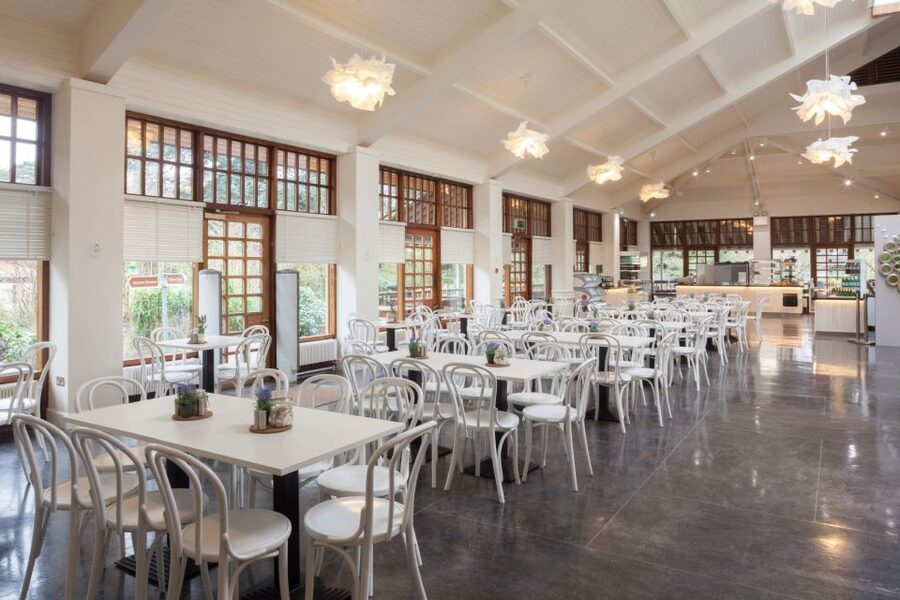
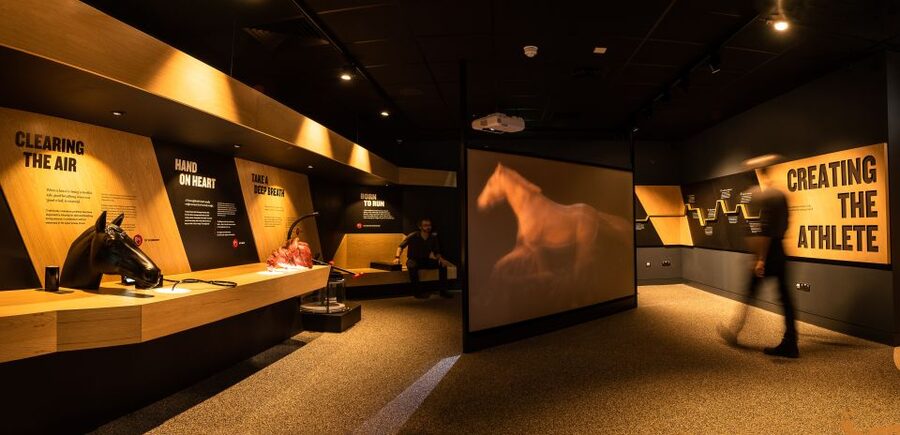
The Irish Racehorse Experience is the most modern part of the visit. It takes you through the stages of a racehorse’s life, beginning with birth and early development.
You receive a horse box that lets you take part in the story as if you own a racehorse. The exhibit then leads you through an interactive auction, where you can purchase an unbroken yearling. From there, the horse enters training and the world of racecourses, jockeys, anatomy, and physiology.
This format works well for families and anyone who wants more than a standard display case. You do not need to know racing terms before you begin. The rooms explain the physical demands placed on the horse and the decisions made by owners and trainers.
The race day section adds some fun. You see the fashion, betting, and animated commentary that surround a major race. You then get the chance to ride your horse in a simulated race and find out how your investment performs.
The exhibit is open from 11am to 4pm. Children under seven cannot use it unless accompanied by an adult, so families with young children should plan to stay together in this section. Allow around 40 minutes if you want to follow the full story without rushing.
The exhibit is informative, but it is also more theatrical than the stud tour. If you prefer quiet gardens and real animals, you might find the screens and simulation less appealing. For most people, though, it gives useful context before or after seeing the horses outside.
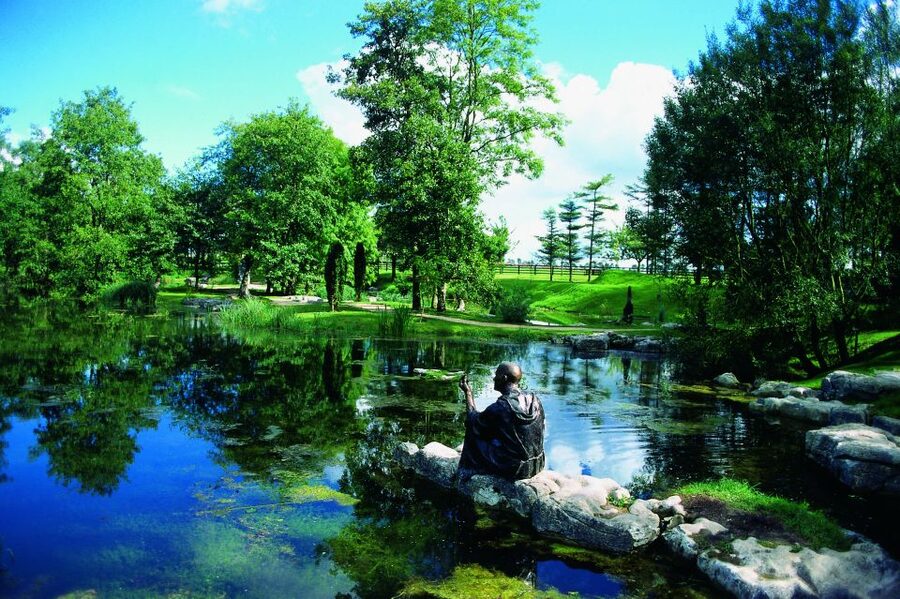
Walk the Japanese Gardens and the Life of Man path
The Japanese Gardens provide a sharp change of mood. Instead of breeding, racing, and business, you get ponds, planted paths, and a carefully arranged setting designed for quiet reflection.
The garden follows the Life of Man path. Its route traces the passage of a soul from birth to death and beyond. You do not need to study every symbol to enjoy the walk, but the layout gives the garden more purpose than a simple collection of attractive plants.
Take your time here. The Japanese Gardens are one of the parts most likely to be rushed by people focused on the horses, yet they may become your favorite section. The paths offer a peaceful break, and the setting gives you room to slow down after the public tour.
The garden is well kept, and the grounds are clean and orderly. Rain does not prevent you from seeing it, although wet paths may make comfortable shoes useful. If you are visiting with children, the garden may appeal less than the foals and race simulator, but it still provides a welcome pause for adults.
Find the Irish character of St Fiachra’s Garden
St Fiachra’s Garden has a different purpose. The Japanese Gardens look outward to a designed tradition from Asia, while St Fiachra’s Garden is rooted in Irish plants, wildlife, and the power of the local setting.
This garden represents the Irish countryside through native species and natural features. Look for Irish wildlife and take time to notice how the planting feels less formal than the Japanese section.
I recommend visiting both gardens rather than choosing only one. Their contrast is the point. The Japanese Gardens are symbolic and carefully arranged. St Fiachra’s Garden feels more connected to Ireland itself and gives you a better sense of local plant life.
Together, the gardens stop the visit from becoming only a horse-racing attraction. They also make the ticket worthwhile for companions who may not be enthusiastic about breeding statistics or betting.
Plan your day around the hours and seasons
The best time to visit is from February through September. From October onward, the stud begins to wind down, and there is limited stock on the grounds. You can still visit the gardens and exhibits, but the animal viewing may feel less complete.
Check the public tour times before setting out. The last entry is at 5pm, while the Irish Racehorse Experience closes earlier at 4pm. If you arrive after 4pm, you may still have time for the gardens and some of the grounds, but you will miss the interactive racehorse section.
A practical order is:
- Start with the Irish Racehorse Experience if you arrive before 4pm.
- Join the next available public tour.
- Visit the Living Legends area after the tour.
- Finish with the Japanese Gardens and St Fiachra’s Garden.
You can reverse that order if your tour begins soon after arrival. The key is to avoid starting an indoor section just before a scheduled tour.
The experience is listed as lasting one day, but that describes the ticket’s validity rather than a fixed guided program. Your actual visit can be shorter, though I would allow a large part of the day if you want to see everything without hurrying.
Who will enjoy this visit most?
Horse lovers will find the strongest reasons to come, especially if names such as Hurricane Fly, Beef, Salmon, and Faugheen mean something to you. The visit also suits families because it combines animals, gardens, and interactive displays rather than relying on long blocks of explanation.
You do not need to follow racing to enjoy it. The gardens and retired horses give the place broader appeal, and the public tour explains the operation in plain terms. The experience also suits anyone interested in farming, breeding, Irish culture, or the business side of sport.
I would be more cautious if you have limited time in Ireland and want to focus only on major historic sights. The National Stud is outside Dublin, requires a trip to County Kildare, and works best when you give it several hours. It is not the right choice for a rushed stop between city attractions.
The site is wheelchair accessible, which is useful for visitors who need step-free access. Still, the grounds are spread across a large property, so check directly if you need precise information about walking distances or particular paths.
Is the $22 ticket good value?
At $22, I consider this a good-value admission if you use the full package. You receive entry to the stud, gardens, and Irish Racehorse Experience, plus the public tour. Buying entry only to see one horse paddock would not offer the same value, but the combined visit has enough variety to fill much of a day.
The strongest value comes from the live tour and the racehorse exhibit. The tour explains what you are seeing, while the exhibit makes the racing world easier to understand. The gardens then give you two quieter areas at no extra charge.
The price may feel less appealing in late autumn, when fewer horses are on site and tour times are limited. For the fullest version of the visit, choose a date between February and September and arrive early enough to fit in the exhibit, tour, and gardens.
Free cancellation up to 24 hours before the visit and the option to reserve now and pay later add useful flexibility. Those details matter if your Ireland plans are still changing.
Should you book the Irish National Stud?
Book it if you want a day outside Dublin that combines real horses, Irish horse culture, gardens, and an interactive exhibit. I especially recommend it from February through September, when the grounds have the best chance of showing the stud at full strength.
Plan your arrival around a public tour, and do not leave the racehorse exhibit until the last minute. If you have a companion who is not interested in racing, the Japanese Gardens, St Fiachra’s Garden, and Living Legends room provide enough variety to make the visit worthwhile.
Skip it if your schedule is extremely tight or if you will visit outside the main season and care only about seeing large numbers of horses. For everyone else, the $22 ticket gives you a thoughtful, varied look at one of Ireland’s most distinctive sporting traditions.
FAQ
Where is the Irish National Stud and Gardens?
It is in County Kildare, Ireland, about 40 minutes outside Dublin.
How much does admission cost?
The listed price is $22 per person.
What does the ticket include?
Admission includes the Irish National Stud, the gardens, the Irish Racehorse Experience, and the public tour.
How long does the visit take?
The ticket is valid for one day. You can make a shorter visit, but allowing several hours gives you time for the tour, racehorse exhibit, Living Legends area, and both gardens.
What time are the public tours?
Public tours are usually at 10:30am, noon, 2pm, and 4pm. During summer, additional tours may run at 1pm and 3pm. From October, tours are at 11am and 2pm.
What are the opening hours for the Irish Racehorse Experience?
The Irish Racehorse Experience is open from 11am to 4pm.
Can children use the Irish Racehorse Experience?
Children under seven may use it only when accompanied by an adult.
What is the best time of year to visit?
February through September is the recommended period. From October onward, the stud winds down and there is limited stock on the grounds.
Is the Irish National Stud wheelchair accessible?
Yes, the activity is listed as wheelchair accessible.
Just added around Dublin
- Gin School, distill you own gin, cocktails, tastings, food★ 5.0 · 8 reviews
- Dublin : Street Art Walking Tour★ 5.0 · 3 reviews
- Dublin: Personal Photographer- Travel Photography Experience★ 4.5 · 8 reviews
- Dublin: Skip-the-line Book of Kells & Old Town Private Tour★ 5.0 · 6 reviews
- Dublin: Howth Coastal Craft Beer and Seafood Tour★ 5.0 · 62 reviews
- Vikings In Dublin (Walking Tour)★ 5.0 · 8 reviews
- Dublin: Silent Disco Walking Tour★ 4.9 · 21 reviews
- Dublin: Private Tour of City Monuments in Spanish★ 5.0 · 6 reviews
Tours in Dublin, compared.
Dublin to Cliffs of Moher, including Wild Atlantic Way and Galway
Read our review →
Cliffs of Moher, Burren & Galway City Day Tour
Read our review →

Dublin to Cliffs of Moher, Burren, Wild Atlantic Way, Galway Tour
Read our review →
Dublin to Belfast Black Cab, Dunluce Castle and Giant’s Causeway
Read our review →
Kilkenny, Wicklow Mountains & Glendalough Day Tour from Dublin
Read our review →
Wicklow Mountains, Glendalough & Kilkenny Tour
Read our review →
Browse the lists this tour appears in