Reviewed · TOURS IN DUBLIN
Irish National Stud & Gardens Skip the line Entrance
The Irish National Stud gives you a rare look at a working thoroughbred breeding farm open to the public. You can see stallions, mares, foals, and retired champions such as Hurricane Fly, Beef or Salmon, and Faugheen, then learn how racing horses are bred and trained through the interactive Irish Racehorse Experience.
I like the mix of horses and gardens, especially the peaceful Japanese Gardens and the carefully designed St Fiachra’s Garden. I also like that the public tour adds useful background instead of leaving you to wander past empty stables without context. The main drawback is that horse sightings can vary, and some areas may feel quiet if few animals are out.
Key points
- Retired racing stars: Meet famous horses from Ireland’s racing world, including Hurricane Fly, Beef or Salmon, and Faugheen.
- Three main activities: Plan time for the stud tour, Irish Racehorse Experience, and both gardens.
- About 40 minutes from Dublin: The site makes a practical half-day or full-day outing from the capital.
- Japanese and Celtic-inspired gardens: The Japanese Gardens offer calm paths, while St Fiachra’s Garden takes its theme from Irish heritage.
- Good value for horse fans: The $22.98 admission includes the public tour, guide, racehorse exhibit, and gardens.
- Transport needs planning: There is no bus from Kildare train station, and the stud is about a three-mile walk away.
Why the Irish National Stud Is Worth the Trip
The Irish National Stud is not simply a collection of paddocks and pretty flowers. It connects three parts of Irish life that are easy to miss in Dublin: horse breeding, racing culture, and formal garden design.
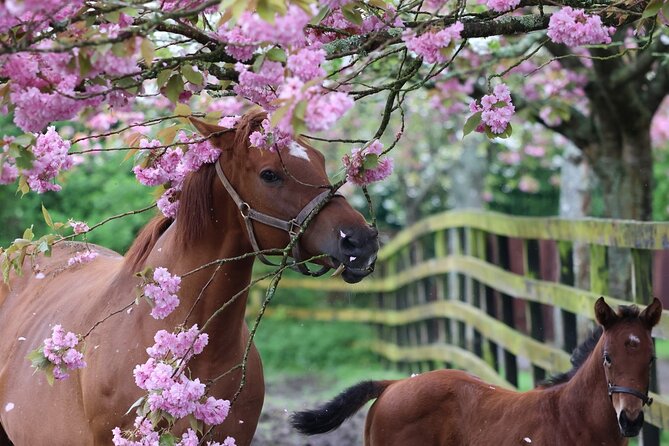
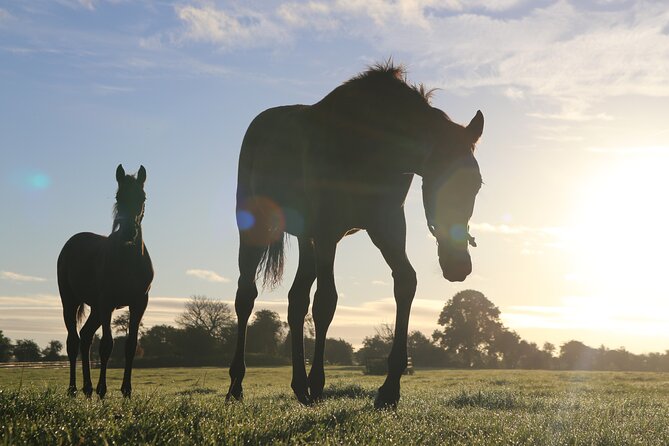
The stud began in the early 1900s and has produced some of Europe’s finest racehorses. You are not visiting a museum frozen in the past. The place still presents the workings of a thoroughbred stud, with stallions, mares, and foals forming the heart of the visit.
I find the attraction most rewarding when you treat it as a full outing rather than a quick stop to see a few horses. The public tour gives you background, the Irish Racehorse Experience explains the sport in a more engaging way, and the gardens slow the pace afterward.
The grounds cover 850 acres of rolling green land. You will not see every acre during your visit, but the setting gives the site a spacious country feel. It is a sharp change from Dublin’s streets and a good choice if you want something outdoors without committing to a long countryside tour.
A few more things to do around Dublin worth a look
- Dublin: Skip-the-Line Guinness and Jameson Whiskey Tour
★ 4.7 · 771 reviews - Skip the Line: The National Wax Museum Admission Ticket
★ 4.0 · 216 reviews - Skip the Line: Irish Night Show Including 4-Course Dinner Ticket
★ 4.5 · 216 reviews
Meeting the Stud’s Horses and Retired Champions
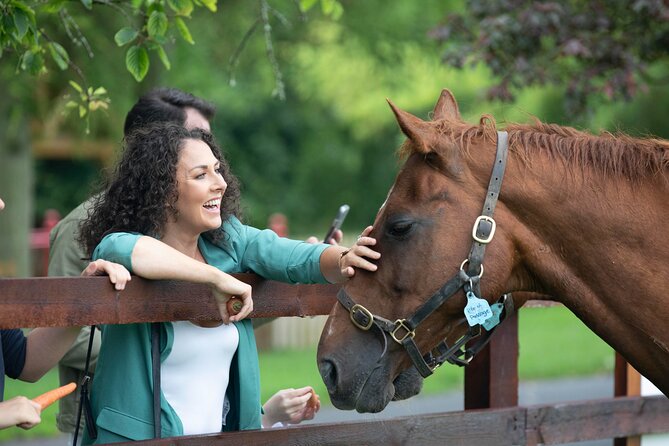
The main reason to come is the horses. The public tour takes you around the stud, where you can see the animals involved in the breeding operation. That includes stallions, mares, and foals, with the exact sightings depending on what is out and available during your visit.
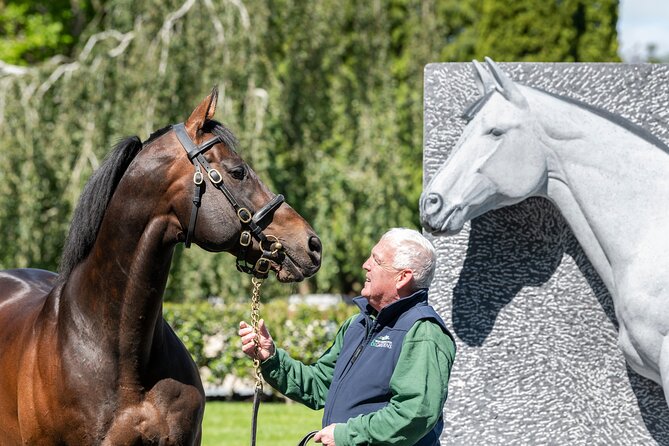
The retired racing stars are a special part of the attraction. Hurricane Fly, Beef or Salmon, and Faugheen are presented as part of the Living Legends team. For anyone familiar with Irish jump racing, seeing these former champions in retirement adds a personal connection to names that once appeared on major race cards.
You should keep your expectations realistic. This is not a guaranteed close-up encounter with a full roster of horses. On quieter days, you might find fewer animals visible and some empty stables. If your main goal is constant horse activity, the visit may feel uneven.
That is where the guide matters. A well-led tour can explain the breeding process, the stud’s history, and the role of different horses. One particularly well-received tour was led by a young guide who made the subject both informative and engaging, but no guide name is provided for regular scheduling, so you should not expect a particular person.
The public tour is included in your admission, so I would make it a priority rather than simply walking through the grounds alone. The information gives meaning to what you see. Without it, the attraction could easily become a pleasant walk with occasional horses.
The Irish Racehorse Experience Explained
The Irish Racehorse Experience is the most useful part of the visit for anyone who does not already understand racing and breeding. It is interactive, which means it aims to show how these animals are bred, raised, trained, and connected to the sport.
I like this addition because a stud farm can otherwise be hard to read. A stable, paddock, or breeding area does not explain itself. The exhibit helps connect the animal in front of you with the larger world of racing.
You will gain more from this section if you arrive with questions. How are racehorses bred? What makes a successful thoroughbred? How does a promising young horse become a racing star? The supplied information confirms that the attraction covers the world of these animals and the breeding process, but it does not list each interactive station, so the precise format may vary.
For children and first-time racegoers, this section may be the easiest way to understand the attraction. Horse racing can seem like a sport of names, numbers, and fast action. The exhibit gives you a clearer starting point before or after the outdoor tour.
I would not plan the whole visit around this exhibit alone. Its value comes from combining it with the living horses and the gardens. Together, the three parts give you a better sense of the place than any one activity can provide.
The Japanese Gardens: The Calmest Hour of the Visit
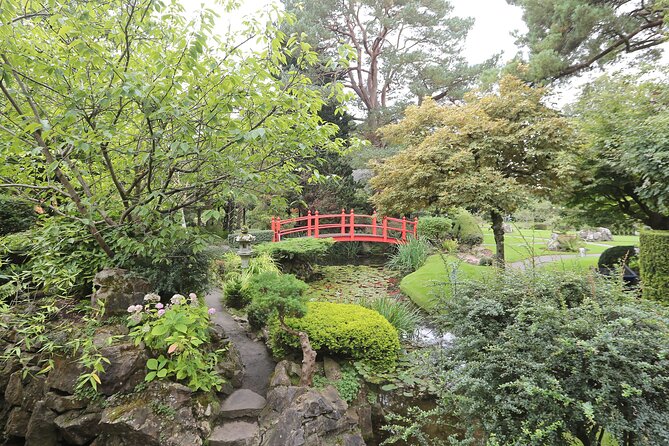
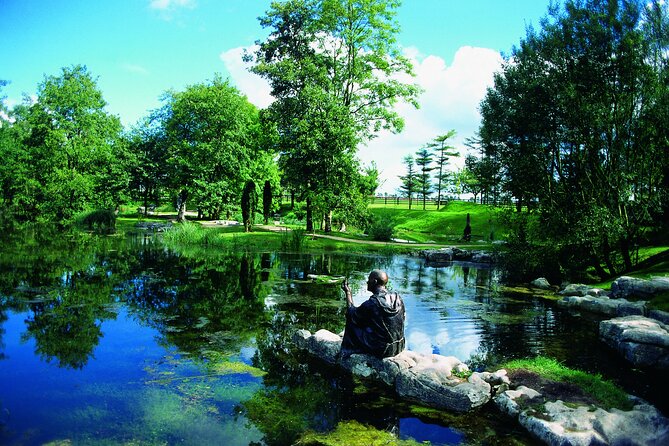
The Japanese Gardens are often the most memorable part for people who are interested in gardens rather than racing. Their paths and planted areas provide a slower, quieter experience after the horse tour.
The gardens are designed for movement and pause. You can take your time, look at the planting, and enjoy the changing views along the paths. The information provided does not specify every feature or the full route, so I would avoid expecting a particular bridge, pond, or structure unless confirmed on the day.
What makes the gardens valuable is the contrast. The stud introduces breeding, speed, bloodlines, and competition. The Japanese Gardens ask you to slow down and notice shape, balance, and atmosphere. That change of pace makes the overall outing feel more varied.
You should not rush through this section. If you only allow an hour for the entire attraction, you may have time for a quick look, but not a proper visit to both gardens and the horse areas. The experience can last from one to seven hours, so your available time makes a real difference.
For a first visit, I would see the scheduled stud tour, complete the Racehorse Experience, and then give the gardens whatever time remains. If you have several hours, do not treat the Japanese Gardens as an optional extra. They are one of the strongest reasons the attraction works for non-racing fans.
Same base, a very different sort of day:
- Dublin to Cliffs of Moher, including Wild Atlantic Way and Galway
★ 5.0 · 23,331 reviews - From Dublin: Cliffs of Moher, Burren & Galway City Day Tour
★ 4.8 · 18,888 reviews - Dublin: Guinness Storehouse Entry Ticket
★ 4.6 · 16,863 reviews - Dublin to Cliffs of Moher, Burren, Wild Atlantic Way, Galway Tour
★ 5.0 · 12,924 reviews
St Fiachra’s Garden and the Irish Setting
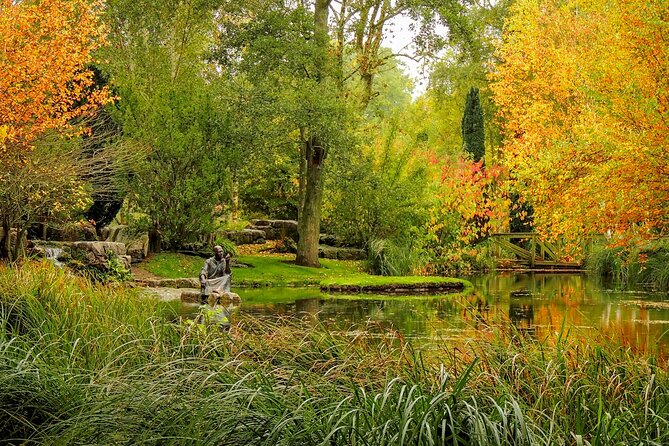
St Fiachra’s Garden brings an Irish theme into the visit. It is described as a Celtic garden, giving you a second garden style after the Japanese design.
I like having both gardens because they prevent the day from becoming narrowly focused on horse racing. St Fiachra’s Garden connects the grounds to Irish culture and gives the setting a more local identity. The Japanese Gardens are influenced by a distinct international tradition, while St Fiachra’s Garden turns your attention back toward Ireland.
The site’s broad acreage also matters here. The gardens are not simply a small decorative corner beside the entrance. They are part of a large rural setting with green hills and open space. You will still be visiting an organized attraction, but the scale helps it feel less cramped.
Allow time to walk at your own pace. The attraction is suitable for most people, and service animals are allowed. Still, you should be prepared for outdoor walking between the horse areas and gardens. The available information does not give a detailed accessibility route or surface description, so anyone with specific mobility needs should confirm the current arrangements before booking.
How Long You Should Allow
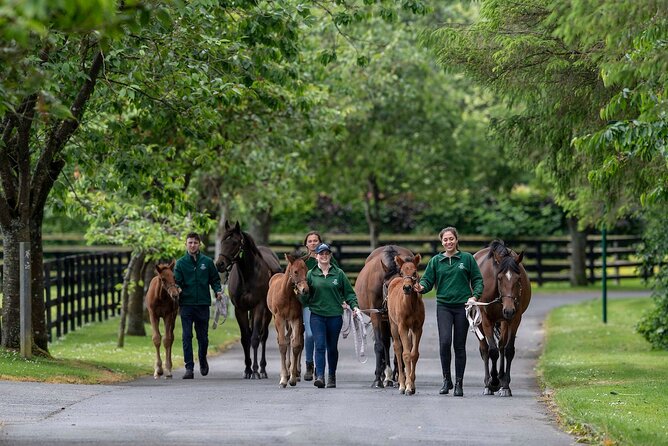
The official duration is about one to seven hours. That wide range is useful because the correct visit length depends on your interest and schedule.
Allow about an hour if you only want a quick look at the main attraction. That will be tight for the full combination of tour, interactive exhibit, and gardens, especially if you want to walk without rushing.
Two to three hours is a better target for most people. You should have time for the public tour, the Irish Racehorse Experience, and a proper visit to at least part of both gardens.
A longer visit of four hours or more suits horse enthusiasts, garden lovers, and anyone making a dedicated day trip from Dublin. You can move slowly, revisit an area, and spend more time with the retired champions and garden paths.
The attraction is booked an average of 23 days in advance, which suggests that planning ahead is sensible, especially if your Dublin dates are fixed. Your mobile ticket is convenient, and confirmation arrives when you book.
Getting There from Dublin and Kildare
The stud is located about 40 minutes from Dublin, making it a realistic outing from the capital. The information provided does not specify a direct tour bus or a detailed public transport route from Dublin, so you should check your own transport plan carefully before purchasing.
Kildare train station is not right beside the stud. There is no bus from the station, and the attraction is about three miles away by foot. That walk may be manageable for some people, but it is not a minor stroll if you are carrying bags, traveling with children, or arriving in poor weather.
A taxi is the practical choice from Kildare station. One visitor paid €13 for a taxi driven by professional jockey Declan Shea and found the ride helpful. That is an unusually nice transport story, but you should treat the fare as a useful example rather than a guaranteed current price.
I would not arrive at Kildare station without a plan. Arrange a taxi in advance if possible, or confirm local availability before setting out. The lack of a bus is the most important transport detail to know.
Is $22.98 Good Value?
At $22.98 per person, admission is reasonable if you plan to use all the included features. Your ticket covers the Irish Racehorse Experience, public tour, guide, horses, and both gardens. That is more useful than paying for a single exhibit and then finding separate charges for the rest.
The value depends on how long you stay. A rushed one-hour visit may feel expensive if you only catch a brief glimpse of the horses. A two-to-four-hour visit gives the ticket better value because you are using the full combination of activities.
A past price mentioned in one account was €16, but prices can change, and the current listed cost is $22.98. Use the current booking price when comparing this outing with other Dublin attractions.
Horse fans will probably find the price easy to justify, especially if seeing retired champions matters to you. Garden lovers also get a solid visit, since the Japanese Gardens and St Fiachra’s Garden are included rather than treated as a separate add-on.
For families, the value depends on each person’s interest. Children who enjoy animals may like the horses and interactive exhibit, while adults may appreciate the gardens and breeding background. If nobody in your group cares about horses, the gardens may carry most of the appeal.
What Can Make the Visit Less Satisfying
The biggest risk is expecting a busy working farm every minute of the day. You may see fewer horses than hoped, and some stables may be empty. That is not necessarily a failure of the attraction, since animals have their own routines, but it can affect your impression.
Information also depends on the public tour. Without a strong explanation, the horse areas may feel short on detail. I would stay with the guide and ask questions rather than treating the tour as a simple walk past the stables.
The site can also take longer than you expect. The 850-acre setting, two gardens, and three main activities reward time, but they make this a poor choice if your Dublin schedule is packed. Add transport time from the city and from Kildare station when planning your day.
The upside is that the attraction gives you several ways to enjoy the visit. If the horses are quiet, the gardens still offer a worthwhile walk. If the weather is less inviting, the Racehorse Experience gives you an indoor focus, though the exact indoor facilities are not detailed in the supplied information.
Who Should Book This Experience?
I would recommend the Irish National Stud and Gardens to you if you have any interest in:
- Thoroughbred horses and racing
- Irish rural culture
- Garden design
- Retired racing champions
- A quieter day outside Dublin
- Family-friendly attractions with an educational element
You do not need to be a racing expert. The public tour and interactive exhibit help explain the subject, and the gardens make the outing accessible to people who are not keen on horse racing.
I would be more cautious if you have only one spare hour in Dublin, dislike outdoor walking, or expect guaranteed close contact with many horses. The attraction is best when you can give it time and accept that the animal sightings may vary.
The ticket includes free cancellation up to 24 hours before the experience begins. Any cancellation or change made less than 24 hours before the start time is not accepted for a refund, so keep that deadline in mind when fixing your schedule.
Should You Book the Irish National Stud?
Yes, if you can spare at least two hours and like the idea of combining horses with gardens. The retired champions, public tour, Racehorse Experience, Japanese Gardens, and St Fiachra’s Garden give you more variety than a standard farm visit.
Book it with realistic expectations. You are not guaranteed a constant parade of horses, and some stables may be empty. But with enough time, the visit offers a thoughtful look at Irish racing culture and a pleasant change from Dublin’s city center.
I would especially recommend it to horse fans and garden lovers. If you are traveling by train, solve the Kildare station taxi question before you go. Plan the three main activities, allow time for both gardens, and the $22.98 ticket should feel like good value.
FAQ
Where is the Irish National Stud and Gardens?
It is located near Dublin, about 40 minutes from the city.
How long does a visit take?
The visit can take about one to seven hours, depending on how much time you spend on the tour, Racehorse Experience, horses, and gardens.
What is included in admission?
Admission includes the Irish Racehorse Experience, the public tour, a guide, and access to the gardens.
Can I see retired racehorses?
Yes. The Living Legends team includes Hurricane Fly, Beef or Salmon, and Faugheen.
Will I see stallions, mares, and foals?
The public tour includes the stud areas where stallions, mares, and foals may be seen. Horse sightings can vary, and some stables may be empty.
Are the Japanese Gardens included?
Yes. The Japanese Gardens are included with admission.
Is St Fiachra’s Garden included?
Yes. St Fiachra’s Garden is included along with the Japanese Gardens.
Can I use a mobile ticket?
Yes. The experience provides a mobile ticket, and booking confirmation is received at the time of booking.
Is there a bus from Kildare train station?
No bus to the stud is provided from Kildare train station. The stud is about three miles away, so you may need a taxi.
Can I cancel for a full refund?
Yes, if you cancel at least 24 hours before the experience start time. Cancellations or changes made less than 24 hours before the start time are not accepted for a refund.
Just added around Dublin
- Wicklow Mountains Private Day Tour including Glendalough★ 5.0 · 7 reviews
- Wicklow: Private Day Tour from Dublin★ 5.0 · 5 reviews
- Women Of Ireland: Trailblazers & Pioneers★ 5.0 · 4 reviews
- Premium Irish Whiskey Tasting Hosted by Local Dublin Expert★ 5.0 · 77 reviews
- Whiskey Tasting Tour of Dublin★ 5.0 · 117 reviews
- Wicklow Mountains & Glendalough Luxury Private Day Tour★ 5.0 · 23 reviews
- Wicklow tour of Glendalough★ 4.5 · 8 reviews
- Waterford Crystal and Kilkenny Full-Day Rail Tour from Dublin★ 5.0 · 3 reviews
Tours in Dublin, compared.

Dublin to Cliffs of Moher, including Wild Atlantic Way and Galway
Read our review →
Cliffs of Moher, Burren & Galway City Day Tour
Read our review →

Dublin to Cliffs of Moher, Burren, Wild Atlantic Way, Galway Tour
Read our review →
Dublin to Belfast Black Cab, Dunluce Castle and Giant’s Causeway
Read our review →
Kilkenny, Wicklow Mountains & Glendalough Day Tour from Dublin
Read our review →
Wicklow Mountains, Glendalough & Kilkenny Tour
Read our review →