
Reviewed · TOURS IN DUBLIN
Dublin: Boyne Valley with Newgrange and Bru Na Boinne Entry
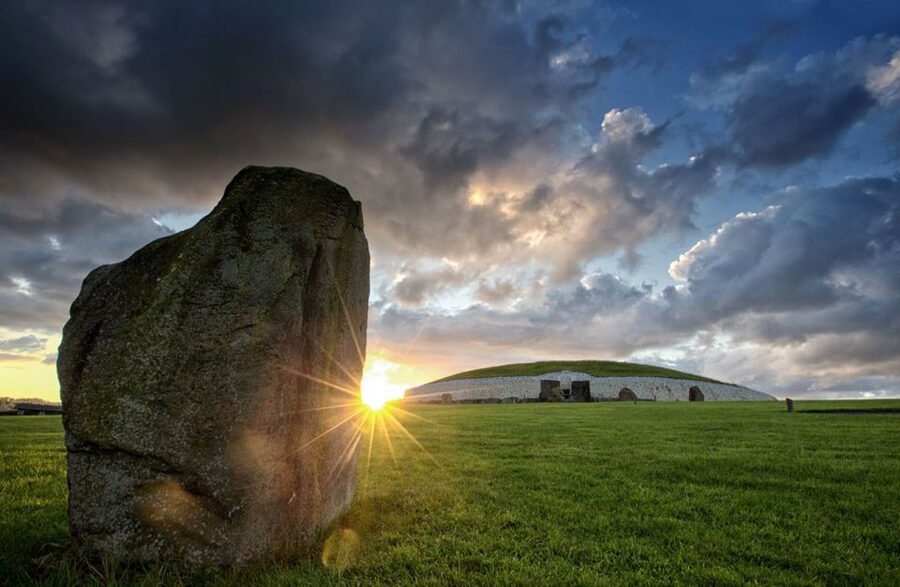
Newgrange is the star here: a 5,000-year-old passage tomb built before Stonehenge and Egypt’s pyramids. You enter the ancient chamber at Bru Na Boinne, then connect Ireland’s prehistoric past with the Battle of the Boyne and the carved crosses at Monasterboice. The sweep of Irish history packed into one day is remarkable.
I like the small-minibus format and the way guides such as Matt, Kevin, and Richard use the drives to explain what you are seeing. I also like the practical timing: you leave Dublin in the morning and generally return around 5:00 PM, leaving your evening free. The main drawback is that this is a full eight-hour outing, and the food stop is not a planned meal with a wide range of choices.
Key points to know before you book
- Newgrange is the main event: Enter a Neolithic passage tomb built more than 5,000 years ago, with a guide explaining its ceremonial and astronomical purpose.
- Knowth changes by season: From November 1 through March 1, Knowth is not accessible, so the Bru Na Boinne portion is shorter.
- The day links ancient and modern Ireland: The Battle of the Boyne Visitor Centre helps explain the political and religious conflict that shaped Ireland and Britain.
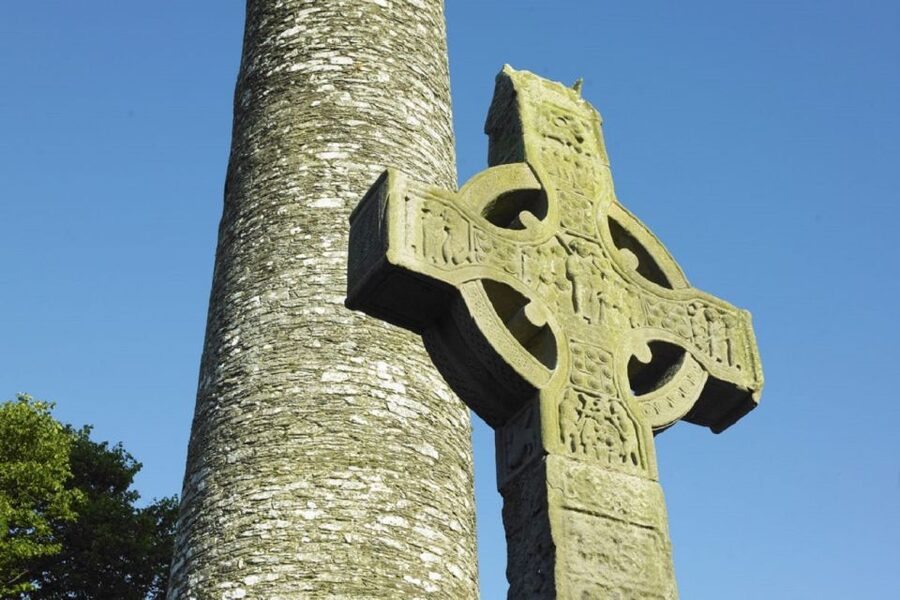
- Monasterboice rewards a short stop: Its 10th-century round tower and three carved high crosses provide some of Ireland’s finest early medieval stonework.
- Guiding is a major part of the value: Matt, Kevin, Richard, and other Hilltoptreks guides are known for clear stories, good timing, and useful explanations between stops.
- Bring weatherproof gear: Comfortable shoes and an umbrella matter in the Boyne Valley, where much of the day involves walking outdoors.
Why Newgrange gives this day trip its purpose
The Boyne Valley is one of Ireland’s most important historic regions. The Boyne River runs through County Meath and County Louth before reaching the sea near Drogheda, and the area preserves evidence of settlement, belief, warfare, and monastic life across thousands of years.
Newgrange gives the trip its strongest sense of place. The monument is a passage tomb from the Neolithic period, more than 5,000 years old. It was not simply a burial mound. Its construction, alignment, and internal passage point to careful attention to the sun and the changing year, as well as to religious and ceremonial practice.
The journey to Newgrange is part of the lesson. A good guide uses the drive from Dublin to place the tomb in the story of Ireland’s first farming communities, later Celtic beliefs, and the political changes that followed. Matt, Kevin, and Richard are among the guides associated with this trip, and each has been praised for making the long stretches between stops useful rather than empty.
You should expect commentary, not a silent transfer. Guides explain the schedule, prepare you for each site, and tell stories that help you understand why a mound of earth matters. That makes a difference at Newgrange, where the meaning of the monument can be easy to miss if you only see it as an impressive pile of stones.
Other days out people book from Dublin:
- Dublin to Cliffs of Moher, including Wild Atlantic Way and Galway
★ 5.0 · 23,331 reviews - From Dublin: Cliffs of Moher, Burren & Galway City Day Tour
★ 4.8 · 18,888 reviews - Dublin: Guinness Storehouse Entry Ticket
★ 4.6 · 16,863 reviews
Meeting the minibus on Suffolk Street
The tour begins at the Molly Malone statue on Suffolk Street in central Dublin. Arrive about 10 minutes before departure and look for a small white minibus marked with the Hilltoptreks sign.
The small vehicle is one of the practical strengths of the outing. It gives the day a more personal feel than a large coach, and guides can speak directly to the group. The tradeoff is that a smaller vehicle usually means less room to spread out, so pack lightly and keep your essentials easy to reach.
The drive to the Boyne Valley takes about an hour. The exact departure time depends on the date you choose, so check availability before booking. The normal plan is to leave in the morning and return to the Molly Malone statue around 5:00 PM, though the precise arrival can shift with traffic and time spent at the sites.
Inside Newgrange and Bru Na Boinne
The Newgrange and Bru Na Boinne visit takes the largest portion of the day, listed at about three hours including transport within the site area, guided visits, and time for photographs. Entrance is included, along with priority access intended to avoid the regular queue.
The visit is not just an exterior photo stop. The key feature is the passage leading into the tomb, where you learn how the monument was built and why its orientation matters. Space inside an ancient passage tomb is naturally limited, and the visit is structured rather than free-form. You should listen carefully to the site staff and follow the group’s timing.
Bru Na Boinne also includes Knowth when it is accessible. Knowth is another major Neolithic monument in the area, and its inclusion makes the visit broader than Newgrange alone. From November 1 to March 1, Knowth is not open to this tour, so the Bru Na Boinne section is shorter during those months.
That seasonal difference is important when comparing dates. If Newgrange is your main reason for booking, the winter version still includes the central monument. If you want the fuller prehistoric itinerary, choose a date outside the period when Knowth is closed.
The site grounds are open and exposed. Wear shoes that can handle paths and grass, and bring an umbrella. Ireland can deliver sunshine, wind, and rain in the same afternoon, so a waterproof layer is more useful than trying to guess the forecast.
The Battle of the Boyne in about an hour
After Bru Na Boinne, the minibus travels roughly 15 minutes to the Battle of the Boyne Visitor Centre. Allow about an hour to an hour and a half here, depending on the day’s timing.
The Battle of the Boyne took place in 1690. It was fought between the Catholic King James II and the Protestant William of Orange, the Dutch prince who became King William III of England. The outcome mattered far beyond the battlefield. It affected the ruling order in Ireland, Britain, and Europe, and its legacy remains tied to the political divisions of Northern Ireland.
This stop is valuable because it adds context to the older monuments. Newgrange takes you back to prehistoric Ireland, while the Boyne Centre shows how later struggles over religion, monarchy, land, and power shaped the island. The battle also helps explain why July 12 is marked by the Loyalist community.
You do not need to arrive with a detailed grasp of Irish political history. The guide’s explanation on the way helps establish the basic story, while the visitor centre gives you time to explore the subject at your own pace. This is one of the points where a good guide matters most, since the battle can become confusing if it is reduced to names and dates.
Food is not included. The Boyne visitor centre has facilities, but you should not assume the tour includes a leisurely lunch. One practical point is worth noting: food options have been described as limited by some visitors, while others found the centre’s choices and facilities satisfactory. If you are particular about meals, bring a snack and treat any food purchase as convenient rather than a main feature of the tour.
Same base, a very different sort of day:
- Dublin to Cliffs of Moher, Burren, Wild Atlantic Way, Galway Tour
★ 5.0 · 12,924 reviews - Dublin to Belfast Black Cab, Dunluce Castle and Giant’s Causeway
★ 5.0 · 7,954 reviews - Kilkenny, Wicklow Mountains & Glendalough Day Tour from Dublin
★ 5.0 · 7,897 reviews - From Dublin: Wicklow Mountains, Glendalough & Kilkenny Tour
★ 4.8 · 6,235 reviews
Monasterboice and Ireland’s carved stone Bible
The final major stop is Monasterboice, reached after about 20 minutes on the road. The visit lasts roughly 45 minutes, though the itinerary can describe it as a half-hour stop depending on the day’s schedule.
Monasterboice means the monastery of Buithe. St Buithe founded the monastic site in the fifth century, while the remains you see include two churches from the 14th century, a round tower from the 10th century, and three great high crosses.
The round tower rises about 28 metres and remains in very good condition. It was probably built shortly after 968 and was damaged by fire in 1098. These details turn the tower from a picturesque ruin into evidence of the risks and routines of medieval monastic life.
The high crosses are the real reason to linger. They date from the 10th century and form a scriptural group, with scenes from the Old and New Testaments carved into the stone. Muiredach’s High Cross is about 5.5 metres high and is regarded as one of Ireland’s finest. It is named for the abbot Muiredach mac Domhnaill, who died in 923.
You get a guided introduction, followed by time to look closely and take photographs. The stop is short, so do not expect a long archaeological visit. Still, it is an excellent final contrast to Newgrange. At the first site, the past is mostly underground and prehistoric. At Monasterboice, the message is visible on the surface in detailed Christian carvings.
How the timing feels across eight hours
This is a full day, but it is not an exhausting marathon of distant attractions. The longest road section is the opening drive from Dublin, followed by short transfers between the Boyne Valley sites. The itinerary gives Newgrange the most time, then moves through the Battle of the Boyne and Monasterboice without trying to add a dozen extra stops.
That balance is useful if you have limited time in Dublin. One person described returning around 4:30 PM on a particular day, while the stated arrival is around 5:00 PM. Either way, you should have the evening available for dinner, music, or further time in the city.
The schedule does require you to stay aware of meeting times. Newgrange and Bru Na Boinne are the focus, and delays can affect the later stops. The guides are praised for keeping the day on track, including adjusting timings when the minibus leaves late.
The pace should suit you if you prefer a guided overview with enough time at each major site. It may not suit you if you want to spend several hours studying one monument alone, particularly Monasterboice or the Battle of the Boyne grounds.
The guide can make or break the history
The strongest part of this trip, beyond the monuments, is the live English-language guiding. Guides including Matt, Kevin, and Richard have different personalities, but the useful pattern is clear: they explain the places before you arrive, tell stories during the drives, answer questions, and keep the group moving without making it feel rushed.
Matt is especially noted for detailed briefings, humor, and a calm sense of timing. Kevin is praised for combining safe driving with stories and efficient scheduling. Richard is described as clear, kind, and especially good at explaining Irish history while keeping the day comfortable.
That matters because the sites do not explain themselves fully. You can photograph a round tower without knowing when it was built, or walk past a high cross without understanding its biblical scenes. The guide supplies the connections.
The quality of live commentary can vary from one departure to another because the individual guide may change. Still, the structure of the day gives the guide plenty of chances to add value, especially during the drives between Dublin, Newgrange, the Boyne Centre, and Monasterboice.
Is $96 good value?
At $96 per person, the price is reasonable for a guided eight-hour day trip when you count transport, the live guide, and admission to Newgrange and Bru Na Boinne. Those entrance fees are included, and priority access saves you from arranging separate transport and ticketing.
The value is strongest for you if you are staying in Dublin without a car. Reaching Newgrange, Knowth, the Battle of the Boyne, and Monasterboice independently would require more planning and several separate transport decisions. Here, the route is arranged as one continuous day.
The price does not include food or drinks. That is normal for this type of outing, but it means you should budget for snacks or a meal and carry water. The trip also does not give you unlimited time at any one place. You are paying for a guided route through several connected sites, not a private visit tailored to your own pace.
Free cancellation up to 24 hours before departure and the option to reserve now and pay later add useful flexibility. Keep the weather in mind when choosing your date, since much of the day takes place outdoors.
Who should book this Boyne Valley tour?
I would choose this trip if you want to understand several layers of Irish history in one day. It works particularly well for first-time visitors to Ireland, people without a rental car, and anyone who wants a strong historical outing without giving up the whole evening in Dublin.
It also suits you if you like a guide who tells stories rather than simply pointing out monuments. The drives are long enough for context, and the range of subjects keeps the day varied: prehistoric religion, medieval monastic art, and the political conflict surrounding the Battle of the Boyne.
Families and mixed-age groups may appreciate the simple route and included transport, though everyone should be ready for walking outdoors and changing weather. Comfortable shoes are essential.
You may want another option if your priority is a long, quiet visit at one ruin, a guaranteed full meal, or complete control over the schedule. Monasterboice is brief, and the winter version does not include Knowth. The day is well planned, but it is still a group tour with fixed departures and return times.
FAQ
Where does the tour begin?
Meet at the Molly Malone statue on Suffolk Street in Dublin 10 minutes before departure. Look for a small white Hilltoptreks minibus.
Where does the tour end?
The tour returns to the Molly Malone statue on Suffolk Street in Dublin.
How long does the activity last?
The stated duration is eight hours. The usual return time is around 5:00 PM, though the exact schedule can vary.
What language is the tour conducted in?
The tour has a live English-speaking guide.
Is entry to Newgrange included?
Yes. Transport, the guide, entrance fees, and priority access into Newgrange and Bru Na Boinne are included.
Is Knowth open all year on this tour?
No. Knowth is not accessible between November 1 and March 1, so the Bru Na Boinne visit is shorter during that period.
Is food included?
No. Food and drinks are not included in the tour price.
What should I bring?
Bring comfortable shoes and an umbrella. These are useful for walking around the outdoor sites in changeable Irish weather.
Can I cancel the booking?
You can cancel up to 24 hours in advance for a full refund. You can also reserve your place and pay later.
Should you book it?
Book this Boyne Valley trip if Newgrange is high on your Ireland list and you want the surrounding history explained in plain language. The combination of a small minibus, included admission, experienced guides, and a return to Dublin in time for the evening makes $96 a fair price.
Choose a date outside November 1 through March 1 if Knowth matters to you. Bring food or a snack if you want more choice than a visitor centre stop can offer, and expect a full day rather than a relaxed countryside drive. For a compact introduction to Ireland’s prehistoric monuments, medieval Christianity, and later political struggles, this is one of the most useful day trips from Dublin.
Just added around Dublin
- Gin School, distill you own gin, cocktails, tastings, food★ 5.0 · 8 reviews
- Dublin : Street Art Walking Tour★ 5.0 · 3 reviews
- Dublin: Personal Photographer- Travel Photography Experience★ 4.5 · 8 reviews
- Dublin: Skip-the-line Book of Kells & Old Town Private Tour★ 5.0 · 6 reviews
- Dublin: Howth Coastal Craft Beer and Seafood Tour★ 5.0 · 62 reviews
- Vikings In Dublin (Walking Tour)★ 5.0 · 8 reviews
- Dublin: Silent Disco Walking Tour★ 4.9 · 21 reviews
- Dublin: Private Tour of City Monuments in Spanish★ 5.0 · 6 reviews
Tours in Dublin, compared.
Dublin to Cliffs of Moher, including Wild Atlantic Way and Galway
Read our review →
Cliffs of Moher, Burren & Galway City Day Tour
Read our review →

Dublin to Cliffs of Moher, Burren, Wild Atlantic Way, Galway Tour
Read our review →
Dublin to Belfast Black Cab, Dunluce Castle and Giant’s Causeway
Read our review →
Kilkenny, Wicklow Mountains & Glendalough Day Tour from Dublin
Read our review →
Wicklow Mountains, Glendalough & Kilkenny Tour
Read our review →
Browse the lists this tour appears in