
Reviewed · WALKING TOURS
Cork Private Walking Tour
Cork’s story is unusually packed into a walkable city center. This private tour connects its early monastic roots with Viking settlement, Scandinavian trade, the English Market, and the scars of the Irish Civil War. I like the private format, which lets you ask questions and set the pace, and I like that the guide can adjust the tour on the spot. The main consideration is time: two hours gives you a strong introduction, not a full tour of every church, street, or museum.
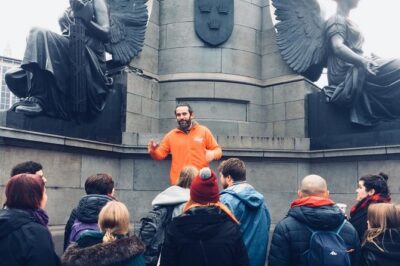
I also like the clear meeting point at the National Monument on Grand Parade and the fact that the walk returns there. Monica is named in one of the tour comments, and the feedback points to an engaging guide who allows plenty of time while keeping the history interesting. Just remember that entrance fees are not included, so this is mainly a guided outdoor visit rather than a ticketed attraction tour.
Key points to know before booking
- Cork’s past comes in layers: Follow the city from an ancient monastic settlement to Viking and Norse trading activity, then on to later conflict.
- A genuinely private walk: Your group has its own English- or Irish-speaking guide, with possible changes to the route during the tour.
- The English Market is a major stop: Expect Cork’s food and trading traditions to sit alongside its political and architectural story.
- The National Monument is both start and finish: The central meeting point makes the tour easy to fit into a day of exploring Cork.
- Two hours is a useful first look: You get an orientation to the center, but not time for a long interior visit or every major sight.
- Best value comes with a larger group: The $284 rate covers up to 15 people, so the cost per person drops sharply when shared by family or friends.
Cork’s story begins with a monastery and a river
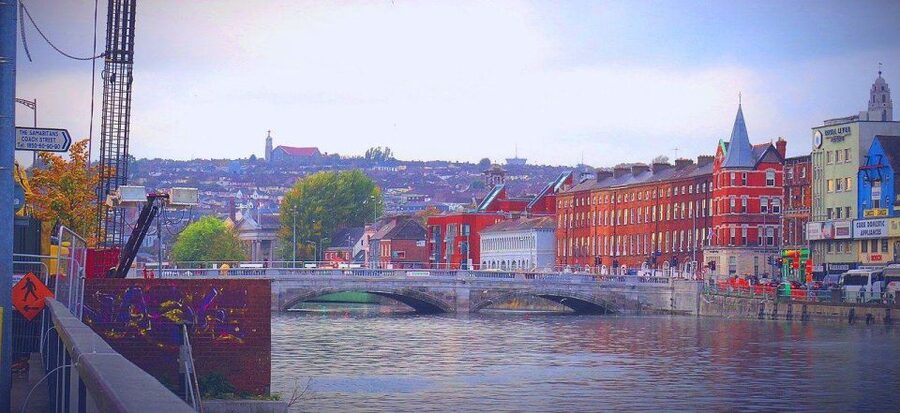
This walk presents Cork as a city shaped by water, trade, and repeated upheaval. Rather than treating the city center as a collection of old buildings, the guide links the streets to the settlement that came before them.
The starting point is the National Monument at 48 Grand Parade, in the Centre area of Cork. It is a practical place to meet because it puts you in the middle of the city rather than at a distant hotel or transport stop. You finish at the same point, which simplifies the rest of your day.
From there, you can expect an introduction to Cork’s ancient monastic settlement. The tour does not just point out old stonework and move along. It explains how a religious settlement helped give the city its first shape, before later arrivals changed Cork’s character.
The River Lee is important to this story. Cork’s setting helped it grow, and the walk uses the city streets and river area to show how geography affected trade and movement. You should expect some walking on ordinary urban streets, with the city itself acting as the main exhibit.
That approach suits you if you enjoy getting your bearings through stories rather than through a list of dates. It also means the experience depends on the guide’s ability to connect places that may not look dramatic at first glance.
More Walking Tours in Cork
- Cork: Guided Historical Walking Tour
★ 4.7 · 310 reviews - The Titanic Trail: 1-Hour Guided Walking Tour of Cobh
★ 4.8 · 78 reviews - Cork Instagram Photography Walking Tour
★ 5.0 · 54 reviews
Viking Cork and the rise of a trading center
One of the more distinctive parts of the tour is its attention to Viking invaders and Norse settlers. Cork was not simply a quiet religious settlement waiting for modern tourism. It became part of a wider trading world shaped by Scandinavian movement and commerce.
The guide explains how Cork grew into a useful trading center and how it connected with a larger Scandinavian trade network. This is valuable context because it places the city within northern European history instead of treating Ireland as an isolated island.
You will hear about the difference between invasion and settlement. Those two ideas often get blurred in quick city tours, but here they help explain how outside groups affected the city over time. The Viking story is not presented as a single dramatic attack. It is part of the longer process by which Cork developed new links, new activity, and a more commercial role.
I would pay close attention during this section if you like economic or social history. The point is not only who arrived, but what changed after they did. Trade brings people, goods, languages, and rival interests. That helps explain why Cork’s center feels like a place built through several stages rather than one fixed plan.
The Scandinavian connection also gives the tour a useful sense of scale. You are looking at local streets, but the story reaches far beyond Cork. A short walk can show how a city on the Irish coast took part in wider patterns of exchange.
Churches and streets reveal Cork’s changing character
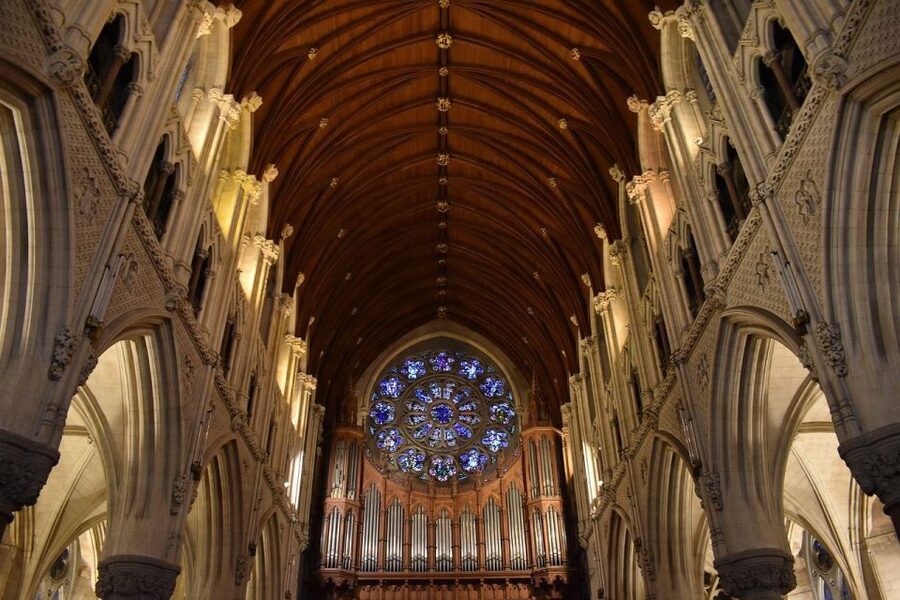
Cork’s churches form another part of the walk. The supplied details do not name individual churches or promise interior access, so you should think of this as an architectural and historical look rather than a church admission tour.
The guide uses the churches to help you read the city. Their size, position, and design can point to changing wealth, religious life, and civic importance. Even if you do not enter every building, the outside views add shape to the story.
The narrow streets are equally useful. Shops, pubs, cafes, and restaurants now fill much of the city center, but the street pattern carries older traces. Walking rather than riding lets you notice how Cork’s commercial life sits directly beside its historic buildings.
I like this kind of city tour because it gives you practical orientation. Afterward, you will have a better idea of where to return for food, a drink, or a slower look at the architecture. The guide’s stories can also turn a simple route between sights into a connected walk.
Do not expect a polished parade of major monuments at every turn. Cork’s appeal here is more local and layered. Some parts of the route may feel like ordinary city streets, which is precisely where a good explanation matters most.
The English Market adds a taste of daily Cork
The English Market is one of the most appealing parts of the experience because it brings history into the present. Its food stalls and aromas offer a change from the stonework and political stories elsewhere on the route.
The market also fits the larger theme of Cork as a trading city. You are not looking at commerce only as something from the Viking period. The market shows how buying, selling, and food remain part of the city’s identity.
Your guide can explain the market’s place in Cork’s story, while you take in the atmosphere and the practical details of a working food hall. Since entrance fees are not included, you should not assume the tour covers paid tastings or purchases. The stated experience is the guided walk, so bring your own budget if you want to buy something inside.
The English Market is also a good reason to schedule this tour before a meal or food stop. It gives you a sense of the city’s cooking culture without turning the walk into a dedicated food tour. If food is your main interest, you may want extra time in the market after the two-hour experience ends.
More walking routes in Cork:
- Meet and Eat Dublin: Cork Food Walking Tour
★ 5.0 · 25 reviews - Best of Cork: Private Walking Tour with a Local
★ 3.3 · 6 reviews - Dublin Highlights and Hidden Gems Guided Walking Tour
★ 5.0 · 6,020 reviews - Dublin: Highlights and Hidden Gems Walking Tour
★ 4.9 · 2,140 reviews
Plague, dynastic wars, and a city under pressure
The tour reaches beyond Cork’s founding period. You will hear about the Black Death and the Wars of the Roses, two events that affected medieval Europe in very different ways.
The Black Death section helps place Cork within the wider crisis that struck communities across Europe. It reminds you that the city’s growth was never guaranteed. Trade could bring prosperity, but it could also bring danger and disruption.
The Wars of the Roses add another layer of political conflict. You will not get a full military course in two hours, but the guide can show how events associated with English power and dynastic struggle affected the setting in which Cork developed.
These subjects are useful because they prevent the tour from becoming a simple success story. Cork survived and grew, but not without setbacks. The city’s identity as a rebel city makes more sense when you see it as a place repeatedly forced to respond to outside pressure and internal conflict.
This part may appeal most to you if you enjoy connections between local and European history. If you prefer only food, architecture, and photo stops, the political material may feel heavier than expected. The advantage of a private guide is that you can ask for more or less detail as the walk continues.
Cork’s Civil War story brings the past closer
The Irish Civil War gives the tour a more recent and painful chapter. Compared with the Viking and medieval sections, this history may feel closer to modern Cork and easier to connect with the city you see today.
The tour presents Cork as a place that survived the conflict and continued to develop. You can expect stories about the city’s role and the effects of the war rather than a complete account of every event in Ireland.
This section is a reminder that historic Cork is not only about old foundations and attractive streets. Political loyalties, violence, and recovery also shaped the city. The phrase rebel city has meaning here, and the guide can connect that identity to the wider Irish story.
A two-hour walk is well suited to this kind of introduction. You receive enough context to understand why certain places matter, while avoiding a long lecture that leaves you lost in names and dates. If a particular Civil War topic interests you, this is a good moment to use the private format and ask for more detail.
What the private format changes
A private group is the biggest practical advantage of this experience. The guide is with your group only, so you do not have to match the pace or interests of a large public tour.
That matters in Cork because the best questions may be personal and specific. You might want more Viking history, less medieval politics, extra time near the market, or a clearer explanation of the city’s churches. Possible on-the-spot customization means the walk can respond to those preferences, although the exact changes will depend on the guide and available time.
The feedback specifically highlights a guide who allowed plenty of time and kept the walk informative, fun, and engaging. Monica is named in that praise. If Monica is your guide, you can expect a personable approach; guide assignments can vary, so treat her as a possibility rather than a guarantee.
The language options are English and Irish. English is the natural choice for most international visitors, while the Irish option may appeal if you want to experience the local language during your city introduction.
Is $284 good value for two hours?
The price is $284 per group, with up to 15 people. At the maximum group size, that works out to about $18.93 per person. For a family, reunion group, or circle of friends, that can be a reasonable way to get a private introduction to Cork.
The calculation changes if only two or three people book. In that case, you are paying for privacy and flexibility rather than a low per-person price. A smaller group may still find the cost worthwhile if you value direct questions, a custom pace, and a guide focused only on you.
No entrance fees are included. That keeps the basic price clear, but you should allow extra money if you decide to visit paid sites separately. The experience itself is primarily an outdoor walking tour with historical interpretation.
Free cancellation up to 24 hours before the start and the reserve-now, pay-later option reduce the risk of booking early. Those policies are useful when your Cork plans may change, but they do not alter the central value question: this is best bought as a private orientation, not as an all-inclusive attraction package.
Who will enjoy this Cork walk most?
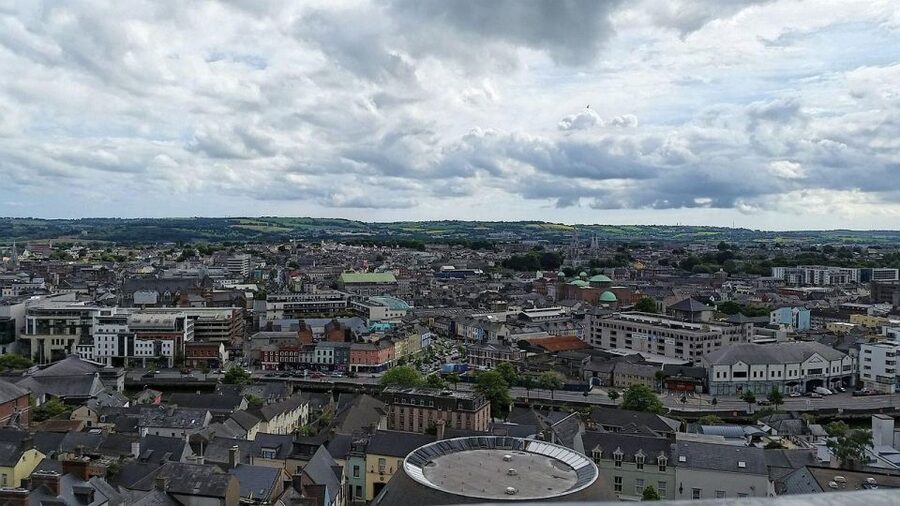
I would recommend this tour to first-time visitors who want a historical framework before exploring Cork on their own. It is also a good fit for families and small groups who want to stay together and ask questions without holding up strangers.
History fans should enjoy the range of subjects, from the monastic settlement and Norse trade to plague, dynastic conflict, and the Irish Civil War. Food-minded visitors will appreciate the English Market, especially if they plan to return afterward for more time.
You may want a different option if you prefer a long museum visit, extensive interior access, or a highly specialized food tour. The two-hour length is useful, but it limits how deeply the guide can cover each period.
Wear sensible walking shoes and keep your schedule flexible after the tour. The route ends where it starts, at the National Monument, so you can continue into the center, return to the English Market, or explore the river area without arranging transport.
Should you book the Cork Private Walking Tour?
Book it if you want Cork explained through its own streets, with a guide who can adjust the emphasis to your group. The Viking and Scandinavian trade material gives the walk a distinctive angle, while the English Market, churches, river, and Civil War story keep it connected to the city you see today.
The value is strongest when several people share the $284 group price. If you are traveling alone or as a couple, compare that private cost with other walking options before booking.
For a first look at Cork, I find the balance appealing: a clear starting point, a two-hour route, a private guide, and enough history to make the city’s streets more meaningful. Just book it for orientation and local context, not for included admissions or a full-day study of Cork.
FAQ
Where does the Cork private walking tour start?
The tour starts at the National Monument, 48 Grand Parade, Centre, Cork, T12 PY86, Ireland.
Where does the tour end?
The activity ends back at the meeting point, the National Monument on Grand Parade.
How long does the tour last?
The walking tour lasts two hours. Available starting times are shown when you check availability.
How much does the tour cost?
The price is $284 per group, for up to 15 people.
Is this a private tour?
Yes. The tour is for a private group, and the local guide will be with your group only.
Which languages are available?
The live tour guide is available in English or Irish.
Are entrance fees included?
No. Entrance fees are not included in the tour price.
Can the tour be customized?
Possible customization with the local guide is available on the spot.
Can I cancel for a refund?
Yes. You can cancel up to 24 hours in advance for a full refund. You can also reserve now and pay later.
Just added around Cork
- Cork: Jameson Cocktail Making Class at Midleton Distillery★ 4.9 · 18 reviews
- From Cork: Full-Day Guided Tour to Dingle Peninsula★ 4.4 · 135 reviews
- Cork: Hysterical Histories, Comedic Dinner Theater Show★ 5.0 · 7 reviews
- Cork: Midleton Distillery Behind the Scenes Tour & Tasting★ 5.0 · 23 reviews
- Cork: Midleton Distillery (Jameson) Premium Whiskey Tasting★ 5.0 · 5 reviews
- Cork: City Gaol Tour with Audio Guide★ 4.8 · 108 reviews
- Cork: Fab Food Tasting Trail★ 4.7 · 10 reviews
- Cork Delicious Donut Adventure by Underground Donut Tour★ 4.6 · 21 reviews
Walking Tours, compared.
Dublin Highlights and Hidden Gems Guided Walking Tour
Read our review →

90 Minute Dublin Walking tour and Sightseeing tips
Read our review →

Dublin Traditional Irish 3 Course Meal Walking Tour with Local
Read our review →
Browse the lists this tour appears in