Reviewed · TOURS IN SHANNON
Craggaunowen Admission Ticket
A hidden pathway through the water leads to Craggaunowen’s artificial island dwelling, where you can picture Bronze Age families living behind a clever natural defense. From there, the visit moves through Celtic cooking sites, a ring fort, a souterrain, and a medieval castle, making this much more than a quick look at old stones.
I like the freedom of a self-guided visit, since you can linger at the exhibits that catch your interest instead of following a fixed group. I also like the mix of archaeology and living details: open-fire cooking, hand-powered querns, rare-breed animals, and even music from an early Irish tradition. The main consideration is that the site takes about two hours and is best enjoyed at a relaxed walking pace, so it may feel brief if you want a full museum day.
Key points to know before you go
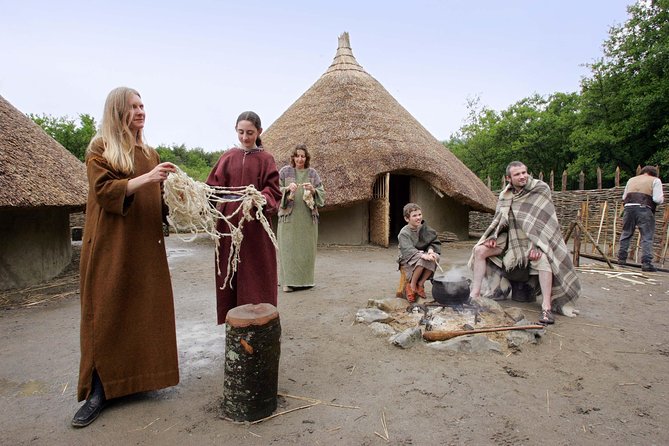
- The crannog gives the visit its strongest opening, with an artificial island home reached by a concealed water route.
- The Celtic ring fort shows everyday work, including grinding grain, shaping pottery, and cooking over fires and pits.
- The Brendan Boat connects Irish tradition with modern experiment, since Tim Severin built and sailed this leather-hulled vessel across the Atlantic.
- Craggaunowen Castle adds a later chapter, with a restored 16th-century building and views over the lake and countryside.
- The site is active and practical rather than purely display-based, with re-enactors, animals, lake paths, and a farmhouse tea-room.
- The $15.38 admission works best for a stop of around two hours, especially when you are driving between Shannon and Dublin.
Why Craggaunowen feels different from a standard museum
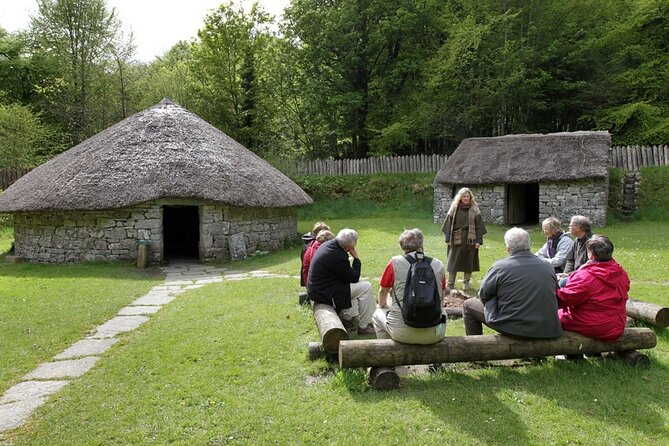
Craggaunowen is an outdoor historical site, so the past is presented through buildings, paths, animals, tools, and reconstructed activities. You are not simply reading about Bronze Age life behind glass. You can walk into the types of structures people used, see how food might have been prepared, and get a sense of how much work ordinary tasks required.
That physical scale matters. A hand-powered quern is easy to overlook in a case, but seeing one in the setting of a ring fort helps you understand that bread and porridge began with long, repetitive labor. A souterrain makes more sense when you can walk toward its narrow underground passage and think about storage, protection, and escape.
The site also covers several periods, but the transitions are easy to follow. You begin with prehistoric and early Celtic life, then move to the Brendan Boat and early Christian tradition, before reaching the 16th-century castle. It is a compact history lesson spread across a rural setting.
The self-guided format suits independent visitors. You receive admission and access to the displays, then move at your own speed. If you want to stop and study a structure, take photographs, or spend extra time with the animals, you are not tied to a group schedule.
A few more things to do around Ireland worth a look
- Dublin: Guinness Storehouse Entry Ticket
★ 4.6 · 16,863 reviews - Dublin EPIC Museum Admission Ticket
★ 4.5 · 1,729 reviews - Dublin: Fast-Track Book of Kells Ticket & Dublin Castle Tour
★ 4.5 · 1,661 reviews
The crannog: a Bronze Age home surrounded by water
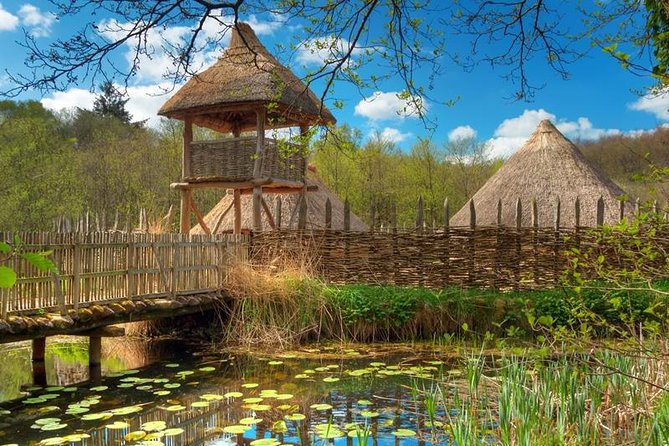
The crannog is one of the most memorable parts of the site. A crannog is an artificial island dwelling, built in water as a place to live and defend. Here, the route includes a concealed path through the water, giving you a practical sense of how the settlement could be protected.
This is where Craggaunowen makes early Irish life feel immediate. The location was not chosen only for scenery. Water created a barrier, and the hidden approach made an attack more difficult. You can look at the dwelling and think about the planning required to build a home that was also a defensive position.
The crannog is especially useful for families and younger visitors because it gives the history a clear shape. Instead of starting with dates, you start with a basic question: how would you keep your home safe? The answer is built into the site itself.
Do not expect a large indoor exhibit here. The value comes from walking around the structure and imagining how it worked as a home. Weather can affect the experience, so bring suitable outdoor clothing if the day is wet or cool.
The ring fort and the work of daily Celtic life
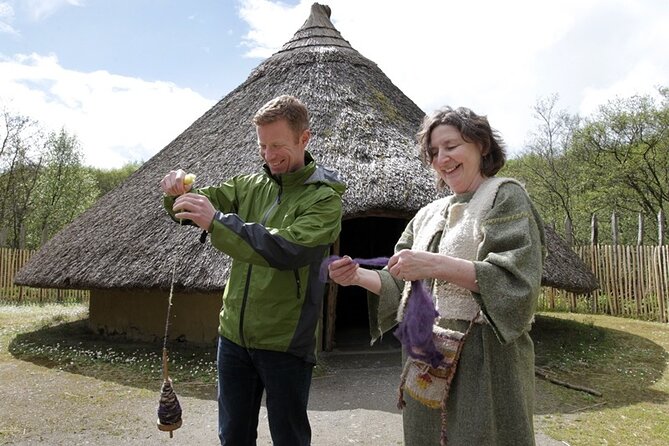
The ring fort offers the most useful look at ordinary activity. It shows how Celtic communities cooked, prepared grain, made pottery, and shaped wooden household items. These are small details, but they are what turn a history stop into a human one.
You can picture people cooking over open fires or in pits, grinding corn on hand-powered querns, and making bread or porridge. The site also presents pottery, wooden bowls, goblets, and platters. None of this is glamorous, and that is precisely why it matters. Most lives are built around food, tools, storage, and shelter.
One striking feature is the method used to feed large groups of hunters during forest expeditions. The display explains a cooking technique involving a large pit, a length of rope, and fresh meat. It is a good reminder that early communities needed organization and skill to feed people away from home.
The ring fort works best if you take your time. Read the signs, look at the materials, and think about how many jobs were done by hand. If you rush from one structure to the next, you will see the outline but miss the point.
The Brendan Boat and the question of Atlantic voyages
The Brendan Boat brings a different kind of story to Craggaunowen. Tim Severin built this leather-hulled boat and sailed across the mid-Atlantic while re-creating the voyage traditionally associated with St. Brendan and early Christian monks.
The display raises a lively historical question: could Irish monks have reached North America centuries before Columbus? The boat does not settle every argument about the original voyage, but it gives you a tangible way to consider the challenge. A leather hull, open ocean, wind, and a small crew make the idea feel far less abstract.
This is one of the site’s most unusual exhibits because it connects old tradition with a modern test. You see an object built for a real expedition, not only a model made to illustrate a textbook.
The Brendan Boat also breaks up the sequence of reconstructed settlements. After seeing how people lived on land, you are asked to think about travel across one of the world’s most demanding stretches of water. It is a short stop, but an interesting one.
Same base, a very different sort of day:
- Dublin to Cliffs of Moher, including Wild Atlantic Way and Galway
★ 5.0 · 23,331 reviews - From Dublin: Cliffs of Moher, Burren & Galway City Day Tour
★ 4.8 · 18,888 reviews - Dublin to Cliffs of Moher, Burren, Wild Atlantic Way, Galway Tour
★ 5.0 · 12,924 reviews - Dublin to Belfast Black Cab, Dunluce Castle and Giant’s Causeway
★ 5.0 · 7,954 reviews
Craggaunowen Castle and the view across the lake
Craggaunowen Castle dates from 1550 and was restored as a medieval castle. It rises on a crag overlooking the lake, giving the visit a change of scale after the smaller prehistoric dwellings and fort structures.
The castle helps you see how later Irish life differed from the world of the crannog and ring fort. Its defensive position and stone construction suggest a society with different threats, resources, and social divisions. You can also enjoy views across the surrounding countryside, which adds a welcome pause to the walk.
Do not expect a vast castle complex. The appeal is its position and its place in the wider story. You are moving through centuries in one compact setting, from artificial island homes to a fortified stone building.
The castle is also a good spot to slow down. The site has plenty of information, but it does not need to be consumed at speed. Give yourself a few minutes to look outward across the lake before continuing.
Togher roadways and the souterrain
Craggaunowen includes an early roadway known as a togher, dated to 148 BC. It is an easy feature to miss if you are focused only on the larger buildings, but it shows how people moved through wet or difficult ground.
Roads are often more revealing than grand structures. A roadway tells you that communities needed dependable connections between homes, fields, water, and other settlements. The togher adds a practical layer to the visit and helps explain how people managed the land around them.
The souterrain is another hands-on part of the site. These underground passages were designed for storing food, but they could also provide an escape route during an attack. The narrow, enclosed space is fun to explore, particularly for children, though anyone who dislikes tight passages may prefer to take it slowly.
The site even presents the souterrain as a place where hide and seek would be tempting. That light touch works well. Historical sites can feel distant when every display is treated solemnly, but here the physical setting encourages curiosity.
Animals, outdoor paths, and the farmhouse tea-room
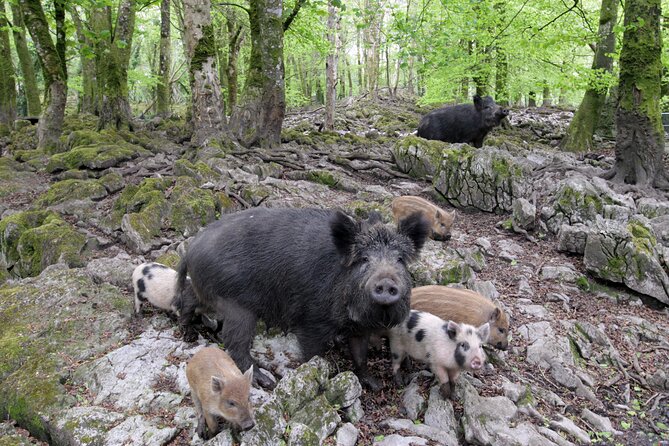
Craggaunowen includes rare and interesting animal breeds connected with earlier rural life, including wild boar and Soay sheep. You may also see donkeys and ponies near the entrance, where yellow iris fields add color to the approach.
The animals are not a replacement for the historical exhibits. They are an added reminder that food, wool, transport, and land management were part of daily life. They also make the visit more appealing if you are coming with children or if you want a break from buildings and interpretation panels.
Lake walks give you another reason not to hurry. The setting is rural and open, with fresh air and views around the water. The exact time you spend outside will depend on your pace and the weather, but the paths help make the site feel like an outing rather than a short indoor attraction.
Food and drinks are not included in the admission price. You can, however, stop at the farmhouse tea-room for homemade fare. This is useful if Craggaunowen becomes part of a longer day on the road, though you should budget separately for anything you eat or drink.
What the self-guided format means for your visit
The admission is offered with a mobile ticket and in English. You do not need to join a scheduled guided group, and the visit usually takes about one to two hours. I would allow the full two hours if you want to see the castle, walk by the lake, look at the animals, and read the displays without rushing.
Re-enactors add useful human detail in the village areas. They explain the activities in a friendly way, and one performer even played the ilhan pipes for a visitor. That sort of encounter can make the site feel more alive, but the depth of interaction may vary during your visit.
The self-guided setup is a strength for people who like independence. It is less ideal if you want a long, formal lecture from one expert guide. You can ask questions when staff or re-enactors are available, but the basic structure is yours to manage.
Children must be accompanied by an adult. Service animals are allowed, and most people can take part. The site is near public transportation, although the information provided does not specify routes or schedules, so check those details before relying on public transit.
Is $15.38 good value?
At $15.38 per person, the ticket is reasonably priced for a two-hour outdoor attraction with access to all displays and exhibits. The value comes from variety: you get reconstructed prehistoric homes, a Celtic ring fort, an unusual boat, a castle, animals, paths, and the chance to see historical activities presented in a practical way.
The price is easier to justify if you are already passing through County Clare or driving between Shannon and Dublin. A stop of a couple of hours can break up the journey without requiring a full day. One visitor made exactly that choice and found the extra time worthwhile.
It is less suitable if you want a major castle tour, a large museum collection, or a full-day archaeological program. Craggaunowen is compact. The visit earns its price through atmosphere, variety, and the freedom to explore, not through a huge number of galleries.
The admission covers taxes, fees, handling charges, and access to the site. Food and drinks cost extra. Free cancellation is available if you cancel at least 24 hours before the start time, but changes or cancellations inside that window are not accepted.
Who should book Craggaunowen?
I would choose Craggaunowen if you enjoy history that you can see at human scale. It suits independent visitors, families, people interested in prehistoric Ireland, and anyone who wants an outdoor stop near Shannon.
You will get the most from it if you enjoy walking and are willing to read, look closely, and picture how the structures were used. The site is not built around constant entertainment, so people wanting a fast, highly staged attraction may find it quieter than expected.
It also works well for a flexible road itinerary. Plan for roughly two hours, then add time for the tea-room or lake paths if the day is pleasant. The daily opening hours are listed as 10 a.m. to 5 p.m.
Should you book this admission?
Yes, if you want a manageable and varied introduction to early Irish life. The crannog, ring fort, souterrain, Brendan Boat, and castle give you several strong reasons to keep walking, while the animals and lake setting prevent the visit from feeling like a row of information panels.
I would skip it only if your schedule is extremely tight or you are looking for a grand, extensive museum. For most people with time near Shannon, Craggaunowen offers solid value, authentic-feeling details, and a pleasant two-hour pause in the countryside.
FAQ
Where is Craggaunowen located?
Craggaunowen Castle and Crannóg is in Kilmurry, County Clare, Ireland, near Shannon.
How long does a visit to Craggaunowen take?
The visit takes approximately one to two hours. The listed itinerary allows about two hours.
What does the admission ticket include?
The ticket includes admission to Craggaunowen, access to all displays and exhibits, and all taxes, fees, and handling charges.
Is the visit guided?
Craggaunowen is designed as a self-guided visit. Re-enactors may also be present in the village areas to explain activities and traditions.
Is the ticket available on a mobile device?
Yes. The admission is offered as a mobile ticket.
What language is offered?
The experience is offered in English.
What are the opening hours?
The listed opening hours are Monday through Sunday, from 10 a.m. to 5 p.m.
Is food included with admission?
No. Food and drinks are not included, though a farmhouse tea-room is available on site.
Can children visit Craggaunowen?
Yes, but children must be accompanied by an adult.
What is the cancellation policy?
You can cancel for a full refund if you cancel at least 24 hours before the experience start time. Cancellations or changes made less than 24 hours before the start time are not accepted.
Just added around Ireland
- Gin School, distill you own gin, cocktails, tastings, food★ 5.0 · 8 reviews
- Dublin : Street Art Walking Tour★ 5.0 · 3 reviews
- Dublin: Personal Photographer- Travel Photography Experience★ 4.5 · 8 reviews
- Dublin: Skip-the-line Book of Kells & Old Town Private Tour★ 5.0 · 6 reviews
- Dublin: Howth Coastal Craft Beer and Seafood Tour★ 5.0 · 62 reviews
- Vikings In Dublin (Walking Tour)★ 5.0 · 8 reviews
- Dublin: Silent Disco Walking Tour★ 4.9 · 21 reviews
- Dublin: Private Pub Tour★ 5.0 · 3 reviews
Tours in Shannon, compared.