
Reviewed · TOURS IN DUBLIN
Windmill Lane Recording Studios – Visitor Experience
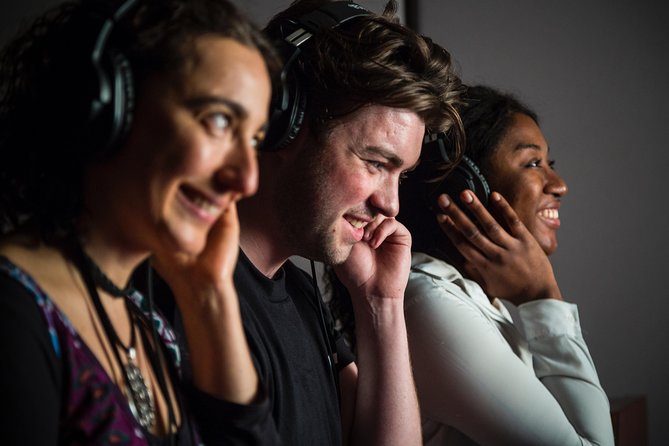
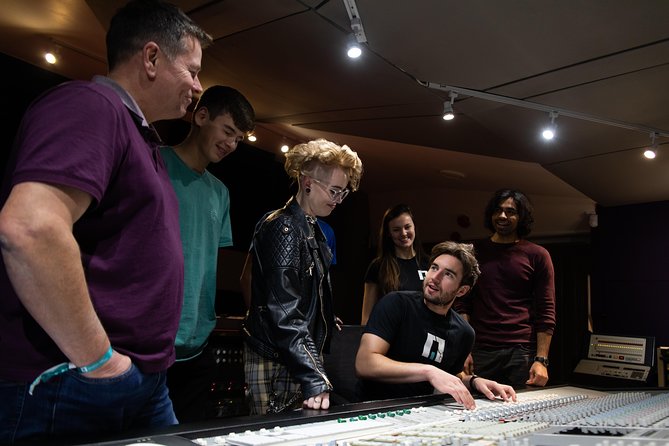
Windmill Lane is not a museum filled with old gear behind glass. It is a working recording studio, and that gives this one-hour tour its spark. You hear how sessions are made, see the famous Neve analog mixing desk, visit three studio spaces, meet a virtual band, and get to mix a track yourself. I especially like the hands-on sound demonstration and the way guides such as Maria, Marie, and Ross can answer both basic and technical questions.
I also like the setting. The studio sits outside Dublin’s busiest sightseeing core, about a 20 to 30 minute walk from Trinity College, so the visit gives you a look at a less touristy part of the city. The main drawback is that the tour is short and tightly scheduled. If you want a long technical workshop, one hour may feel brief, and advance booking matters because recording work continues in the building.
What makes this studio tour worth your hour
- A real working studio: You visit an active recording facility rather than a staged music attraction.
- A hands-on finish: You get to mix your own session and see how individual sounds fit together.
- Three studio spaces: The tour gives you a sense of how different rooms serve different recording needs.
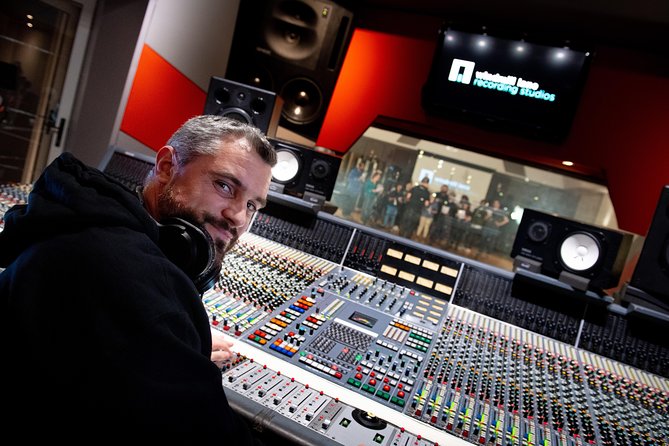
- A serious mixing desk: The large Neve analog board is a memorable sight for musicians and recording fans.
- Strong guides: Guides including Maria, Marie, and Ross bring practical experience and welcome detailed questions.
- A small group: With no more than 15 people, you have a better chance to hear the guide and take part.
Inside Windmill Lane, where records are still made
Windmill Lane Recording Studios has a special advantage over many music-themed attractions: it is not only about the past. The building remains connected to the recording process, so you are seeing rooms and equipment that belong to real studio work.
That changes the mood from a standard display tour. You are not simply walking past photographs of famous performers. You are shown how a recording session works, how sound is shaped, and how engineers bring separate parts together. For anyone curious about what happens between a musician entering a studio and a finished track reaching your headphones, this is the heart of the visit.
The tour also works for people who cannot tell a compressor from a microphone. The guides explain the ideas in an accessible way, then let the equipment and demonstrations do some of the teaching. I like that balance. You can ask about songwriting, engineering, studio history, or the practical steps behind a finished record without needing a technical background first.
Other days out people book from Dublin:
- Dublin to Cliffs of Moher, including Wild Atlantic Way and Galway
★ 5.0 · 23,331 reviews - From Dublin: Cliffs of Moher, Burren & Galway City Day Tour
★ 4.8 · 18,888 reviews - Dublin: Guinness Storehouse Entry Ticket
★ 4.6 · 16,863 reviews
The one-hour route through three studios
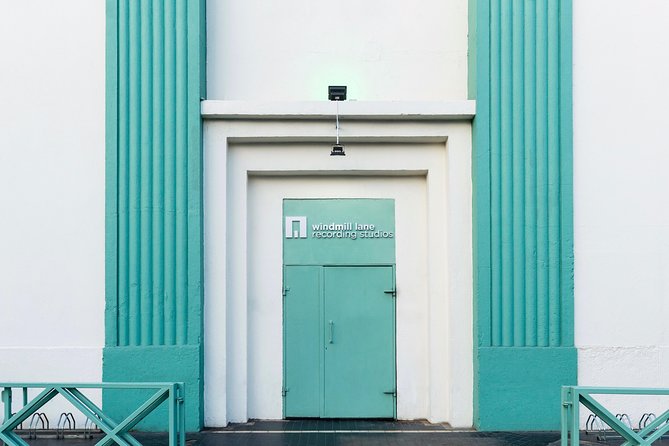
The full experience lasts about one hour and takes place at the studio on 20 Ringsend Road in Dublin 4. The tour begins and ends at the same location, which makes it easy to fit into a day of sightseeing.
You can expect the visit to move through several connected parts:
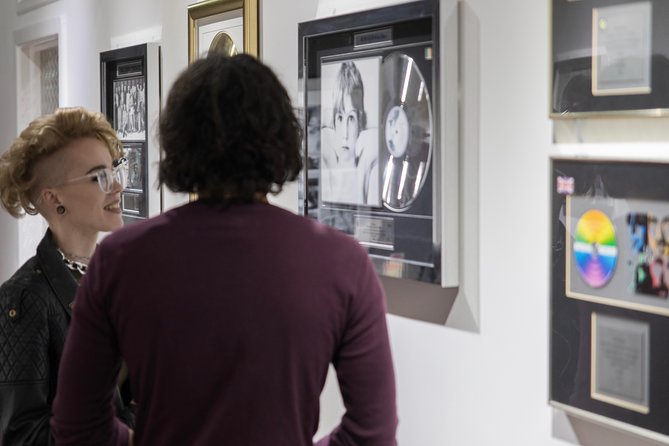
- The story of Windmill Lane and the artists who have recorded there
- A look at the studio spaces and their working purpose
- An explanation of how a recording session operates
- A sound demonstration
- The virtual band experience
- A chance to mix your own session
The pace is brisk but purposeful. You are not spending most of the hour listening to a long speech. The interactive sections break up the history and help turn studio terms into something you can hear and see.
The three studios are part of the appeal. Each gives you a different sense of the building and its work. The large mixing board in Studio 1 is a particular draw. Even if you do not know much about recording, its size and layout make it easy to understand why a studio console can become an object of fascination in its own right.
The history is tied to working sound
Windmill Lane’s appeal comes from the artists and bands who have used its rooms, but the story is most useful when it is linked to the mechanics of recording. You learn about the people who made music there while also seeing the tools that helped shape that music.
That combination keeps the tour from becoming a simple list of famous names. The guide explains the studio’s place in Dublin’s music world, then shows how engineers and performers work together. One of the most interesting details is the way a studio can hold both old and new methods: visitors see modern technology alongside classic analog equipment such as the Neve desk.
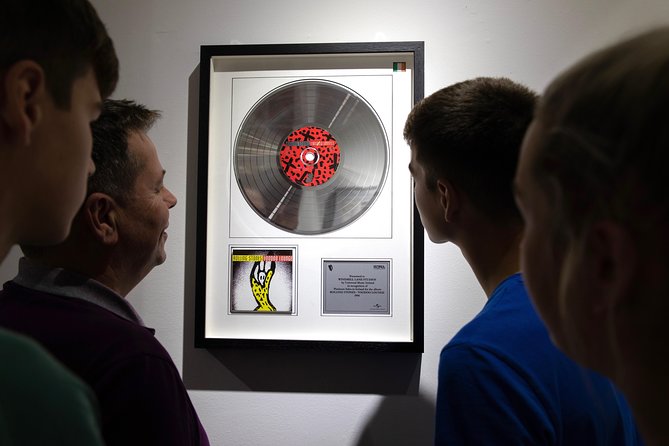
The studio has hosted major recording projects, and one account of a visit noted that Bruce Springsteen had used the same studio only two weeks earlier. The exact artists present at any time will change, of course, since this remains a working facility. Still, the possibility of active professional use gives the rooms a sense of purpose that a historic display cannot copy.
Guides make a major difference here. Maria has been described as a composer and engineer, which allows her to handle questions about the technical side of recording. Marie has also been praised for her energy and clear explanations, while Ross brings an enthusiastic approach to the studio story. On some visits, an owner has led the tour personally. Your guide will vary, but the experience is built around direct conversation rather than a recorded audio script.
Sound demonstrations make the technical side clear

The sound demonstration is one of the strongest parts of the experience because it gives you something to hear, not just something to look at. Recording equipment can seem mysterious when it is explained only with words. A demonstration shows how changes in sound affect what you hear.
This is also where the tour reaches people who are not devoted music fans. You might arrive mainly for the Dublin music connection, while a companion comes along out of politeness. The demonstration gives both of you a reason to pay attention. It makes the process of recording feel physical and understandable.
The tour also includes a virtual band. This is a clever way to show how separate musical parts can be combined into a complete performance. You see the recording process as a series of choices rather than a single moment when a band simply presses record.
For younger visitors and families, this interactive part may be more engaging than a long account of studio history. For musicians, it can prompt more detailed questions about arrangement, mixing, and production. The small group limit of 15 helps here because the guide has room to involve people instead of rushing through a crowd.
Same base, a very different sort of day:
- Dublin to Cliffs of Moher, Burren, Wild Atlantic Way, Galway Tour
★ 5.0 · 12,924 reviews - Dublin to Belfast Black Cab, Dunluce Castle and Giant’s Causeway
★ 5.0 · 7,954 reviews - Kilkenny, Wicklow Mountains & Glendalough Day Tour from Dublin
★ 5.0 · 7,897 reviews - From Dublin: Wicklow Mountains, Glendalough & Kilkenny Tour
★ 4.8 · 6,235 reviews
Mixing your own session

The most distinctive feature is the chance to mix your own session. You are not expected to produce a finished single in an hour. Instead, the activity gives you a taste of the decisions made at the mixing stage.
You can get a sense of how separate parts work together and how the balance of a track changes when you adjust them. That makes the visit feel active rather than purely observational. You leave with a clearer idea of what a producer or engineer actually does.
This section is especially good for anyone who has tried music software at home, played in a band, or wondered how a rough recording becomes a polished track. It is also friendly to beginners because the guide controls the setting and explains what is happening.
The limitation is simple: this is a demonstration and introduction, not a full recording lesson. If you already work professionally in audio, you may want more time with the equipment and more advanced discussion. For most people, though, the session offers enough control to make the tour memorable without turning it into a class.
Why the location works, and what to plan for
The address is 20 Ringsend Road, Dublin 4. It is outside the compact sightseeing zone around Trinity College, but that is not a bad thing. The walk from the Trinity area takes about 20 to 30 minutes, according to the practical directions shared for the visit, and it takes you into a different part of Dublin along the way.
You can also use public transportation, as the studio is near transit. The activity ends where it starts, so you do not need to arrange a separate pickup or find your way to another part of town afterward.
I would allow a little breathing room around the one-hour booking. The visit itself is short, but arriving without a scramble makes it easier to settle into the small-group setting. Since the studio continues to operate as a workplace, advance booking is essential. You cannot safely treat this as a walk-up attraction.
The experience is offered in English, and you receive a mobile ticket. Service animals are allowed. A moderate level of physical fitness is requested, so consider that when deciding if the tour fits your group.
Is $31.44 a fair price?
At $31.44 per person, this is not the cheapest way to spend an hour in Dublin. Its value depends on what you want from a city tour.
If you only want to see a famous building, the price may feel high for a short visit. If you are interested in music production, the price is easier to justify because admission includes access to an active studio, a guided explanation of its past and present work, sound demonstrations, and a mixing activity.
The small group size also matters. With a maximum of 15 people, this is more personal than a large bus tour or a crowded attraction. You have a better chance to ask about the artists, the equipment, or the recording process. A guide with engineering or composition experience can make the visit especially worthwhile for someone who wants more than a basic introduction.
I see the best value in the mix of access and participation. You are not paying only to look around a historic site. You are paying to enter a place that still makes music and to try a small part of the work yourself.
Who will enjoy Windmill Lane most?
This is a strong choice for:
- Music fans who want to connect Dublin with the recording of major albums
- Musicians, singers, producers, and home-recording enthusiasts
- Families looking for an activity that includes participation
- Couples who want a less standard Dublin attraction
- Visitors who enjoy sound, technology, and behind-the-scenes work
- People who want to explore beyond the central tourist streets
You do not need to be an expert. In fact, the tour is designed well for mixed groups. One person can focus on famous artists and studio stories, while another pays close attention to the mixing desk and recording tools.
It may be less suitable if you want a long, relaxed museum visit or a detailed multi-hour engineering course. The tour has a clear one-hour limit, and the content moves between history, demonstration, and hands-on activity.
Booking advice and cancellation terms
The experience is booked on average about 33 days ahead, which gives you a useful warning: do not leave it until the last day of your Dublin stay. The working nature of the studio and the 15-person limit make advance planning important.
The price includes admission, and confirmation is provided when you book. You can cancel for a full refund up to 24 hours before the start time. Cancellations or changes made less than 24 hours before the visit are not accepted for a refund, with cut-off times based on local time.
The tour is available in English. If someone in your group has a particular interest in analog equipment, studio engineering, or the history of a specific artist, it is worth bringing those questions along. Guides have been willing to handle detailed questions, and that conversation can be one of the best parts of the hour.
Should you book this Dublin experience?
Book it if you want real studio access, a clear look at how records are made, and an activity that lets you do more than listen to a guide. The virtual band, sound demonstration, and personal mixing session give Windmill Lane a useful edge over a standard music-history walk.
I would also book it for a group with mixed interests. The music fan gets the artist stories, the technical-minded person gets the equipment, and the rest of the group gets an unusual Dublin experience in a working building.
Skip it if you want a central attraction you can visit on a whim, or if your interest in recording is close to zero. For everyone else, especially anyone willing to walk beyond the usual city center, the $31.44 price buys a focused and memorable hour.
FAQ
Where does the Windmill Lane Recording Studios tour begin?
The tour begins at 20 Ringsend Road, Dublin 4, D04 CF66, Ireland.
Where does the experience end?
The activity ends back at the meeting point at Windmill Lane Recording Studios.
How long does the tour last?
The tour lasts approximately one hour.
How much does the experience cost?
The listed price is $31.44 per person.
Is admission included?
Yes, admission to the studio tour is included.
Is the tour offered in English?
Yes, the experience is offered in English.
How large is the tour group?
The activity has a maximum of 15 people.
Do I need to book in advance?
Yes. Windmill Lane is a working recording studio, so advanced booking is essential.
Is the studio near public transportation?
Yes, the studio is near public transportation.
Can I cancel for a full refund?
Yes. You can cancel at least 24 hours before the start time for a full refund. Cancellations or changes made less than 24 hours before the start time are not accepted for a refund.
Just added around Dublin
- Gin School, distill you own gin, cocktails, tastings, food★ 5.0 · 8 reviews
- Dublin : Street Art Walking Tour★ 5.0 · 3 reviews
- Dublin: Personal Photographer- Travel Photography Experience★ 4.5 · 8 reviews
- Dublin: Skip-the-line Book of Kells & Old Town Private Tour★ 5.0 · 6 reviews
- Dublin: Howth Coastal Craft Beer and Seafood Tour★ 5.0 · 62 reviews
- Vikings In Dublin (Walking Tour)★ 5.0 · 8 reviews
- Dublin: Silent Disco Walking Tour★ 4.9 · 21 reviews
- Dublin: Private Tour of City Monuments in Spanish★ 5.0 · 6 reviews
Tours in Dublin, compared.

Dublin to Cliffs of Moher, including Wild Atlantic Way and Galway
Read our review →
Cliffs of Moher, Burren & Galway City Day Tour
Read our review →

Dublin to Cliffs of Moher, Burren, Wild Atlantic Way, Galway Tour
Read our review →
Dublin to Belfast Black Cab, Dunluce Castle and Giant’s Causeway
Read our review →
Kilkenny, Wicklow Mountains & Glendalough Day Tour from Dublin
Read our review →
Wicklow Mountains, Glendalough & Kilkenny Tour
Read our review →
Browse the lists this tour appears in