Reviewed · TOURS IN DUBLIN
Full-Day Irelands Ancient Boyne Valley Private Guided Tour
The most unusual thing about this private Boyne Valley tour is what it leaves out. Instead of taking you straight to Ireland’s best-known passage tomb, it leads you to four ancient sites, including quiet Dowth and Fourknocks, where the story feels less packaged and more personal. Guide Michael Foxx is praised for his professionalism and strong command of the subject.
I like the private format, which keeps the day to your group of up to three and lets the guide explain the sites at a sensible pace. I also like the range: you get a royal ceremonial hill, Stone Age cairns, and passage tombs linked to the winter solstice. The main drawback is that the price is high for a small group, and lunch is not included.
Key points at a glance
- Four very different ancient sites: Visit the Hill of Tara, Loughcrew Cairns, Dowth, and Fourknocks in one full day.
- A private group of up to three: You avoid a large coach group and have direct access to your guide.
- A strong alternative to Newgrange: Newgrange itself is not part of the route, but Dowth and Fourknocks offer important passage-tomb experiences.
- 5,000-year-old monuments: Loughcrew and Fourknocks date to the Stone Age, around the same broad period as Newgrange and Knowth.
- Private transport from Dublin: An air-conditioned vehicle, bottled water, and pickup are included.
- Some walking is involved: Moderate physical fitness is recommended, especially for the hill sites.
Why this Boyne Valley day is different
The Boyne Valley is packed with monuments, but the famous names can easily dominate the conversation. Tara, Newgrange, and Knowth tend to get the most attention. This tour takes a wider view of the area, linking famous places with quieter sites that help you understand how ancient Irish communities used hills, tombs, stars, and seasonal sunlight.
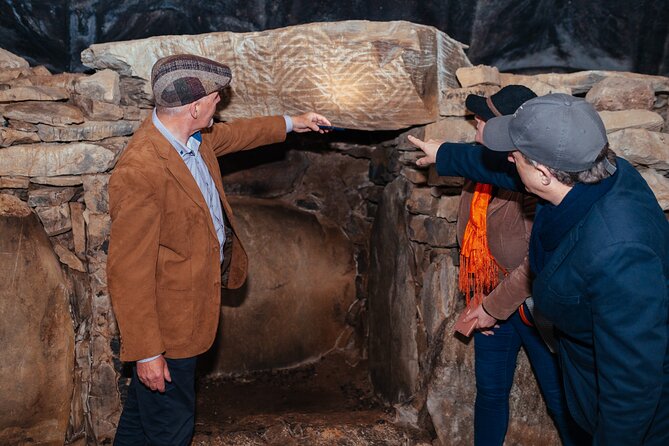
You spend about an hour at each stop. That is enough time to hear the main story, examine the earthworks and stones, and ask questions without turning the day into a museum lecture. Since this is a private tour, your group has the guide’s full attention rather than sharing explanations with a busload of people.
The day begins at 8:30 a.m. with pickup in Dublin. If you are staying in an apartment or Airbnb, provide the complete address and Eircode when booking. That small detail matters in Ireland, where a full street address can make the difference between a smooth pickup and a morning of phone calls.
The tour is offered in English. Private transportation, air conditioning, and bottled water are included. You need to arrange your own lunch, so bring food or plan to buy it during the day. The supplied details do not specify a particular lunch stop, so do not assume a restaurant meal is built into the schedule.
A few more things to do around Dublin worth a look
- Dublin to Glendalough, Wicklow and Kilkenny Full Day Guided Tour
★ 5.0 · 4,895 reviews - Cliffs of Moher Full-Day Tour from Dublin
★ 4.5 · 2,565 reviews - Blarney Castle Full-Day Tour from Dublin
★ 4.5 · 469 reviews
Hill of Tara, where kingship became legend
The Hill of Tara is the most symbolic opening stop. This was a Celtic ceremonial site associated with kingship rituals, and the summit contains an Iron Age enclosure known as the Fort of the Kings.
Inside are two linked earthworks called Cormac’s House and the Royal Seat. At the center of the Royal Seat is the Lia Fáil, or Stone of Destiny. Legend says the stone cried out when the true High King touched it, with a sound that could be heard across Ireland.
You should approach Tara as a ceremonial and political center, not as a palace ruin. Much of what you see is made of grass-covered banks and earthworks rather than standing walls. That can be easy to underestimate at first, but the broad setting helps you picture how a gathering place could carry power long before Ireland had stone castles or formal cities.
An hour here gives your guide time to explain the layout and the legends without rushing you through. It also gives you a useful introduction to the way Irish archaeology and mythology overlap. Some stories are firmly tied to physical monuments. Others belong to later tradition. A good guide helps you enjoy both without pretending they are the same thing.
The main practical point is the hill itself. This is not a flat roadside stop, and the tour recommends a moderate level of physical fitness. Wear shoes suitable for walking over grassy ground and uneven surfaces.
Loughcrew Cairns and the mountain of the hag
Loughcrew brings you back roughly 5,000 years, to a group of Stone Age cairns spread across the hills. The Irish name, Slieve na Caillaigh, means mountain of the hag. Local legend says a giant hag created the monuments by dropping stones from her apron as she strode across the country.
The legend is memorable, but the structures are the real reason to come. These are passage tombs, built long before written Irish history. Their scale and age make the visit more than a quick photo stop. You can consider the effort required to move and place heavy stones, then wonder why these particular hills mattered to the people who built them.
Loughcrew is also where the physical side of the tour becomes most noticeable. The monuments are spread across hills, so expect walking rather than a simple step out of the vehicle. The tour gives you about an hour here, but the exact amount of effort will depend on how far you walk and how quickly your group moves.
The site suits you best if you prefer ancient places with a strong sense of setting. It is less about a single grand building and more about seeing how several monuments relate to the surrounding hills. Bring sensible footwear, and remember that the tour’s moderate fitness recommendation is worth taking seriously.
Dowth, a quieter member of Brú na Bóinne
Dowth is one of the three principal passage tombs in the Brú na Bóinne World Heritage Site, alongside Newgrange and Knowth. It is less famous, but its size compares with both of those better-known monuments.
That makes Dowth especially useful for understanding the Boyne Valley as a group of connected ancient sites rather than a single headline attraction. You get a passage tomb with serious scale, but the visit is framed as part of a broader day devoted to the valley’s ancient ceremonial world.
Dowth also has a strong solar connection. Like Newgrange, it is aligned with the winter solstice. Around December, the setting sun sends light down the passage and illuminates three stones in the central chamber.
That detail gives the monument a clear seasonal purpose, or at least a carefully planned relationship with the sun. You will not experience the winter solstice effect on an ordinary tour date, but the guide can explain how the alignment works and why it matters.
The one-hour stop should work well for a private group. You can focus on the passage, the chamber, and the alignment rather than spending the entire visit trying to keep up with a large party. If your main goal is to enter Newgrange itself, remember that this route does not include Newgrange. Dowth is an alternative, not a substitute in every respect.
Same base, a very different sort of day:
- Dublin to Cliffs of Moher, including Wild Atlantic Way and Galway
★ 5.0 · 23,331 reviews - From Dublin: Cliffs of Moher, Burren & Galway City Day Tour
★ 4.8 · 18,888 reviews - Dublin: Guinness Storehouse Entry Ticket
★ 4.6 · 16,863 reviews - Dublin to Cliffs of Moher, Burren, Wild Atlantic Way, Galway Tour
★ 5.0 · 12,924 reviews
Fourknocks and its link to the winter sunrise
Fourknocks is located just outside Ardcath in County Meath. Its Irish name, Fuair Cnoic, translates as cold hills. The mound dates to around 5,000 years ago, placing it in the same broad period as Newgrange and Knowth.
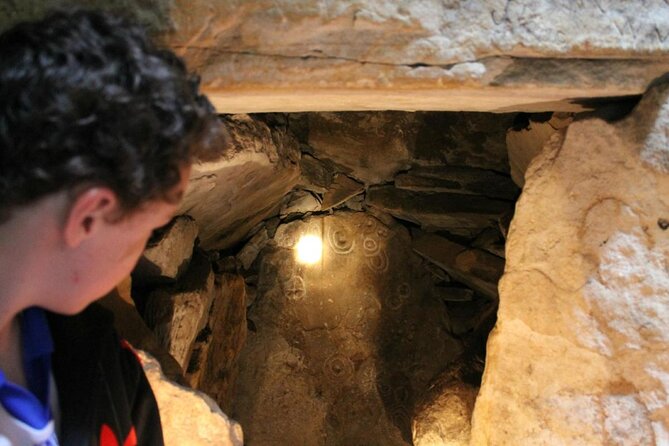
The most interesting detail here is that Fourknocks is not far enough north for a direct solar alignment. Instead, it is aligned toward the path of the winter solstice sunrise in the direction of Newgrange.
That gives the monument a different kind of astronomical connection. The site also relates to the rising of the W-shaped constellation Cassiopeia during Stone Age times. The zigzag markings found on stones may connect with that shape, though the exact meaning of prehistoric symbols remains open to interpretation.
This is the kind of stop that rewards questions. You can ask your guide how archaeologists distinguish a deliberate alignment from coincidence, and how much confidence we can place in interpretations of ancient carvings. The tour information does not promise an elaborate reconstructed experience, so expect an explanation of the monument itself rather than a staged presentation.
Fourknocks is a strong final stop because it brings together several themes from the day: passage-tomb construction, astronomy, seasonal light, and the limits of what we can know about prehistoric belief. It is also the sort of place that can appeal to people who prefer a less familiar site to a standard sightseeing circuit.
Is the private price worth it?
The price is $898.70 per group of up to three. That is a substantial outlay, especially for two people, but the comparison should be made with a private vehicle and guide rather than with a low-cost group excursion.
You are paying for roughly eight hours, private transportation, an air-conditioned vehicle, pickup, and a guide devoted only to your group. If three people share the cost, it works out to about $300 per person before lunch. For two people, the per-person figure is higher. Solo visitors would need to decide if the privacy and specialist focus justify the cost.
The value is strongest when you care about context and flexibility. The four stops are not just four quick photo opportunities. They cover different periods and functions, and a guide such as Michael Foxx can connect Tara’s kingship traditions with the later Stone Age tombs and their solar alignments.
The value is weaker if you mainly want the most famous attraction for the lowest possible cost. Newgrange is not included, lunch is extra, and the tour does not advertise admission tickets because the listed stops have no admission charge. You should choose this experience for its private interpretation and range of sites, not because it is a budget day trip.
Who will enjoy this tour most?
I would recommend it most to a small group of up to three with a real interest in archaeology, Irish mythology, or ancient astronomy. It is also a good match if you have already seen Ireland’s main city sights and want a full day outside Dublin with a clear historical focus.
It suits adults who enjoy listening, asking questions, and walking over open ground. The hour at each location creates a steady rhythm, but you still need enough stamina for hill sites and uneven terrain.
Families can consider it, but the supplied information does not give a child age range or any family-specific arrangements. If you are traveling with children, decide in advance whether four ancient sites and several hours of historical explanation will hold their interest.
This is less suitable if you want a relaxed countryside drive with very little walking. It is also not ideal if your only priority is entering Newgrange. In that case, you should confirm your priorities before booking and compare this route with a tour that specifically includes Newgrange access.
Timing, transport, and what to bring
The 8:30 a.m. start gives you a full day for the four stops. The schedule allows about one hour at Tara, one hour at Loughcrew, one hour at Dowth, and one hour at Fourknocks, with the remaining time used for driving and the day’s overall flow.
Pickup is offered, and the tour uses private air-conditioned transport. That is important because the sites are spread across County Meath rather than clustered in one compact visitor center. You avoid the burden of arranging several rural connections yourself.
Bring water if you prefer more than the included bottled bottle, and plan for lunch since it is not included. Comfortable shoes are the key item. The tour calls for moderate physical fitness, and Loughcrew in particular involves ancient cairns spread across hills.
You should also bring patience about the monuments themselves. Ancient Irish sites often appear as grassy mounds, banks, stones, and narrow entrances rather than complete buildings. The reward comes from understanding how the pieces fit together.
Booking confirmation is provided at the time of booking. Free cancellation is available if you cancel at least 24 hours before the experience begins. Changes or cancellations inside that window are not accepted, and the local Irish cutoff time applies.
Should you book this Boyne Valley tour?
Book it if you want a private, archaeology-focused day that goes beyond Ireland’s most familiar ancient monument. Tara gives you royal legend, Loughcrew gives you Stone Age hill tombs, Dowth gives you a major passage tomb with a winter solstice alignment, and Fourknocks adds a more unusual connection to astronomy and Newgrange’s sunrise direction.
Think twice if you want Newgrange itself, need a low-cost outing, or would rather avoid walking over hills and uneven ground. The price makes the most sense for three people sharing the vehicle, particularly when you value direct access to a guide.
For the right group, the appeal is clear: four substantial sites, a private English-speaking guide, and a day built around the ancient Boyne Valley rather than a quick stop at one famous monument.
FAQ
How long does the tour last?
The tour lasts approximately eight hours.
What time does the tour start?
Pickup and departure begin at 8:30 a.m.
Where does pickup take place?
Pickup is offered in Dublin. If you are staying in an apartment or Airbnb, provide the full address and Eircode.
How many people can join the private tour?
The price covers a private group of up to three people.
What language is the tour offered in?
The tour is offered in English.
Is transportation included?
Yes. Private transportation in an air-conditioned vehicle is included.
Is lunch included?
No. Lunch is not included in the tour price.
Does the tour visit Newgrange?
No. The route visits the Hill of Tara, Loughcrew Cairns, Dowth Passage Tomb, and Fourknocks Passage Tomb. Newgrange is not listed as a stop.
Is cancellation free?
Yes. You can cancel for a full refund up to 24 hours before the experience start time. Cancellations or changes made less than 24 hours in advance are not accepted.
Just added around Dublin
- Wicklow Mountains Private Day Tour including Glendalough★ 5.0 · 7 reviews
- Wicklow: Private Day Tour from Dublin★ 5.0 · 5 reviews
- Women Of Ireland: Trailblazers & Pioneers★ 5.0 · 4 reviews
- Premium Irish Whiskey Tasting Hosted by Local Dublin Expert★ 5.0 · 77 reviews
- Whiskey Tasting Tour of Dublin★ 5.0 · 117 reviews
- Wicklow Mountains & Glendalough Luxury Private Day Tour★ 5.0 · 23 reviews
- Wicklow tour of Glendalough★ 4.5 · 8 reviews
- Waterford Crystal and Kilkenny Full-Day Rail Tour from Dublin★ 5.0 · 3 reviews
Tours in Dublin, compared.
Dublin to Cliffs of Moher, including Wild Atlantic Way and Galway
Read our review →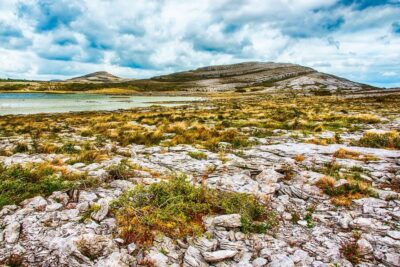
Cliffs of Moher, Burren & Galway City Day Tour
Read our review →
Dublin to Cliffs of Moher, Burren, Wild Atlantic Way, Galway Tour
Read our review →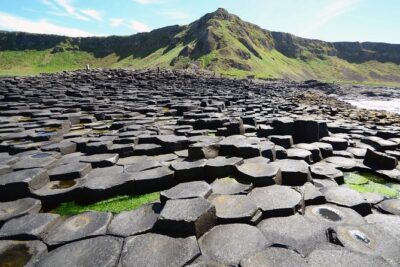
Dublin to Belfast Black Cab, Dunluce Castle and Giant’s Causeway
Read our review →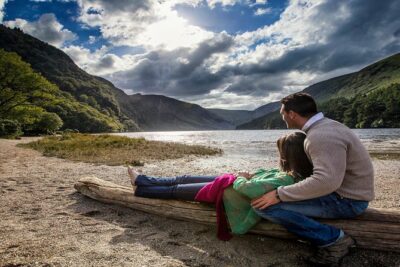
Kilkenny, Wicklow Mountains & Glendalough Day Tour from Dublin
Read our review →
Wicklow Mountains, Glendalough & Kilkenny Tour
Read our review →