
Reviewed · TOURS IN GALWAY
Galway: Medieval Galway Tour
Galway’s medieval past is tucked into places you could easily walk past: a stone doorway in a shopping center, a bank that was once a family castle, and a pub linked to the execution of an English king. This 1.5-hour walking tour connects those fragments into a clear story, with guide Marteen Lane explaining how Galway’s powerful families shaped the city.
I like two things here. First, the route uses real surviving places rather than relying only on dates and speeches. Second, the stories have plenty of human drama, from the father who hanged his own son to the families who controlled Galway for centuries. The main consideration is that St. Nicholas’ Collegiate Church charges an extra €5 for adults, or €4 at the concession rate.
Key points at a glance
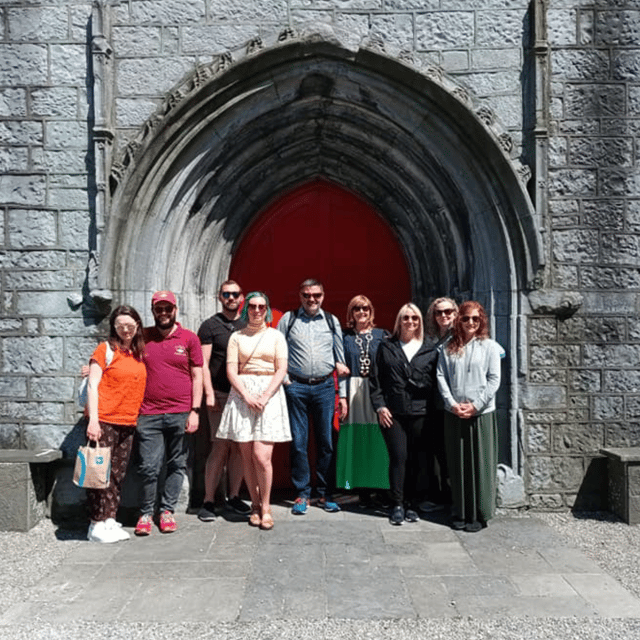
- See medieval Galway inside a modern shopping center: Remains of the old city walls are preserved in Eyre Square Shopping Centre.
- Follow the Lynch family story: Visit Lynch’s Castle and the memorial window tied to the 1493 hanging of Walter Lynch.
- Step into Galway’s oldest church: St. Nicholas’ Collegiate Church has served the city for more than 700 years.
- Explore a genuine archaeological site: The Hall of the Red Earl lets you look down at medieval walls, columns, and buttresses.
- Hear the story of the Claddagh ring: Stop at Thomas Dillon’s Jewellers on Quay Street, original makers since 1750.
- Finish at the Spanish Arch: Learn about the Claddagh across the river and the tsunami that destroyed two of the arches.
Starting at the Browne Doorway in Eyre Square
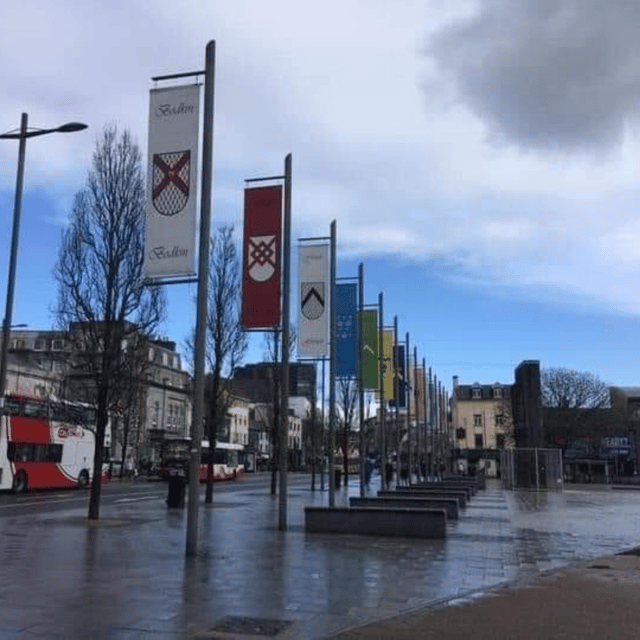
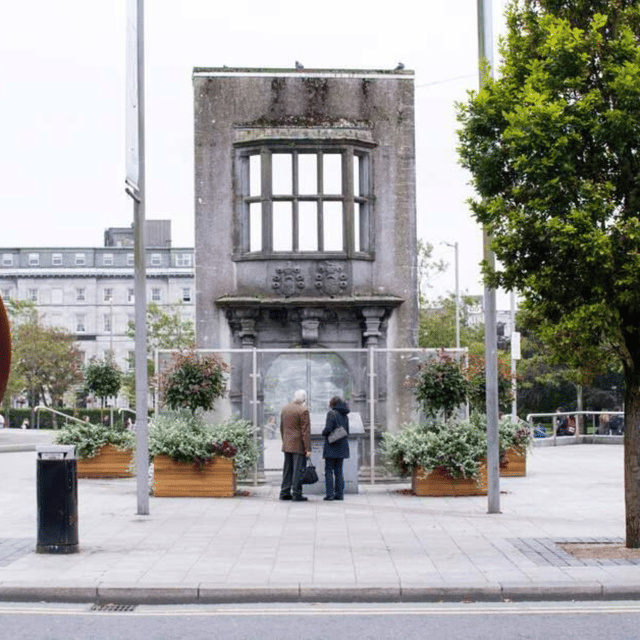
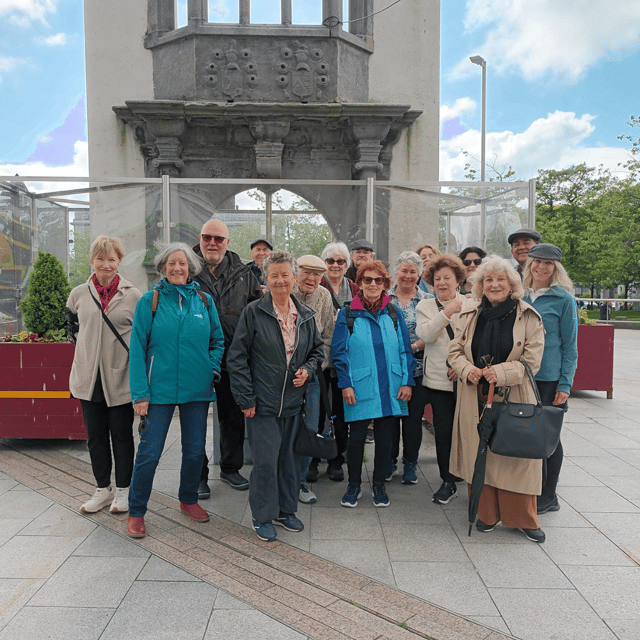
Meet Marteen Lane at the Browne Doorway, a free-standing stone doorway surrounded by perspex glass on the north side of Eyre Square. Arrive 15 minutes early. That gives you time to find the meeting point and lets the walk begin on time.
The tour begins with a useful lesson in how Galway hides its past. Inside Eyre Square Shopping Centre, you will see remains of the medieval city walls. It is an unexpected setting, but that is part of the appeal. You are not looking at an isolated ruin outside town. You are seeing how old Galway survives beneath and beside modern city life.
Marteen Lane is a Fáilte Ireland Regional Guide with more than 11 years of guiding experience and a BA (Hons) in Heritage Studies. The tour is in English, and the route ends back at the Browne Doorway after reaching the Spanish Arch.
Other days out people book from Galway:
- Galway to Cliffs of Moher, Aillwee Cave & Dunguaire Castle Tour
★ 5.0 · 3,058 reviews - From Galway: Full-Day Cliffs of Moher & Burren Guided Tour
★ 4.8 · 2,815 reviews - Galway to Inisheer Aran Islands, Cliffs of Moher and Boat Trip
★ 5.0 · 2,517 reviews
Lynch’s Castle and Galway’s powerful families
The walk continues to Lynch’s Castle, one of the most useful stops for understanding who controlled medieval Galway. The Lynch family was one of the 14 Tribes of Galway, a group of powerful merchant families that shaped the city’s government, trade, and public life.
Today, the building is an AIB bank. That modern use can make the site easy to overlook, but the building is also described as the oldest commercial building in Ireland. You get a strong sense of Galway’s changing identity here: a medieval family residence now serves a modern financial institution.
The tour then moves to Lynch’s Memorial Window, where you hear the grim story of James Lynch Fitzstephen and his son Walter. In 1493, the father is said to have hanged his own son. It is the kind of story that sticks because it raises immediate questions about law, family power, and justice in medieval Galway.
This is one of the tour’s best features. Instead of treating the past as a list of rulers and construction dates, the story gives you a difficult personal choice to consider. The setting also makes the tale feel connected to the street rather than sealed away in a museum.
St. Nicholas’ Church and Galway’s changing fortunes
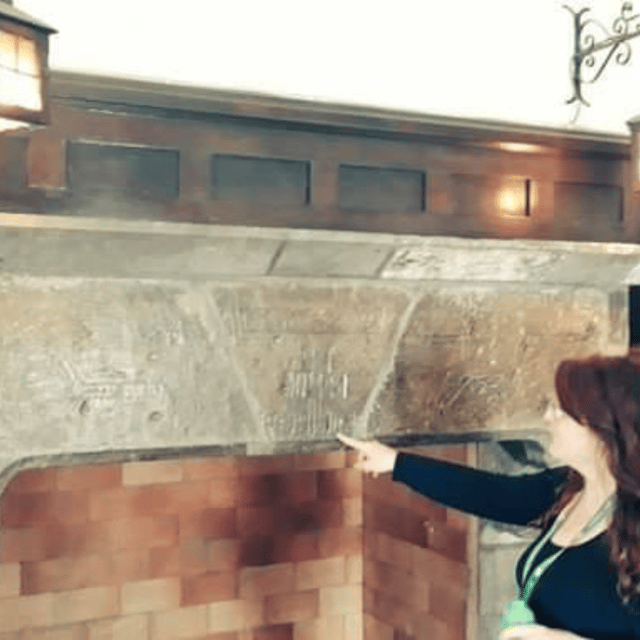
St. Nicholas’ Collegiate Church has been at the heart of Galway for more than 700 years. It is an important stop for the city’s religious, civic, and political story, and the tour brings in several unusual details.
You will hear about Jane Eyre and James Kearney, then learn how Cromwell’s soldiers used the church as a stable. That detail offers a blunt reminder that buildings can change meaning during periods of conflict. A place built for worship can become a military holding space, then return to its earlier role.
Entrance to the church is not included. Adults pay €5, while the concession price is €4. The extra cost is modest, but you should know about it before booking, especially if you are comparing this walk with a tour that keeps every admission included.
The tour does not treat the church as a quick photo stop. Its stories help explain how Galway’s public buildings were affected by religion, war, and political change. If you enjoy seeing the inside of old churches, bring the admission money with you.
The King’s Head and a royal execution
Next comes the building now known as the King’s Head Pub. The site is connected with the beheading of King Charles I of England, giving the walk another sharp turn into political history.
The value of this stop is its location in everyday Galway. You are not moving from one formal monument to another. A place associated with a major event in English history now functions as a pub, and that contrast makes the story easy to remember.
The tour uses these stops to show how Galway’s medieval and early modern past is layered into the present city. You may be looking at a bank, a pub, or a shop, but each building can point back to a different period of power and conflict.
Same base, a very different sort of day:
- From Galway: Aran Islands and Cliffs of Moher Tour & Cruise
★ 4.8 · 2,283 reviews - Cliffs of Moher & the Burren Tour from Galway
★ 5.0 · 1,913 reviews - From Galway: Cliffs of Moher and The Burren Guided Day Trip
★ 4.7 · 1,770 reviews - From Galway: Connemara and Cong Full-Day Tour
★ 4.7 · 1,737 reviews
The Claddagh ring on Quay Street
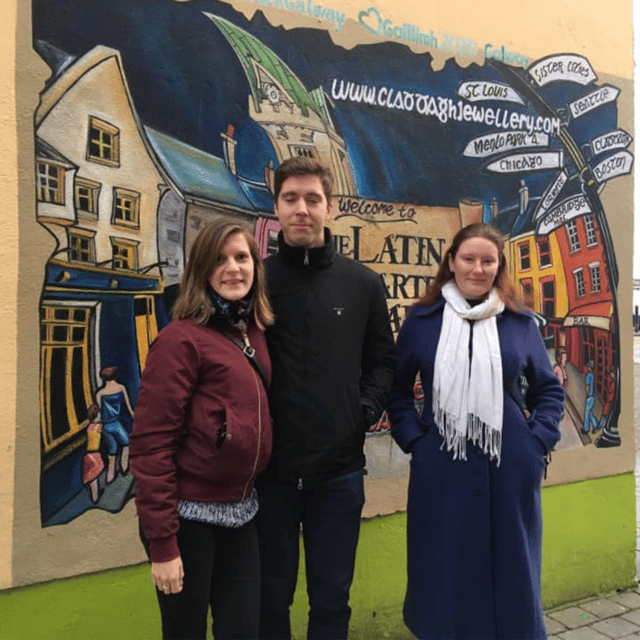
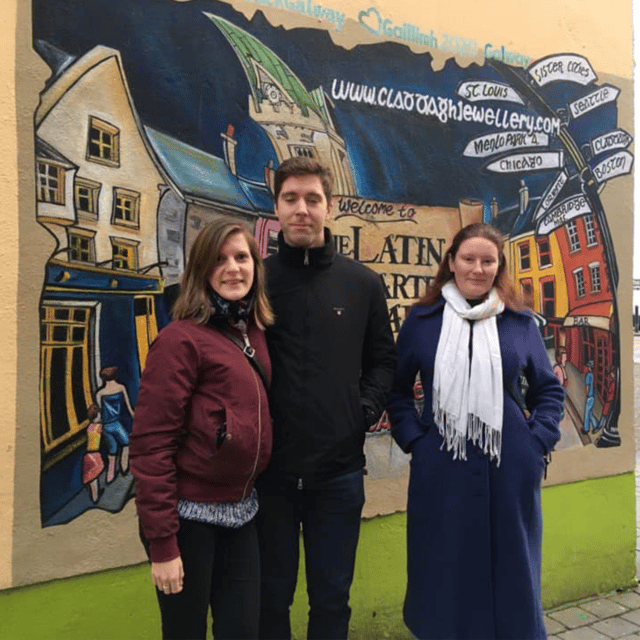
On Quay Street, the route reaches Thomas Dillon’s Jewellers. The shop is identified as the original maker of the famous Claddagh ring, with production dating to 1750.
You will hear the story linked to the ring and its familiar design. The Claddagh is more than a souvenir symbol. Its connection to Galway gives the object a local identity, and this stop helps explain why the ring is so closely tied to the city.
This part of the walk is also practical for anyone thinking about buying one. The tour provides the background before you decide if the ring has meaning for you. It is a small stop, but it connects local craft, family tradition, and Galway’s relationship with the nearby Claddagh community.
The Hall of the Red Earl beneath the city
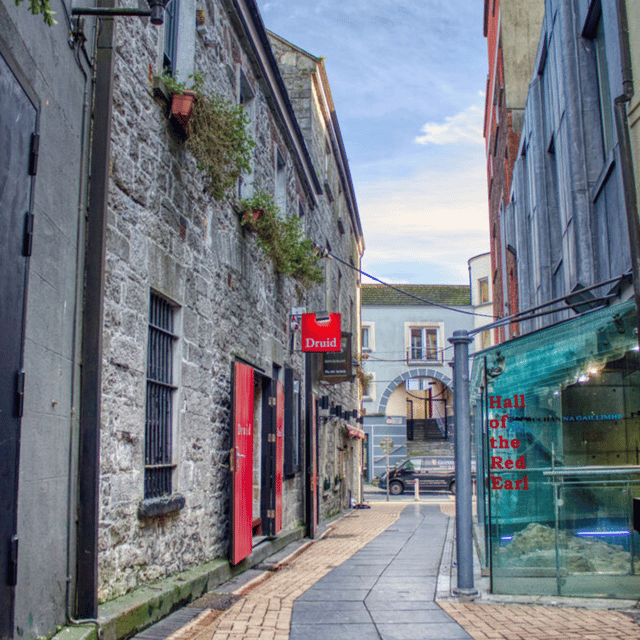
The Hall of the Red Earl is one of the walk’s strongest physical reminders of medieval Galway. This archaeological site is run by Galway Civic Trust, and you can walk down into it to see remains of walls, columns, and buttresses at close range.
Unlike the walls viewed through a shopping center, this stop gives you a more direct look at medieval construction. You are close to the masonry and can see how the remains survive below the current city.
The Hall of the Red Earl also helps fill in the gap between a city’s written history and its physical remains. A story about Galway’s families and trade becomes easier to picture when you are standing beside the structures they used.
The site may appeal most to anyone who likes archaeology, but you do not need a specialist background to enjoy it. Marteen’s role is to explain why these remains matter and how they fit into the city’s development.
Kirwan’s Lane and the last medieval lanes
From the Hall of the Red Earl, the tour continues to Kirwan’s Lane. It is one of five lanes still in existence in Galway and is named for the Kirwan family, another of the 14 Tribes.
The lane preserves remnants of medieval Galway through some of its buildings. This is a good point in the walk to notice the scale of the old city. You are no longer looking only at major walls or public buildings. A narrow lane can show how people moved through the city and how family names remain attached to its streets.
Kirwan’s Lane is also a reminder that medieval Galway was not just a collection of grand family residences. Its story includes ordinary movement through alleys, commercial activity, and the close relationship between homes, businesses, and public routes.
You should wear comfortable shoes. The walk lasts only 90 minutes, but it uses several city streets and lanes, and there is no reason to make the route harder on your feet than it needs to be.
Blake’s Castle and the city jail
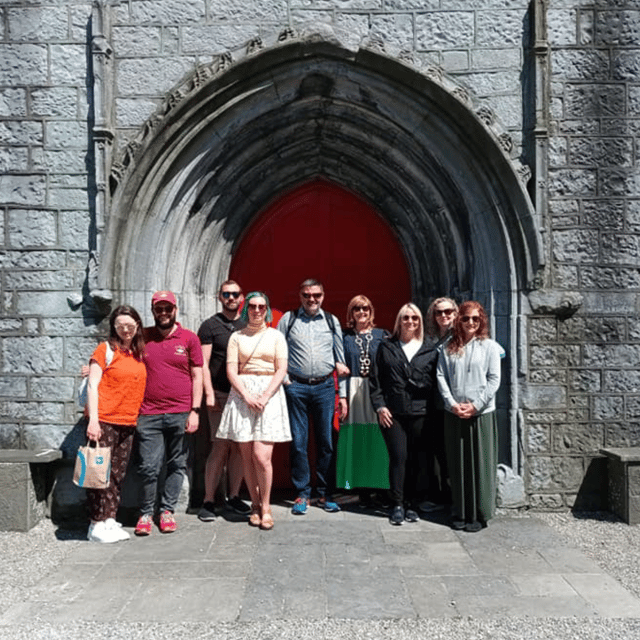
At the end of Quay Street, you will see Blake’s Castle. It belonged to the Blake family, one of Galway’s 14 Tribes, and the tour includes the castle’s connection to criminals and jail life.
The building later fell into ruin and was restored around the 1980s. That gives you another useful contrast: Galway’s old structures have not remained untouched, but they have not vanished either. Restoration has allowed the building to return to the city’s streetscape.
The story of the jail adds a less polished side of Galway’s past. Powerful families appear throughout the tour, but so do the people caught in systems of punishment and control. That balance makes the route more than a parade of family names.
Blake’s Castle is also a good place to think about what restoration can and cannot do. A repaired building gives you a clearer sense of the structure, but the guide’s stories supply the human detail that stone alone cannot provide.
Ending at the Spanish Arch
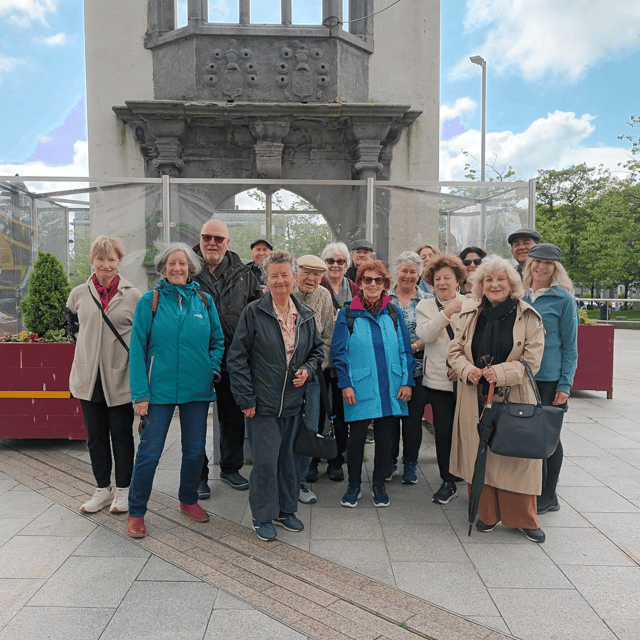
The tour finishes at the Spanish Arch, one of Galway’s best-known sights. Here, you will learn about the Claddagh across the river and the tsunami that destroyed two of the arches.
The Spanish Arch is a fitting final stop because it brings together Galway’s trade, riverfront, defenses, and relationship with the Claddagh. After hearing about walls, family castles, lanes, and archaeological remains, you can see how the city connected to the water.
The story of the tsunami is a useful reminder that Galway’s buildings have faced natural forces as well as political conflict. The arch is not simply an attractive landmark for photographs. It is part of a waterfront shaped by commerce, defense, weather, and change.
The activity ends back at the meeting point, so you are not left at an unfamiliar part of town. The precise return arrangement makes it easier to plan the rest of your day.
What the €23 price gives you
At $23 per person, the tour is fairly priced for a 90-minute guided walk that includes a trained regional guide and a long sequence of significant sites. You are paying mainly for the interpretation, not for a large number of admissions.
That distinction matters. Several stops are viewed from public streets or city spaces, while St. Nicholas’ Church requires an additional €5 adult admission or €4 concession admission. If you want the full church visit, add that cost to your budget.
The value is strongest if you are new to Galway and want a quick orientation with real historical detail. You will see parts of the medieval center, learn the names of the major families, and finish with a clearer idea of how the old city fits around the modern one.
It may be less useful if you prefer to explore entirely at your own pace or want long periods inside each site. The schedule is compact, and the tour moves through many locations in 1.5 hours.
Weather, access, and useful preparation
The tour runs in all weather. Galway can be wet, so bring an umbrella, water, and clothing suited to the forecast. Comfortable shoes are more important than fashionable ones, and a camera is useful for the walls, lanes, church, and Spanish Arch.
The experience is wheelchair accessible. You should still check the specific starting time and any current site conditions when booking, especially if you need to plan around the church visit.
Bring a credit card, cash, and a student card if you may qualify for the church concession. Smoking, alcohol, drugs, and audio recording are not allowed, and bachelor or bachelorette party groups are not accepted.
If a severe weather warning makes the walk unsafe, the activity is cancelled and you receive either an alternative date or a full refund. You can also cancel up to 24 hours in advance for a full refund, and the reserve-now, pay-later option keeps your plans flexible.
Who should book this Galway walk?
I would recommend it to you if you want Galway’s old center explained through buildings, family stories, and local legends. It suits first-time visitors, history fans, and anyone who likes finding the past in ordinary modern places.
Families may appreciate the dramatic stories, though the tale of the 1493 hanging and the discussion of jail life are darker than a simple sightseeing walk. The tour also works well early in a Galway stay because it gives you useful context before you explore the city on your own.
You may want a different experience if you need a very slow pace, extensive time inside every site, or a tour in another language. The live guide speaks English, and the route covers a lot in a short period.
Should you book the Medieval Galway Tour?
Book this tour if you want a focused introduction to Galway’s medieval center and enjoy stories with a little edge. The strongest parts are the hidden city walls, Lynch’s family story, the Hall of the Red Earl, Kirwan’s Lane, and the final view of the Spanish Arch.
Allow a little extra money for St. Nicholas’ Church, arrive 15 minutes early, and dress for rain. With those small preparations, the $23 price gives you a practical, story-led look at Galway that is difficult to reproduce from a guidebook alone.
FAQ
How long does the Medieval Galway Tour last?
The tour lasts 1.5 hours. Check availability for the current starting times.
Where does the tour begin?
Meet at the Browne Doorway in Eyre Square. It is a free-standing stone doorway surrounded by perspex glass on the north side of the square.
Where does the tour finish?
The activity ends back at the meeting point in Eyre Square.
Is the tour conducted in English?
Yes. The tour has a live English-speaking guide.
Is entrance to St. Nicholas’ Church included?
No. Entrance costs €5 for adults and €4 at the concession rate.
Is the walking tour wheelchair accessible?
Yes, the activity is listed as wheelchair accessible.
What happens if there is severe weather?
The tour runs in all weather unless there is a severe weather warning. In that case, it is cancelled for safety, and you receive an alternative date or a full refund.
Just added around Galway
- Cong The Quiet Man Museum Skip-the-Line Ticket★ 4.5 · 13 reviews
- Private visit in an Irish Castle Home★ 5.0 · 6 reviews
- Walking Tour of The Quiet Man Film Locations in Cong★ 5.0 · 78 reviews
- Galway History Walking tour with Local expert – Private Group★ 4.5 · 26 reviews
- Tribe Gin School Experience in Galway★ 5.0 · 34 reviews
- Full Day Private Tour to Ireland★ 5.0 · 32 reviews
- Tour & Taste Galway Food Tour★ 5.0 · 63 reviews
- The Dark History Tour of Galway City★ 5.0 · 146 reviews
Tours in Galway, compared.
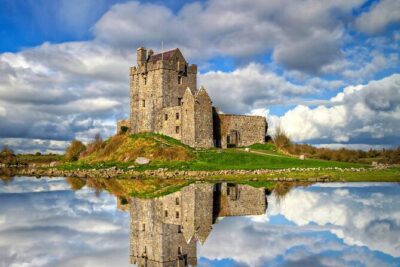
Galway to Cliffs of Moher, Aillwee Cave & Dunguaire Castle Tour
Read our review →
Full-Day Cliffs of Moher & Burren Guided Tour
Read our review →
Galway to Inisheer Aran Islands, Cliffs of Moher and Boat Trip
Read our review →
Aran Islands and Cliffs of Moher Tour & Cruise
Read our review →
Cliffs of Moher & the Burren Tour from Galway
Read our review →
Cliffs of Moher and The Burren Guided Day Trip
Read our review →
Galway to Aran Islands Inisheer, Doolin, Cliffs of Moher Day Tour
Read our review →Browse the lists this tour appears in