
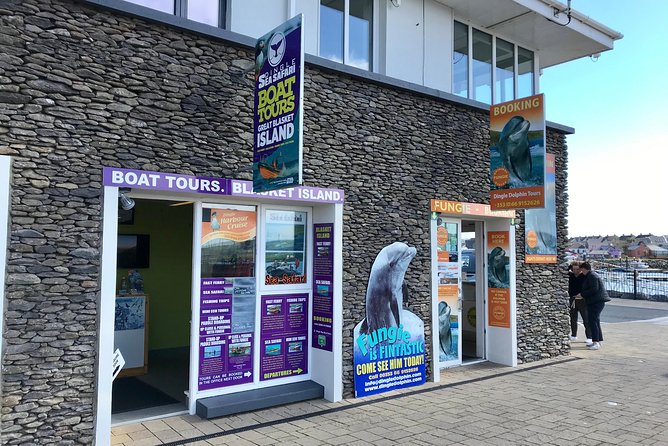
Reviewed · TOURS IN DINGLE
Exhilarating Rib experience – Dingle sea safari
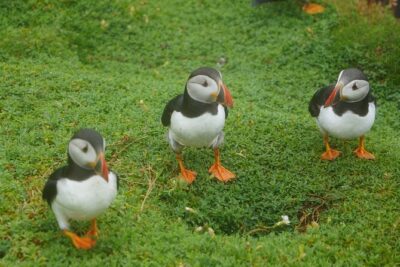
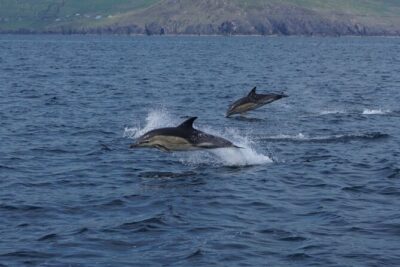
The best part of the Dingle Sea Safari is the change in viewpoint. From the water, the cliffs around Slea Head rise straight from the Atlantic, sea caves open at their base, and the Blasket Islands feel far more remote than they do from land. You may also get close to seals, dolphins, puffins, whales, or basking sharks.
I like the small 12-person boat, which keeps the trip personal, and I like that the crew supplies warm waterproof jackets and trousers. Captains such as Mikey, Colm, Callum, Connell, and Dave are praised for explaining the geology and wildlife with humor. The catch is the ride itself: you straddle a narrow seat for about three hours, and rough water can make even fit passengers seasick.
What makes this Dingle boat trip worth considering
- A water-level view of Slea Head: See the cliffs, caves, beaches, and rock layers from below, a perspective you cannot get from the road.
- Wildlife is a major part of the outing: Seals and dolphins are common targets, while whales, puffins, sharks, and tuna are possible sightings.
- The RIB supplies the thrills: The open boat moves quickly across Dingle Bay, with spray, bumps, and plenty of Atlantic air.
- Only 12 people go at a time: A small group gives you room to listen to the captain and watch the water.
- Warm gear is supplied: Waterproof jackets and trousers help, though you should still bring warm layers and a beanie.
- Weather can change the plan: Strong winds may cancel a departure, so keep some flexibility in your Dingle schedule.
Leaving Dingle Quay for the open Atlantic
You meet at the Dingle Tourist Information Centre on The Quay, in Farrannakilla, Dingle. The activity returns to this same point after roughly three hours, so it fits neatly into a day spent exploring town or driving part of the Dingle Peninsula.
Before boarding, you get warm outer clothing for the trip. This matters. Even on a sunny morning, an open RIB at speed feels much colder than the quay, and rain can arrive quickly. Wear layers underneath, and bring something that covers your ears. One useful tip is to wear sunglasses, not just for glare, but also to protect your eyes from spray.
The boat holds no more than 12 people. That limit is one of the experience’s real advantages. You are not looking over a large crowd, and the captain can point out wildlife or answer questions without shouting across a packed deck. The small size also gives the trip a friendly, informal feel.
This is not a quiet harbor cruise. The RIB is designed for speed, and the first part of the outing can feel like an amusement ride with a magnificent view. You sit astride the seat rather than settling into a padded chair. Hold on firmly, especially when the boat crosses choppy water.
A few more things to do around Ireland worth a look
- Dublin Bay Seal Kayaking Safari at Dalkey
★ 5.0 · 380 reviews - Howth Safari Hiking Tour
★ 5.0 · 279 reviews - Dingle: Sea Safari by RIB Boat
★ 4.8 · 94 reviews
Slea Head looks different from sea level
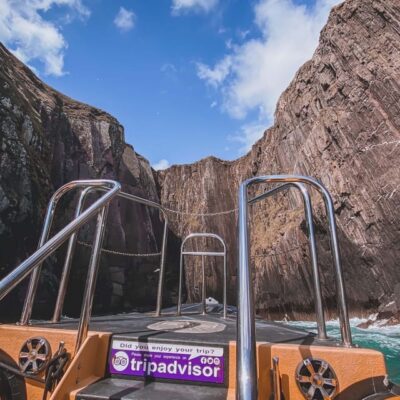
The trip’s main scenic reward is the Dingle coastline seen from the water. Roads and viewpoints give you broad views across the peninsula, but the RIB brings you underneath the cliffs. You see the rock faces rising directly out of the sea, with their layers and folds easier to appreciate from below.
The captain explains the geology of the cliff formations and the wider story of the Dingle Peninsula and Blasket Islands. This adds meaning to what might otherwise be a fast ride past dramatic rocks. If you have taken the Slea Head drive, the boat trip gives you a useful second angle rather than simply repeating the same views.
Sea caves are another highlight. The RIB can approach the coastline closely, allowing you to look into openings cut into the rock by the Atlantic. Conditions and safety always control how close the boat gets, but the chance to see these formations from the ocean is one of the outing’s distinctive features.
You also pass beaches and island shores that feel especially wild from the water. One particularly memorable sight can be a seal colony gathered along the coast. A large group of seals may be easier to spot than a single animal, and the captain will usually help direct your attention when wildlife appears.
Wildlife comes first, but nothing is guaranteed
The crew sets out looking for marine life rather than following a fixed sightseeing script. That is the right approach in this part of Ireland. You might see seals, dolphins, whales, puffins, basking sharks, bluefin tuna, or other sea birds, but nature decides what appears on the day.
Dolphins are among the most frequently praised sightings. One trip encountered a pod of roughly 25 to 30 animals and stayed with them for around 20 minutes. Other outings followed playful bottlenose dolphins, sometimes spotting a second, smaller pod on the return journey.
Whales are also possible. Sightings have included minke whales and a humpback, along with a single whale breaching near the boat. Basking sharks have appeared as well, particularly on calmer, brighter days. These are exciting possibilities, not promises, so book the trip for the whole experience rather than for one particular animal.
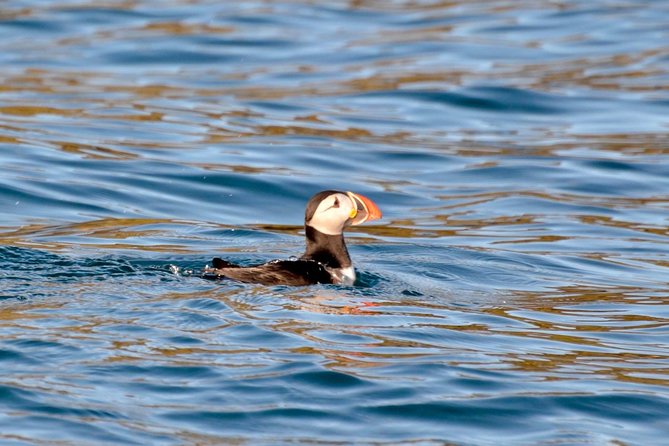
Puffins add a seasonal bonus. They can be seen from April through August, but they may remain farther away than you expect. If puffins are your main goal, keep your expectations sensible. You could see several, yet they may appear as small birds on the water rather than posing close beside the boat.
The captain’s skill matters here. Captains including Mikey, Colm, Callum, Connell, O’Connell, and Dave have been praised for watching carefully, sharing facts, and choosing routes that give the group the best chance of seeing wildlife. Their explanations cover animals, local geography, and the cliffs’ rock formations. The tone can be informative without becoming a lecture.
The RIB ride is the attraction and the warning
The speed gives the Dingle Sea Safari its character. The boat cuts across the Wild Atlantic, and the combination of motion, spray, and cliffs makes the trip feel far more active than a standard sightseeing cruise. Sitting near the front can add even more splash and movement, while outside seats give you a clearer view for photographs.
That same energy can wear you out. You straddle the seat for most of the three-hour outing, and the boat may spend long stretches traveling over rough water between wildlife stops. One honest way to think about the timing is that the trip may include about an hour of concentrated wildlife viewing, with the remaining time spent moving between locations and taking in the coast.
I would not choose this for someone who wants a soft, quiet cruise. Sea sickness is possible even if you do not usually suffer from it. The open design also means you are exposed to wind and spray, though the supplied outerwear helps. If you are uneasy on fast boats, ask yourself if the thrill sounds fun or tiring before you book.
The physical requirement is listed as moderate. You do not need to be athletic, but you do need to manage the seat, the movement, and the climb on and off the boat. Anyone with mobility concerns should consider this carefully, since the available information does not promise easy-access boarding or special seating.
Same base, a very different sort of day:
- Dublin to Cliffs of Moher, including Wild Atlantic Way and Galway
★ 5.0 · 23,331 reviews - From Dublin: Cliffs of Moher, Burren & Galway City Day Tour
★ 4.8 · 18,888 reviews - Dublin: Guinness Storehouse Entry Ticket
★ 4.6 · 16,863 reviews - Dublin to Cliffs of Moher, Burren, Wild Atlantic Way, Galway Tour
★ 5.0 · 12,924 reviews
Why the small group improves the experience
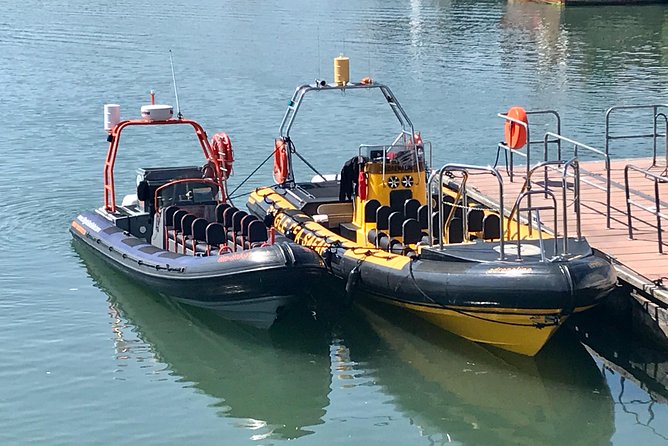
A maximum of 12 people is a useful middle ground. The boat remains lively, but it does not feel like a mass outing. You have a better chance of getting a clear view when dolphins surface, and the captain can respond to questions from several parts of the boat.
The smaller group also helps with photographs. You still need to react quickly, since animals surface without warning, but there are fewer heads blocking the view. Outside seats seem especially desirable for people who want the clearest sightline. One account specifically found the outside positions more enjoyable than the middle seats.
Do not expect a reserved private seat or a formal seating plan. The best position depends on the boat, the group, and the conditions. The experience is active, so your priority should be comfort and a secure grip rather than securing the perfect photo position.
The captains add local color
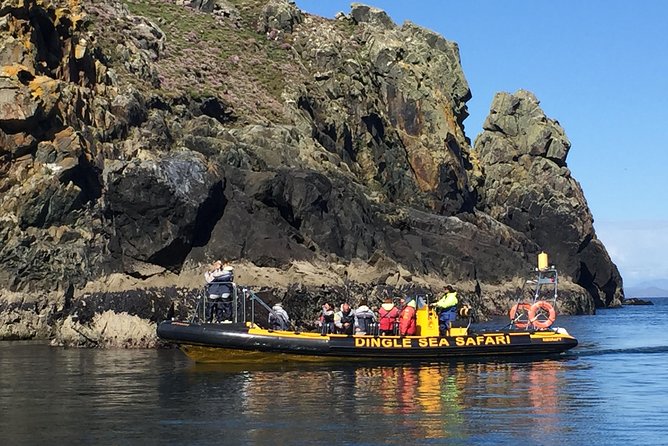
The boat ride would be enjoyable on its own, but the captain shapes the day. Mikey is repeatedly singled out for combining wildlife knowledge with a strong feel for the area. Colm is praised for his care for the animals and enthusiasm for the coast, while Callum is noted for making the ride both thrilling and informative.
Other captains named in the feedback include Connell, O’Connell, and Dave. You should not expect a particular captain unless the company confirms one, but the consistent theme is a crew that actively searches for wildlife and explains what you are seeing.
The best guiding here is not only about naming a bird or whale. It is about helping you understand why the animals gather in certain waters and how the cliffs, islands, and sea fit together. Good commentary gives you something to notice during the longer stretches between sightings.
What the $120.93 price really buys you
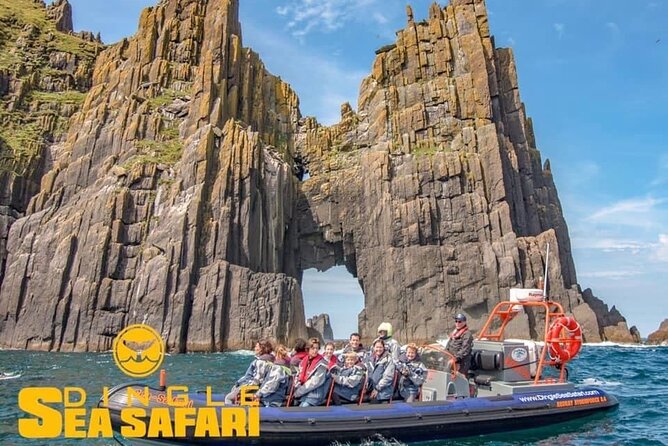
At $120.93 per person, this is not a budget activity. You are paying for a specialized boat, a three-hour outing, outerwear, a small group, and access to a section of the Dingle coast that is difficult to see from land.
The value depends on what you want from Dingle. If you only want a short boat ride, the price may feel high. If you want a full coastal experience with a serious chance of marine wildlife, the cost is easier to justify. A three-hour trip also gives you more time than a quick harbor spin, although some of that time is spent crossing open water.
The price is strongest on a day with workable weather and active wildlife. No operator can control the Atlantic or guarantee a whale. You are buying a well-planned attempt, a close view of the coast, and the excitement of being out there. If the sea is rough, you may feel you paid for a lot of bouncing. That is why flexible scheduling is valuable.
The trip is often booked well ahead, with an average booking lead time of about 52 days. That suggests you should reserve early during popular periods, especially from April through August if puffins matter to you. Keep some room in your schedule, since bad weather can force a change.
Weather and cancellation deserve attention
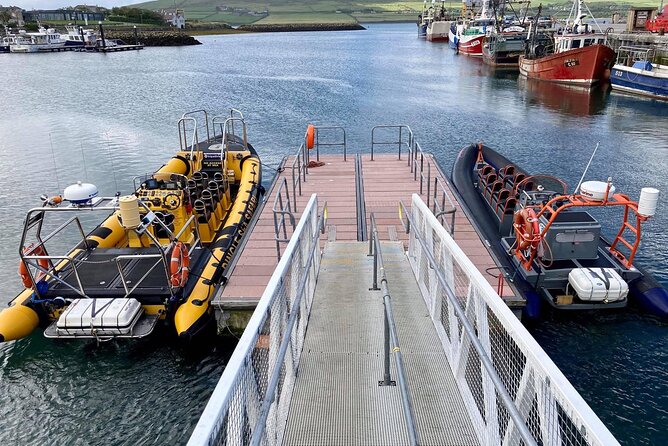
This experience needs good weather. If high winds make the outing unsafe, the company can cancel and offer another date or a full refund. A change of day is not a minor detail in Dingle, where weather can shift quickly and open-water conditions matter greatly.
One useful example is a departure moved forward because poor weather was expected. Another outing was canceled the evening before due to high winds, then rescheduled when a place opened the next morning. Build flexibility into your plans if you can.
You can cancel for a full refund up to 24 hours before the start time. Changes or cancellations inside that 24-hour window are not accepted for a refund. The cut-off uses local Irish time. If a minimum number is not reached, the company offers another date or experience, or a full refund.
If you arrive in Dingle by cruise ship, take extra care with timing. A ship may cancel its tender service because of sea conditions, leaving you unable to reach shore even though the land-based tour is operating. The supplied information includes a case where that caused a missed departure and a refund dispute. Independent visitors with a flexible Dingle stay face fewer problems.
Who should book the Dingle Sea Safari
I would recommend this most strongly to you if you want a physical, outdoor experience and enjoy the possibility of surprise. It suits couples, families with older children, photographers, wildlife fans, and anyone who has already driven the peninsula and wants to see it from another angle.
It is also a good choice for people who like guides who talk while they drive. The captains cover geology, marine life, and local places, so the outing is more than a fast spin on the water.
I would hesitate if you are prone to motion sickness, dislike cold wind, or want a calm boat with fixed indoor seating. The RIB’s narrow seats and rough-water crossings are central to the experience, not a minor inconvenience.
Bring warm layers, use the provided waterproof gear, and pack a hat or beanie. Keep your camera ready, but do not spend the whole trip looking through a screen. Dolphins, seals, and whales do not wait for perfect framing.
Should you book it?
Book the Dingle Sea Safari if you want the most active way to see the peninsula from the ocean. The combination of Slea Head cliffs, sea caves, Blasket Island views, and possible wildlife sightings makes this a memorable use of three hours.
Skip it if you need a gentle, predictable cruise. For everyone else, the smart approach is to reserve early, leave space for weather changes, and accept that the sea will provide the schedule. On a good day, you get much more than a boat ride: you get a close, moving look at Dingle’s Atlantic edge.
FAQ
How long is the Dingle Sea Safari?
The experience lasts approximately three hours, including the boat ride along Dingle Bay, the Dingle coastline, Slea Head, and the Blasket Islands.
Where does the tour start and finish?
It starts at the Dingle Tourist Information Centre on The Quay, Farrannakilla, Dingle, County Kerry, V92 HHTO. The activity ends back at the same meeting point.
How many people can join the RIB?
The boat is limited to a maximum of 12 travelers, making this a small-group experience.
What wildlife might I see?
Possible sightings include seals, dolphins, whales, puffins, sea birds, basking sharks, and bluefin tuna. Puffins are generally associated with the April to August period. Wildlife sightings are not guaranteed.
Is the boat ride physically demanding?
A moderate level of physical fitness is recommended. You sit astride the boat’s seats for much of the three-hour trip, and the ride can be rough and uncomfortable in choppy seas.
Is warm clothing provided?
The company provides warm waterproof jackets and trousers. You should still wear warm layers and bring a hat or beanie, since the open boat can feel cold and wet.
What happens if the weather cancels the trip?
If poor weather causes a cancellation, you are offered a different date or a full refund. If you cancel yourself, you must do so at least 24 hours before the start time for a full refund.
Just added around Ireland
- Dublin: Howth Safari Hiking Tour★ 5.0 · 70 reviews
- Dublin: Trinity College, Castle, Guinness and Whiskey Tour★ 4.7 · 85 reviews
- Dublin: Irish Famine Exhibition Entry Ticket★ 4.4 · 15 reviews
- Dublin: Howth Cliffs and Ireland’s Eye Boat Cruise★ 4.1 · 12 reviews
- Dublin: Hop-on Hop-off Tour with Live German Commentary★ 4.5 · 41 reviews
- Dublin: Howth Cliffs and Lighthouse Boat Tour★ 4.5 · 43 reviews
- Dublin: Highlights and Hidden Corners Walking Tour★ 4.8 · 79 reviews
- Dublin: Historical and Cultural Historical Walking Tour★ 4.8 · 6 reviews
Tours in Dingle, compared.
The Great Blasket Island Experience – Premium Tour
Read our review →
Dingle Peninsula and Slea Head Drive Group Tour
Read our review →
Browse the lists this tour appears in