
Reviewed · CYCLING TOURS
Donegal Electric Bike Tour with Local Guide: Half-Day Adventure
The best thing about this tour is how much ground you cover in three hours. You move from Bunbeg Harbour and an Atlantic beach to quiet gravel tracks, a famine-era village, two lakes, and the eerie Poisoned Glen without turning the day into a hard workout. The fat-tire e-bikes make the hills and mixed surfaces manageable.
I like the mix of local history and open-air riding, and I like that the small group is capped at 10 people. The main drawback is simple: there is no food or drink stop, so you should eat beforehand and bring what you need. The helmet microphones may also not work well, so you might need to gather close to the guide at stops.
Key points at a glance
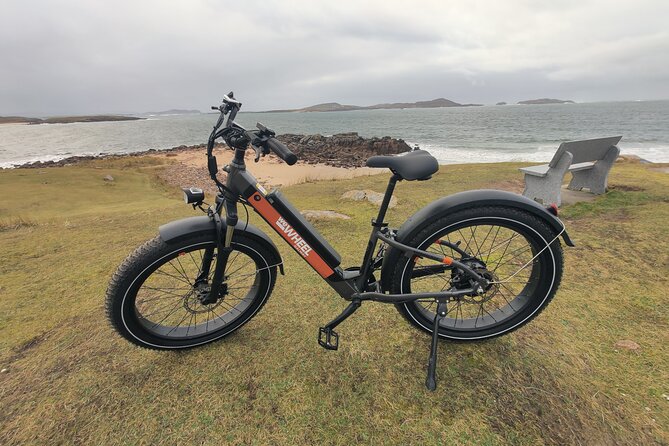
- Bunbeg Harbour start: Begin at Teac Campbell Guesthouse beside a harbor built in the late 1830s to support local fishing.
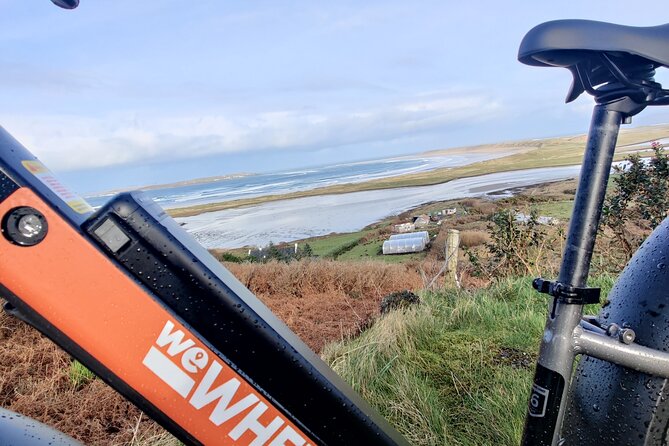
- Electric help on real terrain: Ride paved roads, dirt and gravel tracks, and beach areas on a fat-tire e-bike.
- Famine-era village: Walk among abandoned stone cottages once occupied during the Great Famine.
- Myth at the Poisoned Glen: Stop where local legend connects a stone at the glen’s entrance with Balor’s poisoned eye.
- Dunlewey and the lakes: See a memorial church, cross the dam between Lough Nacung and Dunlewy Lough, and enjoy broad water views.
- A memorable finish: Visit Bád Eddie, or Eddie’s Boat, a shipwreck that ran aground during a storm in 1977.
Why this Donegal bike ride works so well
This is not a short spin around one village. The route links several very different parts of northwest Donegal, and the electric bike is what makes that practical. You can ride on roads, gravel, dirt, and sand, then get off to explore the stops on foot.
At about three hours, the outing fits neatly into a half-day. You get enough time to see several landmarks, but you are not committing an entire day to cycling. That matters in Donegal, where distances between scenic places can be greater than they first appear.
The ride is offered in English and uses a mobile ticket. The group can include up to 10 people, which is small enough for the guide to keep an eye on the group and explain the stops without addressing a crowd.
The bikes are a major part of the value. A standard bicycle could make the hills and loose surfaces tiring, especially if the weather turns wet. Here, the electric motor takes some of the strain. You still pedal and remain active, but you have more energy left for the scenery and the historic stops.
A few more things to do around Donegal worth a look
- Donegal Coast One Day Self-Guided E-Bike Tour
★ 5.0 · 66 reviews - Electric Bike Donegal: Must-Do Half-Day Adventure!
★ 5.0 · 20 reviews - Cycle Dublin – Bike & ebike Tours
★ 5.0 · 748 reviews
Starting at Bunbeg Harbour
Meet at Teac Campbell Guesthouse in Magheraclogher, Bunbeg. The tour begins near Bunbeg Harbour, built in the late 1830s as part of an effort to encourage fishing in the area.
That starting point gives the ride a useful sense of place right away. This is not just a bike rental from a generic car park. The harbor connects the activity with Donegal’s coastal life and working past before you even leave.
Expect a short introduction to the bike and safety gear before setting off. One particularly useful feature is the technical and mechanical support included with the tour. You do not need to know how to operate an electric bike in advance. The guide shows you how the controls work, and the fat tires are suited to more than smooth pavement.
You should still pay attention during the briefing. Electric bikes can respond differently from ordinary bicycles, and the ride includes several types of surface. Wear clothing you can move in and bring rain protection. The tour operates in changeable weather, and the experience can be canceled if conditions are poor.
Riding across roads, gravel, and sand
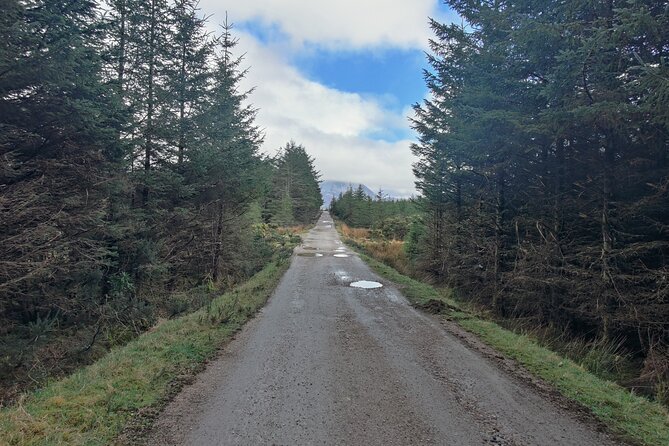
One of the strongest parts of the route is its variety. You may ride paved roads, dirt and gravel trails, and beach areas during the same outing. That gives the tour more character than a simple road cycle, but it also means you should expect uneven ground.
The fat tires help on loose surfaces, yet they do not remove every challenge. You should be comfortable sitting on a bike, steering, and following the guide over changing terrain. The tour is described as suitable for most participants, but it is still an active excursion rather than a sightseeing bus trip.
The electric assistance is especially useful on hills. You can set your pace with the group instead of worrying about falling behind on every incline. This is a good choice if you want to see Donegal by bicycle but do not want a demanding athletic ride.
The scenery is the main reward between stops. You will be moving through open country around the Bunbeg and Dunlewey areas, with water, hills, and coastal views appearing along the way. Keep your camera accessible, but do not let it distract you on the rougher sections.
The abandoned village and the Great Famine
A stop at the abandoned village brings a human scale to the ride. The stone cottages once housed families during the Great Famine in 19th-century Ireland. Their empty walls and simple forms make the history feel immediate without requiring a large museum or formal exhibit.
This is a place to slow down. You can leave the bike and walk among the cottages, looking at the construction and the layout of the settlement. The stop is more powerful for its quietness than for a long list of facts.
The village also helps explain why a guided ride is useful. A guide can place the buildings within the wider story of rural Donegal and point out details you might pass without noticing. The amount of time spent here is not specified, so expect the schedule to depend on the group and the guide’s approach.
Do not expect restored interiors or a polished heritage attraction. The appeal is the remains themselves. If you prefer lively attractions with cafés and displays, this stop may feel spare. If you like places where the setting does much of the talking, it is likely to be one of the most affecting parts of the route.
Same base, a very different sort of day:
- Oakfield Park Day Pass and Train Ride
★ 4.5 · 104 reviews - Slieve League cliffs cruise. Donegal. Guided. 1 ¾ hours.
★ 4.5 · 61 reviews - Full-Day Shore Excursion for cruise ships to Killybegs, Donegal
★ 5.0 · 54 reviews - Inishowen Peninsula Tour
★ 5.0 · 31 reviews
The Poisoned Glen and Balor’s legend
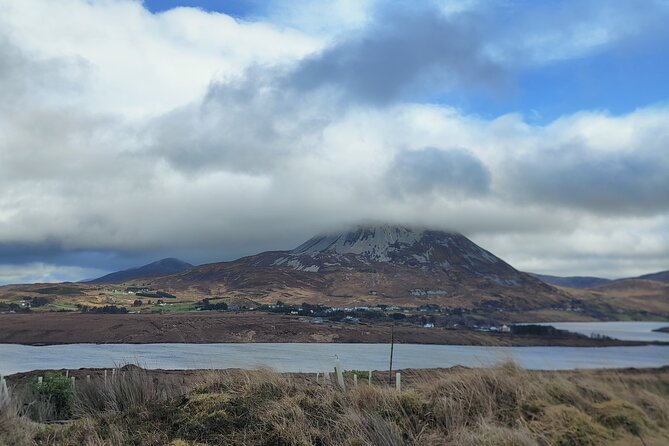
The viewpoint at the Poisoned Glen adds a strong touch of Irish myth to the day. At the entrance to the glen is a stone said to represent the poisoned eye of Balor.
You get two ways to read this stop. On one level, it is a scenic viewpoint in a dramatic area. On another, it connects the landscape to old local storytelling, where unusual rock formations and remote valleys carry tales of giants, danger, and magic.
The guide’s explanation matters here. A quick photo stop would give you the view, but the legend gives the place a mood and a memory. Listen for the story, then take a moment to look beyond the stone itself.
Weather can change the feel of the glen. On a clear day, you may get crisp views. In mist or rain, the setting can seem more mysterious, but visibility may be less reliable. Since the activity requires good weather, the operator may reschedule or refund the booking if conditions are unsuitable.
Dunlewey Church and a story of love
The route continues to a beautiful building that serves as a memorial to the love between James Russell, landlord of the Dunlewey estate, and his wife Jane.
The stop gives the tour a different kind of history. After the hardship represented by the abandoned village and the older legend at the Poisoned Glen, this building brings the focus to one personal relationship and the mark it left on the area.
It is a useful reminder that Donegal’s story is not one single story. You encounter fishing, famine, folklore, estate life, engineering, and maritime mishap in a small area. The guide can help connect those pieces, but you should also allow time simply to look at the building and its setting.
The supplied details do not specify whether you enter the building, so plan to view it as part of the route rather than assume an interior visit. The attraction is still worthwhile as a scenic and historical pause.
Crossing the dam between two lakes
One of the more unusual riding moments comes when you cycle over the dam separating Lough Nacung and Dunlewy Lough.
A dam is not a grand monument, but it makes a memorable route section because it places you between two bodies of water. It also shows how the tour mixes practical local infrastructure with scenic stops. You are not only riding from one attraction to another; the route itself has points of interest.
This section should appeal to anyone who likes seeing how communities interact with their surroundings. The lakes also provide a natural change of pace after the more enclosed feel of the cottages and glen.
Follow the guide’s instructions here and keep your attention on the riding surface. The view may tempt you to stop often, but the group needs to stay together. You will have other planned opportunities to pause and take photographs.
Bád Eddie, the boat left on the shore
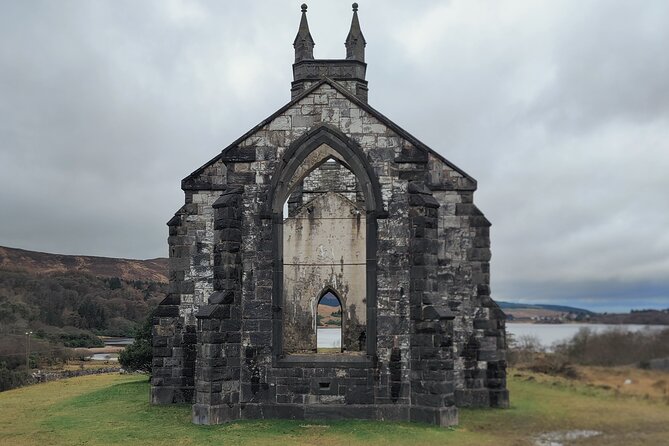
The shipwreck of Bád Eddie is a strong final image. The name means Eddie’s Boat, and the vessel ran aground during a storm in 1977.
Unlike an old stone building, this wreck is a relatively recent reminder of Donegal’s Atlantic exposure. Its presence on the shore links the ride back to Bunbeg Harbour and the fishing culture introduced at the beginning.
The boat is also the kind of sight that photographs well, but it is more than a photo prop. It tells you something about the force of the sea and the risks faced by boats working along this coast. The exact condition of the wreck may change over time, so do not expect it to look exactly like every photograph you have seen.
The beach setting adds variety to the day. After roads, gravel, lakes, and mountain scenery, you finish with a coastal stop that feels firmly tied to Donegal’s maritime character.
The guide, equipment, and group size
The experience is led in English by a local guide. No guide’s name is provided, so you should not book expecting a particular person. What you can expect is route interpretation, help with the e-bike, and safety attention during the ride.
The equipment includes a top-quality fat-tire electric bike and safety gear. You also receive technical and mechanical support, which is valuable on a route that uses several surfaces. The guide demonstrates how to use the bikes before departure, so first-time e-bike users are not left to figure everything out alone.
The small maximum group of 10 is another practical advantage. It should be easier to hear explanations at stops and easier for the guide to manage the pace. A group can still feel slower than a private outing, especially when everyone is taking photographs, but the limit keeps it from becoming a large procession.
The helmets have microphones, though they may not always work well. If you have trouble hearing while riding, stay close when the guide is speaking and expect the most useful explanations to happen during stops.
Is $78.31 a fair price?
At $78.31 per person, this is not the cheapest way to see Donegal, but the price includes more than a basic bicycle hire. You receive the e-bike, safety gear, guide service, and mechanical support, while the route covers several separated sights in about three hours.
I think the price makes sense if you value convenience and want an active way to connect the stops. Renting a regular bicycle and trying to build this route yourself could be less straightforward, especially when you factor in route planning, hills, mixed surfaces, and local interpretation.
The value is weaker if you want a relaxed sightseeing outing with food included. No meals, drinks, or refreshment stop are part of the experience. Eat before you arrive and bring water and any snacks you need.
The tour is often booked well ahead, with an average booking lead time of 47 days. That suggests you should not leave it until the last moment if the route is important to your schedule.
Who should book this three-hour tour?
I would choose this ride if you want active sightseeing but do not want a full-day cycling challenge. It suits couples, families with adult children, and small groups who enjoy scenery, local stories, and varied terrain.
It is also a good option if you have only half a day in the Donegal area. You see coastal, historic, and mountain-related sights in one outing instead of spending your time driving between them.
You should think twice if you dislike cycling, are looking for a fully passive tour, or need guaranteed indoor shelter. The ride includes dirt, gravel, and beach areas, and the weather can affect operation. Most people can participate, but the activity still requires basic comfort on a bicycle.
Free cancellation is available if you cancel at least 24 hours before the start time. Cancellations inside that window are not refunded, and changes are not accepted. If poor weather or an unmet minimum group size causes the operator to cancel, you are offered another date or experience, or a full refund.
My call: book it if you want Donegal with movement
I would book this tour for the combination of electric-bike ease, local stories, and the number of sights packed into three hours. The abandoned village, Poisoned Glen, dam crossing, and Bád Eddie each offer a different view of Donegal, and the route feels more varied than a standard road cycle.
Go prepared for rain, uneven surfaces, and no food stop. If you want a quiet, active half-day with a small group and enough electric assistance to make the hills reasonable, this is a strong choice. If you want guaranteed sunshine, a sit-down meal, or a tour where you never have to pedal, choose something else.
FAQ
Where does the Donegal Electric Bike Tour begin?
It begins at Teac Campbell Guesthouse, Magheraclogher, Bunbeg, County Donegal, Ireland.
Where does the tour finish?
The activity ends back at the meeting point at Teac Campbell Guesthouse.
How long does the tour last?
The tour lasts approximately three hours, including the cycling time to and from the listed attractions.
How much does the tour cost?
The listed price is $78.31 per person.
What kind of bicycle is provided?
You receive a top-quality fat-tire electric bike along with safety gear.
Is bike support included?
Yes. Technical and mechanical support are included with the tour.
What language is the tour offered in?
The tour is offered in English.
How many people can join the tour?
The maximum group size is 10 people.
Is food or drink included?
No. Food and drink are not included.
Can I cancel for a full refund?
Yes, if you cancel at least 24 hours before the experience start time. If poor weather or an unmet minimum number of participants causes the operator to cancel, you are offered another date or experience, or a full refund.
Just added around Donegal
- 2 Hour Walking Tour in Slieve League Ireland★ 5.0 · 9 reviews
- DAY TOUR: Highlights of Derry and Donegal★ 5.0 · 8 reviews
- Mysteries of Inishowen private day tour★ 4.5 · 24 reviews
- Electric Bike Donegal: Must-Do Half-Day Adventure!★ 5.0 · 20 reviews
- Inishowen Peninsula Tour★ 5.0 · 31 reviews
- DONEGAL DAY TOUR: Coast and Castles★ 5.0 · 6 reviews
- DAY TOUR: Highlights Of South Donegal★ 5.0 · 18 reviews
- Glenveagh National Park and Gaeltacht Tour★ 5.0 · 22 reviews
Cycling Tours, compared.
Dublin Panoramic e-Bike Tour with Howth Adventures
Read our review →
Self-Guided Bike Tour of Killarney National Park, Muckross Gardens & Waterfall
Read our review →
Aran Islands Bike Tour with Tea & Scones – Day Trip to Inisheer from Doolin
Read our review →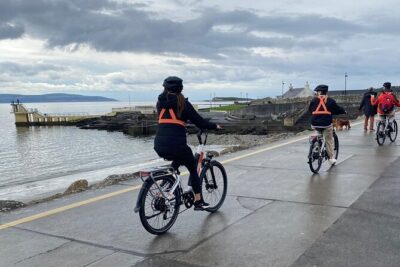
Electric Bike Tour of Galway City with Expert Local Guide
Read our review →Browse the lists this tour appears in