
Reviewed · CITY TOURS
Cork City Ramble
Cork City Ramble is a compact way to get your bearings in Cork while hearing the stories that buildings, streets, bridges, and memorials cannot tell you by themselves. In about 75 minutes, you move from St Patrick Street to the English Market, with stops tied to Cork’s maritime trade, merchant past, music, politics, and local characters.
I like the route’s wide historical range. You get the Crawford Art Gallery, Rory Gallagher, the Huguenots, Nano Nagle, and the English Market in one short walk. I also like the personal touch many guides bring, especially Noel’s local stories and Mary’s warm, clear explanations. The main drawback is that a larger group can make it hard to hear, especially on busy streets, and Cork’s rain can make any outdoor tour less comfortable.
The tour is best for a first visit, a cruise stop, or anyone who wants a useful city overview before exploring alone. It does not take you inside a long list of attractions, so you should see it as a guided introduction, not a full museum tour or a substitute for a day spent exploring Cork.
Key Points About the Cork City Ramble
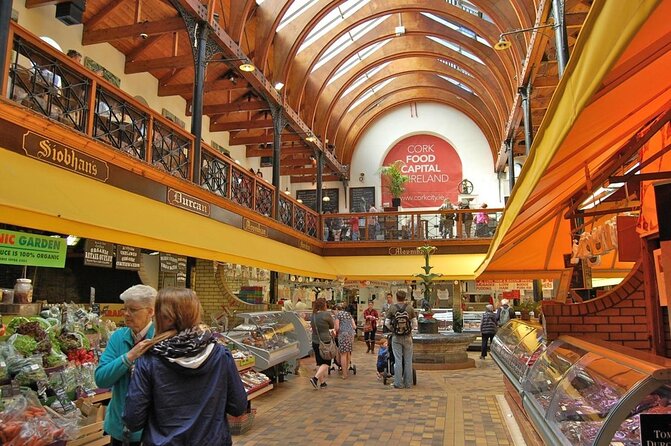
- The route ends at the English Market, giving you an easy place to continue with food and independent exploring.
- You cover major central streets and bridges without committing half a day to a walking tour.
- The stories go beyond church history, including trade, music, migration, politics, and Cork’s maritime past.
- Guides such as Noel, Mary, and Aideen add local anecdotes and personal details to the standard landmarks.
- The $36.30 price buys orientation and context, rather than entry to a series of paid attractions.
- The tour is limited to 25 people, though smaller groups will usually make it easier to hear the guide.
Why This Short Cork Walk Is Useful
Cork can feel slightly confusing at first. Its streets bend around waterways and old commercial areas, and a quick look at a map does not explain why the city developed the way it did. This walk gives you a basic mental map, then adds enough history to make later wandering more rewarding.
The route also keeps moving. The longest stops are about ten minutes, and several are closer to five minutes. You are not planted in one place for a long lecture. Instead, you hear a piece of the story, walk to the next location, and see how the city’s past connects from street to street.
That balance is a major strength. The tour is scheduled for 75 minutes, though an enthusiastic guide may run about 20 minutes longer. If you have a tight connection or another booking, allow extra time rather than planning to finish exactly at 1:15 p.m.
The tour is conducted in English and uses a mobile ticket. The advertised maximum is 25 people. That is a manageable size on paper, but the sound of traffic and pedestrians still matters. A small group is easier to follow, while a full group may require you to stand close to the guide.
A few more things to do around Cork worth a look
- Cork City Gaol Admission Ticket with GUIDEBOOK
★ 4.5 · 247 reviews - Rebel City Distillery Tour
★ 5.0 · 223 reviews - Cork: City Gaol Tour with Audio Guide
★ 4.8 · 108 reviews
Starting on St Patrick Street at Noon
Meet at the Cork City Tourist Information Centre, at 125 St Patrick’s Street, for the noon start. The guide introduces the route and covers basic health and safety information before setting off.
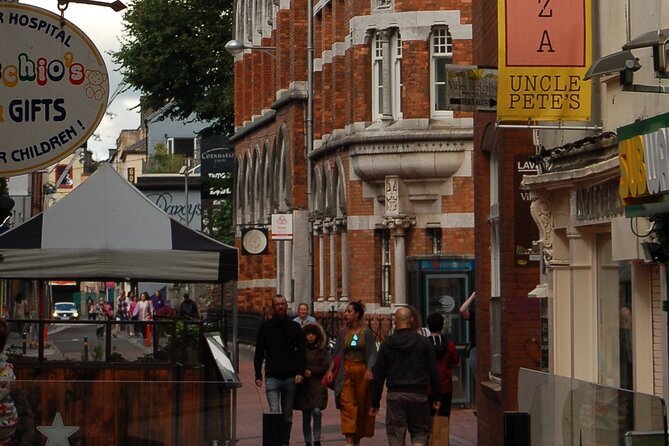
St Patrick Street is a sensible place to begin. It is one of Cork’s main central streets, but the guide helps you notice more than shops and traffic. You hear about its meandering route and the remaining boathouse entrances, reminders of the water and commerce that shaped the city.
This opening section is less about a single grand monument and more about reading the street. The point is to understand why Cork does not feel like a city built on a simple grid. You also get a chance to note shops and places you may want to return to later.
The walk then includes Cork’s newest street, where the guide points out options for shopping and helps you plan your free time. This is practical early in a visit. Instead of passing through the centre without a plan, you begin to identify where you might return after the tour.
Crawford Art Gallery and the City’s Cultural Side
The Crawford Art Gallery is the first clear change of pace. Here, the guide explains how Cork’s best-known gallery emerged and points out the importance of its exhibitions.
The stop lasts about five minutes, so do not expect a full gallery visit. That is not a weakness if you understand the purpose. You receive the cultural context, then can return later if the building and exhibitions catch your interest.
I appreciate that this stop prevents the tour from becoming only a parade of political dates and old commercial stories. Cork’s identity also includes art, performance, and public culture. The gallery gives the walk a useful change of tone before the route moves toward music and social history.
Rory Gallagher Place and Cork’s Musical Connection
At Rory Gallagher Place, the guide introduces the memorial to the Cork-connected performer and explains his musical achievements.
This is one of the route’s most distinctive stops. It gives the tour a modern cultural figure rather than another old building or civic monument. If you know Rory Gallagher’s work, the memorial adds a local connection. If you do not, the stop still shows how Cork remembers people who shaped its cultural life.
The guide’s delivery matters here. Noel, in particular, is praised for adding personal stories and bringing local subjects to life. Other guides, including Mary and Aideen, are described as warm, energetic, and good at mixing facts with amusing anecdotes. The exact style may vary by departure, but the format leaves room for more than memorized dates.
Same base, a very different sort of day:
- From Cork: Ring of Kerry Guided Day Trip
★ 4.3 · 1,284 reviews - Cliffs of Moher and More: Full-Day Tour from Cork
★ 4.4 · 879 reviews - Cork Midleton DistilleryJameson Experience & Whiskey Tasting
★ 5.0 · 681 reviews - Ring of Kerry Day Tour from Cork: Including Killarney National Park
★ 4.5 · 663 reviews
Huguenot Cemetery and Cork’s Merchant Past
The Huguenot Cemetery offers one of the more unusual historical stops on the walk. You hear about the arrival of the Huguenots in Cork and their influence on the city’s commercial and political life.
This is useful because it widens your view of Cork’s development. The city was shaped not only by major institutions and famous local figures, but also by communities who arrived, settled, traded, and took part in civic life.
The stop also supports one of the tour’s best features: its attention to commerce and migration. You are not given a single narrow story about Cork. Instead, you see how business, religion, politics, and movement between countries affected the city centre.
The route also points out the former importance of a maritime marketplace. The exact stop is brief, but the idea is important. Cork’s central streets were once tied closely to trade and waterborne transport. The remaining boathouse entrances on St Patrick Street and South Mall make more sense once you hear this background.
Grand Parade, Berwick Fountain, and Bishop Lucey Park
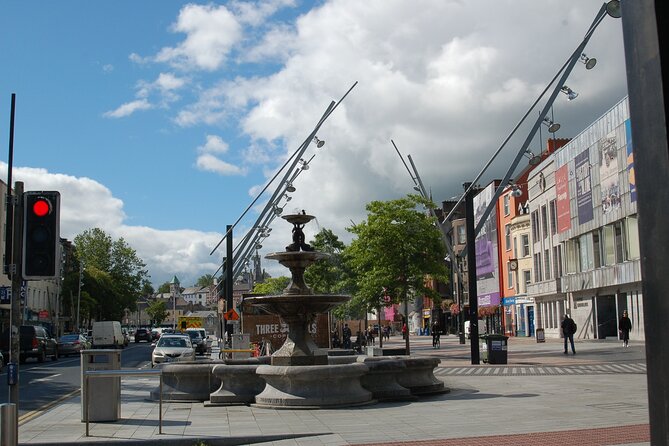
Grand Parade is one of the longer stops, at about ten minutes. Here, the guide discusses Berwick Fountain, Bishop Lucey Park, and the Grand Lodge of Tuckey Street.
This section works well as a lesson in how Cork’s public spaces developed. You see a formal civic street, a park, a fountain, and a lodge connected to different parts of the city’s public life. The details can easily pass unnoticed if you are walking alone with your eyes fixed on a map.
The guide also helps connect the grander civic features with the everyday city around them. That is the real value of a walk like this. You are not simply told that a place is old. You learn why it mattered and how it fitted into Cork’s social and commercial life.
Nano Nagle Bridge and a Story of Social Change
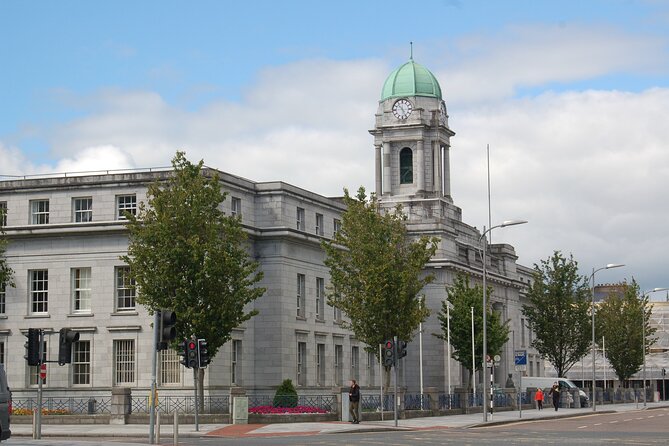
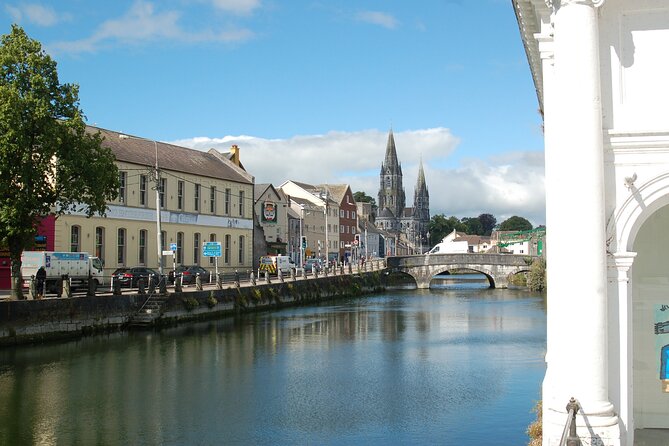
At Nano Nagle Bridge, the focus shifts to the achievements of Nano Nagle. The bridge is identified as the first in Cork city named after a woman, and the guide explains why her work matters.
This is one of the more moving parts of the route. It gives you a woman’s place in Cork’s public story and shows how the city now chooses to remember important figures. The nearby locations of the fortress and cathedral are also pointed out, helping you connect the bridge with Cork’s religious and defensive past.
The stop lasts around ten minutes, enough time for a proper explanation without turning the walk into a long historical seminar. It is also a good example of the tour’s balance. You get architecture and location, but the main subject is a person and her contribution.
South Mall and the Traces of Waterborne Cork
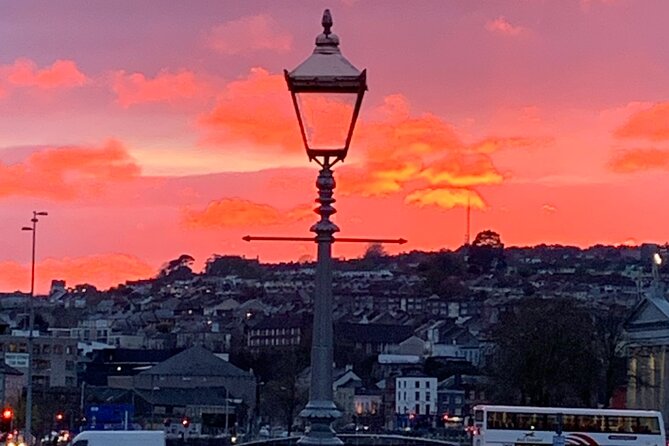
South Mall brings the route back to business and transport. The guide explains the street’s commercial importance and points out more boathouse entrances.
You also see the war memorial and the National Memorial. These stops add a civic and commemorative layer to the walk. Cork is presented as a working city, a political city, and a place that remembers its losses and public figures.
This part is particularly useful if you plan to explore the centre on your own afterward. Once you know what the doorways and street alignments represent, you can spot them again. A self-guided walk often becomes more rewarding after someone has shown you what to look for.
The route is not described as strenuous, and the comments about it being an easy walk are fair. Still, you should be ready to walk continuously for about an hour and a quarter, with short pauses at each stop. Comfortable shoes and a rain jacket make sense in Cork. The tour requires good weather, and rain has affected some departures, though guides have continued when conditions were wet and windy.
Finishing at the English Market
The tour ends outside the main entrance to the English Market, at 2 to 3 Princes Street. This is a strong finish because it leaves you in one of Cork’s most useful food and sightseeing locations.
The guide explains the market’s origins and operation, including its connection with Queen Elizabeth’s visit. You also hear about the range of food and traditional fare sold inside.
The market is not an included tasting experience, so plan to buy anything you want to sample. One guide-led group enjoyed fresh food there after the walk, but the tour itself finishes outside the entrance. That arrangement gives you freedom. You can enter, eat, browse, or continue toward another part of Cork without being tied to a group meal.
Ending here also makes the tour practical. You begin at the city’s tourist information centre and finish beside a major attraction. Along the way, you learn where the central streets are, then arrive at a place where you can make your own plans.
Guide Style and Group Experience
The guide can shape the experience more than the route does. Noel is noted for personal stories, patience, and enthusiasm for Cork. Mary is described as friendly and clear, with a good grasp of the city’s streets and honored citizens. Aideen brings humor, local stories, and answers to questions. Edie is also described as engaging and proud to share information about Cork.
These personal touches are important. A short city walk can feel flat if every stop is delivered as a list of dates. Here, the best version of the tour includes local lore, amusing details, and stories about people connected with the city.
There is one practical concern: voice projection. On a noisy street, a guide without a microphone may be difficult to hear, especially with more than four people nearby. Stay close, position yourself where you can see the guide, and do not hesitate to ask for a point to be repeated.
The group limit of 25 keeps the walk from becoming enormous, but it does not guarantee a small gathering. The experience is more intimate when only a few people book. One small group found the format easy to follow and personal, while a larger group had trouble hearing. That difference is worth keeping in mind if you prefer quiet, close-range guiding.
Is $36.30 Good Value?
At $36.30 per person, Cork City Ramble is not the cheapest way to walk around the centre. You are paying for a guide’s time, local interpretation, and a carefully connected route rather than admission to attractions.
The value is strongest if this is your first time in Cork or you have only a short stay. In 75 minutes, you get an overview of streets, landmarks, memorials, bridges, and the English Market. You also gain a list of places to revisit, including the Crawford Art Gallery and the market itself.
The value is weaker if you already know central Cork well or prefer to spend the same money on food or an indoor attraction. The stops are short, and most admission is free because you are viewing places from outside. This is an orientation walk, not a ticket bundle.
The high overall rating of 4.8 from 250 ratings and the 95 percent recommendation figure suggest that the format works well for most bookings. Still, the lower ratings point to real limits: uneven flow, difficulty hearing in a large group, and disappointment when a participant missed the meeting point. Read the meeting details carefully and arrive early.
Practical Details Before You Book
The tour starts at noon, so it fits well into a morning arrival or a relaxed first day. It can also suit a cruise stop, though you need to allow enough time to reach central Cork and return to your ship or onward transport.
Confirmation arrives at booking, and the mobile ticket is accepted. Service animals are allowed, public transportation is nearby, and most people can participate. The route is on foot, so you should be comfortable walking through city streets for the full duration.
Free cancellation is available up to 24 hours before the start time. Changes or cancellations inside that window are not accepted for a refund. If poor weather causes the operator to cancel, you are offered another date or a full refund.
The meeting point is 125 St Patrick’s Street, not the English Market. The end point is outside the English Market. That distinction matters. Arrive at the starting address at least a little early, since the guide waits from ten minutes before the departure until ten minutes afterward before beginning.
Who Should Book the Cork City Ramble?
I would choose this walk if you want a first look at Cork without spending half a day on a formal history tour. It suits couples, families, solo visitors, and cruise passengers who want a clear introduction to the centre.
It is especially useful for people who enjoy stories about local figures and civic life. Rory Gallagher, Nano Nagle, the Huguenots, and the city’s maritime trade give the walk more character than a simple list of buildings.
I would think twice if you need a fully accessible indoor experience, dislike walking in uncertain weather, or want long visits inside museums and historic buildings. The route is outdoors, the stops are brief, and rainy conditions can affect comfort.
Should You Book It?
Yes, if you want an efficient Cork orientation with local stories and a practical finish at the English Market. The route covers a lot without demanding a full day, and the strongest guides add the personal detail that makes a city walk worthwhile.
Book it early if your schedule is fixed, since it is often reserved about 26 days ahead. Arrive at the exact St Patrick’s Street meeting point, dress for rain, stay near the guide, and keep another 20 minutes free in case the storytelling runs long. For a first visit, that is a fair price for a useful introduction to Cork’s streets and character.
FAQ
How long does Cork City Ramble last?
The scheduled duration is approximately 1 hour and 15 minutes. A guide may continue for about 20 additional minutes if the group and discussion allow.
Where does the tour start?
It starts at the Cork City Tourist Information Centre, 125 St Patrick’s Street, Centre, Cork, T12 AE81, Ireland.
Where does the tour finish?
The walk ends outside the main entrance to the English Market at 2 to 3 Princes Street, Centre, Cork, T12 XR84, Ireland.
What time does the tour begin?
The start time is 12:00 p.m.
What language is the tour offered in?
The tour is offered in English.
How many people can join the tour?
The maximum group size is 25 people.
Can I cancel for a full refund?
Yes. You can cancel at least 24 hours before the start time for a full refund. Cancellations or changes made less than 24 hours before the experience are not refunded.
Just added around Cork
- Cork Private Walking Tour★ 5.0 · 3 reviews
- Cork: Jameson Cocktail Making Class at Midleton Distillery★ 4.9 · 18 reviews
- From Cork: Full-Day Guided Tour to Dingle Peninsula★ 4.4 · 135 reviews
- Cork: Hysterical Histories, Comedic Dinner Theater Show★ 5.0 · 7 reviews
- Cork: Midleton Distillery Behind the Scenes Tour & Tasting★ 5.0 · 23 reviews
- Cork: Midleton Distillery (Jameson) Premium Whiskey Tasting★ 5.0 · 5 reviews
- Cork: City Gaol Tour with Audio Guide★ 4.8 · 108 reviews
- Cork: Fab Food Tasting Trail★ 4.7 · 10 reviews
City Tours, compared.

Cliffs of Moher, Burren & Galway City Day Tour
Read our review →
Dublin to Rock of Cashel, Cork City & Blarney Castle Guided Tour
Read our review →
Go City: Dublin Pass | Save up to 50% – Includes 35+ Things To Do
Read our review →
Aran Islands and Cliffs of Moher Day Cruise sailing from Galway City Docks
Read our review →
Browse the lists this tour appears in