
Reviewed · HIKING & TREKKING
Toe Head Clifftop Hike in West Cork
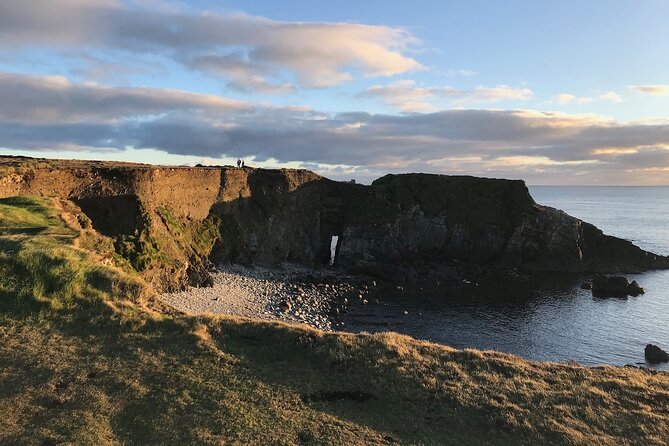
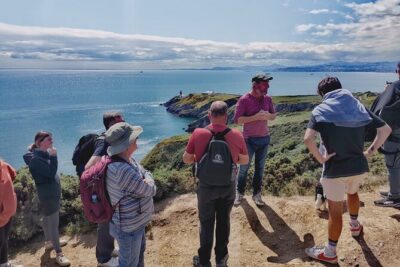
Toe Head’s cliffs give you the kind of West Cork walk that is easy to miss from the main road: quiet paths, sea views, old stones, and stories tied to the ground beneath your boots. Conor leads a gentle 7 km loop, stopping often for photos, folklore, and local history.
I like the small group limit of 10, which keeps the walk sociable without turning it into a procession. I also like the mix of sights: an Iron Age fort, a deserted famine village, wild orchids on Móin Rua, and a beach linked to both a historic battle and First World War submarine activity. The main consideration is that this remains a coastal hike, so you need a moderate level of fitness and a willingness to walk outdoors in changeable Irish weather.
Key points
- A gentle 7 km loop: The pace is easy, with frequent short stops for photographs and stories.
- Local places beyond the usual route: See a famine village, Móin Rua heathland, an EIRE sign, and an Iron Age promontory fort.
- A guide with personal knowledge: Conor brings in Irish language, folklore, local names, and stories tied to Toe Head.
- Small and sociable: The group is capped at 10 people, making it easier to ask questions and enjoy the walk.
- A thoughtful finish: The route ends at Tráigh Liceach with tales of battle, coastal wartime activity, hot tea, and homemade cookies.
- Good practical value: Water and light snacks are provided, so you can pack lightly.
Why Toe Head makes a fine walking base
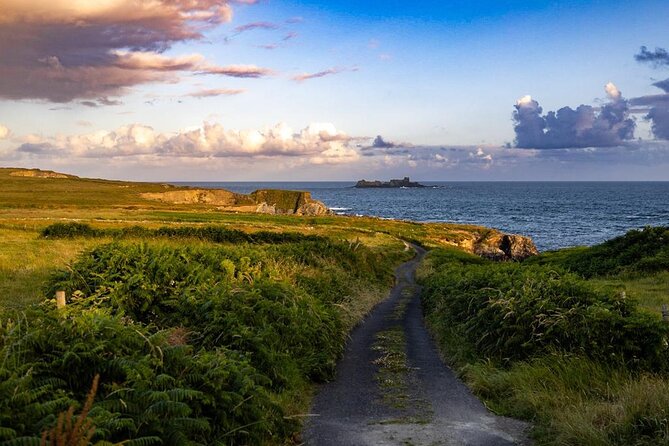
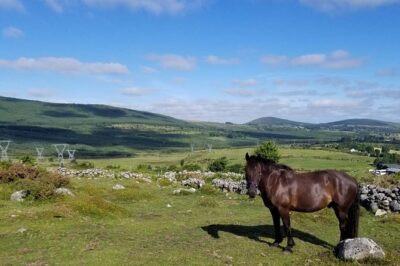
West Cork is at its best when you slow down. Toe Head gives you open sea views, rough coastal ground, heathland, old walls, and small named places that are easy to pass without knowing their stories.
This experience is not built around one grand monument. Its appeal comes from the way several modest sights fit together. A stone fort tells one part of the story. A deserted village tells another. The heathland, cliff paths, beach, and mountain views add the setting.
That mix makes the walk feel more personal than a simple viewpoint stop. You are not only looking out to sea for a few minutes. You are spending close to three hours learning how people used, named, and remembered this corner of West Cork.
Conor is an important part of that appeal. The experience includes local place names, Irish language, folklore, and stories about the area. His approach, as described by the experience details, is conversational rather than rushed. You can ask questions as you go, and the frequent pauses give him room to explain what you are seeing.
A few more things to do around Cork worth a look
- From Dublin: Game of Thrones Winterfell Locations Trek
★ 5.0 · 814 reviews - Dublin Coastal Hike, Pints & Puppies Adventure
★ 5.0 · 647 reviews - Cliffs Of Moher Hiking Tour from Doolin – Small Group
★ 5.0 · 324 reviews
Meeting at 9:00 at the Coast Guard Station
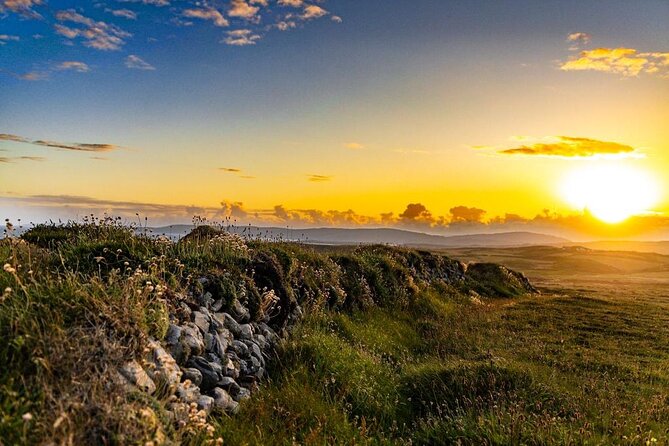
The walk begins at the Toe Head Coast Guard Station on an unnamed road in Bawnishall, County Cork. The start time is 9:00 am, and the walk finishes back at the same meeting point.
That return to the starting place is useful if you are driving, since you do not need to arrange a second pickup. Still, pay close attention to the meeting instructions before setting out. The location is in a rural part of West Cork, and the information provided does not include public transport details or hotel pickup.
The tour is offered in English. Bring footwear suited to a 7 km outdoor walk, along with clothing for coastal weather. The pace is described as easy and fun, but the route is still long enough that casual shoes may not be comfortable for everyone.
You can pack light because water and light snacks are provided. That is a small but welcome detail. It means you can focus on the walk instead of carrying a full day pack. You should still bring anything you personally need for the outing, especially if you prefer more food or have specific drink requirements.
A relaxed 7 km route with room to look around
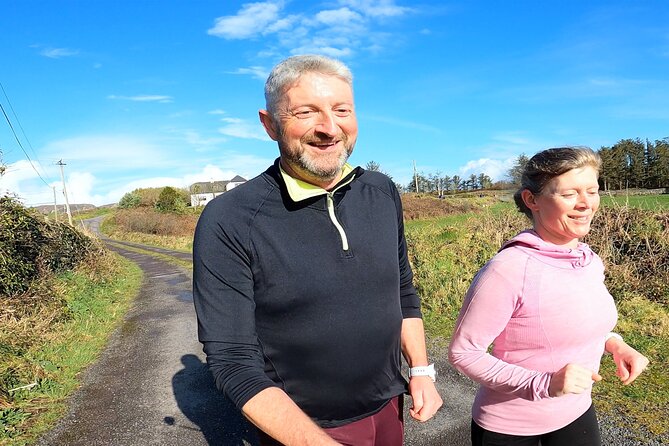
The walk covers about 7 km and takes approximately 2 hours 45 minutes. That timing tells you something useful: this is not a fitness march. Conor keeps the pace easy and breaks the walk with short stops for photographs and stories.
I like this format for West Cork. The best parts of a coastal walk are often the small pauses. You stop to look across the water, notice a place name, hear why a rock or field matters, or simply take in the silence. A fast route can cover more ground, but it can also turn the scenery into a blur.
The group size helps here. With no more than 10 people, you should have a fair chance to hear the guide and ask questions. A small group also makes it easier to pause without blocking a busy path or splitting into separate clusters.
The walk is described as suitable for hikers of all abilities, but the practical information asks for a moderate physical fitness level. Take both points seriously. You do not need to be an experienced hill walker, yet you should be comfortable walking 7 km on coastal trails and uneven ground.
Móin Rua and the wild orchids
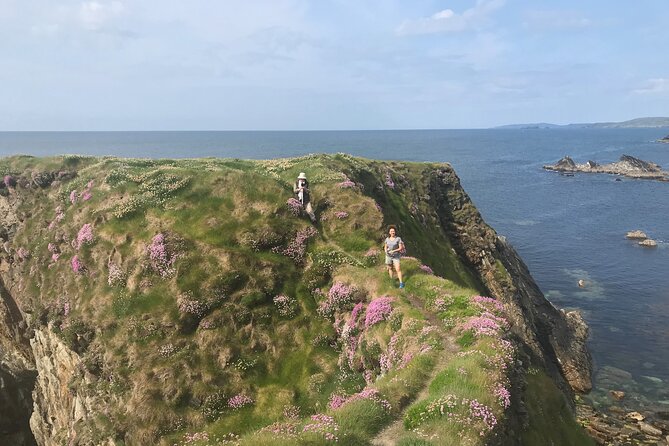
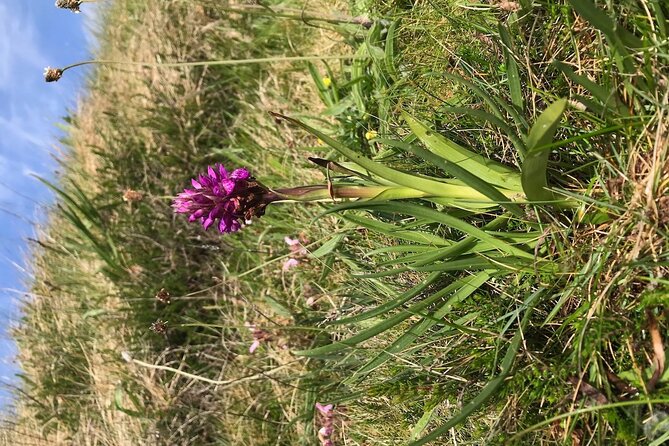
One of the more unusual stops is Móin Rua, a heathland known for its wild orchids. This is a good example of what makes the route different from a standard cliff walk.
You get the sea views, but you also see a more delicate side of West Cork. Heathland can look simple at first glance, especially beside dramatic cliffs. With local guidance, small plants and seasonal details become part of the walk rather than background scenery.
The orchids are a natural feature, so what you see will depend on the time of year and conditions. The tour information does not promise a particular flowering period. You should treat the heathland as a place of interest in its own right, with orchids as a special possibility rather than the sole reason to book.
This stop also adds variety to the route. You move between open coastal views, historic sites, and plant life instead of spending the full walk beside the cliff edge.
Same base, a very different sort of day:
- From Cork: Ring of Kerry Guided Day Trip
★ 4.3 · 1,284 reviews - Cliffs of Moher and More: Full-Day Tour from Cork
★ 4.4 · 879 reviews - Cork Midleton DistilleryJameson Experience & Whiskey Tasting
★ 5.0 · 681 reviews - Ring of Kerry Day Tour from Cork: Including Killarney National Park
★ 4.5 · 663 reviews
A deserted famine village and the stories of place
The route passes a deserted famine village, one of the strongest historical stops on the walk. The remains connect the scenery to the hardship experienced by communities during the Great Famine.
The value here is not just seeing abandoned structures. A village gives you a sense of former daily life: homes, paths, fields, and the people who once depended on this ground. Conor’s local stories and attention to place names help turn the remains into something more than old stones.
This is also where a guide adds real value. Without context, a deserted settlement can be easy to walk past. With an explanation of what happened and how the place fits into the area, the stop becomes one of the emotional centers of the route.
The tour does not present the history as a long classroom lecture. The walk keeps moving, and stories are spread across several short stops. That should suit you if you like learning history in small pieces while outdoors.
Cnoc na nGabhar and the open coastal views
You will also see Cnoc na nGabhar mountain. The experience information does not promise a summit climb, so think of this as a scenic feature viewed along the route rather than a separate mountain ascent.
The mountain adds scale to the walk. Toe Head is not only about the immediate cliff edge. You get broader views across the surrounding terrain, with the sea, heathland, and higher ground working together.
The route includes secret trails along the Wild Atlantic Way. That wording should not lead you to expect a difficult expedition or a path known only to a handful of people. It means the walk takes you beyond the most obvious roadside viewpoints and into less-seen parts of the coast.
That is the core value of this outing. You are seeing a quieter side of the Wild Atlantic Way, guided by someone who can explain the names and stories attached to the area.
The EIRE sign and the Iron Age promontory fort
A famous EIRE sign is another memorable feature. These signs were placed along the Irish coast during the Second World War to mark Ireland’s neutral territory for aircraft. The sign gives the walk a clear link to modern Irish history and to the strategic importance of this coastline.
The Iron Age promontory fort adds a much older layer. Built on a coastal headland, such forts used the natural cliffs and sea as part of their defense. The exact experience at the fort will depend on access and conditions, but the setting itself is a strong reason to take the walk.
The tour description also mentions a secret at the fort known only to locals. Details are deliberately not given, which is probably the point. You get a small sense of discovery without the stop being reduced to a standard photo opportunity.
The fort and EIRE sign work well together. One takes you back many centuries, while the other connects the same coast with twentieth-century military concerns. In a short walk, you get a broad sweep of Irish history without visiting a formal museum.
Finishing at Tráigh Liceach
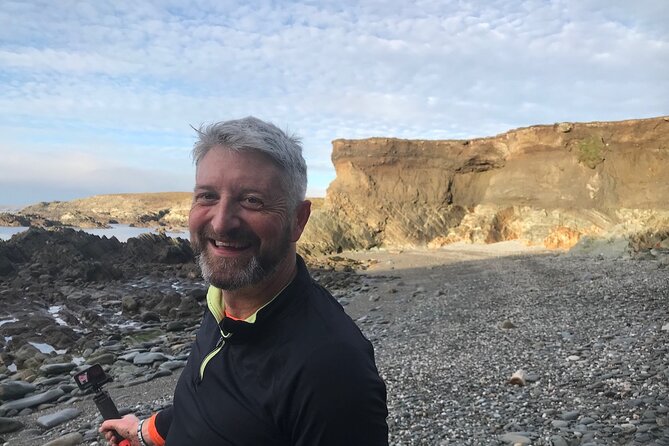
The walk returns to Tráigh Liceach, a beach that serves as the final stop. This is more than a place to take off your boots and look at the water.
Conor shares stories about the Battle of Tráigh Liceach and First World War submarine activity around the coast. The combination is unusual. A beach can appear peaceful today, yet its past may include conflict, military movement, and danger at sea.
Ending here gives the route a natural sense of direction. You have walked through fields and heathland, visited older sites, and followed the coast before arriving at a place where land and sea history meet.
The final refreshment is part of the experience too. The information includes light snacks and water during the walk, while the experience details mention hot tea and homemade cookies at the end. That is a simple touch, but it suits the mood of a small West Cork walk. You get time to sit, listen, and let the stories settle before heading back to the meeting point.
What the $60.07 price gets you
At $60.07 per person, this is not the cheapest way to see a coastal view. You could reach many West Cork viewpoints on your own for the cost of fuel and perhaps a parking fee.
The difference is the guided access and the amount of interpretation packed into nearly three hours. You are paying for a small group, a planned 7 km route, local storytelling, historical context, water, light snacks, and the guide’s knowledge of less obvious paths and features.
For me, the value is strongest if you care about the meaning of a place, not just its appearance. A self-guided walk might give you the cliffs and beach. It may not give you the story of the famine village, the Irish names, the fort’s local secret, the Battle of Tráigh Liceach, or the submarine activity.
The price makes less sense if you want a strenuous hike, a long summit day, or complete freedom to set your own pace. This is a guided social walk with regular stops. You are buying company and interpretation as much as distance.
The experience is frequently booked well ahead, with an average booking time of 53 days. That suggests you should plan ahead if the date matters to you, especially during a busy Ireland trip.
Who will enjoy this Toe Head walk
I would choose this experience if you want:
- A gentle coastal outing rather than a hard hike
- A small group with time for questions
- Local folklore, Irish place names, and history
- Quiet parts of the Wild Atlantic Way
- A mix of nature, archaeology, and recent history
- A sociable morning with a thoughtful finish
It is especially suitable for people staying in or near West Cork who want a guided experience beyond the best-known stops. One person even made the trip from Cork city for the walk, which shows that the outing can be worth a special detour if you are keen on local history and coastal scenery.
Families or mixed-ability groups may appreciate the slow pace and regular pauses, but everyone should be ready for a 7 km outdoor walk. Service animals are allowed.
I would skip it if you want a private tour, a demanding mountain hike, or a tightly timed attraction visit. The route depends on weather, and the experience is designed to unfold at a relaxed pace.
Weather, cancellation, and practical planning
This experience requires good weather. If poor weather causes cancellation, you will be offered another date or a full refund.
You can cancel for a full refund up to 24 hours before the start time. Changes or cancellations made less than 24 hours before the local start time are not accepted for a refund.
Wear suitable outdoor clothing and keep your bag light. Since the route is coastal, conditions may feel different from what you find in a town or sheltered valley. The tour provides water and light snacks, but the supplied information does not specify the exact footwear, clothing, or equipment required, so use your own judgment for a moderate walk.
The activity is mobile-ticketed and conducted in English. It begins at 9:00 am and returns to the Toe Head Coast Guard Station.
Should you book the Toe Head Clifftop Hike?
Book it if you want to understand West Cork through its small places: a heathland orchid, an abandoned village, an old fort, a wartime sign, and a beach with stories of conflict. Conor’s local connection, the small group, and the easy pace give the walk a personal feel.
The strongest reason to go is the range of material covered in one morning. You get scenery, folklore, archaeology, famine history, military history, and time for tea and homemade cookies at the end.
Think twice if your priority is a challenging hike or a cheap viewpoint stop. At $60.07, the value comes from the guide and the stories. For a slower, more human look at a lesser-seen stretch of the Wild Atlantic Way, this is a very good choice.
FAQ
How long is the Toe Head Clifftop Hike?
The walk covers about 7 km and takes approximately 2 hours 45 minutes.
What time and where does the hike begin?
It begins at 9:00 am at the Toe Head Coast Guard Station, on an unnamed road in Bawnishall, County Cork.
Where does the experience finish?
The walk finishes back at the meeting point after returning to the Toe Head Coast Guard Station.
How large is the group?
The experience has a maximum of 10 participants.
What sights will I see?
The route includes Móin Rua heathland and its wild orchids, a deserted famine village, Cnoc na nGabhar mountain, an EIRE sign, an Iron Age promontory fort, and Tráigh Liceach beach.
What happens if the weather is poor?
If the experience is canceled because of poor weather, you will be offered a different date or a full refund.
Just added around Cork
- Wild Coast Bike and EBike Tour in Kinsale Cork Ireland★ 5.0 · 12 reviews
- Clonakilty Distillery Tour & Classic Whiskey Tasting★ 5.0 · 110 reviews
- Fota House, Arboretum & Gardens Admission Ticket★ 5.0 · 67 reviews
- Full-Day Private Whispers of Kerry Emerald Dreams Tour from Cork★ 5.0 · 6 reviews
- Blarney,Cork City,Kinsale,Ultimate Private Guided Minibus Tour.★ 5.0 · 6 reviews
- Kinsale and West Cork Classic Private Tour in modern a/c minibus★ 5.0 · 4 reviews
- Cocktail Masterclass & Distillery Tour Combo★ 5.0 · 63 reviews
- Private Tour: Classic Cork Tour visiting Blarney Castle & Kinsale★ 5.0 · 8 reviews
Hiking & Trekking, compared.
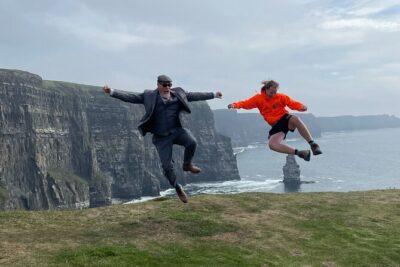
Cliffs Of Moher Hiking Tour from Doolin – Small Group
Read our review →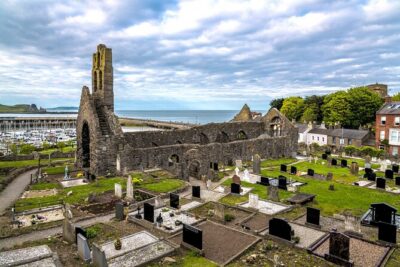
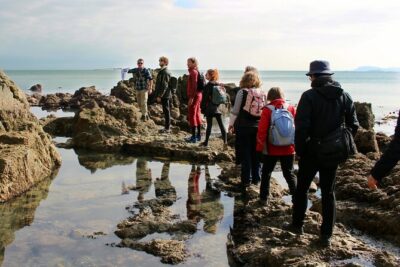

Howth Hiking Trail from Dublin: Mythology and Legend
Read our review →Browse the lists this tour appears in