
Reviewed · TITANIC & COBH HERITAGE TOURS
The Queenstown Story @ Cobh Heritage Centre , Great Stories of Emigration.
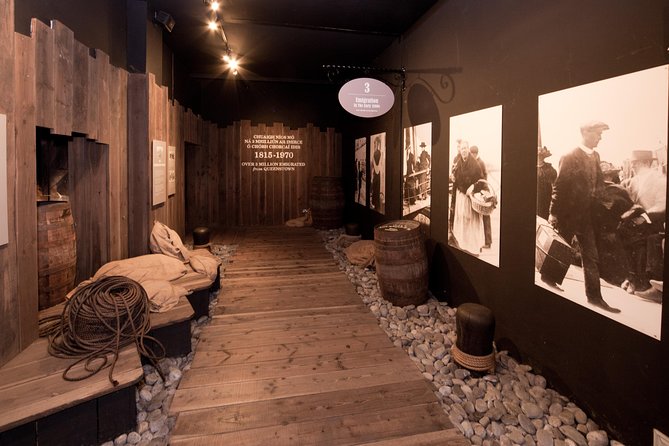
Cobh Heritage Centre tells its best story through one simple idea: you follow the life of an Irish emigrant. That personal thread turns dates and shipping routes into something easier to grasp. You also see how Cobh, once called Queenstown, linked Ireland with America, the West Indies, and the wider world.
I like the interactive displays and the clear timeline, which covers far more than Titanic. I also like the easy location inside a restored Victorian railway station, just a short walk from the train and cruise pier. The main drawback is that this is a self-guided museum, so anyone looking for a lively guide throughout will need to read, listen, and watch at their own pace.
Key points to know before you go
- Follow an emigrant’s story: The museum gives you a named person to track through the exhibits, making Irish emigration feel personal.
- More than Titanic: The displays cover the Great Famine, several waves of emigration, maritime history, military links, and the Lusitania.
- Plan on 60 to 100 minutes: The formal visit takes about an hour, but you can stay longer and revisit sections on the same day.
- Ideal for cruise passengers: The centre sits at Deepwater Quay, close to where ships dock, and is about a four-minute walk from Cobh railway station.
- A useful genealogy stop: A genealogy service and access to Ancestry.com are available, though the consultant’s desk may not always be staffed.
- Good practical facilities: A cafe serves scones, cream, jam, and coffee, while the gift shop and clean facilities make the visit easy to fit into a busy day.
Inside Cobh’s restored railway station
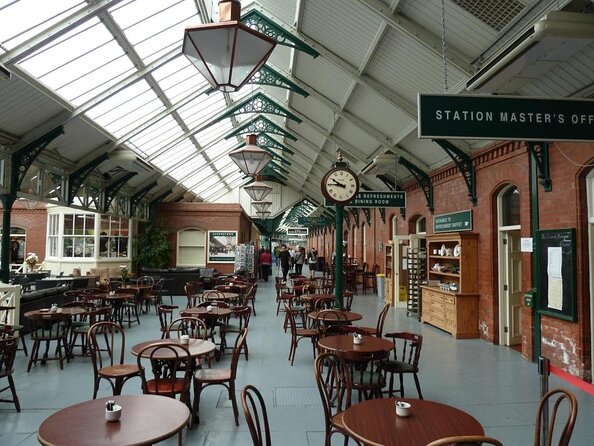
The setting gives the visit a strong opening. Cobh Heritage Centre occupies a beautifully restored Victorian railway station at Deepwater Quay. This is not just a convenient shell for a museum. The building once formed part of the transport network that carried people toward the harbour and their ships.
You enter near the waterfront, close to the cruise pier and the railway station. If you are coming from Cork City, the train ride to Cobh takes about 25 minutes, followed by a walk of roughly four minutes to the centre. From the cruise berths, the building is also very close, making it one of the easiest shore visits in Cobh.
The centre is compact enough to manage without a full day. Its high ceilings and old railway character add atmosphere, but the displays do most of the work. You move through the story at your own speed rather than following a fixed guide or group.
The advertised visit takes about an hour. I would allow 90 minutes if you want time for the audio and video elements, the interactive features, and a quiet look at the personal stories. If you have only two hours in Cobh, the centre fits neatly into that window, especially since the cafe gives you somewhere to wait if you finish early.
More harbour history around Ireland:
- Dublin to Belfast Titanic, Dunluce Castle & Giant’s Causeway Tour
★ 5.0 · 3,729 reviews - Dublin: Giant’s Causeway, Dark Hedges, Dunluce and Belfast Titanic entrance fee
★ 5.0 · 2,301 reviews - Giant’s Causeway with the Titanic Exhibition and the best of Northern Ireland
★ 5.0 · 1,122 reviews
Following Irish emigrants from the 1600s onward
The main story begins in the 17th century, when Irish people left for the American colonies and the West Indies. From there, the displays move forward through later periods and show the destinations where Irish emigrants settled.
That chronological structure matters. Instead of presenting emigration as one single event, the museum shows that people left Ireland at different times and for different reasons. Economic pressure, political conditions, famine, and the search for work all form part of the wider story.
The most effective feature gives you the name of an emigrant to follow. You can then trace that person through the museum as if you were making the journey yourself. It is a clever way to keep the displays connected, especially for younger visitors or anyone who finds long blocks of historical text tiring.
The experience is emotional without needing a dramatic guide. You see the scale of departure, with more than three million Irish emigrants connected to the story told here. The number is large, but the individual format brings it back to one person, one family, and one uncertain departure.
You should not expect a museum devoted only to famous ships or well-known names. Much of the value comes from the ordinary lives behind the statistics. If your own family came from Ireland, the setting may feel especially personal. Several exhibits encourage you to think about the relatives who left and the families they left behind.
The Great Famine and the reasons people left
The Great Famine receives its own section, and it is one of the most important parts of the visit. The displays place mass emigration within the severe conditions faced by Irish people during that period.
This section helps explain why departure was often not a romantic choice or an exciting adventure. For many families, leaving meant separation, danger, and a difficult attempt to build a new life far away. The museum gives you a clearer sense of that pressure without asking you to know Irish history in advance.
I appreciate that the centre connects the famine with the broader pattern of Irish departures. You can see how different periods produced different waves of emigration, rather than treating every emigrant as part of the same story.
The subject matter can be sad, particularly when the museum turns from broad events to the people who left and never returned. That is part of the purpose of the visit, but families with very young children may want to judge the tone for themselves.
Cobh, Titanic, and the Lusitania
Cobh’s connection with Titanic is an important draw, particularly for first-time visitors. The port was the final stop for Titanic before it crossed the Atlantic, and the centre includes material connected with that departure.
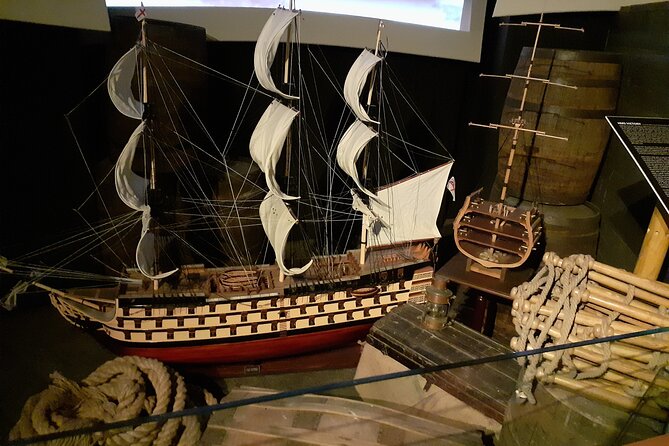
The museum also covers the Lusitania and Cobh’s wider maritime role. This makes the visit more useful than a single-ship attraction. You learn how the port functioned within Ireland’s shipping story and how different vessels, routes, and events shaped the town.
The Titanic material does not take over the whole museum. That is good news if you already know the basic story of the ship and want something broader. You get the famous connection, but you also get Irish emigration, famine, military history, and the changing role of the harbour.
The centre’s position beside the water adds a useful sense of place. After your visit, you can walk through Cobh and see the harbour that mattered so much to the people and ships described inside. The town’s maritime setting helps connect the displays with the real location outside.
A few more things to do around Ireland worth a look
- Dublin Historical Centre Food Tour with 8 Food Tastings & Drinks
★ 5.0 · 1,718 reviews - 2-Hour Historical Walking Tour from Dublin
★ 5.0 · 875 reviews - Historical 2-Hour Guided Walking Tour of Dublin
★ 4.7 · 865 reviews - Dublin to Cork, Blarney Castle & Cóbh Heritage Centre by train
★ 4.5 · 510 reviews
Interactive displays, Morse code, and the self-guided format
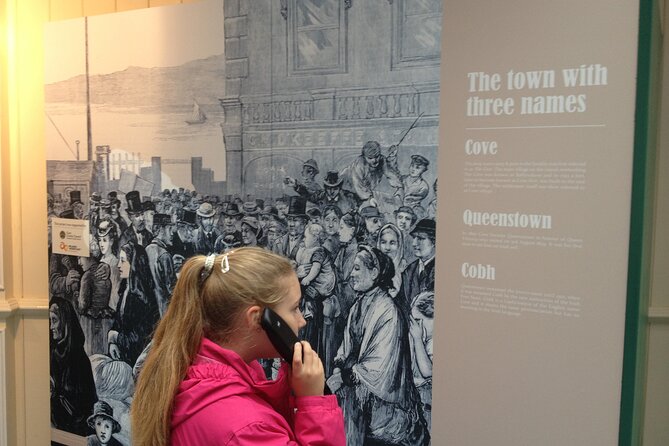
The displays use a mix of reading, listening, watching, and hands-on features. You can learn how to type Morse code, and the interactive sections give the visit more variety than a museum made entirely of wall panels.
The self-guided format gives you control. You can pause at a family story, move quickly through a section you already understand, or return to something that caught your attention. You can also stay longer than the basic one-hour estimate and go back through the centre again on the same day.
That freedom is useful for mixed groups. One person can spend time on genealogy while another looks at Titanic material. Children can try the interactive features while adults read the background information.
The tradeoff is that you need to manage your own visit. There is no guide keeping the story moving or answering questions at every stop. A walking tour led by Aideen has also been part of some visits to the centre, but the standard museum experience described here is independent and self-guided.
If you enjoy museums that let you set the pace, this works well. If you prefer a single strong narrative delivered by a guide, you may find the presentation less engaging in places.
Genealogy help for family research
The genealogy service adds another reason to visit, especially if you are tracing Irish ancestors. A genealogy consultant is available in the centre, and access to Ancestry.com is provided.
You should keep your expectations practical. The service can be useful for starting or extending family research, but the consultant’s desk may not always be staffed when you arrive. If this part of the visit matters most to you, check availability before you go rather than assuming someone will be there.
The museum itself still helps with family research even if you do not meet the consultant. Its focus on departure points, destinations, and different waves of emigration gives you context for your own family records.
For someone whose grandparent or great-grandparent left through Cobh, the visit can be more than a general museum stop. You may not find a complete family record, but you can better understand what that departure meant and how it fitted into Ireland’s wider story.
How long to allow and how the price works
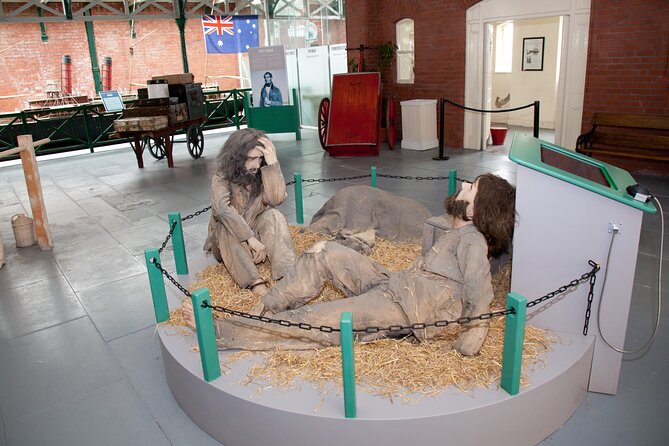
The admission price is about $18.15 per person. I see this as fair value if you spend 90 minutes inside and use the displays, rather than simply walking through for a quick look.
At the one-hour minimum, the price is reasonable for a focused museum visit in a historic building. It becomes stronger value if you stay longer, use the interactive features, visit the genealogy area, and take time with the personal stories.
The ticket includes entry and skip-the-line access. That can matter during busy periods, especially when cruise passengers arrive at the same time. Still, you may not always find a queue. If the centre is quiet, the advance ticket may not save much time, since visitors can still be directed through the same entrance area.
Food and drinks are not included, but the on-site cafe is useful. You can have a scone with cream and jam or a cup of coffee before or after the museum. The gift shop gives you another brief stop, and the centre’s clean facilities make it a convenient base near the harbour.
Getting there from Cork, the cruise pier, or Cobh town
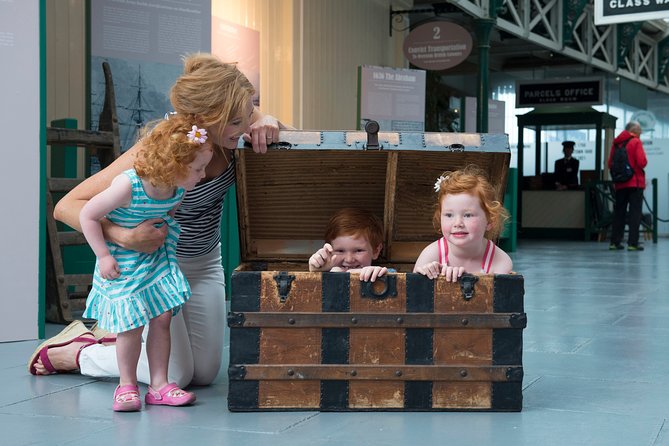
The address is Deepwater Quay, Ringmeen, Cobh, County Cork, P24 CY67. The centre is near public transport and easy to reach on foot from the railway station.
From Cork City, the train takes about 25 minutes. The station is roughly a four-minute walk from the heritage centre, so you do not need a taxi for the final stretch.
Cruise passengers have an even easier visit. The centre is less than 200 yards from the ship docking area, according to the practical directions provided for the site. That makes it a sensible first stop before walking uphill or farther into Cobh.
The Titanic attraction is also about a four-minute walk beyond the heritage centre. You can combine the two if you have enough time, but do not confuse their focus. The Queenstown Story is the broader stop, covering Irish emigration and port history. The Titanic attraction focuses more closely on that ship’s Cobh connection.
The centre opens from 9:30 a.m. to 4 p.m. daily during the stated operating period from September 1 through December 30, 2026. Check the hours for your exact date, since opening details can change.
Who will get the most from this visit
I would choose this experience for anyone interested in Irish family history, migration, the Great Famine, or Cobh’s role as a port. It also suits cruise passengers who want a worthwhile attraction within a very short walk of the pier.
Families can make good use of the mixed presentation. The Morse code activity and other interactive displays provide a change of pace, while the timeline and personal stories give adults plenty to consider.
It is also a good choice for visitors staying in Cork who want an easy half-day outing. The train ride is short, the walk is simple, and you can combine the centre with a look around Cobh.
You may want to skip it if you have no interest in Irish history and want a purely scenic visit. You may also find it less satisfying if you expect a live guide, a large collection of physical artifacts, or a long theatrical presentation. Much of the experience depends on your willingness to read, listen, and follow the story yourself.
The centre is capped at 40 people for the activity, though the museum’s self-guided design means you are not tied to a group moving from room to room. Service animals are allowed, and most people can take part.
Should you book the Queenstown Story?
Book it if you want to understand why Cobh mattered to Ireland and to the millions who left the country. The personal emigrant trail, the Great Famine section, and the links with Titanic and the Lusitania give you a broad visit in a manageable space.
I would especially recommend it before visiting the rest of Cobh. The museum gives meaning to the harbour, railway station, and streets outside. It also works well as a cruise excursion because you can reach it quickly and return to the ship without a long transfer.
The best reason to go is not Titanic alone. It is the chance to connect Cobh with ordinary Irish families who left over several centuries. At $18.15, the visit offers solid value for about an hour, and better value if you stay for 90 minutes or more, use the interactive displays, and stop at the cafe.
Free cancellation is available if you cancel at least 24 hours before the start time. If you are unsure about your schedule, that gives you useful flexibility, but changes or cancellations inside the 24-hour window are not refunded.
FAQ
How long does the Queenstown Story visit take?
The visit takes about one hour, but you can spend 90 to 100 minutes if you read the displays carefully and use the interactive features. You can also stay longer and revisit parts of the centre on the same day.
Where does the experience take place?
It takes place at Cobh Heritage Centre, Deepwater Quay, Ringmeen, Cobh, County Cork, P24 CY67, Ireland. The centre is inside a restored Victorian railway station.
Is the tour guided?
The museum visit is self-guided. You move through the displays independently using the written, audio, video, and interactive material. A walking tour led by Aideen has also been available at the centre, but it is separate from the standard self-guided format.
Does the experience cover Titanic?
Yes. The centre includes Cobh’s connection with Titanic, along with material about the Lusitania. Titanic is one part of a wider visit that also covers Irish emigration, the Great Famine, and maritime and military history.
Is genealogy help available?
Yes. A genealogy consultant and access to Ancestry.com are available at the centre. The consultant may not be at the desk at all times, so availability is not guaranteed during every visit.
Can I cancel for a full refund?
Yes. You can cancel at least 24 hours before the experience start time for a full refund. Cancellations or changes made less than 24 hours before the start time are not accepted for a refund.
Just added around Ireland
- Gin School, distill you own gin, cocktails, tastings, food★ 5.0 · 8 reviews
- Dublin : Street Art Walking Tour★ 5.0 · 3 reviews
- Dublin: Personal Photographer- Travel Photography Experience★ 4.5 · 8 reviews
- Dublin: Skip-the-line Book of Kells & Old Town Private Tour★ 5.0 · 6 reviews
- Dublin: Howth Coastal Craft Beer and Seafood Tour★ 5.0 · 62 reviews
- Vikings In Dublin (Walking Tour)★ 5.0 · 8 reviews
- Dublin: Silent Disco Walking Tour★ 4.9 · 21 reviews
- Dublin: Private Tour of City Monuments in Spanish★ 5.0 · 6 reviews
Titanic & Cobh Heritage Tours, compared.
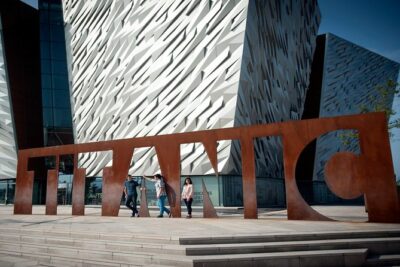
Dublin to Belfast Titanic, Dunluce Castle & Giant’s Causeway Tour
Read our review →
Giant’s Causeway, Dark Hedges, Dunluce and Belfast Titanic entrance fee
Read our review →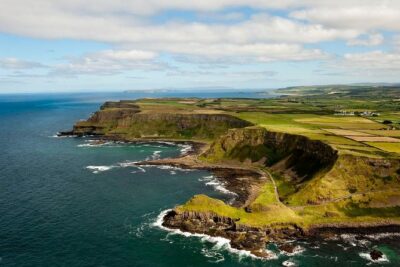
Giant’s Causeway with the Titanic Exhibition and the best of Northern Ireland
Read our review →
Cobh (Cork) to Blarney Castle & Kinsale – Shore Excursion
Read our review →
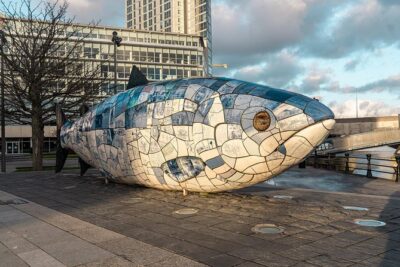
Belfast Day Tour From Dublin: Including Titanic Experience
Read our review →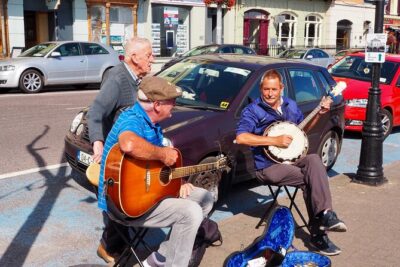
Visit 16 Sites Key Historical Sites And Experience Cobh Rebel Tours
Read our review →
Full-Day Tour to Cork, Cobh and Blarney Castle
Read our review →Browse the lists this tour appears in